

Details
Description
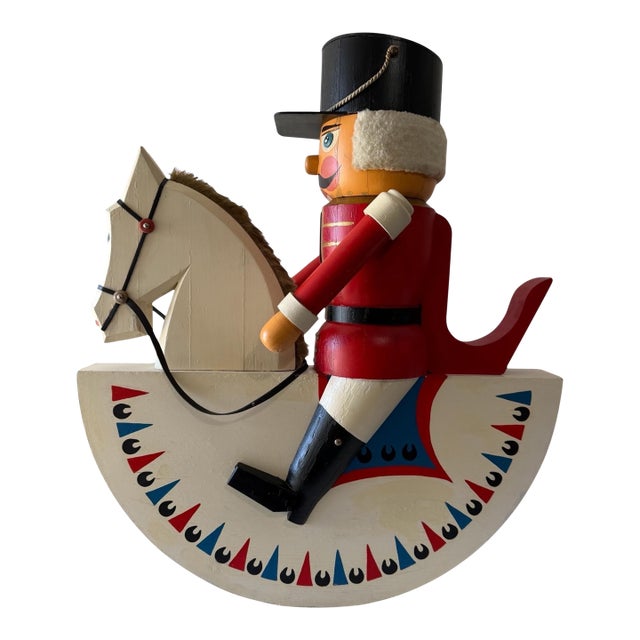
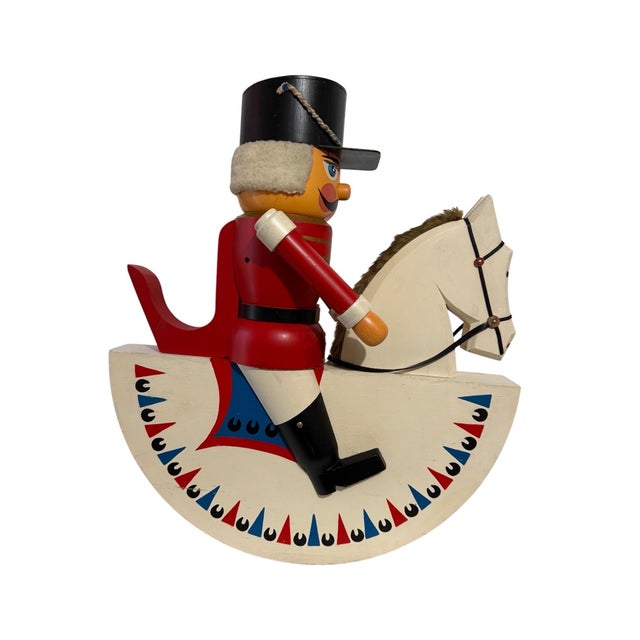
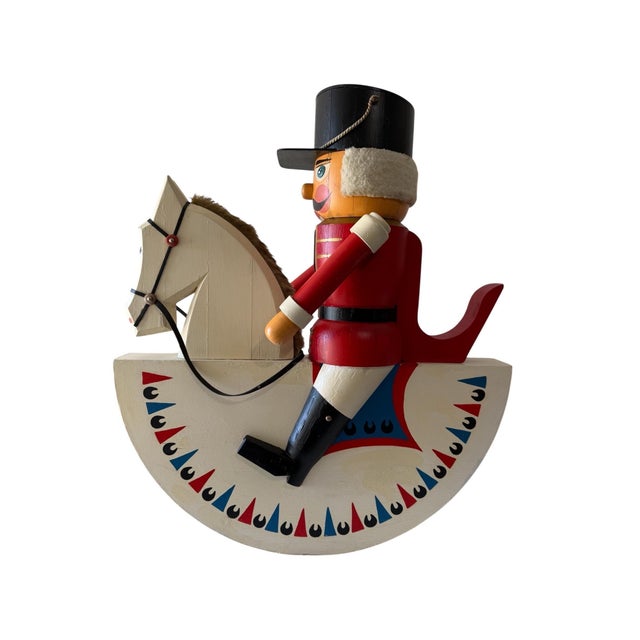
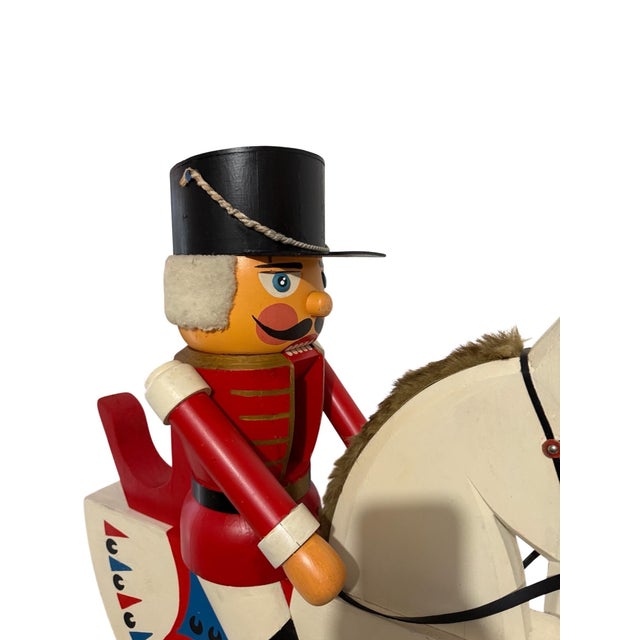
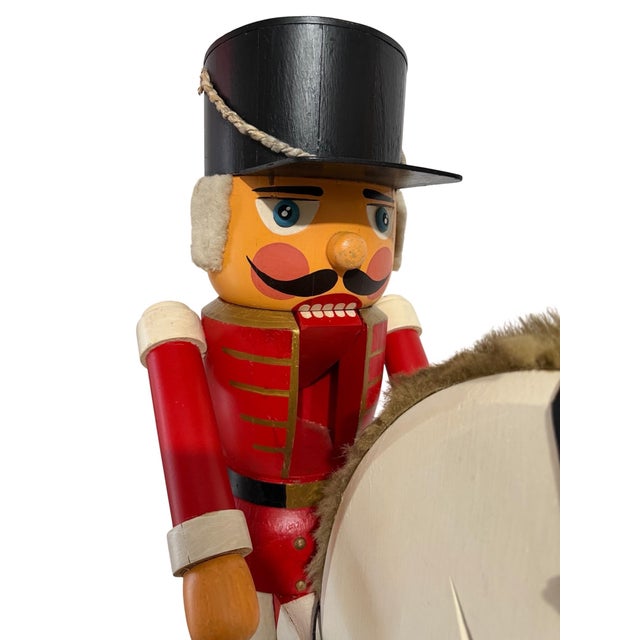
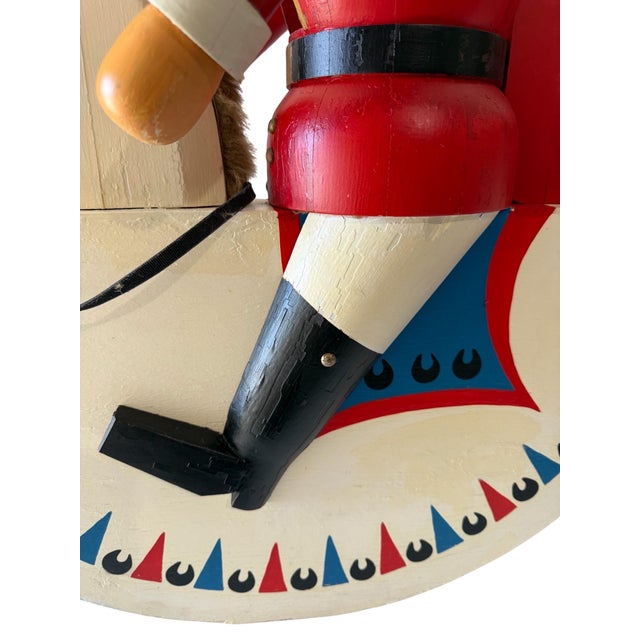
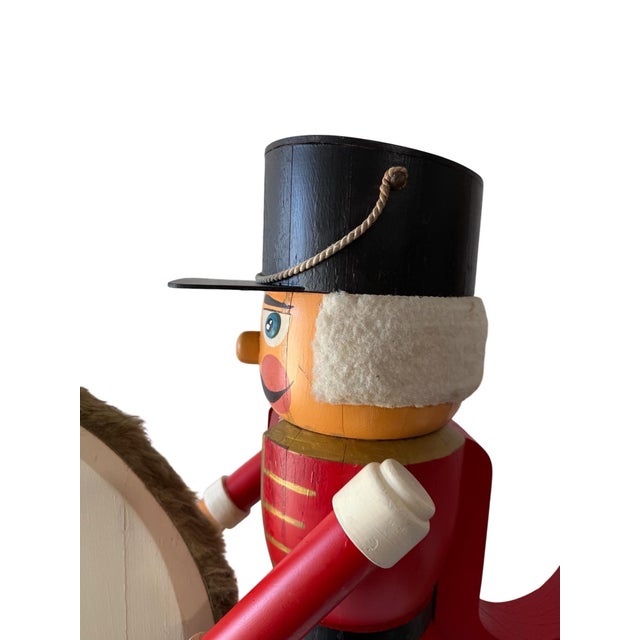
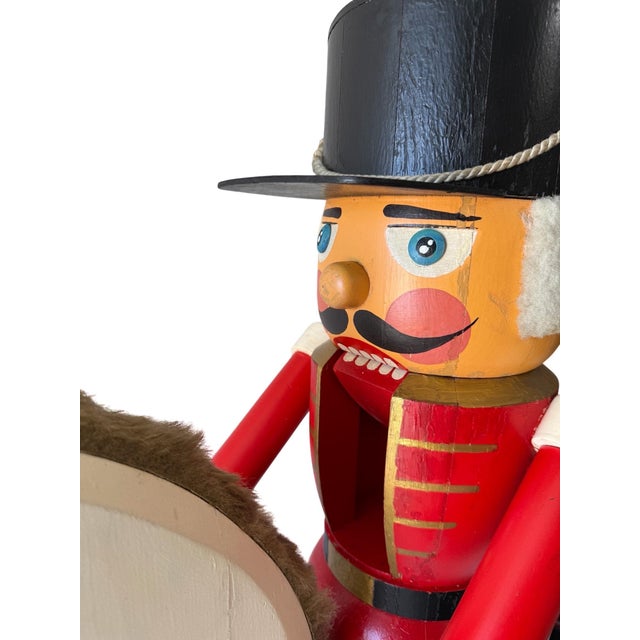
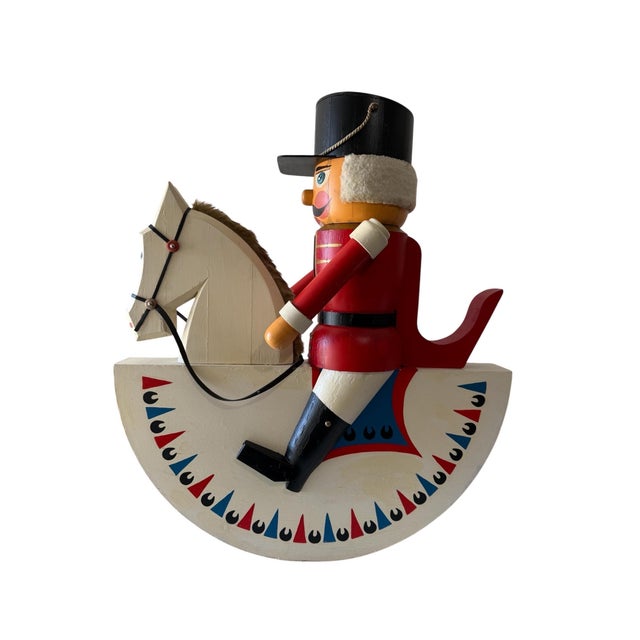
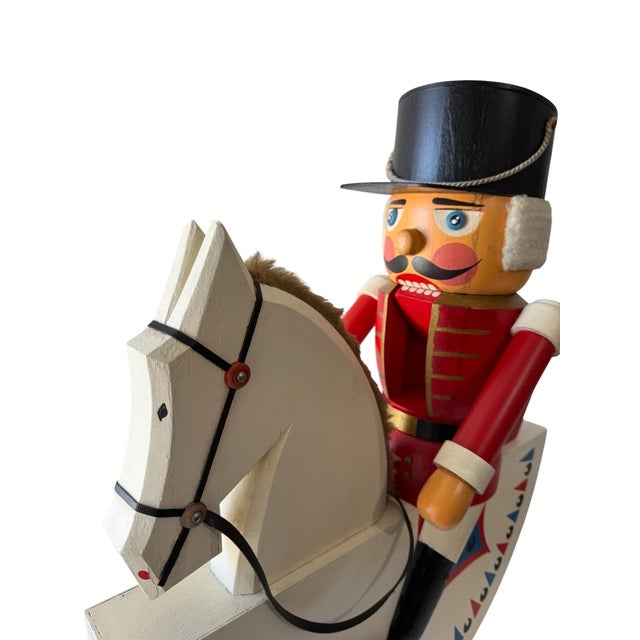
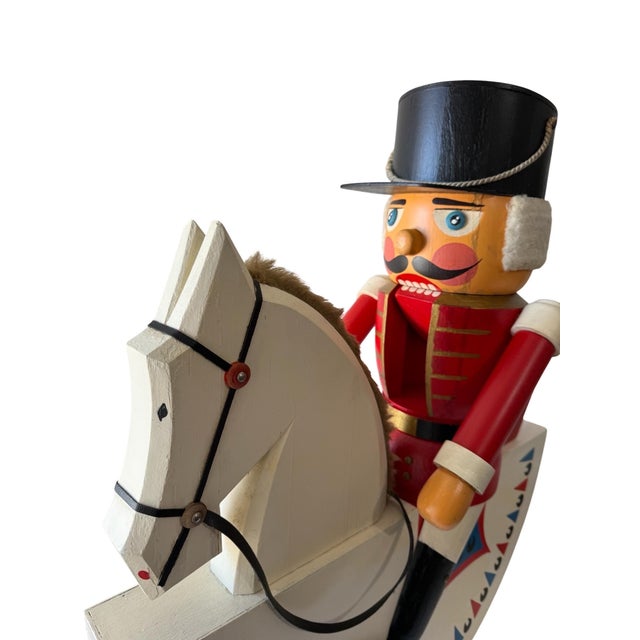
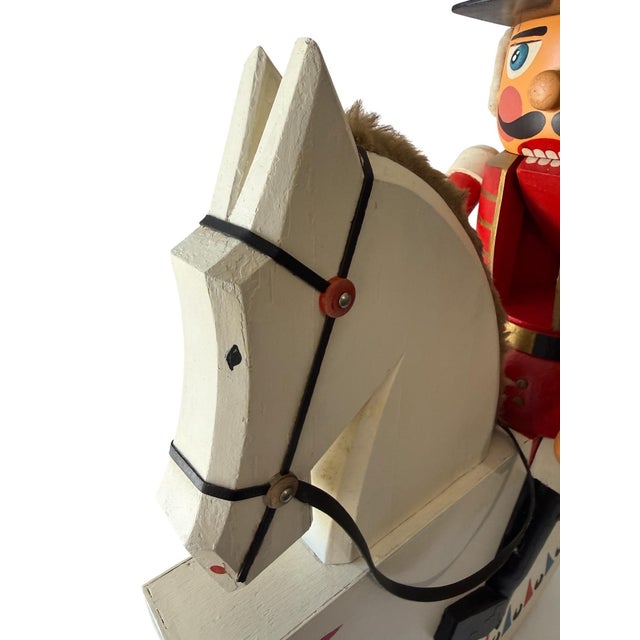
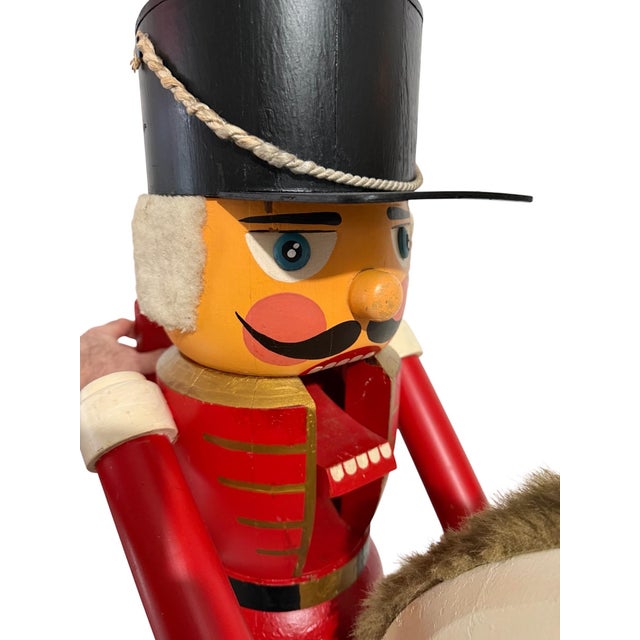
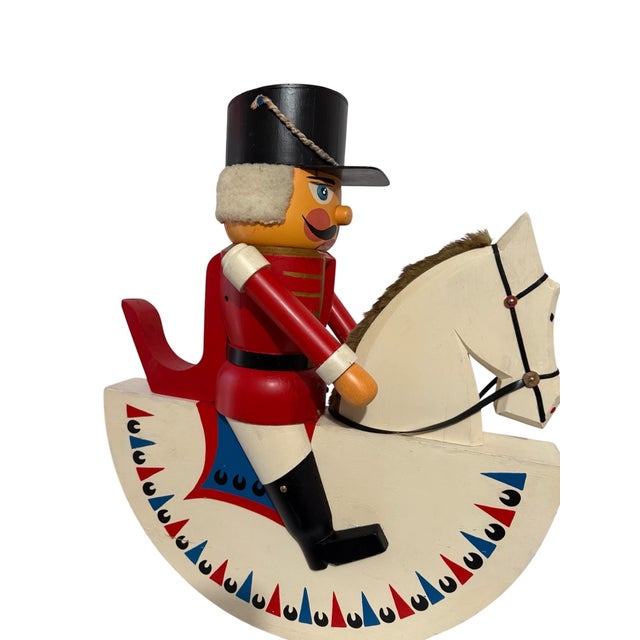
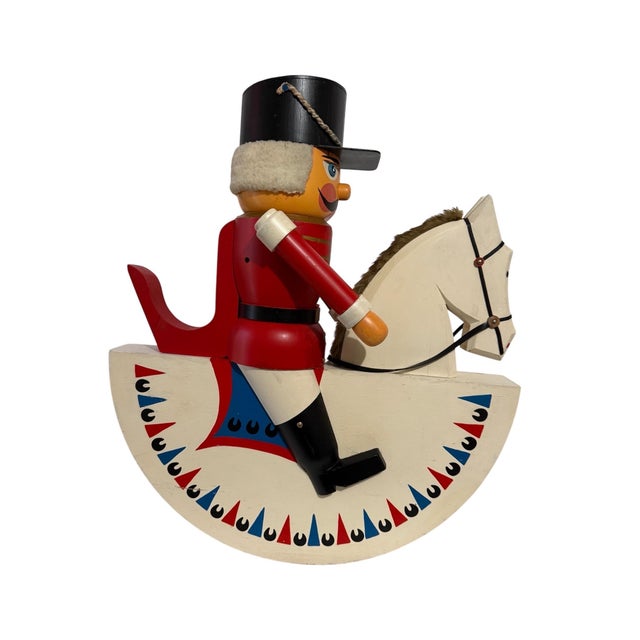
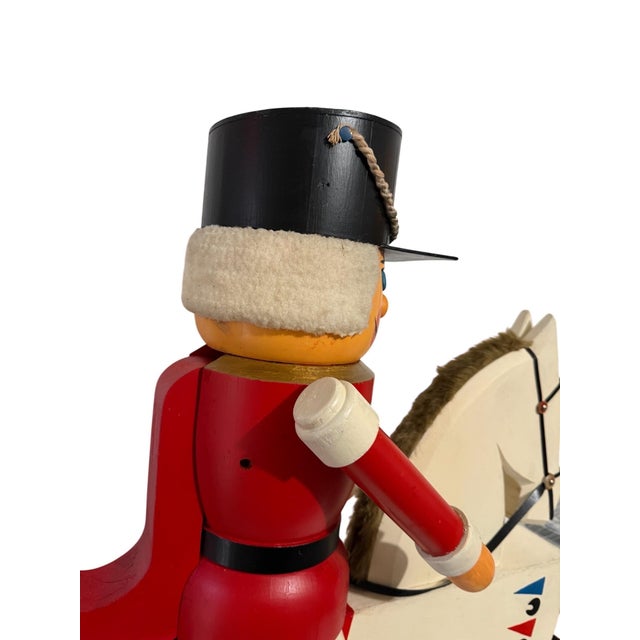
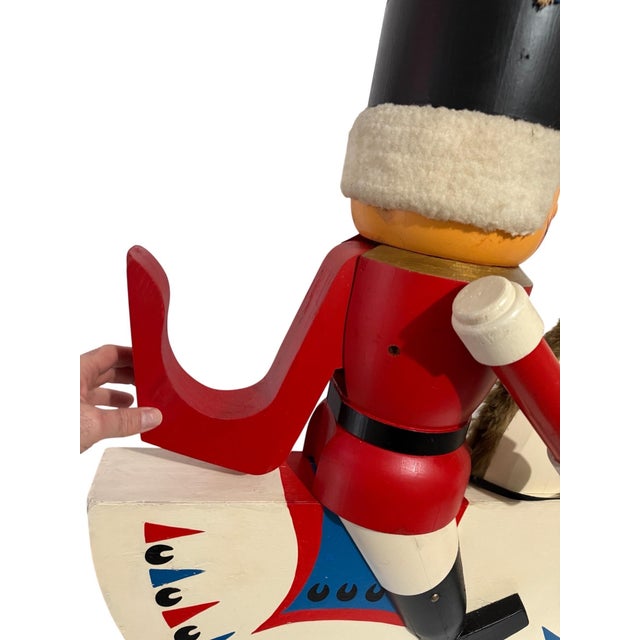
Vintage German folk art wood nutcracker
"Hussar on Rocking Horse"
Dimensions: H 32" x W 30" x D 15"
Erzgebirge …
Read more
Vintage German folk art wood nutcracker
"Hussar on Rocking Horse"
Dimensions: H 32" x W 30" x D 15"
Erzgebirge Volkskunst Hussar
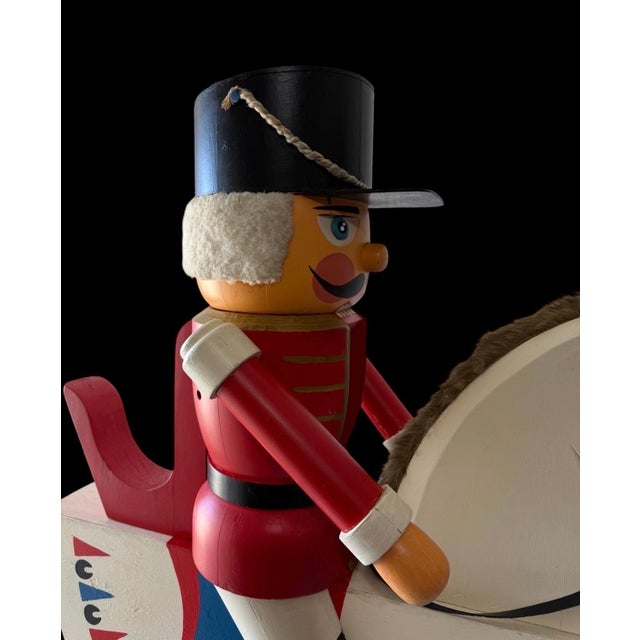
This is a kinetic piece and the mouth opens and closes.
This is a large wood carving.
Highly collectible Erzgebirge Volkskunst (Ore Mountain Folk Art, a centuries-old tradition of highly artistic woodcraft from the Ore Mountain region of Germany. Originating in the 17th century, this craft began when local mining industries declined and miners turned to woodcarving to support their families. German Handmade folk art is a genre of art that sees local people, usually living outside the traditional art world, create work with a sense of style unencumbered by wider outside influences. Germany’s Erzgebirge region was mined for ore from the 12th to the 20th century, and during this time, local miners would create small wooden pieces of art, which saw the birth of Germany’s rustic folk art. Over the centuries, these little pieces of toy folk art — which usually resembled local village characters — started to create a unique style of their own. These pieces, which have been perfected over the centuries, grew in popularity in the last century and have become famous and loved across the world. One of the most iconic and instantly recognisable pieces of German folk is the wooden Nutcracker. This upright soldier design was first created in the late 1800s in Erzgebirge. One of the most direct examples of German folk art, carved to resemble the “local village characters”, are German incense smoker men. These are hand-carved and come in many different designs. These include distinct characters such as mushroom forager, Oktoberfest beer drinker and miner in traditional garb. It is a self-standing style, recognizable, cheerful, whimsical and a happy creation. Naïve art is any form of visual art that is created by a person who lacks the formal education and training that a professional artist undergoes (in anatomy, art history, technique, perspective, ways of seeing). Unlike folk art, naïve art does not necessarily evince a distinct cultural context or tradition. Naïve art is recognized, and often imitated, for its childlike simplicity and frankness. Paintings of this kind typically have a flat rendering style with a rudimentary expression of perspective.
One particularly influential painter of "naïve art" was Henri Rousseau (1844–1910), a French Post-Impressionist who was discovered by Pablo Picasso. Naïve art is often seen as outsider art that is by someone without formal (or little) training or degree. While this was true before the twentieth century, there are now academies for naïve art. Naïve art is now a fully recognized art genre, represented in art galleries worldwide.
Museums devoted to naïve art now exist in Kecskemét, Hungary; Riga, Latvia; Jaen, Spain; Rio de Janeiro, Brasil; Vicq France and Paris. "Primitive art" is another term often applied to art by those without formal training, but is historically more often applied to work from certain cultures that have been judged socially or technologically "primitive" by Western academia, such as Native American, sub saharan African or Pacific Island art (see Tribal art). This is distinguished from the self-conscious, "primitive" inspired movement primitivism. Another term related to (but not completely synonymous with) naïve art is folk art. There also exist the terms "naïvism" and "primitivism" which are usually applied to professional painters working in the style of naïve art (like Paul Gauguin, Mikhail Larionov, Paul Klee). Naive art can be regarded as having occupied an "official" position in the annals of twentieth-century art since - at the very latest - the publication of the Der Blaue Reiter, an almanac in 1912. Wassily Kandinsky and Franz Marc, who brought out the almanac, presented 6 reproductions of paintings by le Douanier' Rousseau (Henri Rousseau), comparing them with other pictorial examples. However, most experts agree that the year that naive art was "discovered" was 1885, when the painter Paul Signac became aware of the talents of Henri Rousseau and set about organizing exhibitions of his work in a number of prestigious galleries. The Earth Group (Grupa Zemlja) were Croatian artists, architects and intellectuals active in Zagreb from 1929 to 1935. The group included the painters Krsto Hegedušić, Edo Kovačević, Omer Mujadžić, Kamilo Ružička, Ivan Tabaković, and Oton Postružnik, the sculptors Antun Augustinčić, Frano Kršinić, and the architect Drago Ibler. A term applied to Yugoslav (Croatian) naive painters working in or around the village of Hlebine, near the Hungarian border, from about 1930. Some of the best known naive artists are Dragan Gaži, Ivan Generalić, Josip Generalić, Krsto Hegedušić, Mijo Kovačić, Ivan Lacković-Croata, Franjo Mraz, Ivan Večenaj and Mirko Virius. Camille Bombois (1883–1970) Ferdinand Cheval, known as 'le facteur Cheval' (1836–1924) Henry Darger (1892–1973) L. S. Lowry (1887–1976) Grandma Moses, Anna Mary Robertson (1860–1961) Nikifor (1895–1968) Poland, Horace Pippin (1888–1946) Jon Serl (1894-1993) United States Alfred Wallis (1855–1942) Scottie Wilson (1890–1972) Gesner Abelard (b. 1922) Jan Balet (1913–2009) Michel Delacroix (b. 1933) France Howard Finster (1916–2001) Ivan Rabuzin (1921–2008)
Spontaneous Art Museum in Brussels, Art en Marge Museum in Brussels,
MADmusée in Liege, International Museum of Naive Art of Brazil in Cosme Velho, Rio de Janeiro, Gallery Jacques Ardies in São Paulo, Musée international d'art naïf de Magog in Magog, Gallery of Croatian Naïve Art in Zagreb, Musée international d'Art naïf Anatole Jakovsky in Nice,
Musée d'Art Naïf - Max Fourny in Paris, International Museum of Naive Art in Vicq (near Versailles), Museum of Naive Art in Beraut (near Toulouse),
Museum Charlotte Zander in Bönnigheim, Gesellschaft für Naive Kunst in Hannover, Museum of Hungarian Naive Artists in Kecskemét, Gallery of International Naïve Art (GINA) in Tel Aviv, Naive Art Museum in Moscow
Collection of naïve and outsider art of Dr. X. Bogucharskaia and A.Turchin,
Anthony Petullo Collection of Self-Taught & Outsider Art, American Visionary Art Museum in Baltimore, MD
See less
- Dimensions
- 30ʺW × 15ʺD × 32ʺH
- Styles
- Folk Art
- Art Subjects
- Other
- Period
- 1950s
- Country of Origin
- United States
- Item Type
- Vintage, Antique or Pre-owned
- Materials
- Paint
- Wood
- Condition
- Good Condition, Original Condition Unaltered, Some Imperfections
- Color
- Red
- Condition Notes
- Good please see photos. has wear commensurate with age. Good please see photos. has wear commensurate with age. less
Questions about the item?
Returns & Cancellations
Return Policy - All sales are final 48 hours after delivery, unless otherwise specified in the description of the product.
Cancellation Policy - Prior to shipping or local pickup, buyers may cancel an order for up to 48 hours, unless otherwise specified.
Related Collections
- Lime Sculpture
- Roman Bronze Works Sculpture
- Mathurin Moreau Sculpture
- Fernando Botero Sculpture
- Straw Sculpture
- Oil-Rubbed Bronze Finish Sculpture
- Maison Jansen Sculpture
- Parchment Sculpture
- Far Pavilions Sculpture
- Bakelite Sculpture
- Georgian Sculpture
- Constantin Brancusi Sculpture
- Albert Ernest Carrier-Belleuse Sculpture
- Sculpture in Panama City, FL
- Loredano Rosin Sculpture
- Peter Shire Sculpture
- Chaim Gross Sculpture
- Boris Lovet-Lorski Sculpture
- David Palombo Sculpture
- Gourd Sculpture
- Recycled/Repurposed Sculpture
- Polycarbonate Sculpture
- Austin Productions Sculpture
- Mid-Century Modern Sculpture
- Brutalist Sculpture