

Details
Description
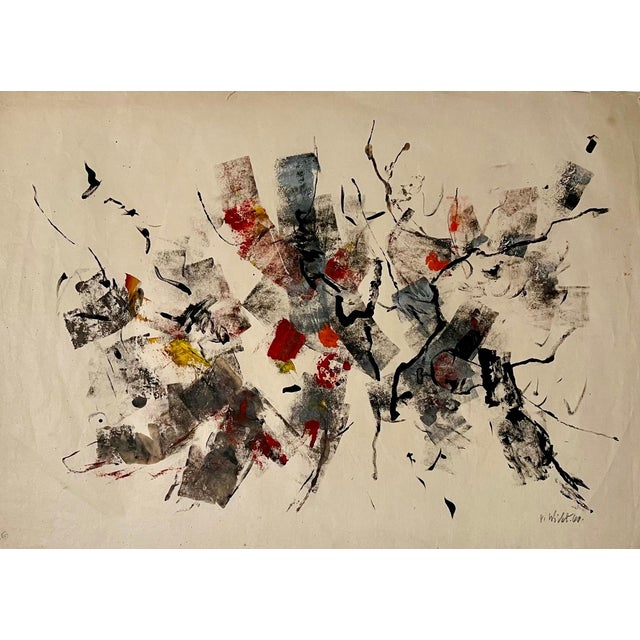
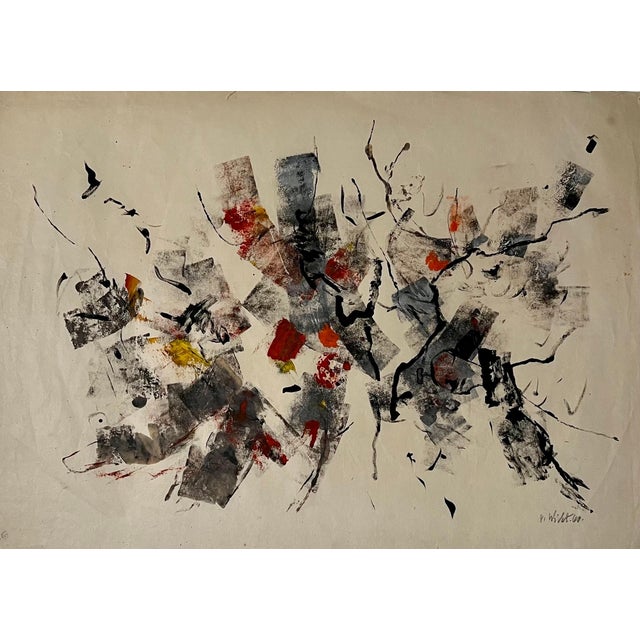
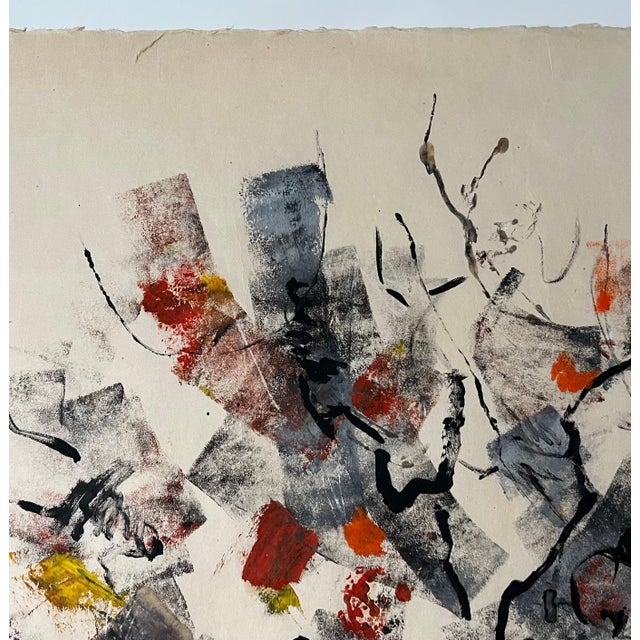
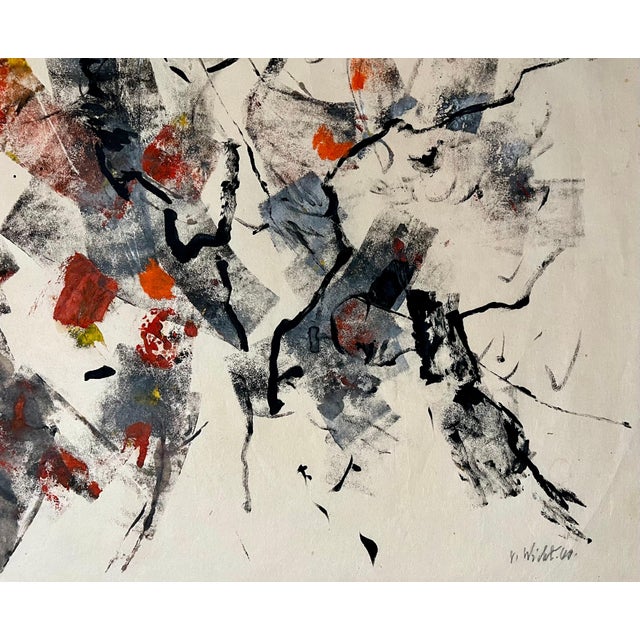
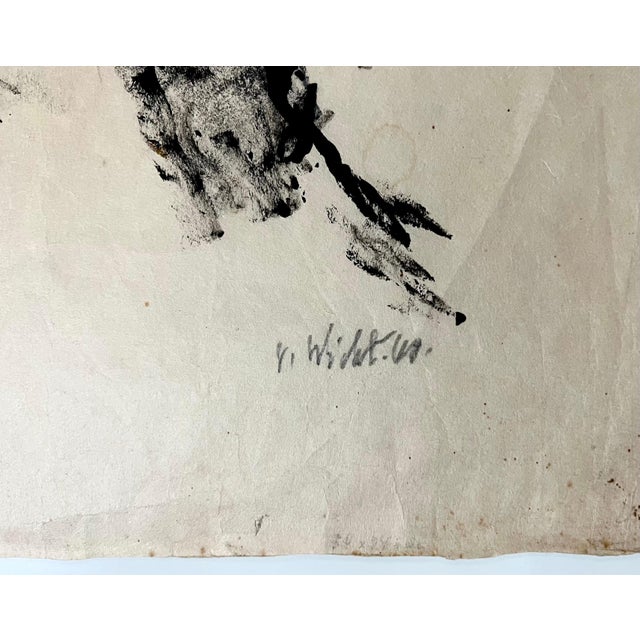
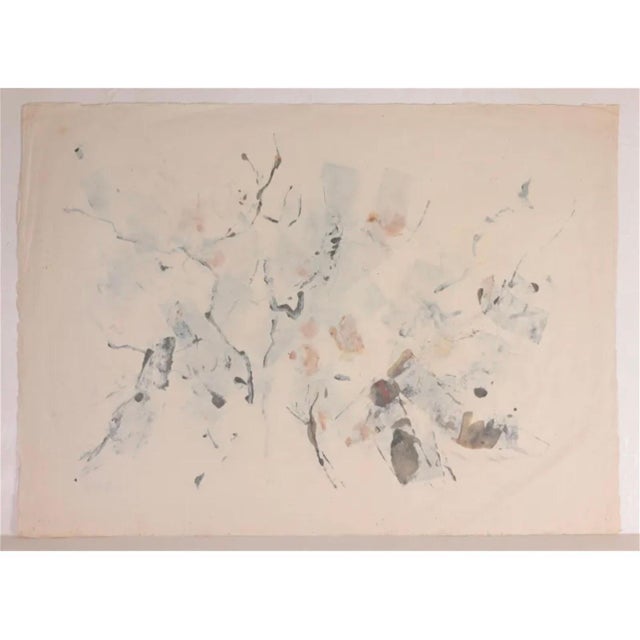
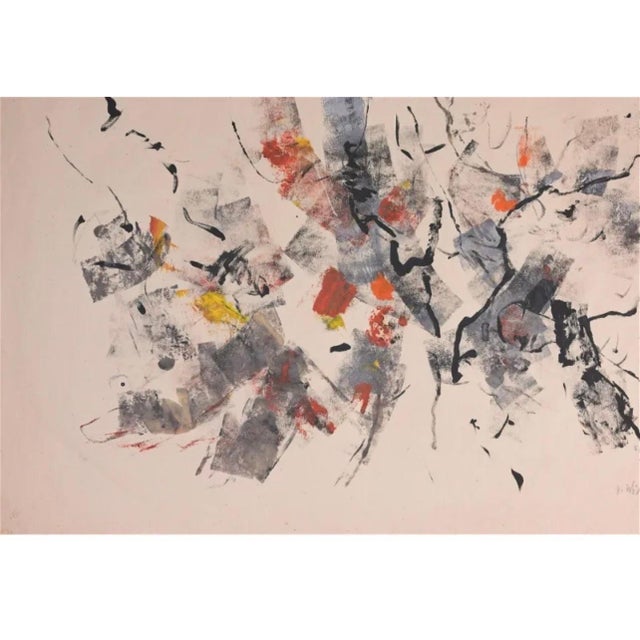
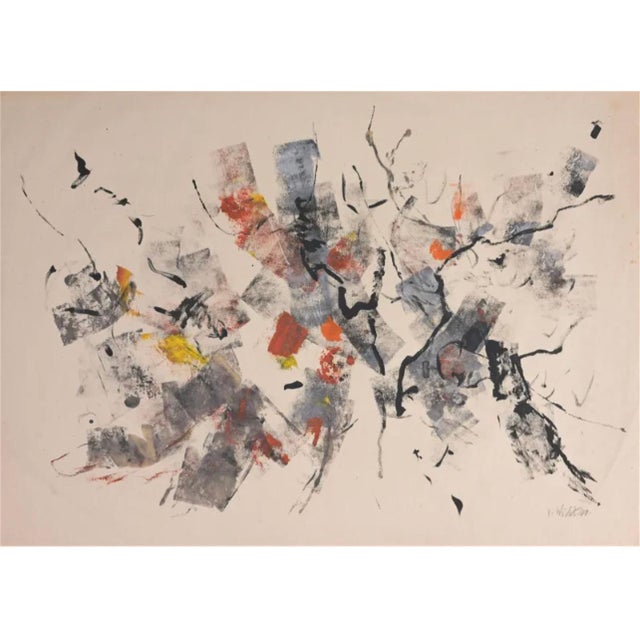
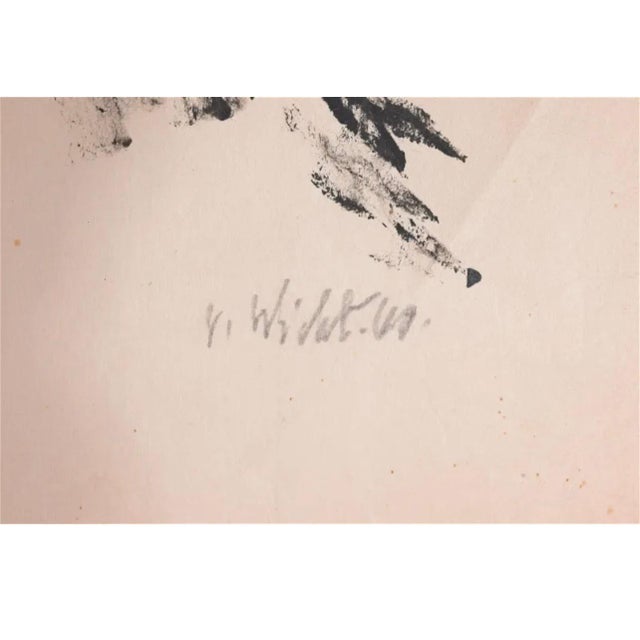
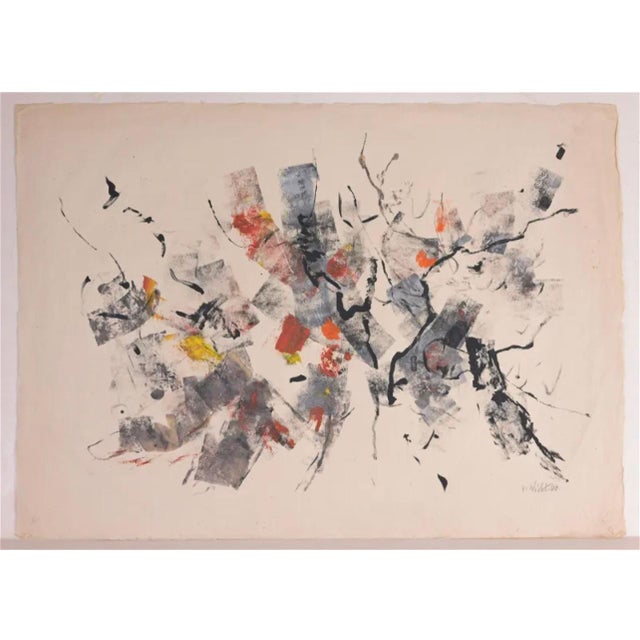
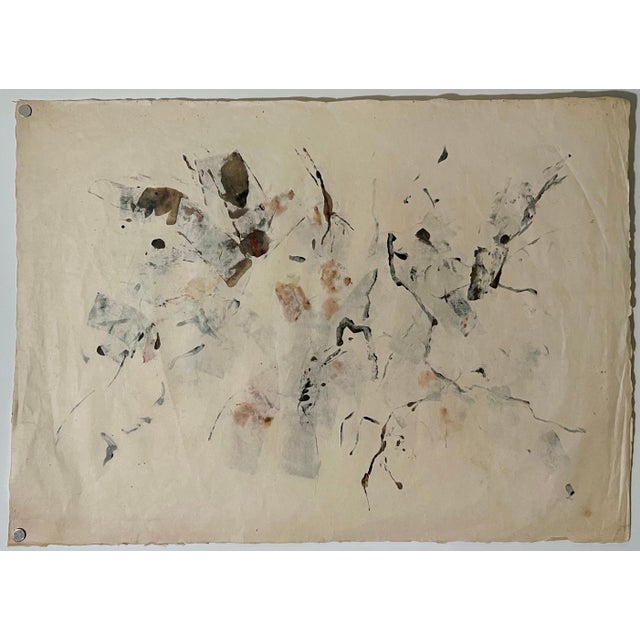
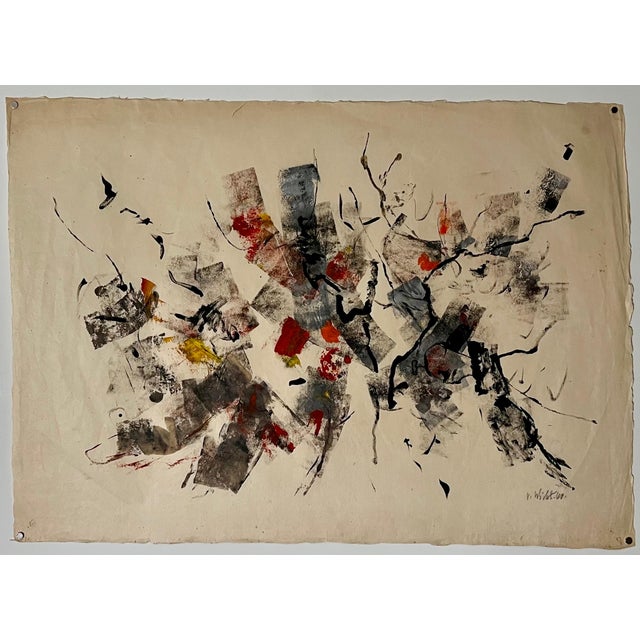
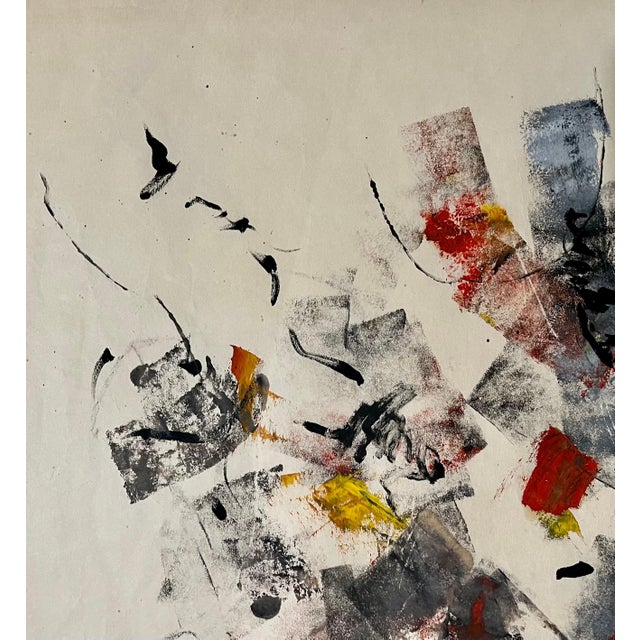
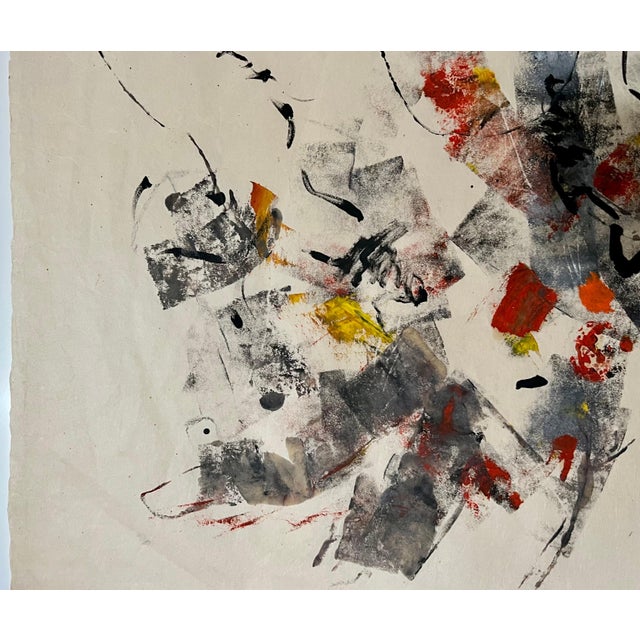
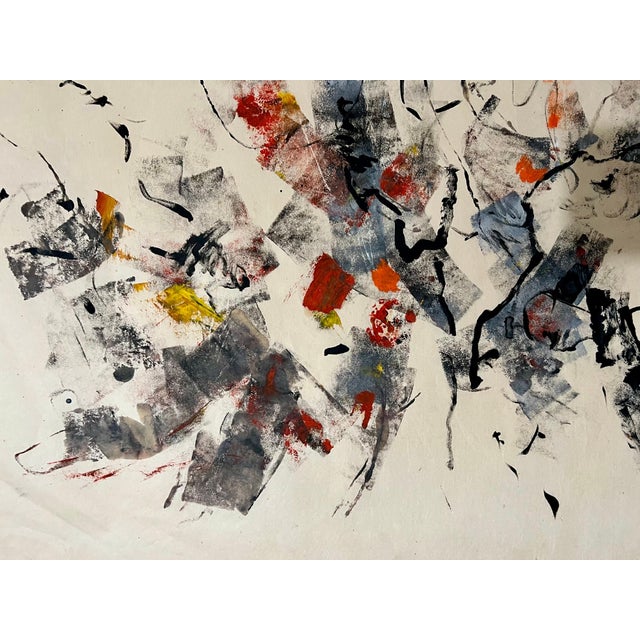
John von Wicht (American, 1888-1970) Oil on Japanese Rice Paper. Hand signed and dated in pencil lower right. Sheet Size: … Read more John von Wicht (American, 1888-1970) Oil on Japanese Rice Paper. Hand signed and dated in pencil lower right. Sheet Size: 21 x 29.25 in. Johannes Von Wicht was born in Holstein, Germany on February 3, 1888. His mother moved the family to Oldenburg when Von Wicht was in elementary school and he began to visit the artist Gerhard Bakenhus. Von Wicht’s mother had arranged for him to apprentice at the studio of master painter F.W. Adels. There he learned to prepare paints with linseed oil and later commented on the lasting impression of colors throughout his career. Interior of a Farmhouse was his first painting completed in 1907. Gerhard Bakenhus was able to include the painting to in the Bremer Kunsthalle exhibition in 1908. Due to the critical success of this piece Von Wicht was accepted to the private art school of the Grand Duke of Hesse in Darmstadt. Fundamental themes of simplicity, nature, and poetry were instilled in the students. The students also studied ancient art, Chinese and Japanese calligraphy, as well as Mathias Grünewald, Albrecht Dürer, Martin Schongauer, Hans Memling, and other German masters whose work was in local collections. Von Wicht subsequently studied printing methods at the Royal School for Fine and Applied Arts in Berlin, but said he skipped class frequently to visit exhibitions of the newest painting—van Gogh, Paul Cézanne, Edvard Munch, Paul Gauguin, Wassily Kandinsky, and Franz Marc. Von Wicht continued to pursue the arts with a three-year scholarship to the Royal School of Fine & Applied Arts in Berlin. There he was influenced by the city’s avant-garde art scene. In 1911 his work was included in the Free Berlin Secession exhibition. During his service in WWI Von Wicht was wounded and partially paralyzed. While recovering he worked on book designs and illustrations. In 1923 Von Wicht immigrated to the United States, leaving a post-war Berlin and its economic hardships. He found his place at the Ardsley Art Academy in Brooklyn and secured a job at the U.S. Printing and Lithography Company, later moving to work at Ravenna Mosaic. While working for the mosaic company, Von Wicht designed a vestibule for the St. Louis Cathedral in a classic Byzantine manner. After a few years he had established enough contacts to become an independent mosaic contractor, setting up an office on Park Ave to handle private commissions, with a studio in Brooklyn Heights. Von Wicht’s first attempt at abstraction was not until 1937 when he created his “Force” series in watercolor, commemorating Juliana Force, the first director of the Whitney Museum of American Art. This group of paintings were clearly influenced by Kandinsky’s geometrical abstractions. In 1941 Von Wicht was accepted into a show at the Whitney, whereupon he was recognized and acknowledged both by his critics as well as his peers. Challenged by cubism and surrealism, Von Wicht had yet to find his own personal artistic vocabulary within abstract expressionism. By 1950 Von Wicht was painting full time and able to explore his personal expression of abstraction as a mature artist, returning to drawing in order to solve problems of content and composition. Far Eastern calligraphy was a major influence for Von Wicht that moved his works into a more vertical format. In 1951 Von Wicht had his second solo exhibit at the Passedoit Gallery, which won him much critical acclaim. He held another show at the Passedoit in 1954 with works based on musical symphonies, using elements of abstraction to provide a spiritual analysis of the music itself. He created innovative works on rice paper while spending a winter at the McDowell Colony, an artist-in residence program in New Hampshire. He attempted automatic sketching as a direct translation of inner movement to find equilibrium within his work. Towards the end of the 1950’s, Von Wicht contract with the Passedoit Gallery ended and he moved to the Bertha Schaefer Gallery (She introduced the work sculptors Kenneth Armitage and Eduardo Chillida, championed the paintings of Marsden Hartley and Alfred Maurer and Bauhaus artists). His first European show was in held 1959 in Paris, with others following in Brussels, Liege, and Belgium. Select Solo Exhibitions 1924 Brooklyn Institute of Art and Science 1936 Architects Building, NYC 1939 Theodore A. Kohn & Son, NYC 1944 Artists’ Gallery, NYC 1947 University of California, Los Angeles 1950 Passedoit Gallery, NYC 1959 Galerie Internationale d’Art Contemporain, Paris, France Galerie Europe, Brussels, Belgium Association pour e Progrès Intel et Artistique de la Wallonie (APIAW), Liége Belgium Esther Robles Gallery, Los Angeles Santa Barbara Museum, Santa Barbara 1960 Galeria Mayer, Madrid, Spain 1960 The Bertha Schaefer Gallery, NYC (1962, 1964, 1966) 1962 Galerie Neufville, Paris 1964 Galerie Leonhard, Munich, Germany 1966 Joseph Grippi Gallery, NYC 1973 Oscar Krasner Gallery, NYC 1979 Marden Fine Arts, NYC 1989 Galerie Kaupa, Germany 1990 “Kunstverein March,” Germany 1992 Galerie Michael Rasche, Freiburg, Germany (2000) 1993 Gallery Berman-Daferner, NYC (1995) 1993 Susan Teller Gallery, NYC 1999 Kraushaar Gallery, NYC 2002 Ostholsteinisches Landesmuseum, Eutin, Germany Select Group Exhibitions 1940 Galerie St. Etienne, NYC 1941 Metropolitan Museum of Art 1945-48 Brooklyn Museum 1941 Whitney Museum of American Art Annuals and Biennial 1946 National Academy Galleries, NYC 1946 Kleeman Gallery, NYC Grand Central Art Galleries, Inc., NYC Montclair Art Museum, Montclair, NJ Pennsylvania Academy of Fine Arts, Philadelphia, PA Palais des Beaux Arts de la Ville de Paris, France New School for Social Research, NYC Museum of Modern Art National Arts Club, NYC Bertha Schaefer Gallery The Print Club, Philadelphia, PA Corcoran Gallery of Art, Washington DC The Butler Institute of American Art, Youngstown, OH Library of Congress, Washington, D.C. “The Second Wave: American Abstraction of the 1930s and 1940s,” Worcester Art Museum, MA “A Century of MacDowell Colony Artists,” The Currier Art Gallery, Manchester, NH Museu de Mallorca, Mallorca, Spain “The Stamp of Impulse: Abstract Expressionist Paintings,” Worcester Art Museum, MA He was a member of American Abstract Artists, Audubon Society of Artists, Brooklyn Society of Artists and Salons of America. See less
- Dimensions
- 29.25ʺW × 1ʺD × 21ʺH
- Styles
- Abstract Expressionism
- Art Subjects
- Abstract
- Frame Type
- Unframed
- Period
- Mid 20th Century
- Item Type
- Vintage, Antique or Pre-owned
- Materials
- Oil Paint
- Oil Pastel
- Condition
- Good Condition, Original Condition Unaltered, Some Imperfections
- Color
- Brown
- Condition Notes
- Good good. minor wear. please see photos. Good good. minor wear. please see photos. less
Questions about the item?
Returns & Cancellations
Return Policy - All sales are final 48 hours after delivery, unless otherwise specified in the description of the product.
Cancellation Policy - Prior to shipping or local pickup, buyers may cancel an order for up to 48 hours, unless otherwise specified.
Related Collections
- Ralph Lauren Paintings
- Ed Ruscha Paintings
- Photorealism Canvas Paintings
- Photorealism Paintings in New York
- Karen Offutt Paintings
- Richard Serra Paintings
- Silk Velvet Paintings
- Jo Baskerville Paintings
- Jeff Slemmons Paintings
- Black Photorealism Paintings
- Herman Miller Paintings
- Cassina Paintings
- Louise Nevelson Paintings
- Mark Lewis Paintings
- Mark Lewis Art Paintings
- Vienna Secession Paintings
- Jaanika Peerna Paintings
- Photorealism Paintings in Los Angeles
- BDDW Paintings
- Lee Reynolds Paintings
- Mid-Century Modern Paintings
- Abstract Paintings
- Nautical Paintings
- Velvet Paintings
- Landscape Paintings