




Details
Description
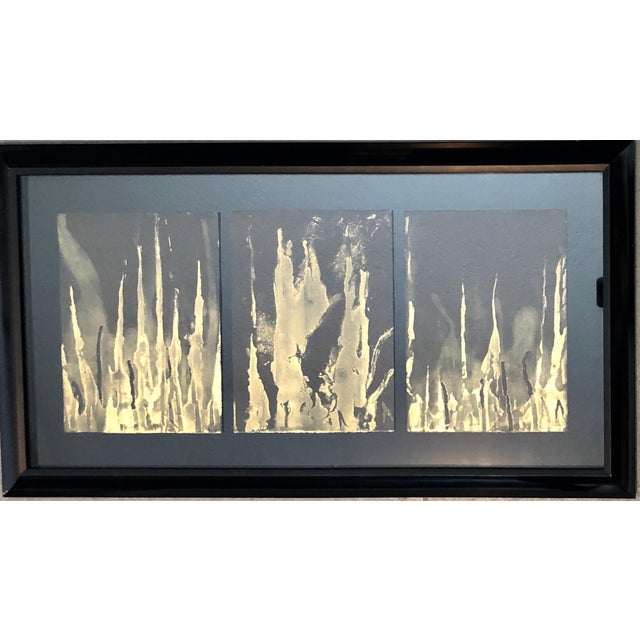
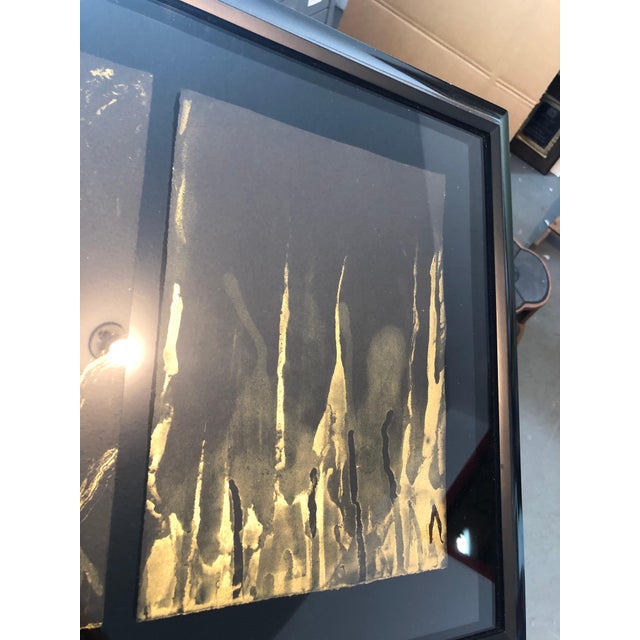
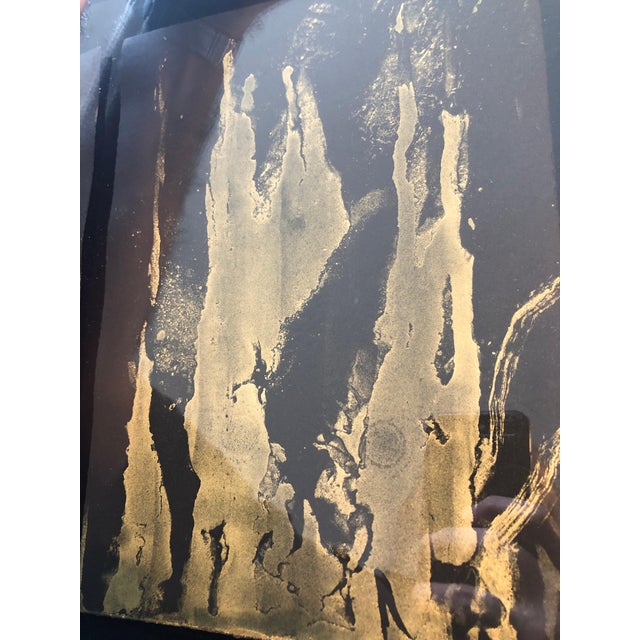
UNTITLED, 1994, triptych, three etchings on three sheets, each signed and dated and numbered 11/12 on verso, each sheet 11 … Read more UNTITLED, 1994, triptych, three etchings on three sheets, each signed and dated and numbered 11/12 on verso, each sheet 11 ½ x 8 ½”, Israeli blind stamp lower right, all in one frame. Provenance: Michael Hittleman Gallery Los Angeles. Moshe Gershuni (1936 – 2017) was an Israeli painter and sculptor. In his works, particularly in his paintings from the 1980s, he expressed a position different from the norm, commemorating The Holocaust in Israeli art. In addition, he created in his works a connection between bereavement and homoerotic sexuality, in the way he criticized society and Israeli Zionism-nationalism. He was awarded the Israel Prize for Painting for his work in 2003, but in the end it was revoked and he was deprived of receiving the prize. Moshe Gershuni was born in 1936 to Yona and Zvi Kutner, who had migrated to British Mandate Palestine from Poland. Zvi, the head of the family, who was an agronomist and farmer, After his father's death Gershuni began to move into the world of art. The painter Leon Fouturian and the sculptor Uri Shoshany, both residents of Herzliya, influenced him. From 1960 to 1964 he studied sculpture in night courses at Avni Institute of Art and Design, after days spent working in the orchards. His teachers were Dov Feigin and Moshe Sternschuss, members of the “New Horizons” group, which during these years was beginning to lose the central place it had held in the world of Israeli art. Gershuni’s artistic path began with abstract sculpture, strongly influenced by pop art. His first solo exhibition was mounted in 1969 in the Israel Museum. On the walls of the Museum were hung yellowish green abstract paintings in a geometric style, and throughout the space of the exhibition itself were strewn objects made of soft materials influenced by the Pop Art sculptor Claes Oldenburg. Following the lead of Yitzhak Danziger, the spiritual father of many young artists of the 1970s, Gershuni participated in several performance art installations, which were called in those days "activities." Gershuni developed in a kind of group that worked in the Hadera area, and which included Micha Ullman, Avital Geva, and Yehezkel Yardeni. The group made sure they had regular meetings with Danziger in Haifa and Tel Aviv and participated in tours he organized. In 1972 Gershuni began to teach in the Department of Fine Arts of “Bezalel.” He was considered one of the central teachers, who supported experimental and political art. In 1978 Gershuni began to teach at HaMidrasha - The Art Teachers Training College in Ramat Hasharon, where he continued to teach until 1986. In 1979 a solo exhibition entitled “Little Red Sealings” opened at the “Sarah Levy Gallery.” The exhibition included paper and photographs that had been treated with red paint, a color which was to become significant in Moshe Gershuni’s work in the coming years. The works exhibited a number of artistic influences by citing the names of artists such as the Italian sculptor Medardo Rosso, the Israeli painter Aviva Uri, etc. At the end of this decade Gershuni went through a depression and a deep identity crisis. It was during this period that Gershuni also came to terms with his homosexuality. In 1981, after several sexual experiments with men, Gershuni left his family and Ra'anana for an apartment and studio on Yosef ha-Nasi Street in Tel Aviv-Yafo. In addition to his expressive works, Gershuni began work on a large number of prints which he created at the Jerusalem Print Workshop. Among his works in this medium that stand out are the series of etchings called “Kaddish” (1984), each of which includes words from the Jewish prayer of mourning Kaddish, a series of prints from the poems of Hayim Nahman Bialik (1986), etc. In 1986 a large exhibition of Gershuni's paintings, curated by Zalmona, was held in the Israel Museum. In 1990 a large solo exhibition of Gershuni's works, entitled “Works, 1987-1990” and curated by Itamar Levy, was held at the Tel Aviv Museum of Art. In May 1996 Gershuni held a joint exhibition with Raffi Lavie in the Givon Gallery in Tel Aviv. The exhibition was considered one of the most important exhibitions of its time, not only because it presented a body of works of two canonical figures in Israeli art, or as it was defined, of “local masters turning 60,” but primarily because of its relationship to Israeli public space. Gershuni displayed works in a group exhibition called “After Rabin: New Works in Israeli Art” in 1998 at the Jewish Museum in New York City. In November 2010, a retrospective exhibition of Gershuni’s works opened at the Tel Aviv Museum of Art, curated by Sarah Breitberg-Semel. Another exhibition of his works from the 1980s onward opened in November 2014 at the Neue Nationalgalerie in Berlin, Germany. Gershuni died on 22 January 2017 in Tel Aviv at the age of 80. Awards and recognition 1969 Aika Brown Prize, Israel Museum 1982 Sandberg Prize for an Israeli Artist, Israel Museum 1988 Minister of Education and Culture Prize for a Young Artist, 1989 Kolb Prize, Tel Aviv Museum 1994 Sussman Prize, Yad Vashem 1995 Mendel and Eva Pondik Prize, Tel Aviv Museum 2000 George and Janet Jaffin Prize Since America-Israel Cultural Foundation 2003 Israel Prize was cancelled as he refused to participate at the awards ceremony 2003 Honor Member of the LGBT community for his contribution to culture. 2006 Yakir Bezalel Jerusalem Select Exhibitions: Genia Schreiber University Art Gallery, Tel Aviv Abramson, Larry Avigdor Arikha, Dei Ben Shaul, David Michail Grobman, Michael Gross, Uri Lifschitz, Ofer Lellouche, Menashe Kadishman, Shaul Schatz and others Sarig - in Israeli Paintings Israel Pollak School of Art Kalisher Five, Art Sc, Tel Aviv Abramson, Larry Menashe Kadishman, Pinchas Cohen Gan, David Reeb, Arnon Ben David, Moshe Gershuni and other See less
- Dimensions
- 33.25ʺW × 1ʺD × 18.5ʺH
- Styles
- Modern
- Frame Type
- Framed
- Art Subjects
- Abstract
- Period
- Late 20th Century
- Country of Origin
- Israel
- Item Type
- Vintage, Antique or Pre-owned
- Materials
- Mixed-Media
- Condition
- Good Condition, Original Condition Unaltered, Some Imperfections
- Color
- Black
- Condition Notes
- Good minor wear. framed. Good minor wear. framed. less
Questions about the item?
Returns & Cancellations
Return Policy - All sales are final 48 hours after delivery, unless otherwise specified in the description of the product.
Cancellation Policy - Prior to shipping or local pickup, buyers may cancel an order for up to 48 hours, unless otherwise specified.
Related Collections
- Patrick Nagel Reproduction Prints
- Reproduction Prints in Panama City, FL
- Sam Francis Reproduction Prints
- Utagawa Kunisada (Toyokuni Iii) Reproduction Prints
- Reproduction Prints in Mobile
- Tuscan Reproduction Prints
- William Hogarth Reproduction Prints
- Daylight Dream Editions Reproduction Prints
- Alvar Aalto Reproduction Prints
- Gold-Plate Reproduction Prints
- Polychrome Reproduction Prints
- Leather Reproduction Prints
- Jute Reproduction Prints
- Ethan Allen Reproduction Prints
- Paule Marrot Reproduction Prints
- Qing Reproduction Prints
- Francis Orpen Morris Reproduction Prints