

Details
Description
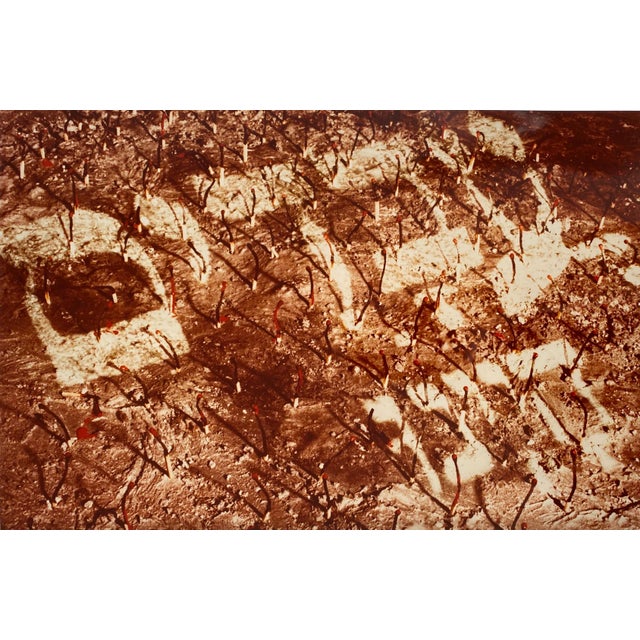
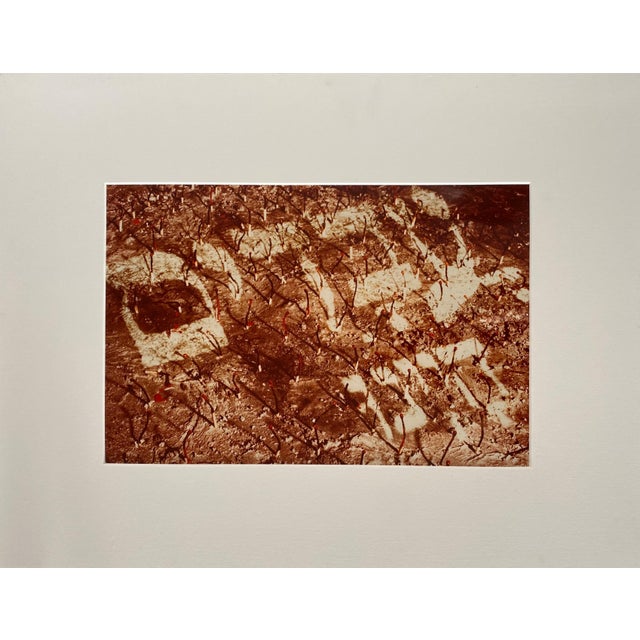
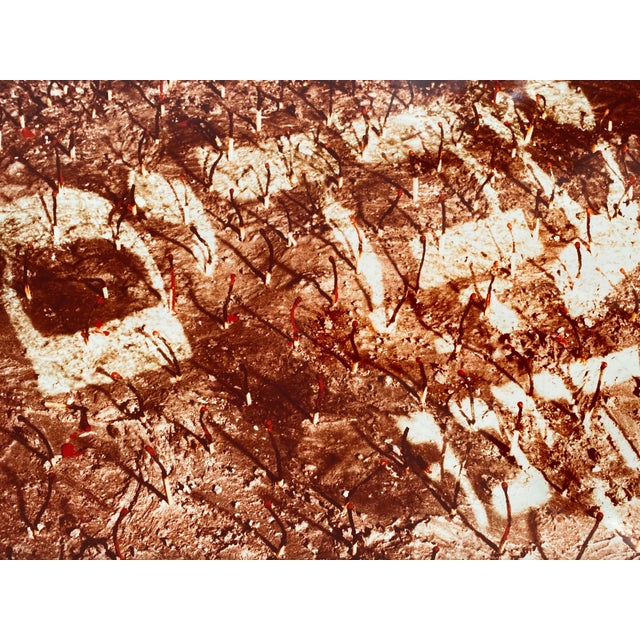
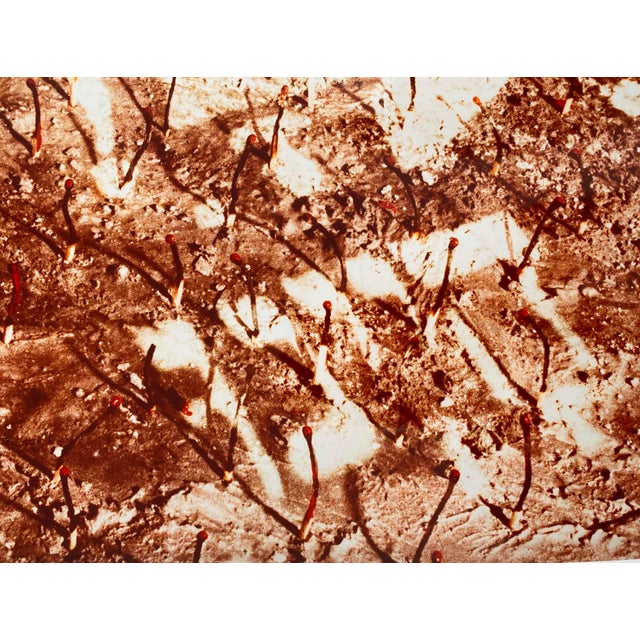
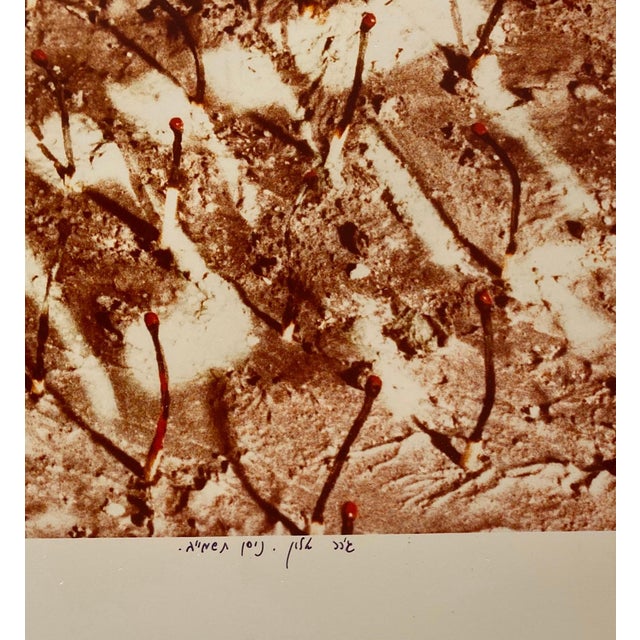
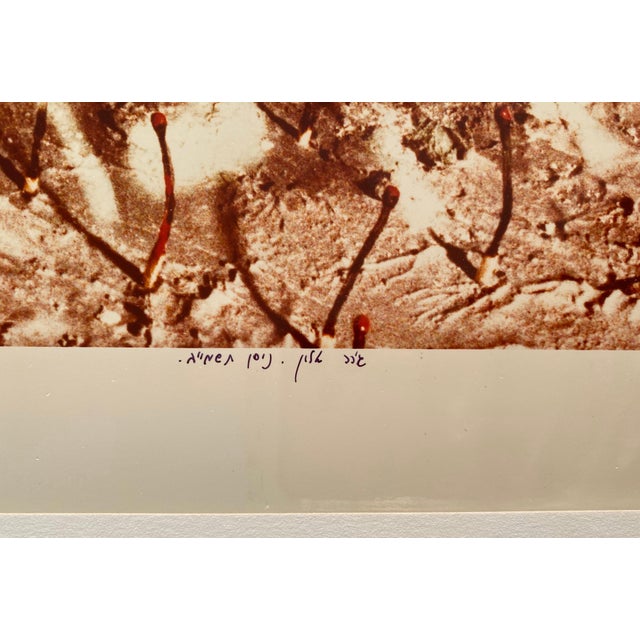
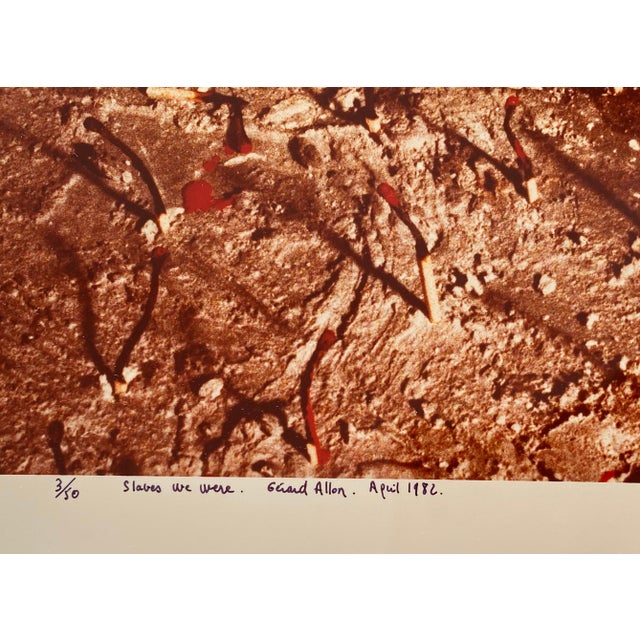
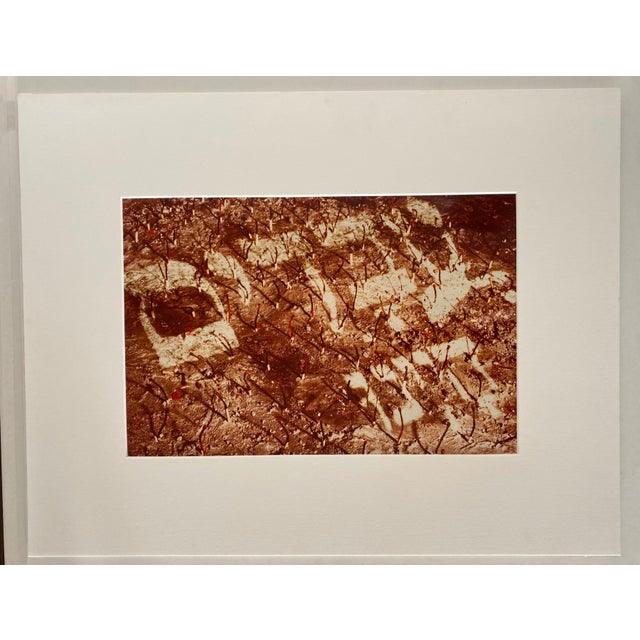
SLAVES WE WERE, 1982, color photograph, signed and dated and titled in ink, numbered 3/50, sheet 12 x 16”. Hand … Read more SLAVES WE WERE, 1982, color photograph, signed and dated and titled in ink, numbered 3/50, sheet 12 x 16”. Hand signed, titled and has the edition number on the recto. Gerard Allon, photographer, born 1949, Casablanca, Morocco. Immigrated to Israel in 1974. In 1985 Allon left Israel and established himself in Canada. He became interested in holography and developed a patent for the "holoposter" .Gérard Allon (Moroccan, Israeli) was born in 1949 in Morocco, grew up in Algiers, then in France. He learned French literature at the Lille University and worked as director assistant for the cinema and the French television. At age 24 he went to Israel and made a movie on the first Jewish settlement on the Golan Heights. From 1975 he has developed an Artist photographer career. The transformation of the camera arts in Israel began in the summer of 1975 with a juried exhibition in Tel Aviv entitled Through the Lens of Immigrant Photographers. Held under the auspices of the Ministry Of Education and Culture, the exhibition included six artists selected by a jury: one of them, the then-unknown Gérard Allon. To include him was an act of almost prophetic clairvoyance, since both as an artist and a photographer, Allon was destined to play a most important role in the renewal of the art in Israel, above all in the field of commercial and fashion photography. Together with a handful of other young photographers active at the time (among them the immigrants Yosaif Cohain and Neil Folberg, and Israelis educated abroad, such as Hanan Laskin, Avi Ganor, and Micha Kirshner), Allon was instrumental in bringing much-needed foreign influences into the insular bubble of local photography. He belongs to the younger generation of camera artists who have established new standards and have brought Israel Photography to the highest international standards.Gérard Allon--originally Alloun--was born in Casablanca, Morocco, in 1949. His great-grandfather, on a trip from Jerusalem, had married a rabbi’s daughter in Morocco and settled down there. Allon’s father, a self-taught engineer specializing in concrete, had studied in the Alliance school and consequently was extremely open to French culture. His mother (née Zemour) was of Algerian origin and so held French Citizenship, which the decree of Crémieux had awarded to Algerian Jews in 1870. In 1956, the family moved from Morocco to Algiers, where they joined the mother's family. However, as a result of theinstability that led to Algeria's decolonization and independence, the family immigrated to France and settled in Paris where Allon attended the Lycée Jean-Baptiste Say in the sixteenth arrondissement. Helater studied linguistics and French literature at the University of Lille.At seventeen Allon got hold of the family's Exakta camera and also a 16mm movie camera. From then on his career was determined. He immediately began experimenting with the visual possibilities of these new tools, and just a few years later he found employment as assistant director for the cinema and for French Television.The student revolution of May 1968 in Paris and its aftermath left a strong and lasting mark on the individuals of Allon’s generation. In the field of photography Allon mentions a long list of artists, many of them predictable, such as Eadweard Muybridge, Man Ray, Dorothea Lange, Bill Brandt, Cartier Bresson, and Robert Frank. Again, each of these connects to a specific moment in his life and career. However, these influential photographers were not models that he copied directly. They were, rather, sounding boards with whom he still conducts a visual, artistic and creative dialogue. Through staged photography, which he practiced extensively throughout his practice, Allon came to appreciate and admire Jeff Wall’s work much later in his career. His works are part of several art collections in Israel and abroad. He is a lecturer at The Bezalel Academy for the Arts and Graphic Design in Jerusalem. His video, holographic and photographic works have been exhibited in Israel, Canada, the United States and Europe. His movie Naomi's Corset (2004) received the Mention Speciale du Jury at the FIPA 2005. See less
- Dimensions
- 16ʺW × 1ʺD × 12ʺH
- Styles
- Modern
- Art Subjects
- Other
- Frame Type
- Unframed
- Period
- 1980s
- Item Type
- Vintage, Antique or Pre-owned
- Materials
- Color Photography
- Condition
- Good Condition, Original Condition Unaltered, Some Imperfections
- Color
- Brown
- Condition Notes
- Good good. Minor Toning. Please see Photos. Good good. Minor Toning. Please see Photos. less
Questions about the item?
Returns & Cancellations
Return Policy - All sales are final 48 hours after delivery, unless otherwise specified in the description of the product.
Cancellation Policy - Prior to shipping or local pickup, buyers may cancel an order for up to 48 hours, unless otherwise specified.
Related Collections
- Cubism Photography
- Herbert List Photography
- Bright Green Photography
- Color Pencil Photography
- Graphite Photography
- Raymond Loewy Photography
- Edward S. Curtis Photography
- Edwardian Photography
- Black and White Photos
- Nick Mele Photography
- Gustavian (Swedish) Photography
- Photography in Minneapolis
- Enamel Photography