


Details
Description
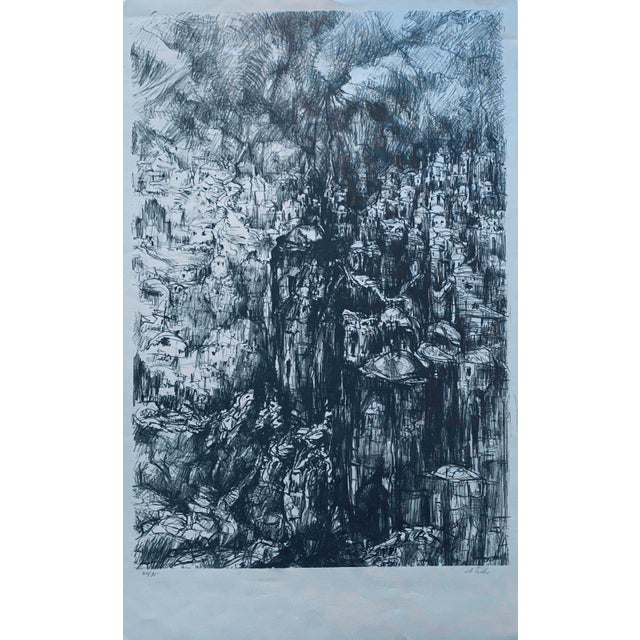
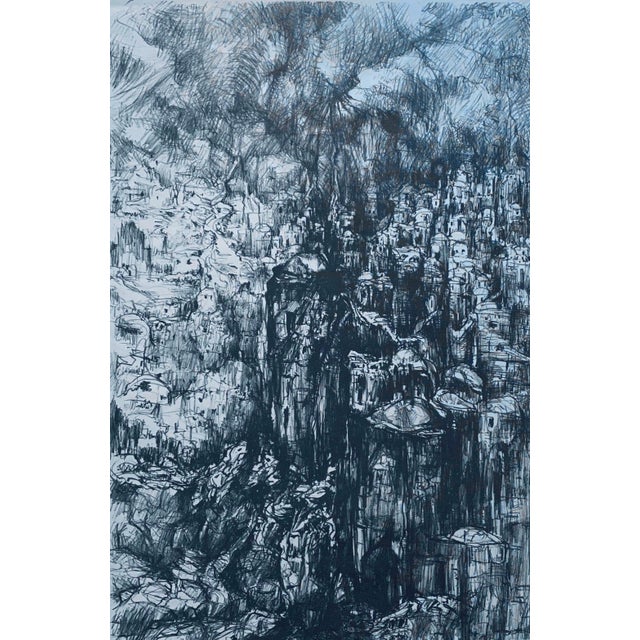
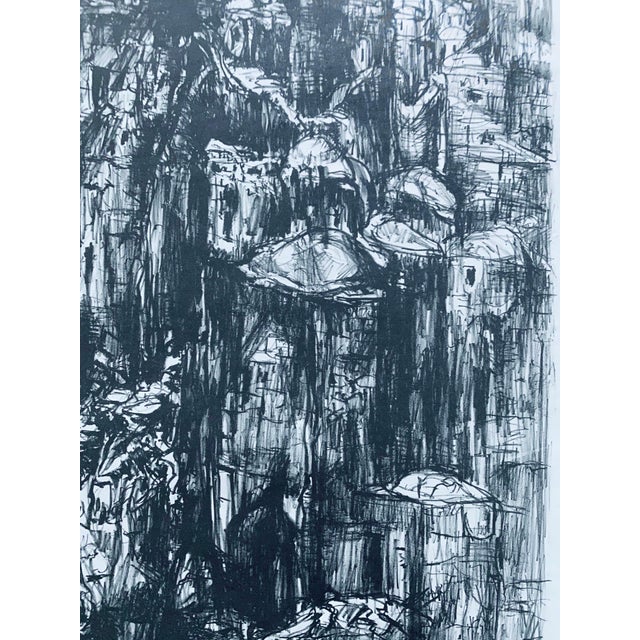
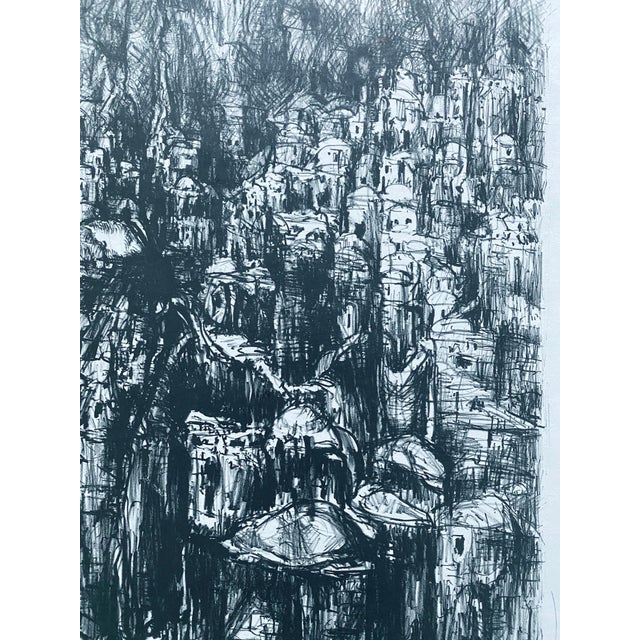
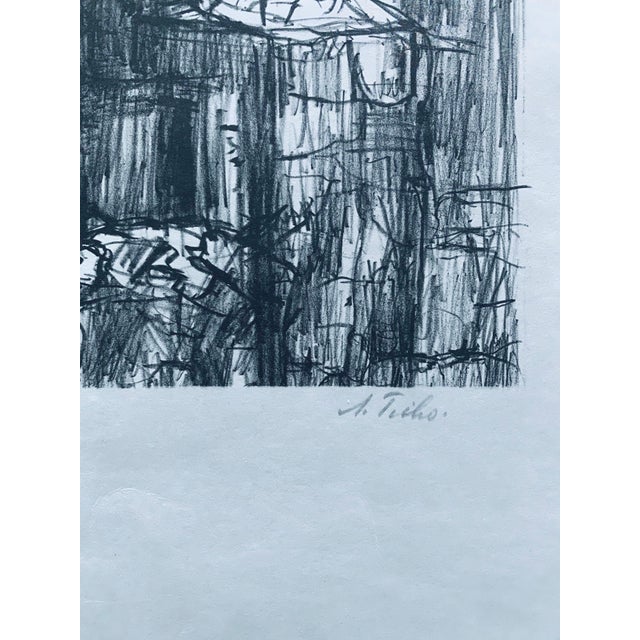
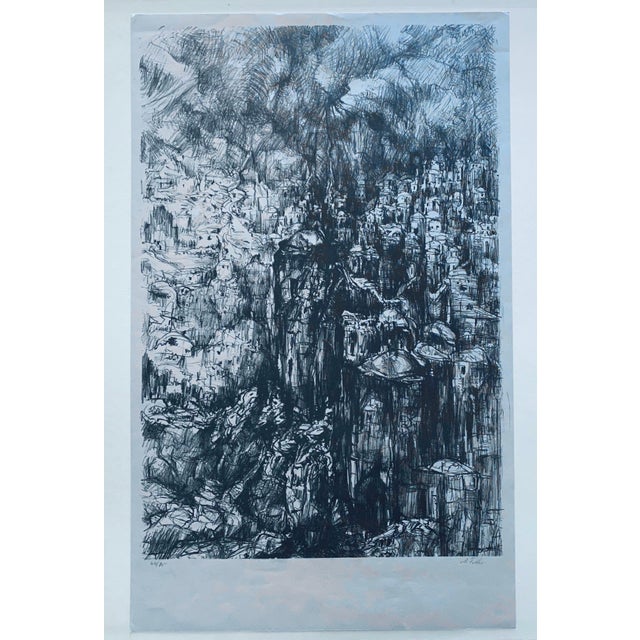
Anna Ticho (אנה טיכו ) (1894-1980) was a Jewish artist who became famous for her drawings of the Jerusalem hills. … Read more Anna Ticho (אנה טיכו ) (1894-1980) was a Jewish artist who became famous for her drawings of the Jerusalem hills. Anna Ticho was born in Brno, Moravia, then part of the Austro-Hungarian Empire (today the Czech Republic) in 1894. At the age of 15, she began to study drawing in Vienna in an art school under the directorship of Ernst Nowak. In 1912 she emigrated from Vienna to what was then the Mutasarrifate of Jerusalem in the Ottoman Empire with her mother, Bertha, about four months after her fiancé, ophthalmologist Avraham Albert Ticho (1883–1960), who was her first cousin. The two married on November 7, 1912 in Jerusalem and they settled in their home above the Lemaan Zion Eye Hospital, the hospital which Dr. Ticho had reopened four months earlier. Anna worked as her husband's assistant. The Tichos were exiled to Damascus in December 1917, just days before the British conquest of Jerusalem. There Dr. Ticho entered active service as a medical office in the Austro-Hungarian Empire and Anna worked as a nurse. She developed a severe case of typhus and during her recovery, Anna Ticho returned to her art by sketching landscape scenes, foreshadowing later mastery of this genre. Via a long and circuitous route after the war, the Tichos returned to Jerusalem in December 1918 where Dr. Ticho established a private clinic and hospital, just to the north of the ruined Lemaan Zion building. In 1924, the couple purchased a large house surrounded by gardens where they lived and worked. The mansion was built around 1864, apparently for the Nashashibis, a prominent local family. The house had previously been lived in by antiquities dealer and forger Wilhelm Moses Shapira. The Tichos hosted local and British government officials in her home, as well as many artists, writers, academics and intellectuals. Toward the end of her life, she willed the house, her art collection, including many of her own works, and her husband's extensive Judaica collection to the city of Jerusalem. Anna Ticho had several solo exhibitions in Mandatory Palestine and in Europe during the 1920s, 30s and 40s. An even greater number of her individual exhibitions took place in the years following World War II. She died on March 1, 1980. Ticho House operates today as a branch of the Israel Museum, and houses a popular restaurant and cafe. While the dramatically different light of the Middle East and the starkness of the landscape inhibited her artistic pursuits at first, in the 1930s Ticho went back to drawing and painting. It was then that she produced many of the distinctive drawings of the hills of Jerusalem and portraits of local people for which she became well known. Today, Ticho's drawings and watercolors can be found in major museums around the world. The first major art exhibition (1921), held at David's Citadel in Jerusalem's Old City, was dominated by painters from Bezalel. Soon afterwards, however, Bezalel's anachronistic, national-oriental narrative style was challenged both by young rebels within the Bezalel establishment and newly arrived artists, who began searching for an idiom appropriate to what they termed 'Hebrew' as opposed to 'Jewish' art. In an attempt to define their new cultural identity and express their view of the country as a source of national renewal, they depicted the daily reality of the Middle Eastern environment, with emphasis on the bright light and glowing colors of the landscape, and stressed exotic subject matter such as the simple Arab lifestyle, through a predominantly primitive technique, as seen in the works of painters including Israel Paldi, Tziona Tagger, Pinhas Litvinovsky, Nahum Gutman, and Reuven Rubin. By the middle of the decade, most of the leading artists were established in the new, dynamic city of Tel Aviv (est. 1909), which has remained the center of the country's artistic activity. The art of the 1930s was strongly influenced by early 20th century Western innovations, the most powerful of which was the expressionism emanating from the ateliers of Paris. Works of painters such as Moshe Castel, Menachem Shemi, and Arie Aroch tended to portray an emotionally charged, often mystical reality through their use of distortion and, although themes still dealt with local landscapes and images, the narrative components of 10 years earlier gradually disappeared and the oriental-Muslim world vanished entirely. German expressionism was introduced in the middle of the decade with the arrival of immigrant artists fleeing the terror of rising Nazism. Joining German-born artists Anna Ticho and Leopold Krakauer, who had come to Jerusalem some 20 years earlier, this group, which included Hermann Struck, Mordecai Ardon, and Jakob Steinhardt, devoted itself largely to subjective interpretations of the landscape of Jerusalem and the surrounding hills. These artists made a significant contribution to the development of local art, notably through the leadership given to the Bezalel Academy of Art by its directors, Ardon and Steinhardt, under whose guidance a new generation of artists grew to maturity. The break with Paris during World War II and the trauma of the Holocaust caused several artists, including Moshe Castel, Yitzhak Danziger, and Aharon Kahana, to adopt the emerging 'Canaanite' ideology which sought to identify with the original inhabitants of the land and create a 'new Hebrew people' by reviving ancient myths and pagan motifs. The 1948 War of Independence led other artists, including Naftali Bezem and Avraham Ofek, to adopt a militant style with a clear social message. But the most significant group formed in this period was 'New Horizons,' which aimed to free Israeli painting from its local character and literary associations and bring it into the sphere of contemporary European art. Awards In 1970, Anna Ticho received the Yakir Yerushalayim (Worthy Citizen of Jerusalem) award. In 1980, she was awarded the Israel Prize, for painting. Sandberg Prize recipient Artistes de Jerusalem Artists' House, Jerusalem 1949 Artists: Jacob Eisenberg, David Palombo, Lehmann, Rudolph (Rudi) Lev, Jacob Zeev Ben Zvi, Fima (Roytenberg, Ephraim) Zev Raban, Anna Ticho, Jakob Steinhardt, Grete Wolf Krakauer, Joseph Budko, Isidor Aschheim, Ludwig Jonas. See less
- Dimensions
- 16.4ʺW × 1ʺD × 26.5ʺH
- Styles
- Expressionism
- Frame Type
- Unframed
- Art Subjects
- Cityscape
- Period
- Early 20th Century
- Item Type
- Vintage, Antique or Pre-owned
- Materials
- Lithograph
- Condition
- Good Condition, Original Condition Unaltered, Some Imperfections
- Color
- Black
- Condition Notes
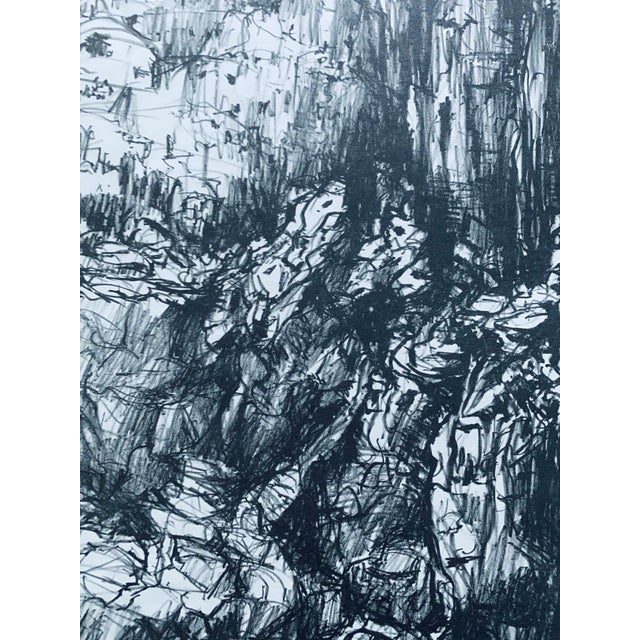
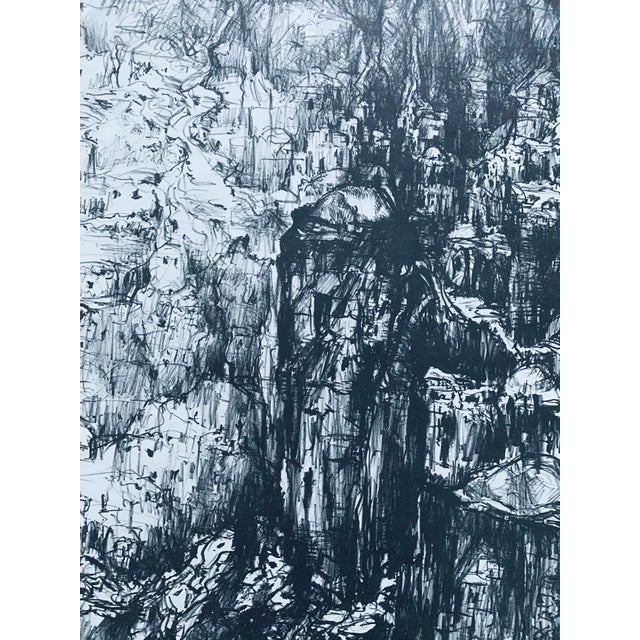
- Good Minor Wear. Please see Photos. Good Minor Wear. Please see Photos. less
Questions about the item?
Returns & Cancellations
Return Policy - All sales are final 48 hours after delivery, unless otherwise specified in the description of the product.
Cancellation Policy - Prior to shipping or local pickup, buyers may cancel an order for up to 48 hours, unless otherwise specified.
Related Collections
- Qing Reproduction Prints
- Patrick Nagel Reproduction Prints
- Reproduction Prints in Panama City, FL
- Reproduction Prints in Boise
- William Hogarth Reproduction Prints
- Classical Greek Reproduction Prints
- Reproduction Prints in Mobile
- William Gropper Reproduction Prints
- Monotype Reproduction Prints
- Sol LeWitt Reproduction Prints
- Utagawa Kunisada (Toyokuni Iii) Reproduction Prints
- Ethan Allen Reproduction Prints
- Paule Marrot Reproduction Prints