

Details
Description
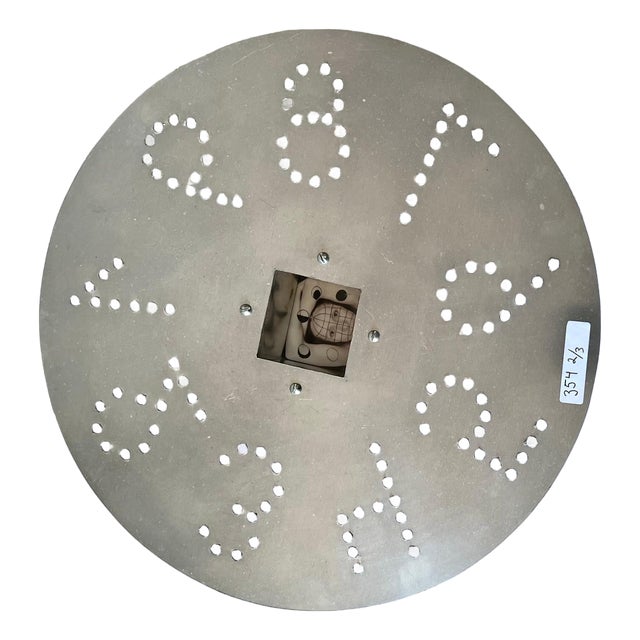
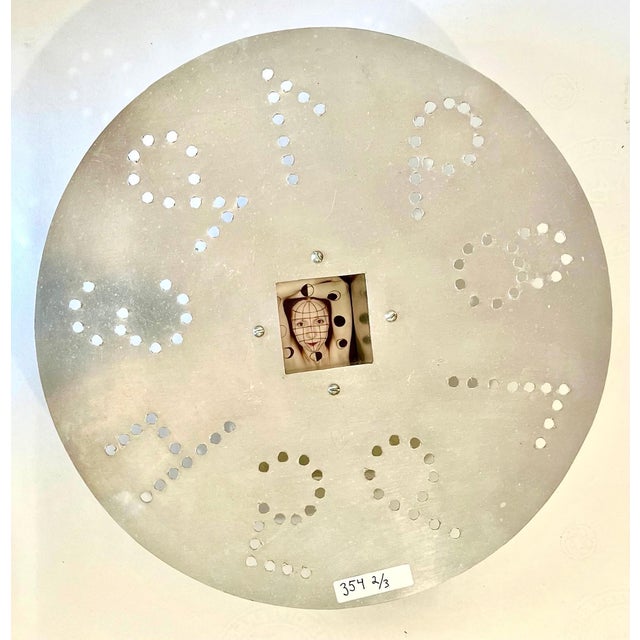
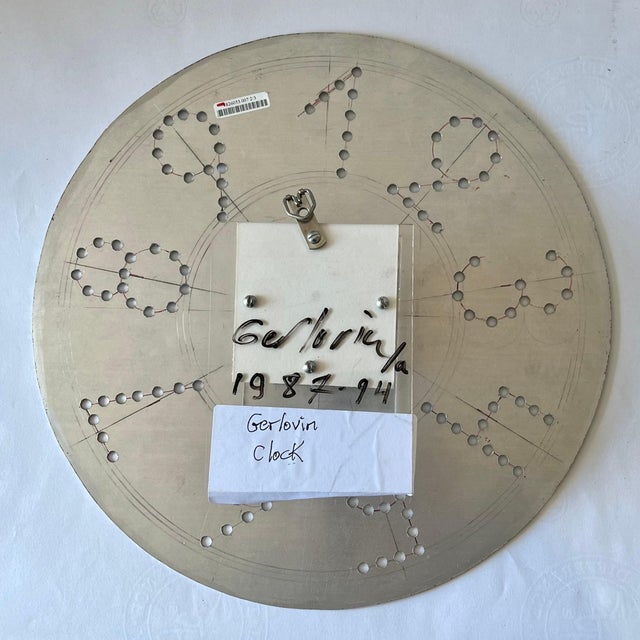
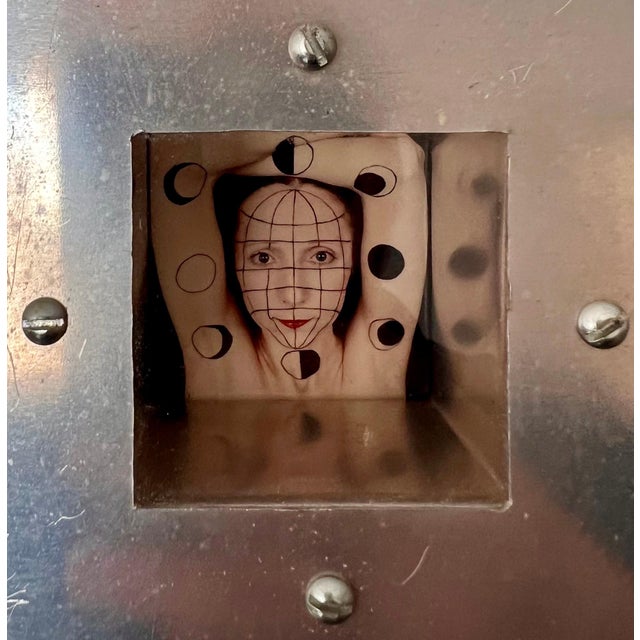
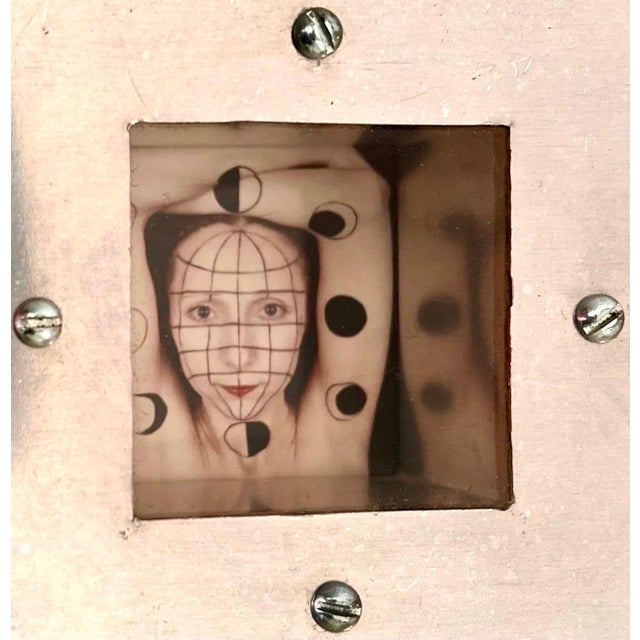
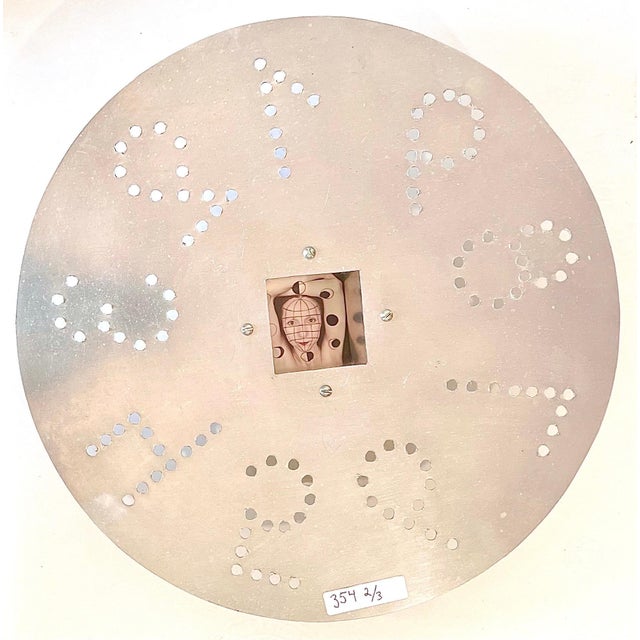
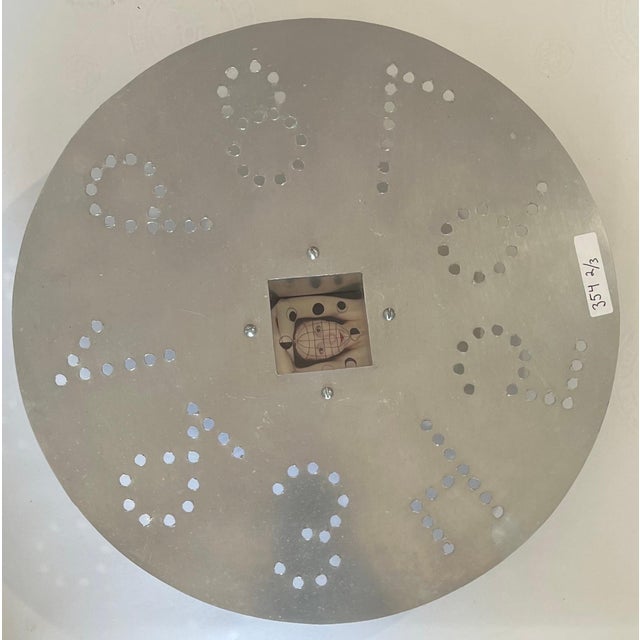
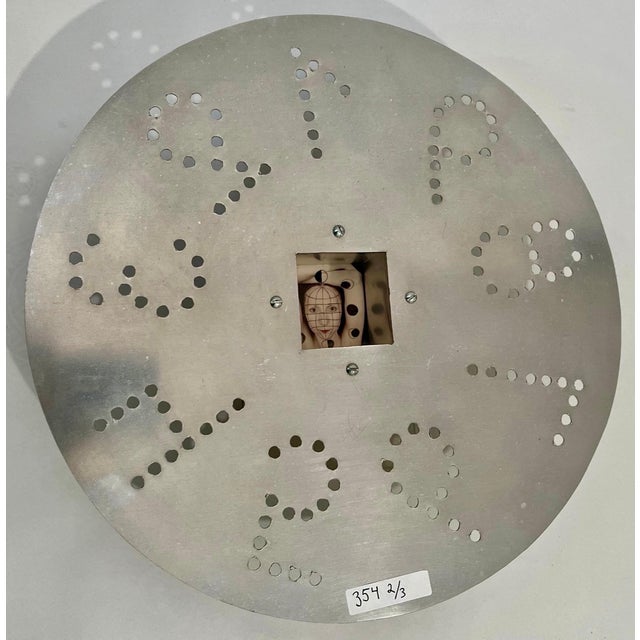
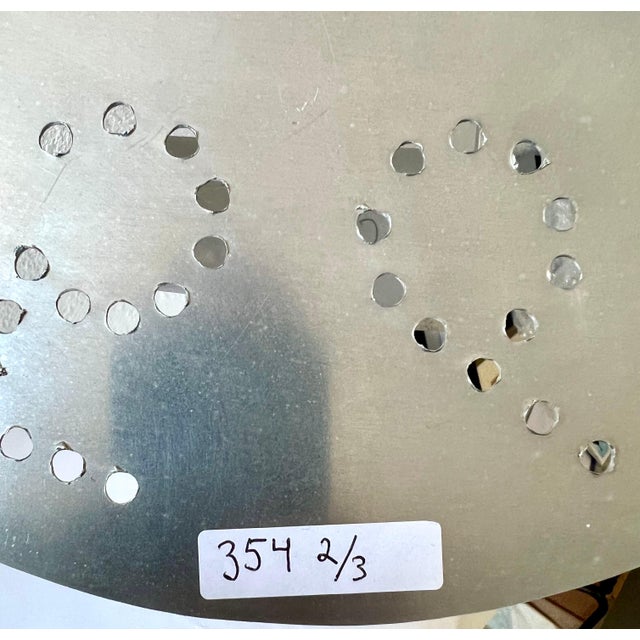
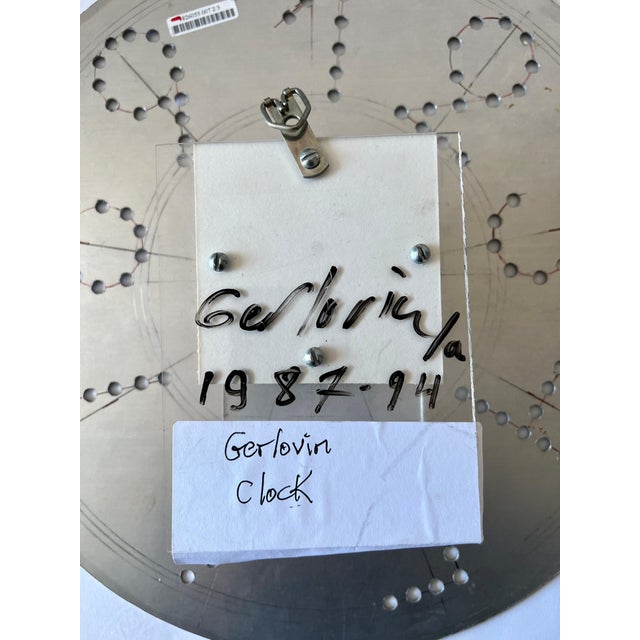
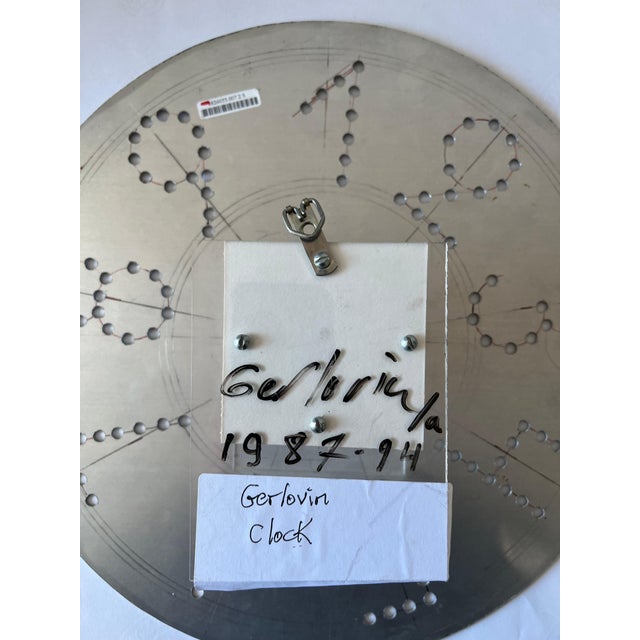
Rimma Gerlovina and Valeriy Gerlovin Clock, 1987-94 Aluminum sculpture, mixed media and c-print photograph construction, c-print, felt tip marker 13 … Read more Rimma Gerlovina and Valeriy Gerlovin Clock, 1987-94 Aluminum sculpture, mixed media and c-print photograph construction, c-print, felt tip marker 13 h × 13 w × 4 d in (30 × 30 × 6 cm) Rimma Gerlovina and Valeriy Gerlovin were founding members of the underground conceptual movement Samizdat in the Soviet Union, described in their book Russian Samizdat Art. Based on a play of paradoxes, their work is rich with philosophic and mythological implications, reflected in their writing as well. Their book Concepts was published in Russia in 2012. The work by Rimma Gerlovina and Valeriy Gerlovin is emphatically contemporary. The artist couple were part of the Moscow Conceptualists, their performance Costumes, from 1977, deepened their ongoing work with linguistic semiotic systems and their own bodies. Considering the context in which Gerlovina and Gerlovin made their work—that of political restrictions on public life, of unfreedom, and censorship—their collaborative togetherness must also be read as a space of possibility for political community and resistance. Rimma Gerlovina’s hair is featured prominently in the art of the Gerlovins as a constructing element of the body. Used for the linear drawings her braids transmit transpersonal waves reminiscent of an aura of live filaments. Long loose hairs function as threads of life; streaming in abundance, they allude to Aphrodisiac vitality and Samsonian strength. On the other hand, they are the haircloth worn during mourning and penitence. In New York they continued to make sculptural objects, and their photographic projects grew into an extended series called Photoglyphs. In their photographs, they use their own faces to explore the nature of thought and what lies beyond it. Since coming to the United States in 1980, they had many exhibitions in galleries and museums including the Art Institute of Chicago. The New Orleans Museum of Art launched a retrospective of their photography, which traveled to fifteen cities. Group exhibitions include the Venice Biennale, the Guggenheim Museum, New York, Smithsonian National Museum of American Art, Washington D.C., Bonn Kunsthalle, Germany, Tokyo Metropolitan Museum of Photography, State Tretyakov Gallery, Moscow, and others. Samizdat or “self-published” began in the Soviet Union, and Samizdat art consists mainly of books and magazines published and distributed by the artists who made them. Samizdat art has sources in the innovative books and magazines turned out by the early 20th century Russian avant-garde—artists and writers like Olga Rozanova, Vladimir Mayakovsky, El Lissitzky, and Alexander Rodchenko. Artists as varied as Alexander Archipenko, Leon Bakst, Marc Chagall, Naum Gabo, Alexandra Exter have all been associated with the movement. Later Samizdat examples include the poster portraits of Lenin and Stalin, both 1982, by the now New York–based Vagrich Bakhchanyan, a leading Samizdat personality whose career spans the development of the medium. Victor Tupitsyn, collages, Lev Nussberg Correspondence of K.S. Malevich (1878–1935) to L.V. Nussberg (1937–1998), 1981, texts and drawings made to appear as if by Malevich—the ultimate homage from the Russian avant-garde of the late 20th century to that of the early. Komar and Melamid, Valentin Goroshko and Elisabeth Clark, Alexander Kosolapov, Lev Rubinshtein, and Anatoly Ur. They were prominent members of the Post Soviet Avant Garde a group that included Ilya Kabakov, Vitaly Komar and Alexander Melamid, Grisha Bruskin, Leonid Sokov, Alexander Kosolapov and Erik Bulatov. Books featuring their works: Art on the Edge and Over by Linda Weintraub; Reflections in a Glass Eye (ICP and Bulfinch Press); Face, The New Photographic Portrait (Thames & Hudson); Moscow Conceptualism in Context (Prestel); Serpenti in Art (Bulgari); also art history college books, such as Understanding Art and Foundations of Art and Design by Lois Fichner-Rathus (Cengage), and others. Their works have appeared on the covers of The New York Times Magazine; Zoom; The Sciences; The Buddhist Review Tricycle. In the Millennium Issue on art, The New York Times Magazine gave them a spread. (Excerpt from publications) Museum collections include The Art Institute of Chicago; The Guggenheim Museum, NYC; The Getty Research Institute, Los Angeles; International Center of Photography, NYC; Centre Pompidou, Paris (cubes) (Mirror Game) ; Tate Modern, London; The Museum of Fine Arts, Houston; Cincinnati Art Museum; Denver Art Museum; Nasher Museum at Duke University, NC; the Polaroid Photograph collection, Yale University Art Gallery, New Haven, CT; The Scottsdale Museum of Contemporary Art, AZ; Ackland Museum of Art, NC; Zimmerli Art Museum at Rutgers University, NJ; Museo d'Arte Moderna di Trento e Rovereto, Italy; National Gallery of Australia, Canberra; The State Tretyakov Gallery, Moscow; Museum Moderner Kunst Ludwig, Vienna, and others. Their work has also been sold by leading auction houses, including Sotheby’s, Christie’s, and Phillip’s. See less
- Dimensions
- 12.5ʺW × 3ʺD × 12.5ʺH
- Styles
- Arts & Crafts
- Period
- 1980s
- Item Type
- Vintage, Antique or Pre-owned
- Materials
- Metal
- Mixed-Media
- Condition
- Good Condition, Original Condition Unaltered, Some Imperfections
- Color
- Silver
- Condition Notes
- Good aluminum shows minor wear, some light oxidation and a few faint abrasions scattered throughout, typical with age and materials. … moreGood aluminum shows minor wear, some light oxidation and a few faint abrasions scattered throughout, typical with age and materials. Overall, works present well. less
Questions about the item?
Returns & Cancellations
Return Policy - All sales are final 48 hours after delivery, unless otherwise specified in the description of the product.
Cancellation Policy - Prior to shipping or local pickup, buyers may cancel an order for up to 48 hours, unless otherwise specified.
Related Collections
- Wenge Sculptural Wall Objects
- Ralph Lauren Sculptural Wall Objects
- Medium-Density Fibreboard Sculptural Wall Objects
- Byzantine Sculptural Wall Objects
- Antique Copper Finish Sculptural Wall Objects
- Stainless Steel Sculptural Wall Objects
- Helmut Friedrich Schäffenacker Sculptural Wall Objects
- Mid-Century Modern Sculptural Wall Objects
- Plaster Sculptural Wall Objects
- Curtis Jere Sculptural Wall Objects
- Brutalist Sculptural Wall Objects
- Asian Sculptural Wall Objects
- Greg Copeland Sculptural Wall Objects
- Japanese Sculptural Wall Objects
- Sarreid Ltd. Sculptural Wall Objects
- Silverplate Sculptural Wall Objects