

Details
Description
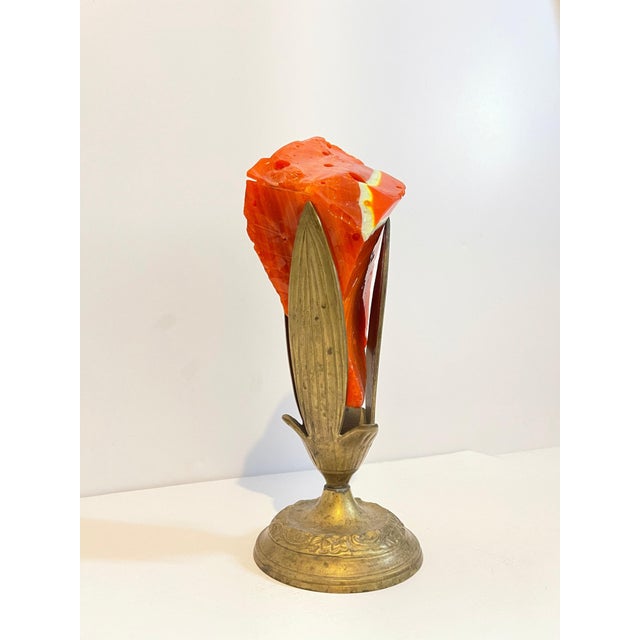
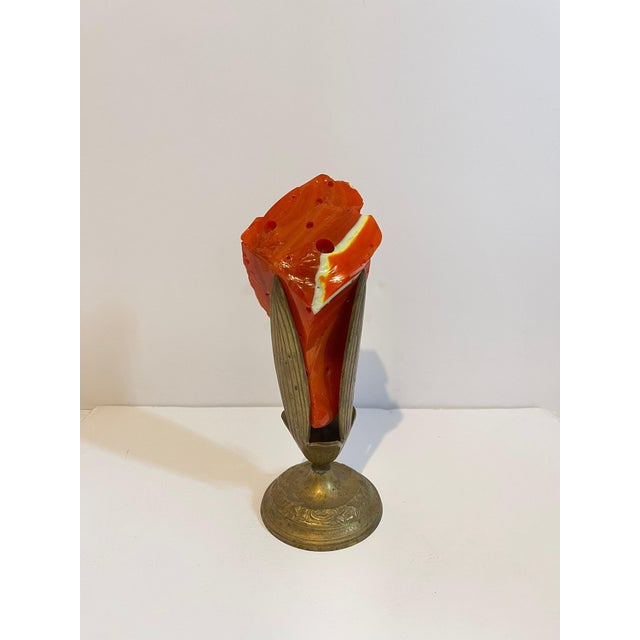
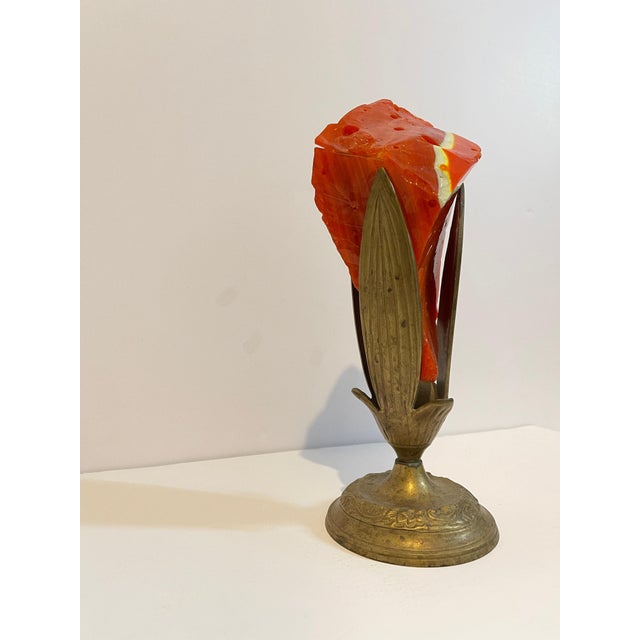
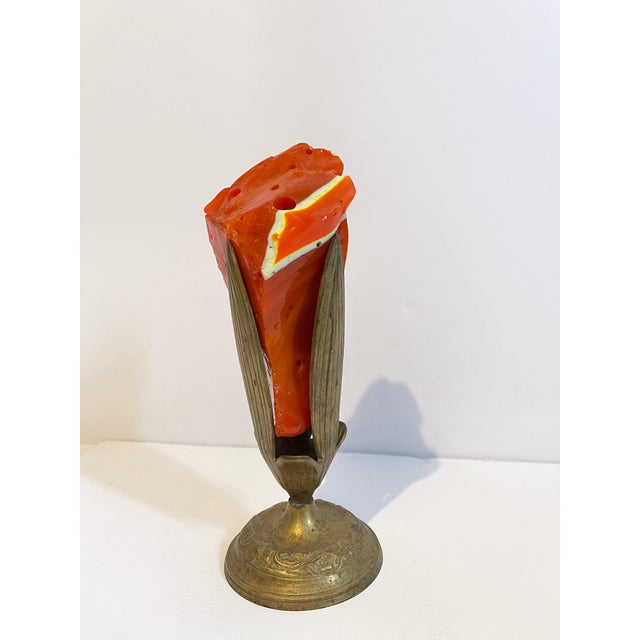
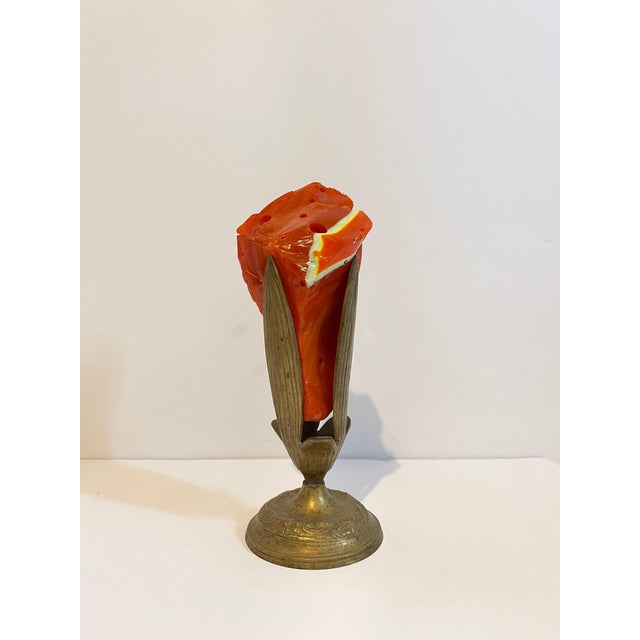
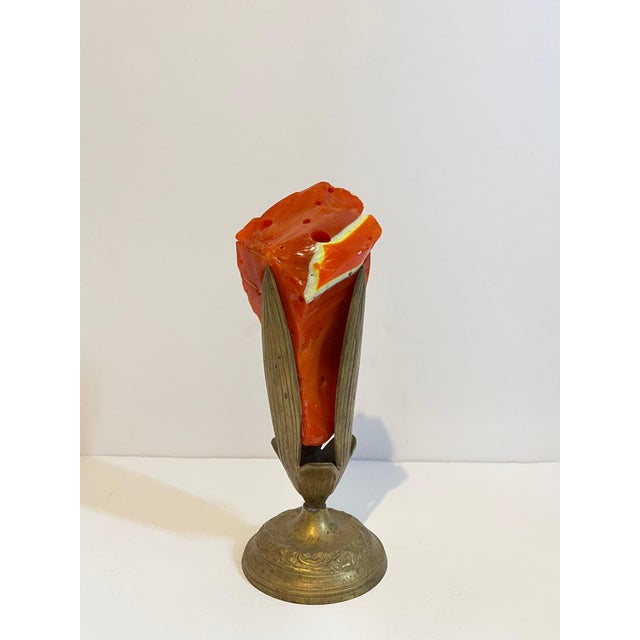
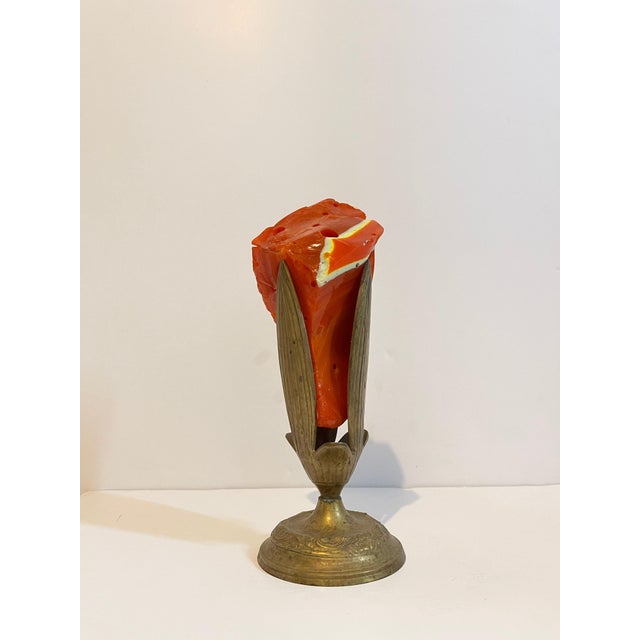
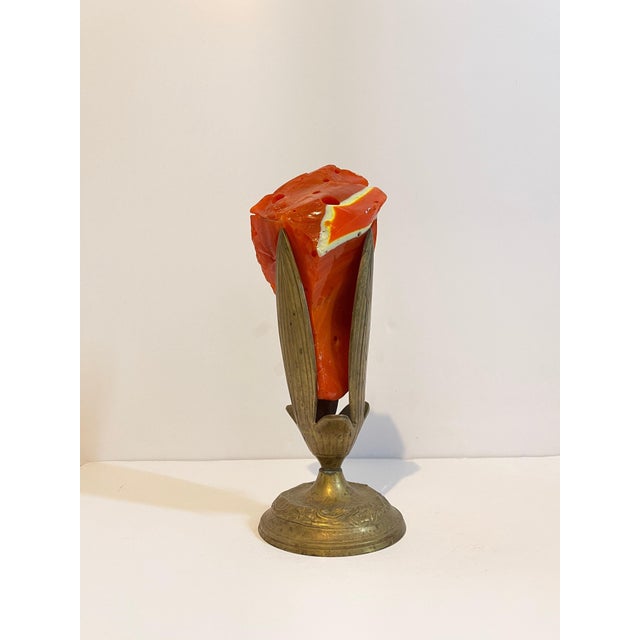
This piece appears unsigned and unmarked. It came from an important estate in the Palm Beach area. It is an … Read more This piece appears unsigned and unmarked. It came from an important estate in the Palm Beach area. It is an abstract flame or torch in a bronze vase. Venetian glass (Italian: vetro veneziano) is thought to have been made for over 1,500 years, and production has been concentrated on the Venetian island of Murano since the 13th century. Murano glassmakers created cristallo—which was almost transparent and considered the finest glass in the world. Murano glassmakers also developed a white-colored glass (milk glass called lattimo) that looked like porcelain. They later became Europe's finest makers of mirrors. Murano glassmaking began a revival in the 1920s. Today, Murano and Venice are tourist attractions, and Murano is home to numerous glass factories and a few individual artists' studios. Its Museo del Vetro (Glass Museum) in the Palazzo Giustinian contains displays on the history of glassmaking as well as glass samples ranging from Egyptian times through the present day. The Venetian glassmakers of Murano are known for many innovations and refinements to glassmaking. Among them are Murano beads, cristallo, lattimo, chandeliers, and mirrors. Additional refinements or creations are goldstone, multicolored glass (millefiori), and imitation gemstones made of glass. Aventurine glass, also known as goldstone glass, is translucent brownish with metallic (copper) specks. Calcedonio is a marbled glass that looked like the semi precious stone chalcedony. This type of glass was created during the 1400s by Angelo Barovier, who is considered Murano's greatest glassmaker. Ercole Barovier, a descendant of Murano's greatest glassmaker Angelo Barovier, won numerous awards during the 1940s and 1950s for his innovations using the murrine technique. Sommerso is a form of artistic Murano glass that has layers of contrasting colors (typically two), which are formed by dipping colored glass into another molten glass and then blowing the combination into a desired shape. The outermost layer, or casing, is often clear. Sommerso was developed in Murano during the late 1930s. Flavio Poli was known for using this technique, and it was made popular by Seguso Vetri d'Arte and the Mandruzzato family in the 1950s. This process is a popular technique for vases, and is sometimes used for sculptures. Some of Venice's historical glass factories in Murano remain well known brands today, including De Biasi, Gabbiani, Venini, Salviati, Barovier & Toso, Pauly, Berengo Studio, Seguso, Formia International, Simone Cenedese, Alessandro Mandruzzato, Vetreria Ducale, Estevan Rossetto 1950 and others. The oldest glass factory is Antica Vetreria Fratelli Toso, founded in 1854. See less
Questions about the item?
Returns & Cancellations
Return Policy - All sales are final 48 hours after delivery, unless otherwise specified in the description of the product.
Cancellation Policy - Prior to shipping or local pickup, buyers may cancel an order for up to 48 hours, unless otherwise specified.
Related Collections
- Lime Sculpture
- Mathurin Moreau Sculpture
- Parchment Sculpture
- Far Pavilions Sculpture
- Georgian Sculpture
- Oil-Rubbed Bronze Finish Sculpture
- Maison Jansen Sculpture
- Photorealism Sculpture
- Chaim Gross Sculpture
- David Palombo Sculpture
- Boris Lovet-Lorski Sculpture
- Hagenauer Werkstätte Sculpture
- Gourd Sculpture
- Recycled/Repurposed Sculpture
- Polycarbonate Sculpture
- Fernando Botero Sculpture
- Constantin Brancusi Sculpture
- Albert Ernest Carrier-Belleuse Sculpture
- Straw Sculpture
- Peter Shire Sculpture
- Austin Productions Sculpture
- Mid-Century Modern Sculpture
- Brutalist Sculpture
- Alabaster Sculpture
- Folk Art Sculpture