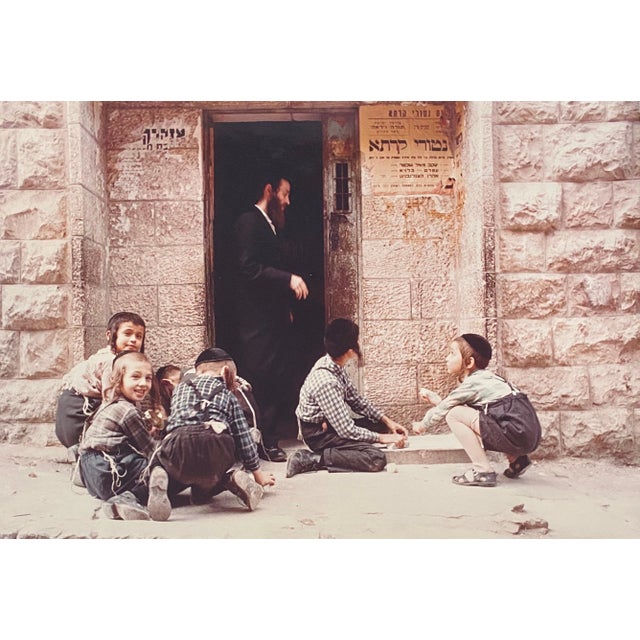
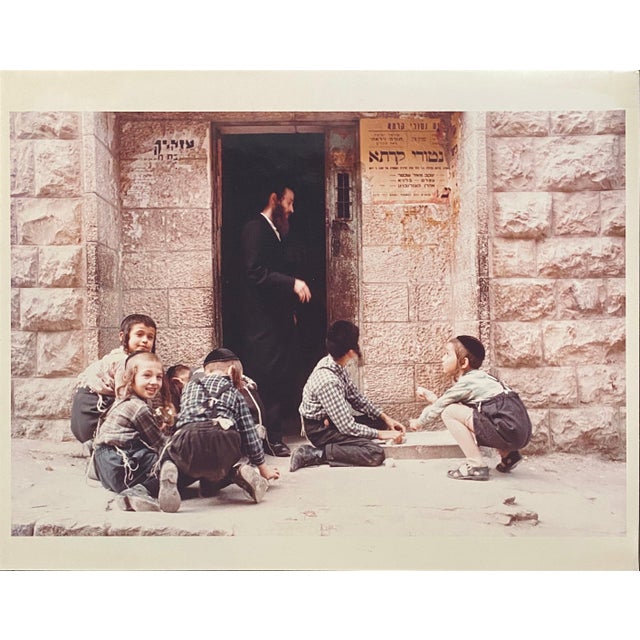

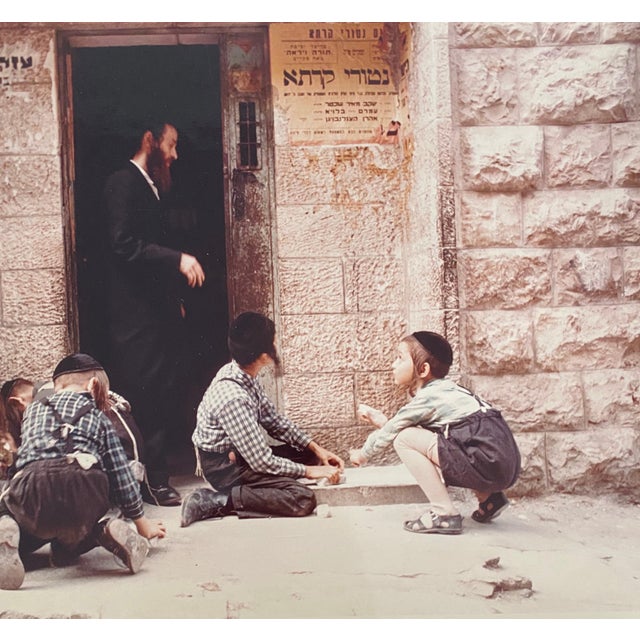



Details
Description
Neturei Karta (Jewish Babylonian Aramaic: נָטוֹרֵי קַרְתָּא nāṭōrē qarṯā, literally "Guardians of the City") is a religious group of Haredi … Read more Neturei Karta (Jewish Babylonian Aramaic: נָטוֹרֵי קַרְתָּא nāṭōrē qarṯā, literally "Guardians of the City") is a religious group of Haredi Jews, formally created in Jerusalem, British Mandate of Palestine, in 1938, splitting off from Agudas Yisrael. Neturei Karta opposes Zionism and calls for a "peaceful dismantling" of the State of Israel, in the belief that Jews are forbidden to have their own state until the coming of the Jewish Messiah and that the state of Israel is a rebellion against god. While the Neturei Karta describe themselves as true traditional Jews, the more secular US-based Jewish Anti-Defamation League has described them as "the farthest fringes of Judaism". In Israel some members also pray at affiliated beit midrash, in Jerusalem's Meah Shearim neighborhood and in Ramat Beit Shemesh Bet. Neturei Karta states that no official count of the number of members exists. The Jewish Virtual Library puts their numbers at 5,000, while the Anti-Defamation League estimates that fewer than 100 members of the community take part in anti-Israel activism. According to the Anti-Defamation League, members of Neturei Karta have a long history of "extremist statements" and support for notable anti-Zionists and Islamists. According to the US branch Neturei Karta: "The name Neturei Karta is a name usually given to those people who regularly pray in the Neturei Karta synagogues (Torah Ve'Yirah Jerusalem, Torah U'Tefillah London, Torah U'Tefillah NY, Beis Yehudi Upstate NY, etc.), study in or send their children to educational institutions run by Neturei Karta, or actively participate in activities, assemblies or demonstrations called by the Neturei Karta". Originally the organization was called Chevrat HaChayim (Society of Life); however this name was quickly supplanted in favor of the name Neturei Karta. The name Neturei Karta literally means "Guardians of the City" in Aramaic and is derived from a narrative on page 76c of Tractate Hagigah in the Jerusalem Talmud. There it is related that Rabbi Judah haNasi sent two rabbis on a tour of inspection: In one town they asked to see the "guardians of the city" and the city guard was paraded before them. They said that these were not the guardians of the city but its destroyers, which prompted the citizens to ask who, then, could be considered the guardians. The rabbis answered, "The scribes and the scholars," referring them to Tehillim (Psalms) Chapter 127. It is this role that Neturei Karta see themselves as fulfilling by defending what they believe is "the position of the Torah and authentic unadulterated Judaism." Generally, members of Neturei Karta are descendants of Hungarian Jews and Lithuanian Jews who were students of the Gaon of Vilna (known as Perushim) who had settled in Jerusalem in the early nineteenth century. In the late nineteenth century, their ancestors participated in the creation of new neighborhoods outside the city walls to alleviate overcrowding in the Old City, and most are now concentrated in the neighborhood of Batei Ungarin and the larger Meah Shearim neighborhood. At the time, they were vocal opponents to the new political ideology of Zionism that was attempting to assert Jewish sovereignty in Ottoman-controlled Palestine. They resented the new arrivals, who were predominantly non-religious, while they asserted that Jewish redemption could be brought about only by the Jewish messiah. Members of Neturei Karta at the Quds Day protests in Berlin 2014 Neturei Karta was founded by Rabbi Amram Blau and Rabbi Aharon Katzenelbogen. Rabbi Blau was a native of Meah Shearim in Jerusalem and was active in the Agudat Israel during the British Mandate era. However, by the 1930s, the Aguda began to adopt a more compromising and accommodationist approach to the Zionist movement. This caused Rabbi Blau to split with the Aguda in 1937 and cofound Chevrat HaChayim (with Rabbi Katzenelbogen), which was soon to be known thereafter as Neturei Karta. Other Orthodox Jewish movements, including some who oppose Zionism, have denounced the activities of the radical branch of Neturei Karta. According to The Guardian, "[e]ven among Haredi, or ultra-Orthodox circles, the Neturei Karta are regarded as a wild fringe". Neturei Karta is sometimes confused with Satmar, due to both being anti-Zionist; however, they are separate groups and have had disagreements. For example, Satmar criticized Neturei Karta for attending a 2006 holocaust revisionist conference in Iran. Neturei Karta asserts that the mass media deliberately downplays their viewpoint and makes them out to be few in number. Their protests in America are usually attended by, at most, a few dozen people. In Israel, the group's protests typically attract several hundred participants, depending on the nature of the protest and its location. In July 2013, the Shin Bet arrested a 46-year-old member of Neturei Karta for allegedly attempting to spy on Israel for Iran. As part of a plea deal, the man was sentenced to 41⁄2 years in prison. Neturei Karta has denied that he had ever been a member of their group. Neturei Karta's website states that its members "frequently participate[s] in public burning of the Israeli flag." On the Jewish holiday of Purim, Neturei Karta members have routinely burned Israeli flags in celebrations in cities such as London, Brooklyn and Jerusalem. While many in Neturei Karta chose to simply ignore the State of Israel, this has become more difficult. Some took steps to condemn Israel and bring about its eventual dismantling until the coming of the Messiah. Chief among these was Moshe Hirsch, leader of an activist branch of Neturei Karta, who served in Yasser Arafat's cabinet as Minister for Jewish Affairs. Neturei Karta stress what is said in the mussaf Shemona Esrei ("The Standing Prayer") of Yom Tov, that because of their sins, the Jewish people went into exile from the Land of Israel ("umipnei chatoeinu golinu meiartzeinu"). Additionally, they maintain the view – based on the Babylonian Talmud– that any form of forceful recapture of the Land of Israel is a violation of divine will. They believe that the restoration of the Land of Israel to the Jews should happen only with the coming of the Messiah, not by self-determination. Neturei Karta believe that the exile of the Jews can end only with the arrival of the Messiah, and that human attempts to establish Jewish sovereignty over the Land of Israel are sinful. In Neturei Karta's view, Zionism is a presumptuous affront against God. Chief among their arguments against Zionism is the Talmudic concept of the so-called Three Oaths, extracted from the discussion of certain portions of the Bible. It states that a pact consisting of three oaths was made between God, the Jewish people, and the nations of the world, when the Jews were sent into exile. One provision of the pact was that the Jews would not rebel against the non-Jewish world that gave them sanctuary; a second was that they would not immigrate en masse to the Land of Israel. In return, the gentile nations promised not to persecute the Jews. By rebelling against this pact, they argued, the Jewish people were engaging in rebellion against God. The Neturei Karta synagogues follow the customs of the Gaon of Vilna, due to Neturei Karta's origin within the Lithuanian rather than Hasidic branch of ultra-Orthodox Judaism. Neturei Karta is not a Hasidic but a Litvish group; they are often mistaken for Hasidim because their style of dress (including a shtreimel on Shabbos) is very similar to that of Hasidim. This style of dress is not unique to Neturei Karta, but is also the style of other Jerusalem Litvaks, such as Rabbi Yosef Sholom Eliashiv and his followers. Furthermore, Shomer Emunim, a Hasidic group with a similar anti-Zionist ideology, is often bundled together with Neturei Karta. Typically, the Jerusalem Neturei Karta will keep the customs of the "Old Yishuv" of the city of Jerusalem even when living outside of Jerusalem or even when living abroad, as a demonstration of their love for and connection to the Holy Land. See less
- Dimensions
- 14ʺW × 1ʺD × 11ʺH
- Styles
- Modern
- Art Subjects
- Figure
- Frame Type
- Unframed
- Period
- Late 20th Century
- Item Type
- Vintage, Antique or Pre-owned
- Materials
- Color Photography
- Condition
- Good Condition, Original Condition Unaltered, Some Imperfections
- Color
- Black
- Condition Notes
- Good Minor Toning. Please see photos. Good Minor Toning. Please see photos. less
Questions about the item?
Returns & Cancellations
Return Policy - All sales are final 48 hours after delivery, unless otherwise specified in the description of the product.
Cancellation Policy - Prior to shipping or local pickup, buyers may cancel an order for up to 48 hours, unless otherwise specified.
Related Collections
- Graphite Photography
- Bright Green Photography
- Herbert List Photography
- Edwardian Photography
- Edward S. Curtis Photography
- Raymond Loewy Photography
- Color Pencil Photography
- Cubism Photography
- Andreas Feininger Photography
- Black and White Photos
- Nick Mele Photography
- Gustavian (Swedish) Photography
- Photography in Minneapolis