

Details
Description
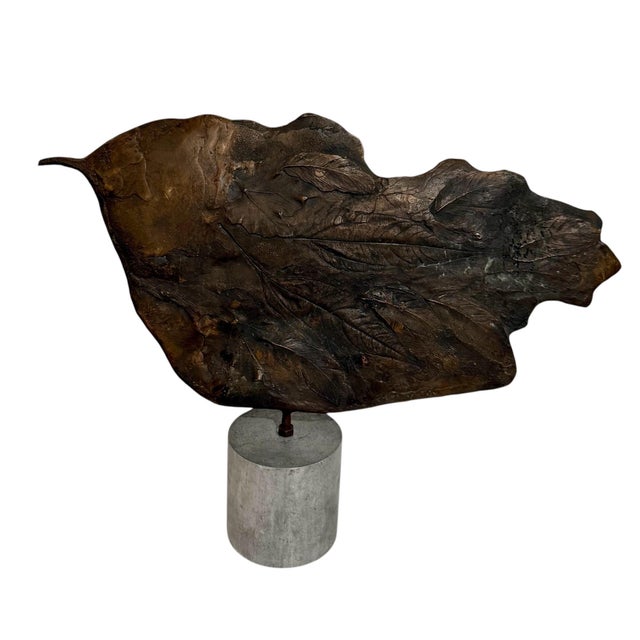
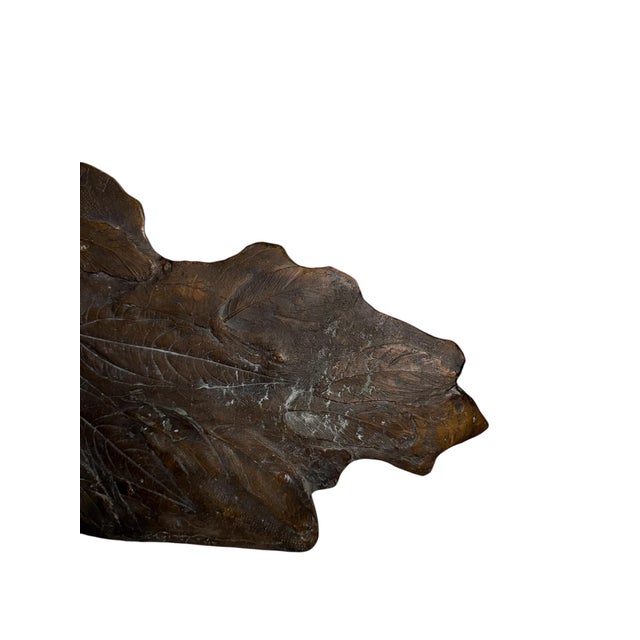
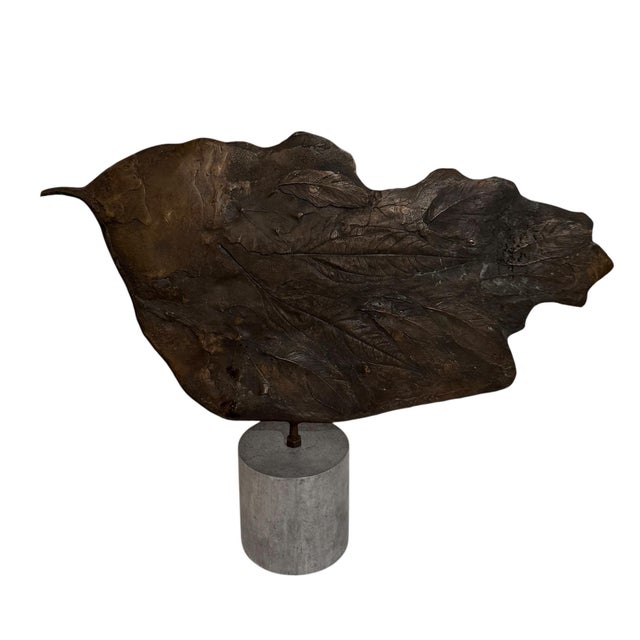
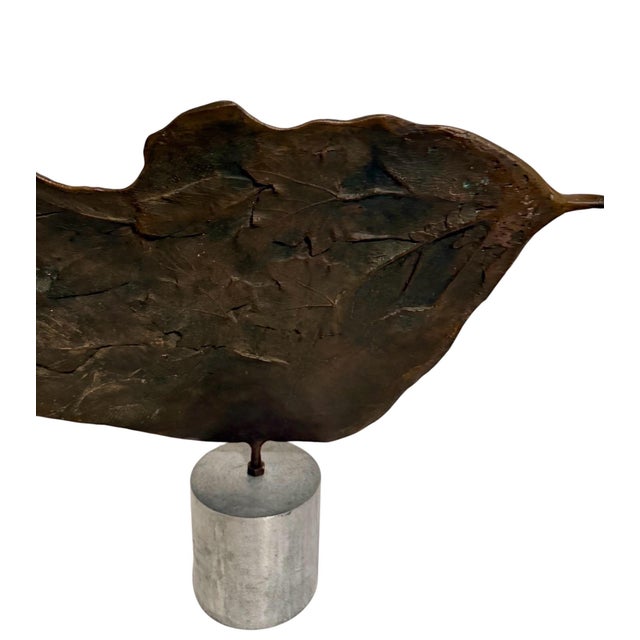
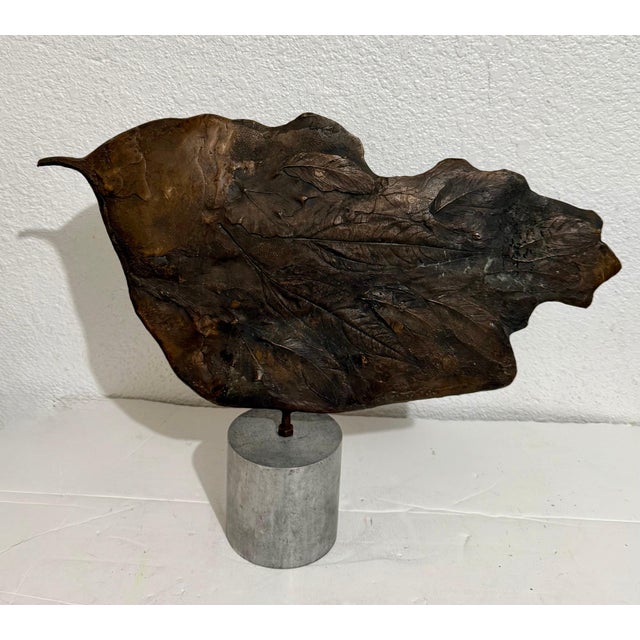
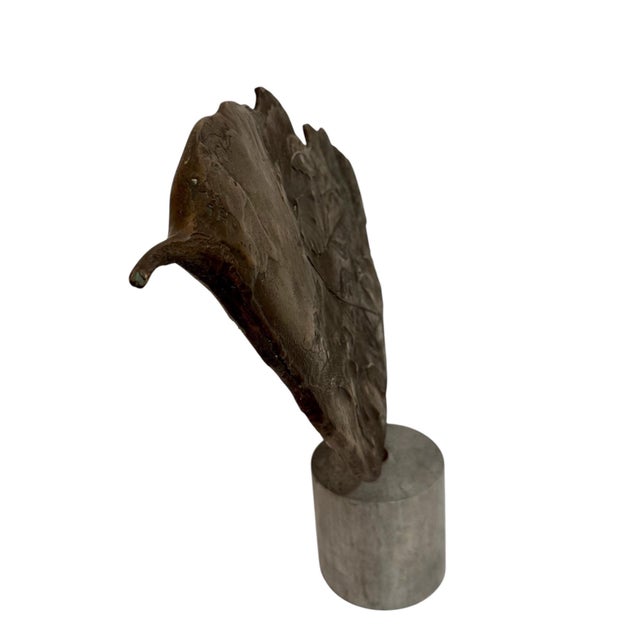
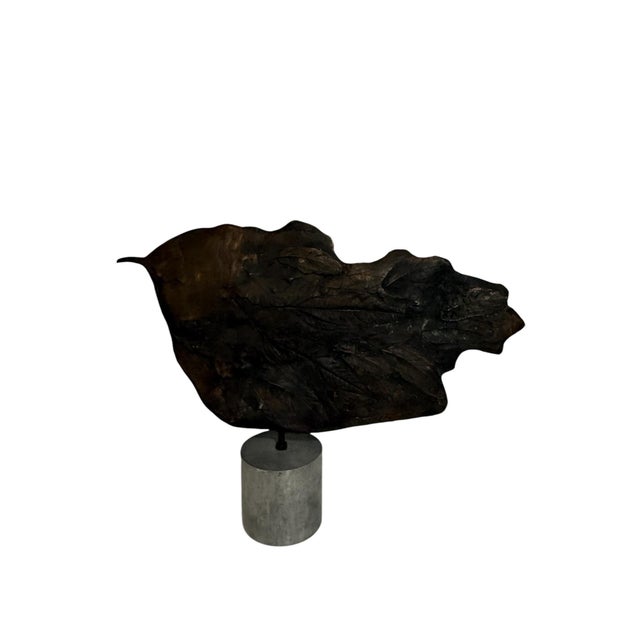
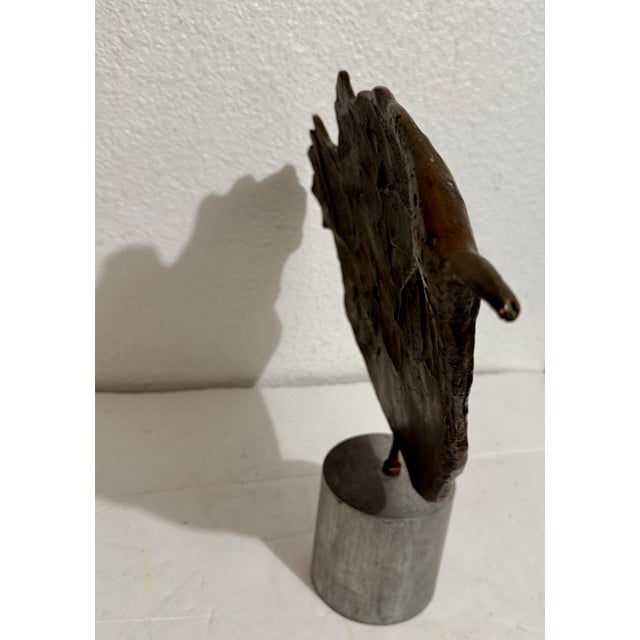
Roberto Estopinan, Cuban, 1920 - 2015 Dimensions: 24.5" wide x 13" high plus 6" high base. Roberto Estopiñán (1921–2015) was … Read more Roberto Estopinan, Cuban, 1920 - 2015 Dimensions: 24.5" wide x 13" high plus 6" high base. Roberto Estopiñán (1921–2015) was a Cuban American sculptor known for his sculptures of the human form, including political prisoners. Born in Camaguey, Cuba, he lived in the United States for over fifty years. His works are held by major institutions such as the Museum of Modern Art, the Whitney Museum and the Smithsonian Museum of American Art. Roberto Gabriel Estopinan, a sculptor, draftsman, and printmaker, was born in Havana, Cuba on March 18, 1921. Estopiñán enrolled at the San Alejandro Academy when he was just 14 years old and became the protegé and studio assistant of the sculptor Juan José Sicre. After graduation he traveled first to Mexico, where he met and befriended Francisco Zuniga, and studied Pre-Columbian sculpture. In 1949 he traveled to Europe, visiting England, France and Italy. In these trips he encountered the sculpture of Henry Moore and Marino Marini, and their humanistic yet formal visions would be influential on Estopinan's work. Estopiñán was a pioneer of direct carvings using wood and of welding techniques in Latin America. Throughout the 1950s, Estopiñán received important prizes at various national exhibitions in Havana. In 1953 he was the only semi-finalist from Latin America at the Tate Gallery's international sculpture competition for a Monument to the Unknown Political Prisoner. In 1961, the artist moved to New York, where he resided until 2002. Roberto Gabriel Estopiñán a Cuban emigre sculptor who emigrated to exile in the United States not long after Fidel Castro’s revolution in 1959, is considered one of Latin America’s most important 20th-century artists. His work, which includes drawings and prints as well as sculptures in wood and bronze, is in the collections of New York’s Museum of Modern Art, the Smithsonian’s American Art Museum, the Art Institute of Chicago, and the Detroit Institute of Art, among many locations. He is best known for his stark, disturbing renderings of political prisoners, the fruit of his own experiences as a dissident under both Castro and his predecessor, the dictator Fulgencio Batista, and for his representations of the female torso that can remind viewers of both classical statuary and the high-modern, abstractly elongated work of Henry Moore.mHe was born in Havana to a father from Asturias in northwest Spain and a mother of African descent. Estopiñán was something of a prodigy. At the age of fourteen, he won the first prize in drawing at the Centro Asturiano, a regional association for Cubans of Asturian descent. Shortly afterward he received special permission to enter the San Alejandro Academy of Fine Arts in Havana. At the school he was mentored first by its director, the painter Armando Menocal (1863-1941), then by the landscape artist Antonio Rodríguez Morey (1872-1967), and finally by Juan José Sicre (1898-1974), regarded as one of Cuba’s greatest sculptors. Sicre, a professor of sculpture at the Academy, had helped introduce European modernist art to Cuba, and from the 1930s through the 1950s had sculpted monumental figures in Havana of José Martí and other Cuban national heroes that stand to this day. Estopiñán was first Sicre’s student, then his assistant, and, finally, his colleague for the next fifty years. After graduating from San Alejandro in 1942, Estopiñán began simultaneously teaching art at the Ceiba del Agua School for young men, assisting Sicre in public art projects and developing his own artistic vision. He also traveled widely, to Mexico, New York, France, and Italy. From the late 1940s through the 1950s his sculpture evolved from an early neoclassical phase under the influence of Maillol to what he defined as “formalist humanism”: emphasizing the abstract beauty of the shapes he sculpted while not abandoning the human figure as the basis of his work. As the 1950s progressed he chose to carve in native Cuban woods as well as weld scraps of various metals. Although he was obviously influenced by Henry Moore and Julio González (1876-1942), a Spanish modernist sculptor whose iron weldings prefigured Estopiñán’s weldings in bronze, he had already created his own visual language. Estopiñán joined the Directorio Revolucionario Estudiantil, an anticommunist, pro-democracy student-based organization that opposed the Batista regime. Estopiñán recalled: “I wanted to be true to myself, which meant being a modern artist and a believer. Georges Rouault and Ernst Barlach could do it, as well as abstractionists like Alfred Manessier and Jean René Bazaine. But so could artists who were not traditional believers, like Henri Matisse in the chapel at Vence, like Germaine Richier at Assy. I am not talking of grotesqueries like Le Corbusier’s church [an asymmetric concrete chapel with tiny windows erected in 1955 in Ronchamp, France], but something deep and clear and balanced.” During the 1970s Estopiñán’s style shifted toward a more organic figuration, reflecting his desire to convey a synthesis between the human body and plant life. By the 1980s he had arrived at a new classicism, austere and simplified, in which the female torso whose renderings he became famous for and the political prisoners who continued to haunt him were his most constant themes, right through the end of his life. In 2002 Estopiñán and his wife, Carmina Benguría, a performance artist and fellow exile, moved from New York to Miami. Since the 1980s, he has been involved with the female torso as his favorite expressive form. As a printmaker and draftsman, his production was thematically parallel to his sculptures. The most complete collection of his prints (1959-96) is found in the Jersey City Museum in New Jersey, where an exhibition was hosted in the spring of 1996. Together with Juan José Sicre, Alfredo Lozano and Agustin Cardenas, He has exhibited with José Bedia, Tomás Sánchez, Manuel Mendive, Wifredo Lam, Armando Morales and many more masters of Cuban art. Estopiñán is considered one of the pioneers of modern sculpture in Cuba and Latin America. The artist recently retired to Miami, FL. “His work in the early 1950s was an evocation of Aristide Maillol and his resonant masses. During the same decade, Estopiñán produced totems and angular figures that reverberated with influences from Africa and Oceania. He was included in the influential 1988 show at Miami Dade College. An exhibition of Twentieth Century Cuban Art from the Collection of Ramón Cernuda and Nercys Ganem. Artists included: Eduardo Abela, Víctor Manuel, Aristides Fernández, Fidelio Ponce, Carlos Enríquez, Amelia Peláez, Mario Carreño, René Portocarrero, Mariano Rodríguez, Cundo Bermúdez, Raúl Millían, Roberto Estopiñan, José Mijares, Agustin Fernández, Angel Acosta León, Gina Pellón and Arturo Rodríguez. Bibliography, Xenia Bas de Tamayo: Roberto Estopiñán: El escultor que insiste en buscar la forma más pura. Replica, Miami, FL 1992-1993. in Veigas, J., et al, eds. Memoria, Cuban Art of the Twentieth Century. 1st ed. Los Angeles, CA: California International Arts Foundation, 2002. See less
- Dimensions
- 19ʺW × 5ʺD × 24.5ʺH
- Styles
- Abstract
- Art Subjects
- Figure
- Period
- Early 20th Century
- Item Type
- Vintage, Antique or Pre-owned
- Materials
- Bronze
- Condition
- Good Condition, Original Condition Unaltered, Some Imperfections
- Color
- Brown
- Condition Notes
- Good Please see photos. Good Please see photos. less
Questions about the item?
Returns & Cancellations
Return Policy - All sales are final 48 hours after delivery, unless otherwise specified in the description of the product.
Cancellation Policy - Prior to shipping or local pickup, buyers may cancel an order for up to 48 hours, unless otherwise specified.
Related Collections
- Lime Sculpture
- Roman Bronze Works Sculpture
- Mathurin Moreau Sculpture
- Loredano Rosin Sculpture
- Straw Sculpture
- Oil-Rubbed Bronze Finish Sculpture
- Far Pavilions Sculpture
- Bakelite Sculpture
- Albert Ernest Carrier-Belleuse Sculpture
- Sculpture in Panama City, FL
- Georgian Sculpture
- Peter Shire Sculpture
- Chaim Gross Sculpture
- Boris Lovet-Lorski Sculpture
- David Palombo Sculpture
- Gourd Sculpture
- Recycled/Repurposed Sculpture
- Polycarbonate Sculpture
- Fernando Botero Sculpture
- Worlds Away Sculpture
- Constantin Brancusi Sculpture
- Maison Jansen Sculpture
- Austin Productions Sculpture
- Mid-Century Modern Sculpture
- Brutalist Sculpture