

Details
Description
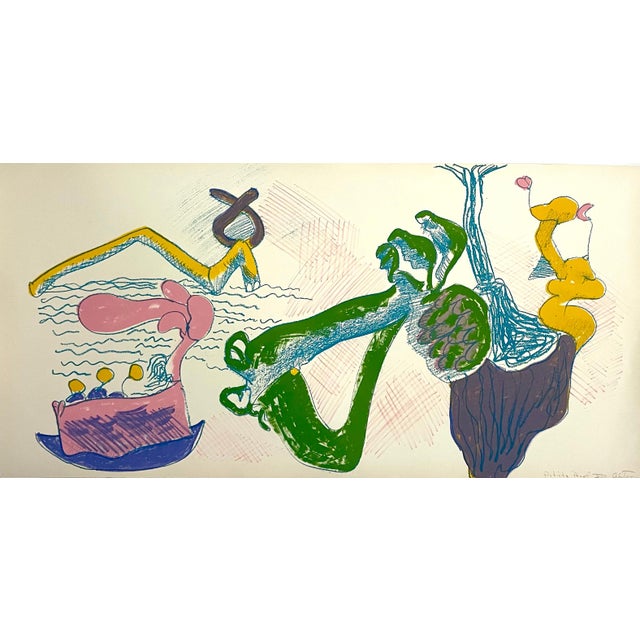
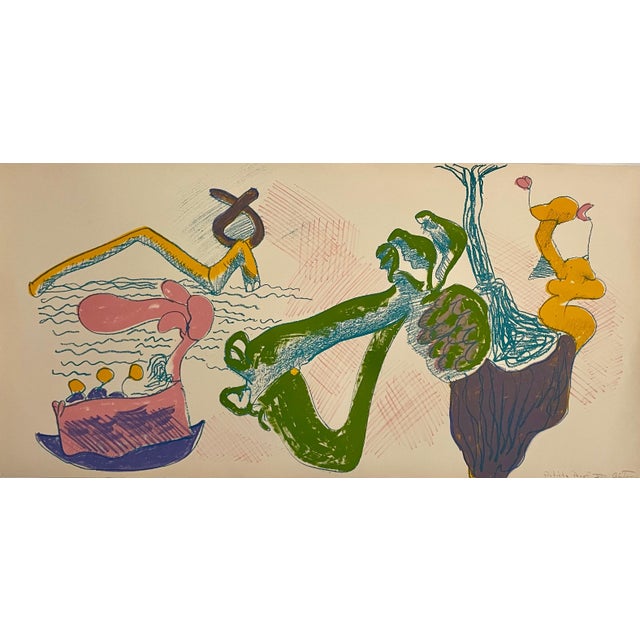
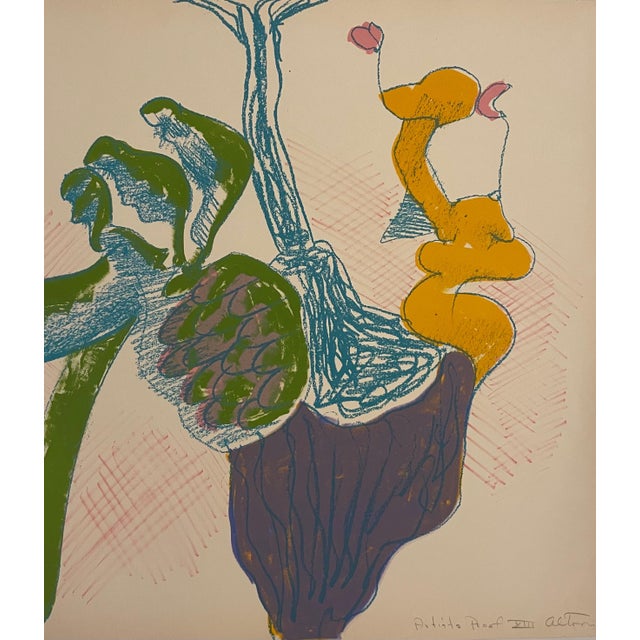
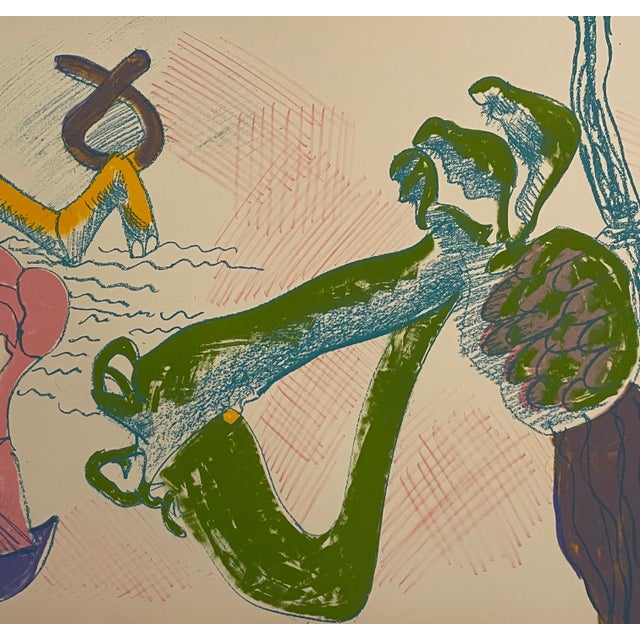
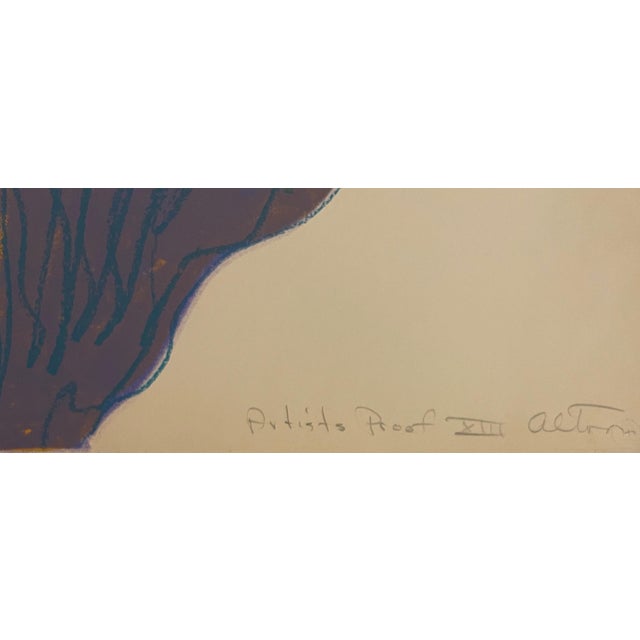
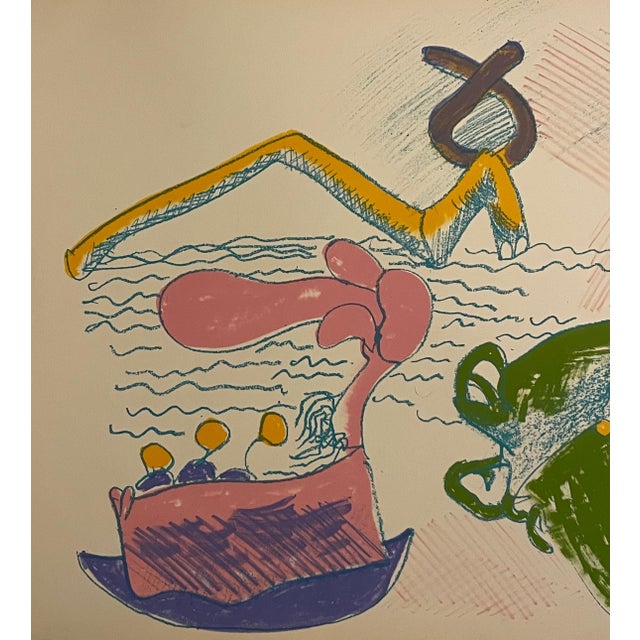
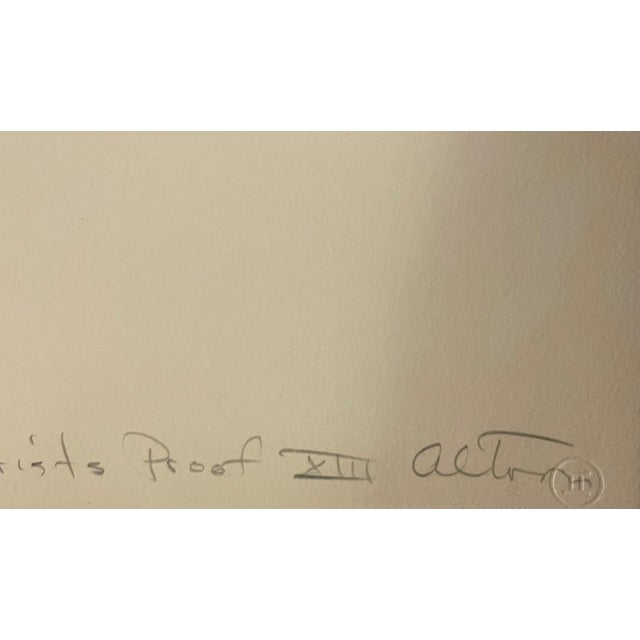
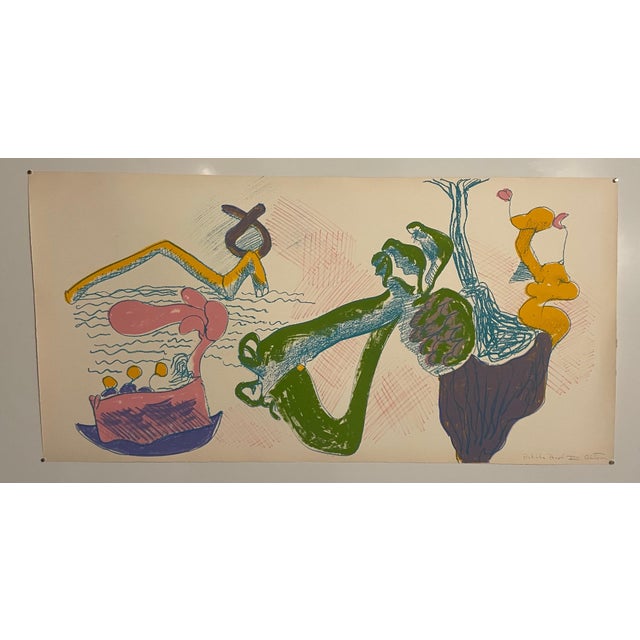
John Altoon (American, 1925-1969) From the 'About Women' Series. Color lithograph 1965/66, Hand signed and editioned in pencil with the … Read more John Altoon (American, 1925-1969) From the 'About Women' Series. Color lithograph 1965/66, Hand signed and editioned in pencil with the chop mark of Gemini G.E.L. publishers John Altoon (1925 - 1969), an American artist, was born in Los Angeles to immigrant Armenian parents. From 1947–1949 he attended the Otis Art Institute, from 1947 to 1950 he also attended the Art Center College of Design in Los Angeles, and in 1950 the Chouinard Art Institute. Altoon was a prominent figure in the LA art scene in the 1950s and 1960s. Exhibitions of his work have been held at the Museum of Contemporary Art San Diego, Whitney Museum of American Art, New York, Corcoran Gallery, Washington D.C, Fine Arts Museums of San Francisco, The Baxter Museum, Pasadena, and The Los Angeles County Museum of Art (LACMA). Altoon's work was influenced by the Abstract Expressionism Movement although he is best known for his figurative drawings of the 1960s, with as Leah Ollman describes "a vocabulary of vaguely figurative, botanical and biological forms that he pursued until his death." He was part of the "Ferus group" of artists so called for their association to the Ferus Gallery that operated in Los Angeles in 1957–1966. Some of the other artists included in this group are Edward Kienholz, Larry Bell, Robert Irwin, Billy Al Bengston. He was featured in the Cool School documentary, a film about Altoon and other Ferus Gallery artists such as Walter Hopps and Ed Kienholz, Craig Kauffman, Wallace Berman, Ed Moses, John Altoon, Ed Ruscha and Robert Irwin. many Ferus artists say John was the most fun and friendliest of all, every where everyone liked him. He could charm anyone. Altoon, during his Ferus Gallery years, did the Ocean Park series which depicted an area around Venice and Santa Monica beach towns in California. The series was 18 paintings as well some works he did on paper. It had the direct from brain to hand & brush approach he was known for: the abstracting of nature on his canvas by pushing through a spontaneous approach, freehand biomorphic in design giving us his surrealist interpretation as a direct rendering of the coastal surroundings. Leah Ollman describes his life a 1999 article in Art in America, "With his outsized personality and reckless intensity, John Altoon loomed large in the L.A. art scene of the '50s and '60s". In the course of his brief artistic career, John Altoon made an explosive impression on the Los Angeles art community of the 1950s and ’60s, in part because of his volatile personality. He produced drawings, paintings, and prints of overt satires, surrealist personal nightmares, and improbable sexual situations. In fact, Altoon frequently used his dreams and fantasies as subjects, influenced by his encounter with Surrealism in his travels through Europe. His renderings had a characteristically misty or ghostly quality, which Altoon achieved by using an airbrush to apply color. Altoon was diagnosed as schizophrenic in his late 30s and suffered bouts of depression and paranoia. From 1962 to 1963 he produced the pop art Advertising Parodies series and large-scale pastels that explored the figure as represented in the media and pop culture, pulling imagery and text from commercial advertisements. In 1965 he worked at the Tamarind Lithography Workshop, which taught a generation of American master printers. Altoon continued to draw throughout his career, creating his Animal and Cowboys and Indians series from 1966 to 1968, in which the comical and sexually explicit implications that abound in his early work "gave way to softer, biomorphic forms that were vaguely sexual and highly fanciful."Irving Blum, partner in the Ferus Gallery, recalls: "If the gallery was closest in spirit to a single person, that person was John Altoon--dearly loved, defiant, romantic, highly ambitious--and slightly mad." Altoon's struggle with mental illness, his big, dark, robust personality and his early death from a heart attack at 44 have, even more than his art itself, come to define his legacy." See less
- Dimensions
- 38ʺW × 1ʺD × 19ʺH
- Styles
- Abstract Expressionism
- Frame Type
- Unframed
- Art Subjects
- Other
- Period
- 1960s
- Item Type
- Vintage, Antique or Pre-owned
- Materials
- Lithograph
- Condition
- Good Condition, Original Condition Unaltered, Some Imperfections
- Color
- Cream
- Condition Notes
- Good good. minor wear. never been framed. Good good. minor wear. never been framed. less
Questions about the item?
Returns & Cancellations
Return Policy - All sales are final 48 hours after delivery, unless otherwise specified in the description of the product.
Cancellation Policy - Prior to shipping or local pickup, buyers may cancel an order for up to 48 hours, unless otherwise specified.
Related Collections
- Patrick Nagel Reproduction Prints
- Reproduction Prints in Panama City, FL
- Qing Reproduction Prints
- Sol LeWitt Reproduction Prints
- Utagawa Kunisada (Toyokuni Iii) Reproduction Prints
- Monotype Reproduction Prints
- Daylight Dream Editions Reproduction Prints
- William Gropper Reproduction Prints
- William Hogarth Reproduction Prints
- Classical Greek Reproduction Prints
- Polychrome Reproduction Prints
- Gold-Plate Reproduction Prints
- Jute Reproduction Prints
- Reproduction Prints in Mobile
- Ethan Allen Reproduction Prints
- Paule Marrot Reproduction Prints
- Francis Orpen Morris Reproduction Prints
- Jim Dine Reproduction Prints