

Details
Description
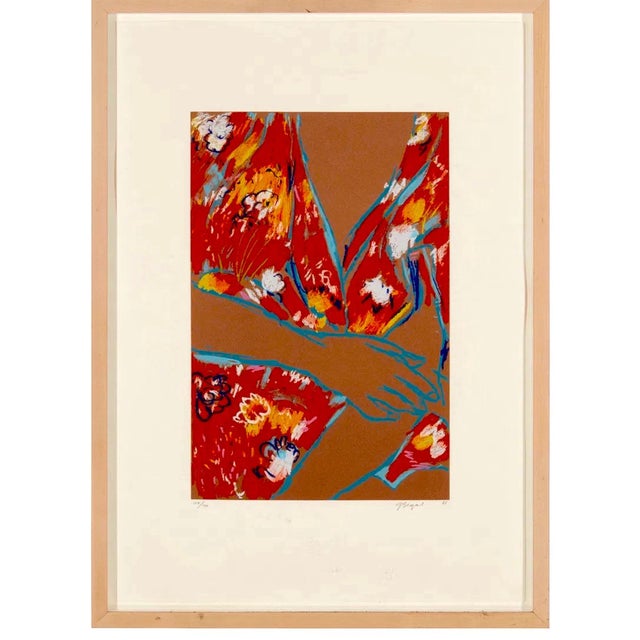
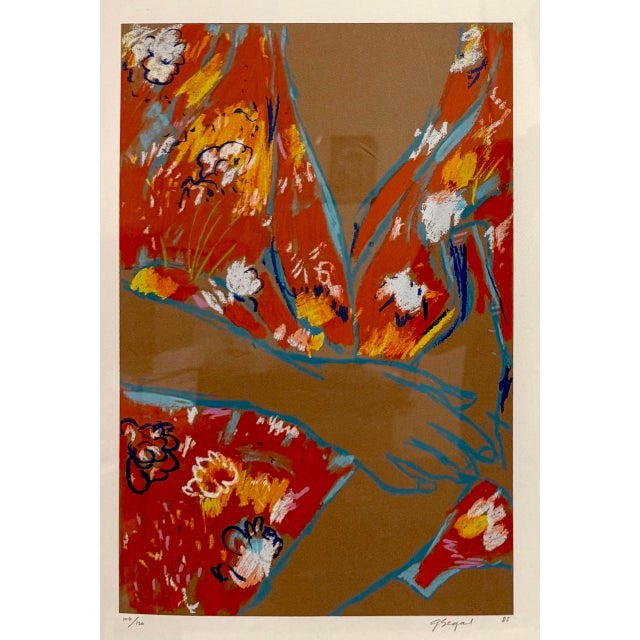
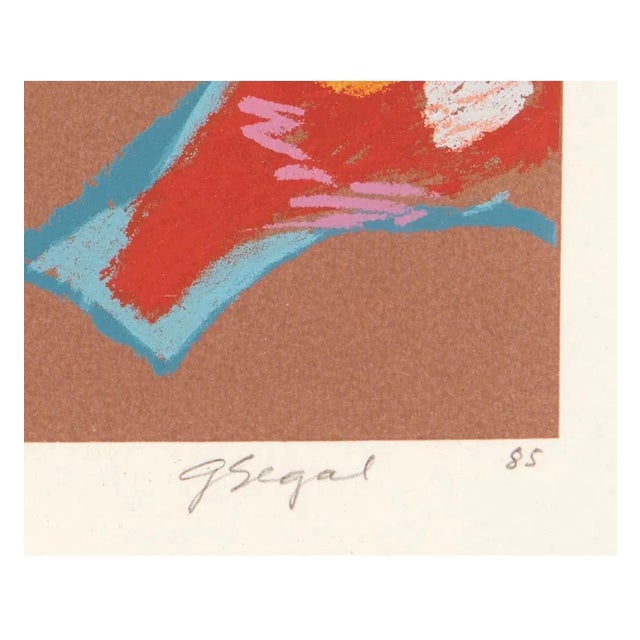
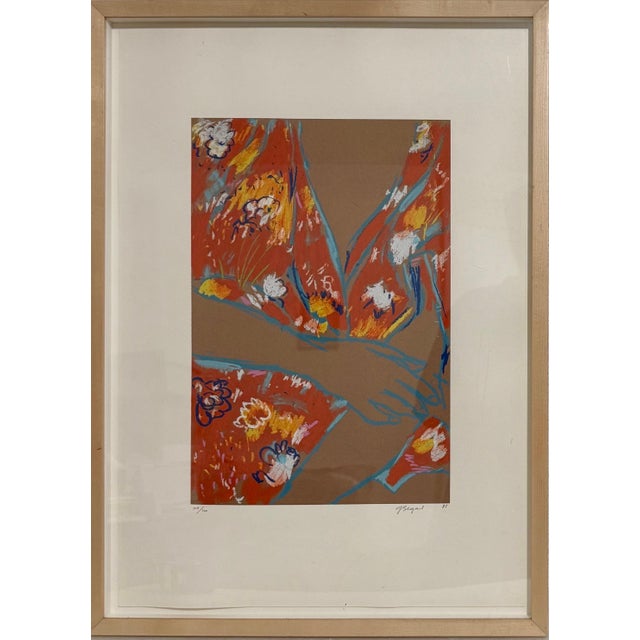
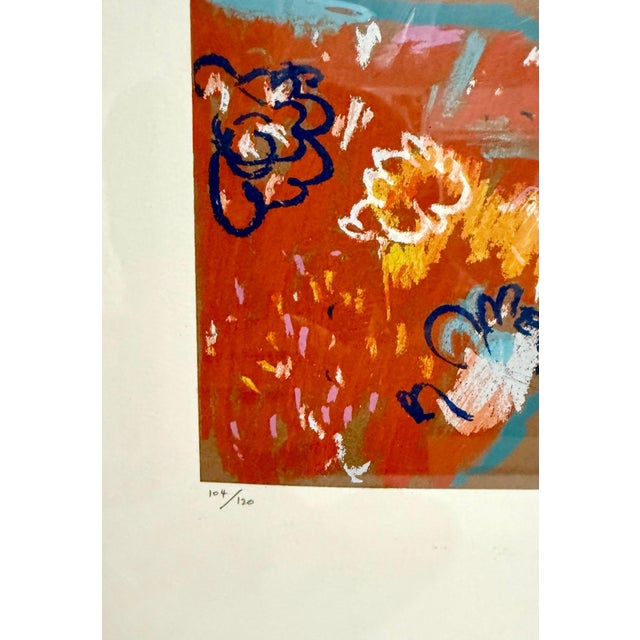
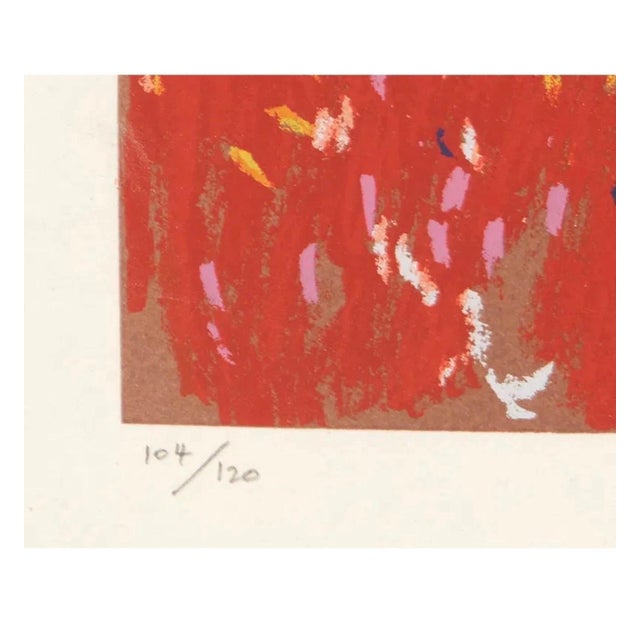
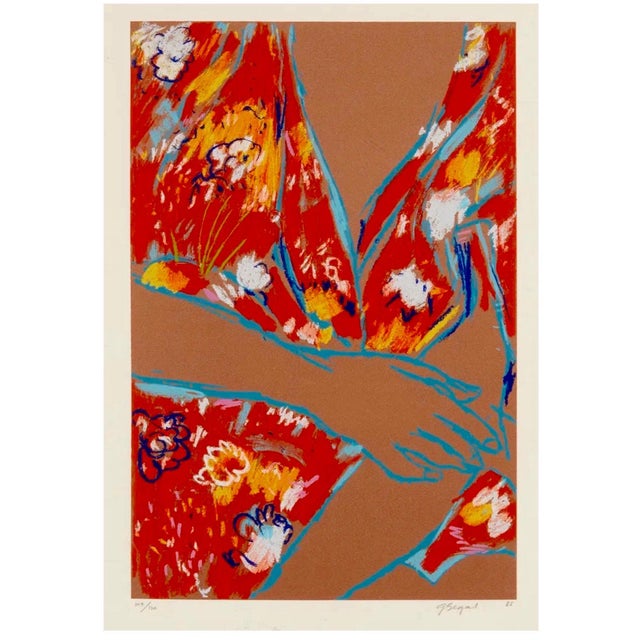
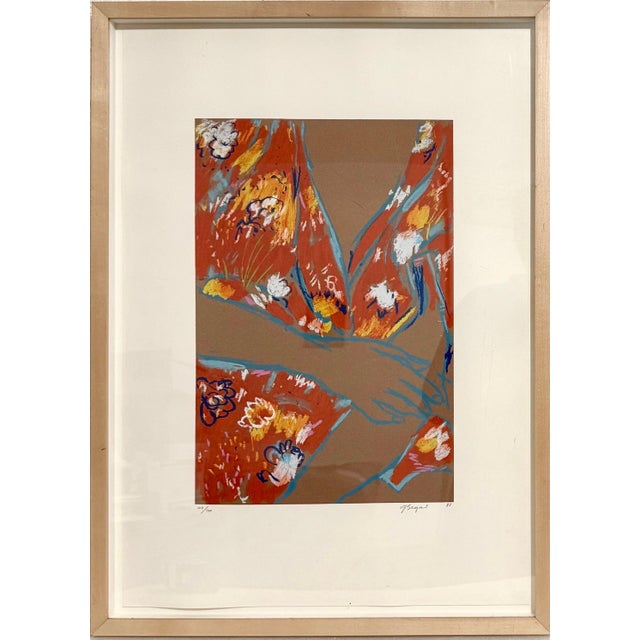
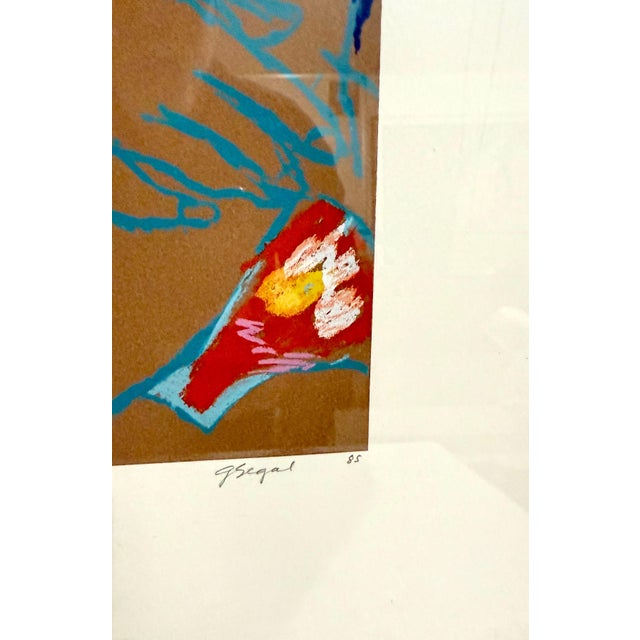
George Segal (American, 1924-2000) "Woman in Red Kimono," 1985 Lithograph in colors on wove paper Edition: 104/120 Signed, dated, and … Read more George Segal (American, 1924-2000) "Woman in Red Kimono," 1985 Lithograph in colors on wove paper Edition: 104/120 Signed, dated, and numbered in pencil in the lower margin: G. Segal 85 Dimensions: Image, 18 X 12 Sheet: 27 x 19 Frame 29.5 X 22 This depicts a woman in the studio with an Asian inspired kimono robe. George Segal (November 26, 1924 – June 9, 2000) was an American painter and sculptor associated with the pop art movement. He was presented with the United States National Medal of Arts in 1999. Born in 1926, George Segal grew up in the Bronx, NY. He moved to New Jersey in 1940 and lived in the same town until he passed away in 2000. Segal is known internationally for his figurative works in plaster, which he created using a unique technique he had developed. The figures are often placed within environments made with real objects, creating a personal tableau. The Getty ULAN states of George Segal: “American sculptor best known for his life-size sculptures of human figures set in environments. Although he began as a figurative painter in the late 1950’s along with artists such as Allan Kaprow and George Brecht, he turned to sculpture in order to explore the human figure as it relates to actual space and its surroundings. Segal’s early work is often treated within the framework of Pop Art, because of the reference to the individual’s position within mass culture and the examination of the relationship between fine and popular art. Later his work reflected social concerns. These works consist of plaster molds cast from living models in order to capture life like gestures, placed in environmental tableaux, which lock them in time. Although most of his figures remain white, in his later work he began painting them in vivid colors.” His work has been associated with John De Andrea, Duane Hanson, Edward Kienholz, Ron Mueck Although Segal started his art career as a painter, his best known works are cast life-size figures and the tableaux the figures inhabited. In place of traditional casting techniques, Segal pioneered the use of plaster bandages (plaster-impregnated gauze strips designed for making orthopedic casts) as a sculptural medium. In this process, he first wrapped a model with bandages in sections, then removed the hardened forms and put them back together with more plaster to form a hollow shell. These forms were not used as molds; the shell itself became the final sculpture, including the rough texture of the bandages. Initially, Segal kept the sculptures stark white, but late in life he began painting them, usually in bright monochrome colors. Eventually he started having the final forms cast in bronze, sometimes patinated white to resemble the original plaster. Segal's figures have minimal color and detail, which give them a ghostly, melancholic appearance. In larger works, one or more figures are placed in anonymous, typically urban environments such as a street corner, bus, or diner. In contrast to the figures, the environments were built using found objects. Segal was born in New York; his Jewish parents were immigrants from Eastern Europe. His parents ran a butcher shop in the Bronx, then moved to a poultry farm in New Jersey where Segal grew up. He attended Stuyvesant High School, as well as the Pratt Institute, the Cooper Union, and New York University, from which he graduated in 1949 with a teaching degree. During the few years he ran the chicken farm, Segal held annual picnics at the site to which he invited his friends from the New York art world. His proximity to central New Jersey fostered friendships with professors from the Rutgers University art department. Segal introduced several Rutgers professors to John Cage, and took part in Cage's legendary experimental composition classes. Allan Kaprow coined the term happening to describe the art performances that took place on Segal's farm in the Spring of 1957. His work was included in the New York Collection for Stockholm Portfolio along with Andy Warhol, Claes Oldenburg, Cy Twombly, Hans Haacke, James Rosenquist, Jim Dine, John Chamberlain, Larry Rivers, Lee Bontecou, Louise Nevelson, Nam June Paik, Red Grooms, Richard Serra, Robert Rauschenberg, Robert Whitman, Roy Lichtenstein and Sol LeWitt . He was in the show Painted Pop at Acquavella Galleries, Palm Beach, Florida along with Ed Ruscha, Jasper Johns, Robert Indiana, Tom Wesselmann, Wayne Thiebaud and more. Segal’s works have been exhibited in numerous prestigious museums and galleries throughout the United States as well as in Europe, Japan, and South America. A retrospective exhibition was held in 1997-98 and traveled to the Montreal Museum of Fine Arts; the Hirshhorn Museum and Sculpture Garden in Washington, D.C.; the Jewish Museum in New York; and the Miami Art Museum, FL. Segal’s sculptures are featured in major public collections. See less
Questions about the item?
Returns & Cancellations
Return Policy - All sales are final 48 hours after delivery, unless otherwise specified in the description of the product.
Cancellation Policy - Prior to shipping or local pickup, buyers may cancel an order for up to 48 hours, unless otherwise specified.
Related Collections
- Patrick Nagel Reproduction Prints
- Reproduction Prints in Panama City, FL
- Qing Reproduction Prints
- Monotype Reproduction Prints
- Sol LeWitt Reproduction Prints
- Utagawa Kunisada (Toyokuni Iii) Reproduction Prints
- Reproduction Prints in Mobile
- William Gropper Reproduction Prints
- Daylight Dream Editions Reproduction Prints
- Classical Greek Reproduction Prints
- William Hogarth Reproduction Prints
- Polychrome Reproduction Prints
- Gold-Plate Reproduction Prints
- Ethan Allen Reproduction Prints
- Paule Marrot Reproduction Prints