

Details
Description
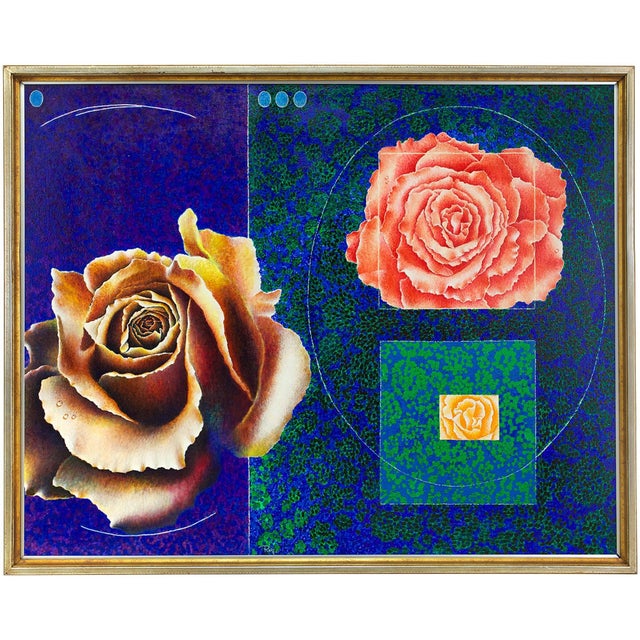
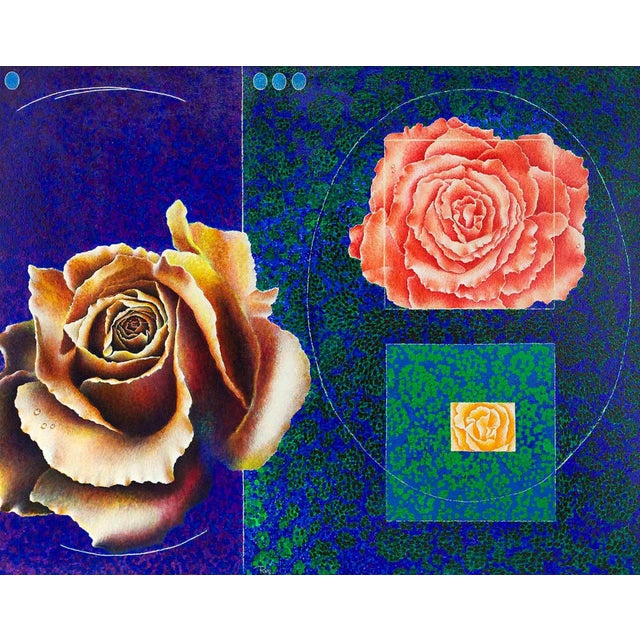
Trompe-l'œil (French for "deceive the eye",) is an art technique that uses realistic imagery to create the optical illusion that … Read more Trompe-l'œil (French for "deceive the eye",) is an art technique that uses realistic imagery to create the optical illusion that the depicted objects exist in three dimensions. Forced perspective is a comparable illusion in architecture. Though the phrase, originates in the Baroque period, when it refers to perspectival illusionism, trompe-l'œil dates much further back. It was (and is) often employed in murals. Instances from Greek and Roman times are known, for instance in Pompeii. A typical trompe-l'œil mural might depict a window, door, or hallway, intended to suggest a larger room. A version of an oft-told ancient Greek story concerns a contest between two renowned painters. Zeuxis (born around 464 BC) produced a still life painting so convincing that birds flew down to peck at the painted grapes. A rival, Parrhasius, asked Zeuxis to judge one of his paintings that was behind a pair of tattered curtains in his study. Parrhasius asked Zeuxis to pull back the curtains, but when Zeuxis tried, he could not, as the curtains were included in Parrhasius's painting—making Parrhasius the winner. With widespread fascination with perspective drawing in the Renaissance, Italian painters of the late Quattrocento such as Andrea Mantegna (1431–1506) and Melozzo da Forlì (1438–1494), began painting illusionistic ceiling paintings, generally in fresco, that employed perspective and techniques such as foreshortening to create the impression of greater space for the viewer below. This type of trompe l'œil illusionism as specifically applied to ceiling paintings is known as di sotto in sù, meaning "from below, upward" in Italian. The elements above the viewer are rendered as if viewed from true vanishing point perspective. Well-known examples are the Camera degli Sposi in Mantua and Antonio da Correggio's (1489–1534) Assumption of the Virgin in the Duomo of Parma. Similarly, Vittorio Carpaccio (1460–1525) and Jacopo de' Barbari (c. 1440 – before 1516) added small trompe-l'œil features to their paintings, playfully exploring the boundary between image and reality. For example, a fly might appear to be sitting on the painting's frame, or a curtain might appear to partly conceal the painting, a piece of paper might appear to be attached to a board, or a person might appear to be climbing out of the painting altogether—all in reference to the contest of Zeuxis and Parrhasius. In a 1964 seminar, the psychoanalyst and theorist Jacques Lacan (1901–1981) observed that the myth of the two painters reveals an interesting aspect of human cognition. While animals are attracted to superficial appearances, humans are enticed by the idea of things that are hidden. See less
- Dimensions
- 52.25ʺW × 1ʺD × 42ʺH
- Styles
- Surrealism
- Art Subjects
- Botanic
- Frame Type
- Framed
- Period
- Mid 20th Century
- Item Type
- Vintage, Antique or Pre-owned
- Materials
- Acrylic
- Condition
- Good Condition, Original Condition Unaltered, Some Imperfections
- Color
- Blue
- Condition Notes
- Good Good less
Questions about the item?
Returns & Cancellations
Return Policy - All sales are final 48 hours after delivery, unless otherwise specified in the description of the product.
Cancellation Policy - Prior to shipping or local pickup, buyers may cancel an order for up to 48 hours, unless otherwise specified.
Related Collections
- Photorealism Paintings in New York
- Richard Serra Paintings
- Joseph Solman Paintings
- Margaret Kennedy Paintings
- Donald Judd Paintings
- George Coggeshall Paintings
- Photorealism Canvas Paintings
- William IV Paintings
- Keith Haring Paintings
- Jacobean Paintings
- Lowell Nesbitt Paintings
- Louis Wolchonok Paintings
- Jean Calogero Paintings
- Francine Tint Paintings
- Vienna Secession Paintings
- Michelle Arnold Paine Paintings
- René Magritte Paintings
- BandB Italia Paintings
- Jeff Slemmons Paintings
- Karen Offutt Paintings
- Paintings in Panama City, FL
- Camille Pissarro Paintings
- Ralph Lauren Paintings
- Black Photorealism Paintings
- Etruscan Revival Paintings