

Details
Description
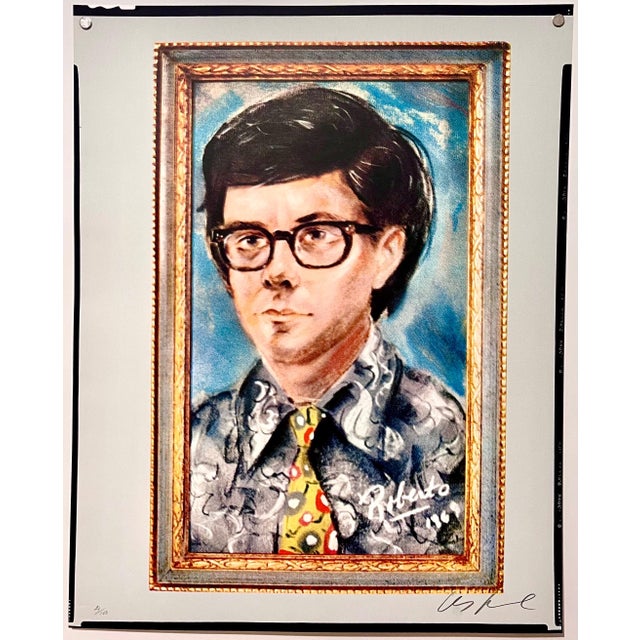
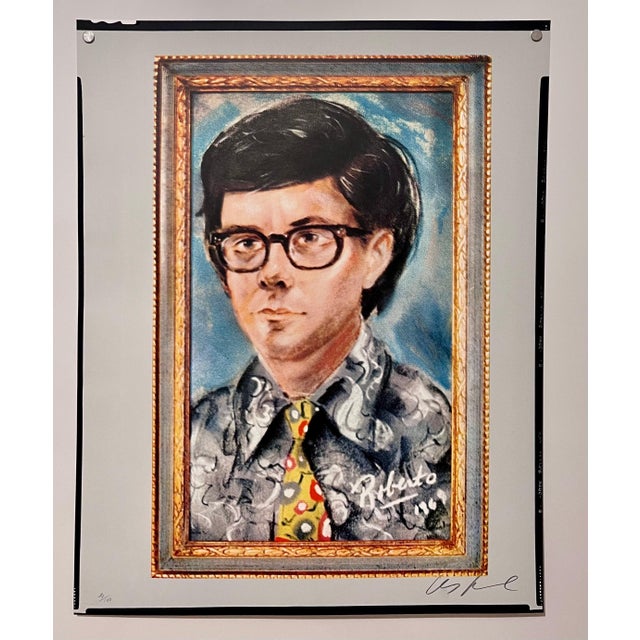
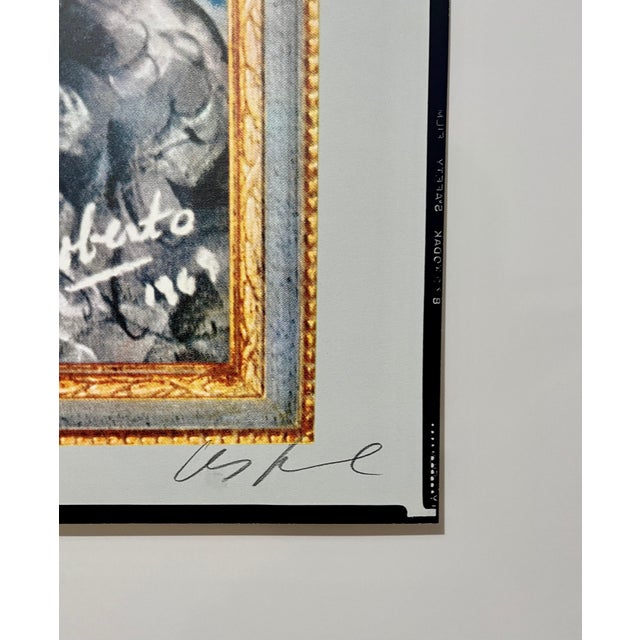
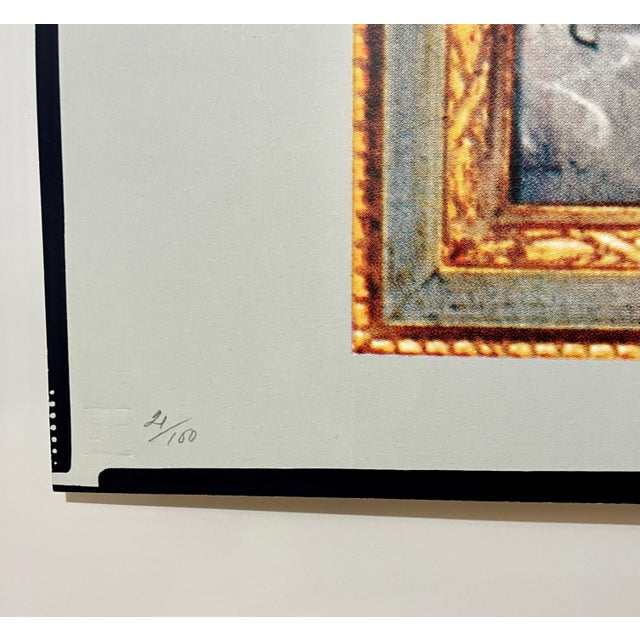
Les Levine On the Bowery, 1969 - 1971 Screenprint in color 25.5 x 25.5 inches, signed, numbered 21/100 Hand signed, … Read more Les Levine On the Bowery, 1969 - 1971 Screenprint in color 25.5 x 25.5 inches, signed, numbered 21/100 Hand signed, published by Edition Domberger, Bonlanden, West Germany (with their blindstamp) Provenance: Collection of Tom Levine On the Bowery, 1971. The portfolio consists of nine screenprints in colors (one with mylar collage), on wove paper, by representative artists of the Pop Art period. Cy Twombly, Robert Ryman, Will Insley, Robert Indiana, Les Levine, John Willenbecher, Charles Hinman, Richard Smith, Gerald Laing, and John Giorno. The ten artists were photographed by Eliot Elisofon (1911-1973), who also lived on the Bowery and was a founding member of the Photo League in 1936. In the late 40s and 50s Clyfford Still, Mark Rothko, Fernand Leger and Jean Dubuffet, among others, had studios on the Bowery, and Willem de Kooning, Franz Kline and Reginald Marsh worked nearby. In the early 60s, Louise Nevelson took a place on Mott Street just off the Bowery and was joined not long after by other artists attracted by the lofts for reasonable rents and the relaxed, small-time quality of the area. - William Katz, from the introduction for the portfolio. Among other artists, writers and photographers who have lived or worked there are: Arman, Jack Brusca, Larry Calcagno, Pierre Clerk, Tom Doyle, Jean Dupuy, Janet Fish, Robert Frank, Adolph Gottlieb, Eva Hesse, Roy Lichtenstein, Jay Maisel, Ed Meneeley, Malcolm Morley, Kenneth Noland, Angelo Savelli, and Tom Wesselmann. Les Levine (born 1935) is a naturalized American Irish artist known as a pioneer of video art and as a conceptual artist working with mass communication. In 1967, Levine won first prize for sculpture in the Canadian Sculpture Biennial. A graduate of the Central School of Art and Design in London, Levine first moved to Canada in 1960. He eventually settled in New York City in 1964 and became a resident artist at the Nova Scotia College of Art and Design in Halifax, Nova Scotia in 1973. Early in his career, Levine introduced the idea of a disposable art and was given the nickname Plastic Man. In 1965, Levine, with Nam June Paik, were among the first artists to buy and use portapaks. Thus he was one of the first artists to try television as a medium for the dissemination of art. He has also used the telephone for this purpose, as well. In 1969 he exhibited White Sight at the Fischbach Gallery, a work consisting of a room as the inside of a featureless white cube illuminated by two bright sodium vapour lights. This meant that the spectator was confronted with their own act of looking presented as an artifact. The installation was also included as a feature for a charity ball at the New York Museum of Modern Art, to attend which museum patrons had to pay $75 per couple. Whilst Levine regarded the installation as a great success, this view was not shared by all the patrons. The yellow light drained the women's dresses of color. One visitor said: "All the men looked as if they have been dead for two centuries. All the women looked like their grandmothers. The beautiful ladies fled within one minute." One of these accused Levine of making the museum "look ugly and silly" and promptly transformed the artwork by pulling the main light switch. In 1984, Levine produced the short film Made in New York in collaboration with fashion designer Willi Smith. He also designed a T-shirt for Smith’s label WilliWear Productions that was featured in the film. Levine has written on art for Arts, The Village Voice, Art in America and the Saturday Review. He was awarded the National Endowment for the Arts Fellowship in 1974 and again in 1980. Reference material Expanded Cinema by Gene Youngblood (pp. 337–344). Beyond Modern Sculpture by Jack Burnham, The Britannica Encyclopedia of American Art Simon Schuster, Art and the Future by Douglass Davis, Science and Technology in the Arts by Stewart Kranz, Innovative Printmaking by Theima P. Newman and On Photography by Susan Sontag. See less
- Dimensions
- 20.5ʺW × 1ʺD × 25.5ʺH
- Styles
- Pop Art
- Frame Type
- Unframed
- Art Subjects
- Portrait
- Period
- 1960s
- Item Type
- Vintage, Antique or Pre-owned
- Materials
- Lithograph
- Condition
- Good Condition, Original Condition Unaltered, Some Imperfections
- Color
- Black
- Condition Notes
- Good good. minor wear. never framed. kept in original portfolio. Good good. minor wear. never framed. kept in original portfolio. less
Questions about the item?
Returns & Cancellations
Return Policy - All sales are final 48 hours after delivery, unless otherwise specified in the description of the product.
Cancellation Policy - Prior to shipping or local pickup, buyers may cancel an order for up to 48 hours, unless otherwise specified.
Related Collections
- Patrick Nagel Reproduction Prints
- Reproduction Prints in Panama City, FL
- Jute Reproduction Prints
- Sam Francis Reproduction Prints
- Utagawa Kunisada (Toyokuni Iii) Reproduction Prints
- Reproduction Prints in Mobile
- Tuscan Reproduction Prints
- William Hogarth Reproduction Prints
- Daylight Dream Editions Reproduction Prints
- Alvar Aalto Reproduction Prints
- Gold-Plate Reproduction Prints
- Polychrome Reproduction Prints
- Leather Reproduction Prints
- Ethan Allen Reproduction Prints
- Paule Marrot Reproduction Prints
- Qing Reproduction Prints
- Francis Orpen Morris Reproduction Prints