

Details
Description
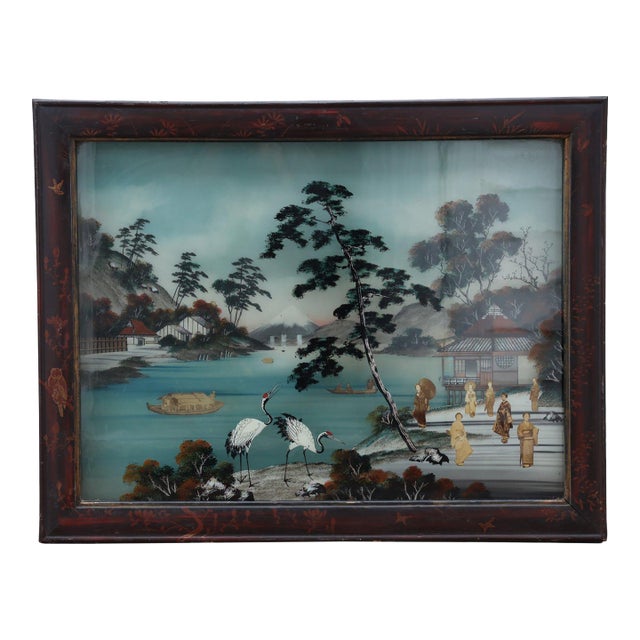
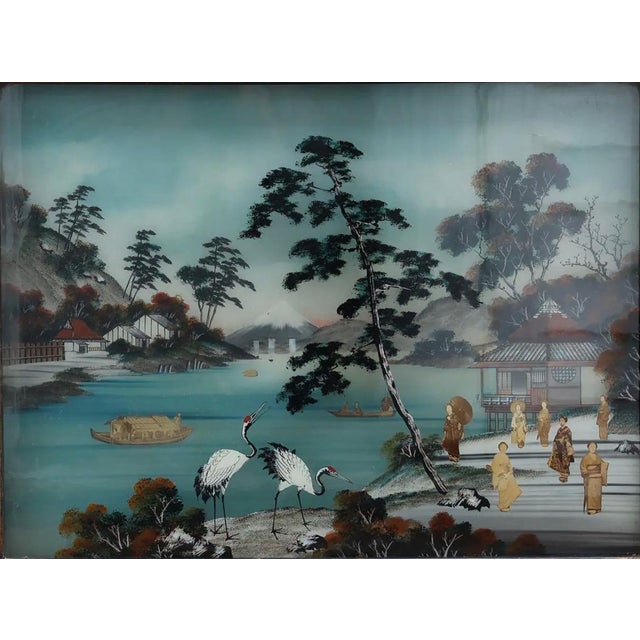
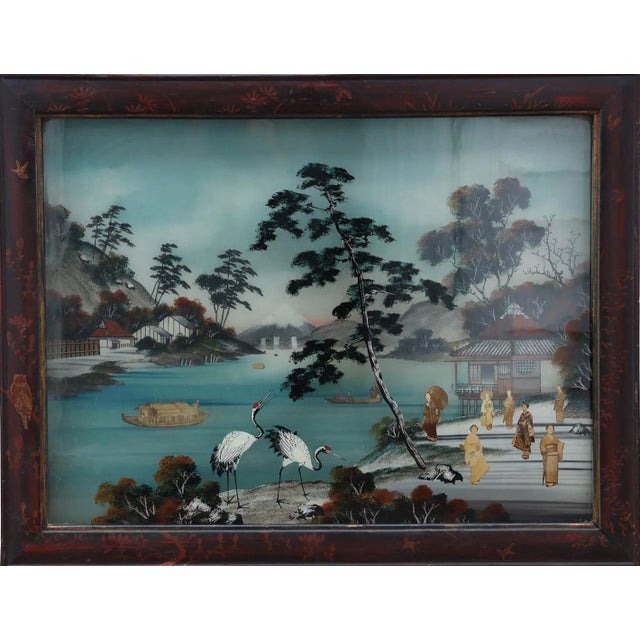
Antique Meiji Period Japanese Reverse Glass Painting - Mother of Pearl Inlay - Cranes at Mt. Fuji - c. 1890
…
Read more
Antique Meiji Period Japanese Reverse Glass Painting - Mother of Pearl Inlay - Cranes at Mt. Fuji - c. 1890
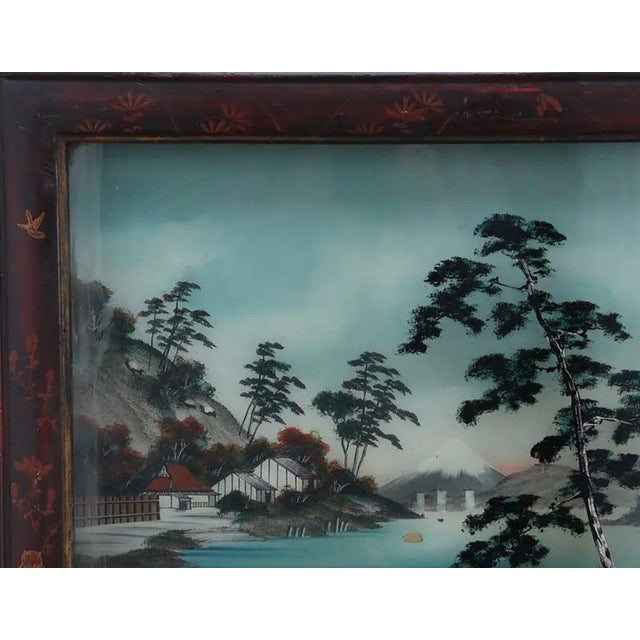
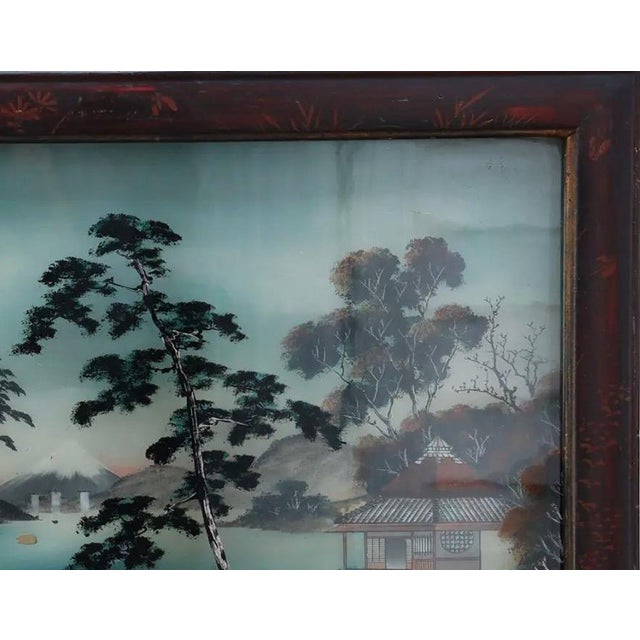
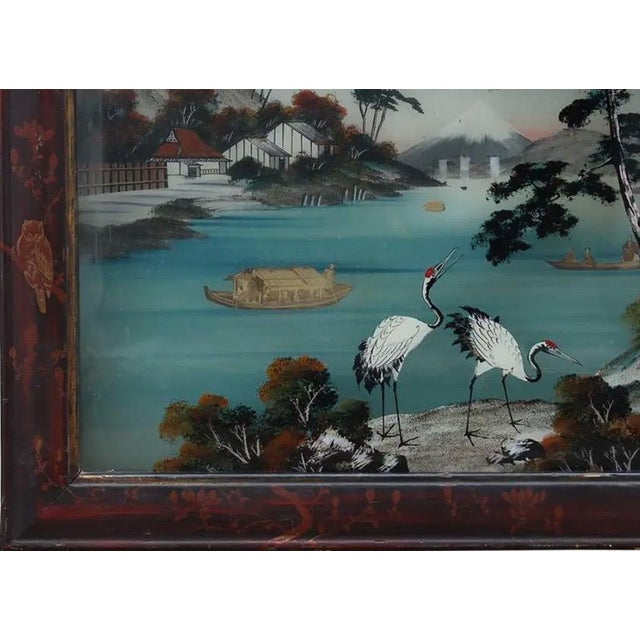
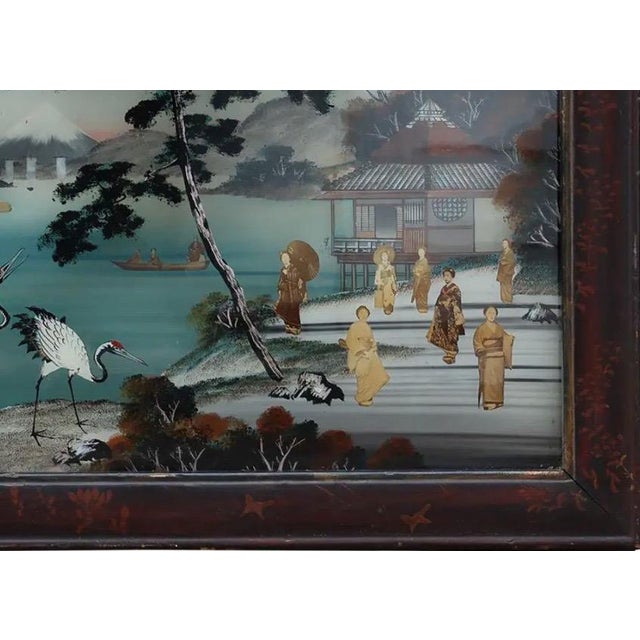
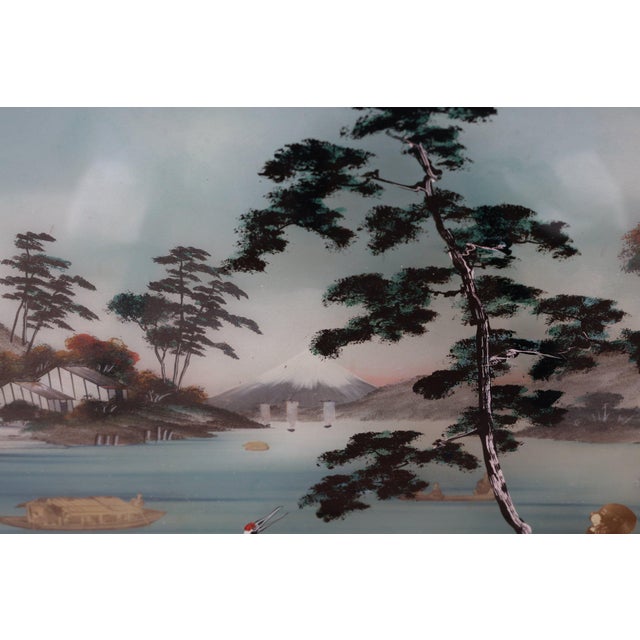
Anchor your interior with the radiant, mirror-like elegance of Japanese heritage. This monumental antique artwork is a masterclass in the traditional art of reverse glass painting, a rare technique where the artist meticulously hand-paints the scene on the back of a glass pane. This method protects the delicate pigments from oxidation and creates a depth of color and "ethereal glow" that traditional canvas simply cannot replicate. The expansive composition is brilliantly accented with hand-inlaid, iridescent Mother-of-Pearl (Nacre). These shimmering highlights catch the light across the architecture of the pagodas, the plumage of the cranes, and the majestic snow-capped peak of Mount Fuji. The narrative scene unfolds with a sophisticated multi-layered perspective, depicting a traditional lakeside village where figures in kimonos and small sampan boats glide across vibrant teal waters. Housed in its original dark-lacquered wood frame with hand-painted foliate motifs, this is a significant "story piece" for a primary suite, a grand library, or a high-end gallery wall.
Historical Significance: The Meiji Export Era
During the Meiji Period (1868–1912), Japan opened its doors to the West, sparking a global obsession with Japanese aesthetics known as Japonisme. This specific piece is a premier example of Japanese Export Art, designed to dazzle Western collectors with the Raden technique (inlaid shell). While reverse glass painting originated in Europe and China, Japanese artisans during the late 19th century perfected the medium, blending their own narrative traditions with the optical luxury demanded by the international market. This painting represents a unique cultural bridge, capturing a moment when Eastern craftsmanship met Western Victorian tastes for the "exotic" and the ornate.
The Symbolism of the Crane and Fuji
Beyond its aesthetic brilliance, this painting is steeped in traditional Japanese iconography. The Japanese Crane is revered as the "Bird of Happiness," serving as an auspicious symbol of longevity, fidelity, and peace. In the foreground, these birds are positioned as guardians of the landscape. They stand in contrast to Mount Fuji, the sacred heart of Japan, which represents immortality and resilience. For the 19th-century collector, owning such a piece was not just a display of wealth, but a silent wish for a long and harmonious life within the home.
Technical Artistry: The "Mirror" Effect
What makes reverse glass painting so distinctive is the "order of operations." Unlike standard painting, the artist must apply details first and background colors last. This requires immense foresight and precision. Because the viewer sees the brushwork through the glass substrate, the surface possesses a natural high-gloss finish that acts as a permanent varnish. The result is a luminous, high-contrast image that appears to be lit from within, making it a perfect functional art piece for rooms that require a touch of brightening and reflective luxury.
Specifications and Dimensions
Period: Meiji Period (c. 1890)
Origin: Japan
Medium: Reverse Glass Painting with Mother-of-Pearl (Nacre) Inlay
Frame: Original Hand-Painted Lacquered Wood
Framed Size: 27.25 inches W x 21.25 inches H
Depth: 1.5 inches
Subject: Landscape, Mount Fuji, Cranes, Maritime
Condition Report
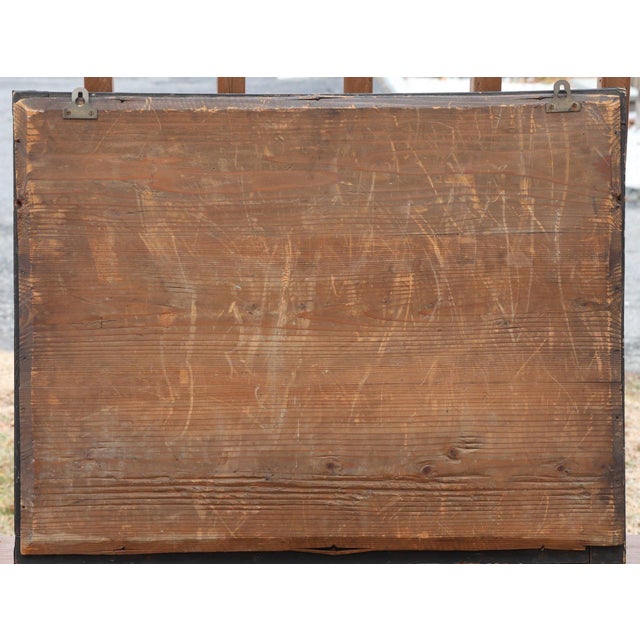
This artwork is in excellent antique condition, representing a remarkably well-preserved specimen of a fragile medium. The colors remain exceptionally vibrant, showing no significant flaking or "lifting" of the paint from the glass, which is a common issue with lesser-quality pieces of this age. The glass is original, clear, and free of cracks or chips. The Mother-of-Pearl inlay is entirely secure and retains a high degree of iridescent luster. The original lacquered frame shows minor, age-appropriate surface wear and "honest" rubbing at the corners, which confirms its authentic period status. The reverse retains its original solid wood structural backing for added stability.
Designer’s Note: The Luminous Focal Point
In high-end interior design, reverse glass paintings are often utilized as "windows" in rooms with limited natural light. The glass surface reflects ambient light, effectively brightening dark corners while providing a rich, maximalist texture. This piece is the perfect anchor for a Grandmillennial, Hollywood Regency, or Chinoiserie space. It pairs beautifully with faux-bamboo furniture, silk grasscloth wallpapers, and polished brass accents. For a more contemporary "Japandi" look, style it as a singular statement piece against a muted, neutral palette to let the teal waters and shimmering shell take center stage.
A rare survival of the East-meets-West export era, this Mother-of-Pearl and Glass Masterpiece offers a level of handcrafted detail that modern reproductions simply cannot replicate. It stands as a sophisticated bridge between fine art and high-end cabinetry—a true investment-grade acquisition for the discerning global collector. Whether you are looking to deepen a collection of Asian Antiques or simply seeking a storied centerpiece with tactile soul, this Meiji-era treasure is ready to serve as the definitive conversation piece in a home of high distinction.
See less
- Dimensions
- 27.25ʺW × 1.25ʺD × 21.25ʺH
- Frame Type
- Framed
- Period
- Late 19th Century
- Country of Origin
- Japan
- Item Type
- Vintage, Antique or Pre-owned
- Materials
- Glass
- Mother-of-Pearl
- Paint
- Condition
- Good Condition, Original Condition Unaltered, Some Imperfections
- Color
- Blue
- Condition Notes
- This artwork is in excellent antique condition, representing a remarkably well-preserved specimen of a fragile medium. The colors remain exceptionally … moreThis artwork is in excellent antique condition, representing a remarkably well-preserved specimen of a fragile medium. The colors remain exceptionally vibrant, showing no significant flaking or "lifting" of the paint from the glass, which is a common issue with lesser-quality pieces of this age. The glass is original, clear, and free of cracks or chips. The Mother-of-Pearl inlay is entirely secure and retains a high degree of iridescent luster. The original lacquered frame shows minor, age-appropriate surface wear and "honest" rubbing at the corners, which confirms its authentic period status. The reverse retains its original solid wood structural backing for added stability. less
Questions about the item?
Returns & Cancellations
Return Policy - All sales are final 48 hours after delivery, unless otherwise specified in the description of the product.
Cancellation Policy - Prior to shipping or local pickup, buyers may cancel an order for up to 48 hours, unless otherwise specified.
Related Collections
- Photorealism Canvas Paintings
- Ed Ruscha Paintings
- Photorealism Paintings in New York
- Richard Serra Paintings
- Herman Miller Paintings
- Jo Baskerville Paintings
- Louise Nevelson Paintings
- Karen Offutt Paintings
- Nicola Simbari Paintings
- BDDW Paintings
- James McCray Paintings
- Jaanika Peerna Paintings
- Leroy Neiman Paintings
- Black Photorealism Paintings
- Jeff Slemmons Paintings
- Gold-filled Paintings
- Milton Avery Paintings
- Soicher Marin Paintings
- Vienna Secession Paintings
- Johannes Andersen Paintings
- Pedro Friedeberg Paintings
- Peter Behrens Paintings
- Piet Hein Eek Paintings
- Raphael Paintings
- Photorealism Paintings in Los Angeles