


Details
Description
This is a Qing Dynasty (1644-1911) ancestor portrait. Ancestors were usually shown in their best dress, which gives us a …
Read more
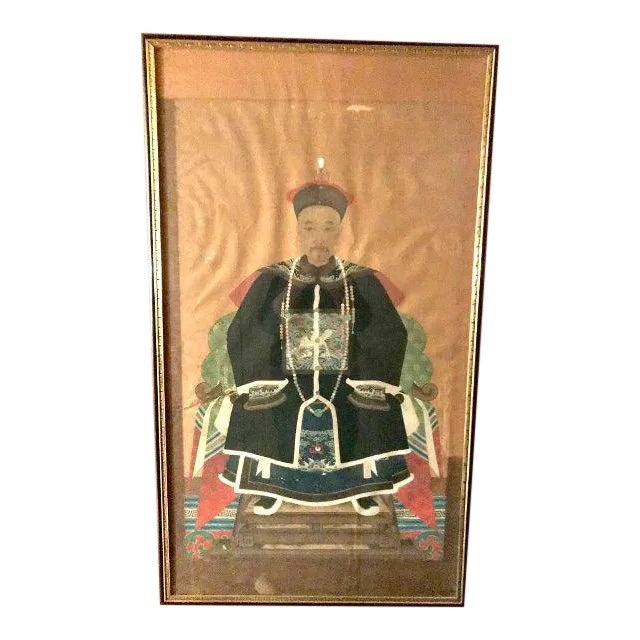
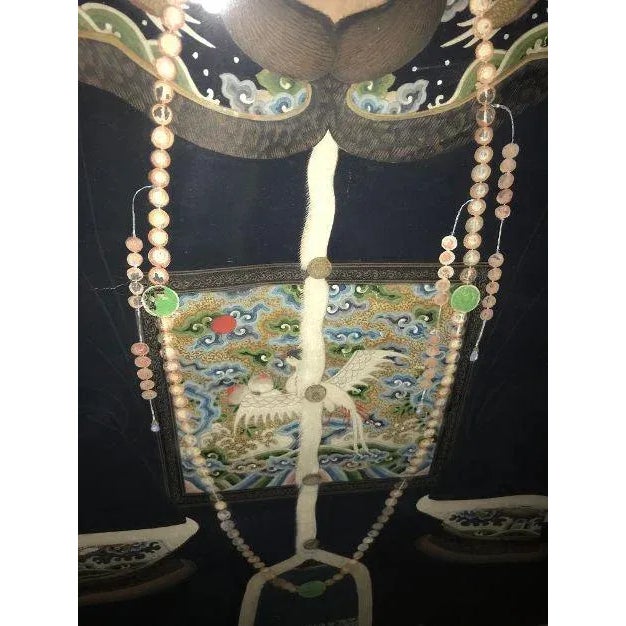
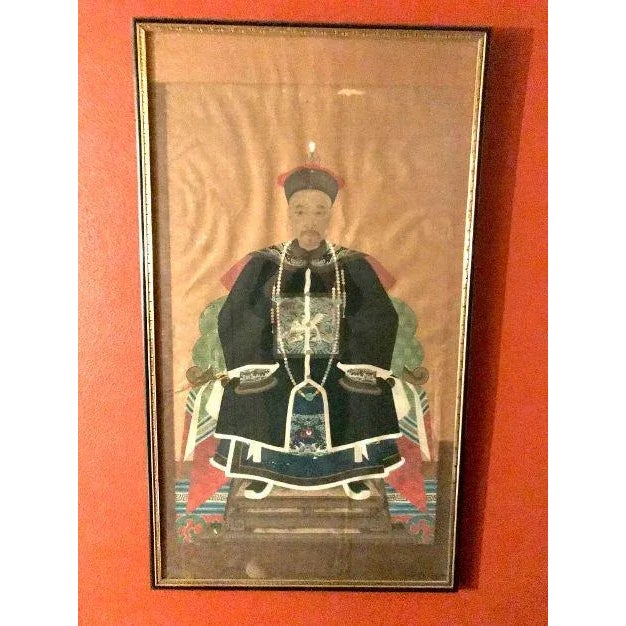
This is a Qing Dynasty (1644-1911) ancestor portrait. Ancestors were usually shown in their best dress, which gives us a way to judge the rank of a subject. The most formal costume in the Qing wardrobe was called chao fu, “court dress.” Chao fu did not refer to a single garment but to an entire outfit, the way a “tuxedo” consists of a shirt, pants, jacket, tie, and cummerbund. Chao fu required a court hat, robe, necklace, and belt, all with prescribed decorations and symbols.
Families commissioned ancestor portraits to commemorate deceased relatives. These paintings were treated with the greatest respect. On certain holidays, families would honor their ancestors by bowing before the portraits and placing food in front of them. If properly cared for, ancestors contributed to wealth and good fortune for their descendants. If ignored, ancestors could turn into nasty ghosts who would bring bad luck. When the Qing Dynasty fell in the 1910s, families began to sell off their ancestor portraits.
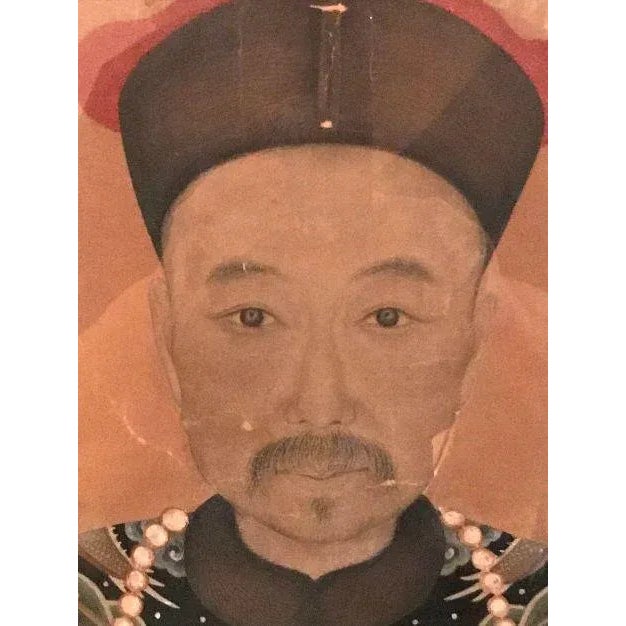
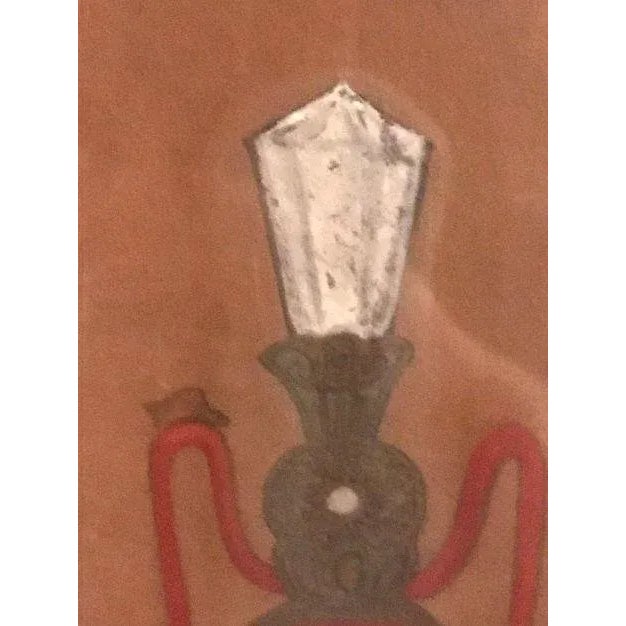
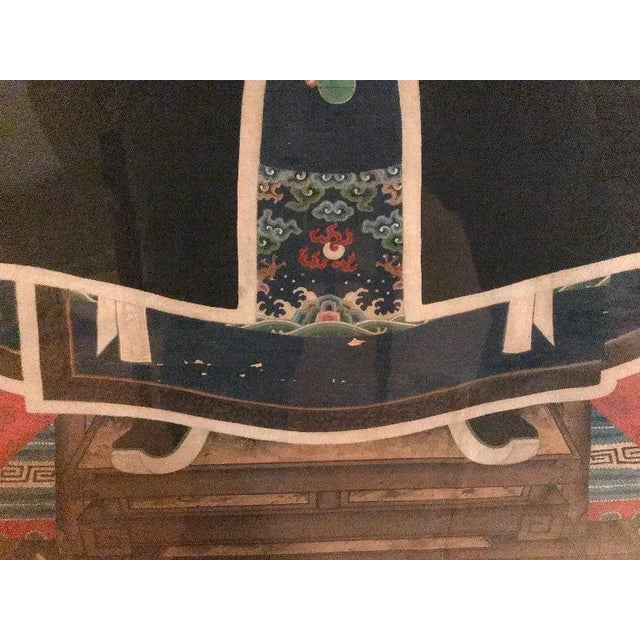
This portrait consists of ink and colors on paper, with the ancestor seated on a throne and dressed in winter ceremonial attire. See the fur linings visible at the cuffs and collar. The dark surcoat is emblazoned with a Qing Dynasty badge (silk square) that reflected rank of officials. Mandarin viscounts and barons had cranes and golden pheasants showing they were of the first or second class at court. This ancestor's winter hat finial, or ornament at the top, marks this as a court hat, also of high rank. .
The boots depicted symbolized that a man never walked anywhere because he had a horse to ride. The boots had stiff white soles that originally allowed a Manchu rider to stand up in the stirrups. Such boots were usually made of black satin with soles of leather and felted paper, and cost the same as a servant’s wages for a whole year!
This portrait was acquired in the 1910s by a family member. Around 1970, an appraiser indicated its age at 175 years, so today the portrait is some 225 years old. There is some minor deterioration of the paper and one area near a sleeve and throne arm that may have had water damage. The portrait would benefit from reframing.
See less
- Dimensions
- 28.5ʺW × 1ʺD × 49.5ʺH
- Styles
- Qing
- Frame Type
- Framed
- Art Subjects
- Portrait
- Period
- Early 19th Century
- Country of Origin
- China
- Item Type
- Vintage, Antique or Pre-owned
- Materials
- Paint
- Paper
- Pen and Ink
- Condition
- Good Condition, Original Condition Unaltered, Some Imperfections
- Color
- Black
- Condition Notes
- There is some deterioration of the paper and what looks like a small water stain by the right hand. This … moreThere is some deterioration of the paper and what looks like a small water stain by the right hand. This item was last framed in the 1950s and while the frame is in good condition with some minor blemishes, it would benefit from being repapered on the back. less
Questions about the item?
Returns & Cancellations
Return Policy - All sales are final 48 hours after delivery, unless otherwise specified in the description of the product.
Cancellation Policy - Prior to shipping or local pickup, buyers may cancel an order for up to 48 hours, unless otherwise specified.
Related Collections
- Ralph Lauren Paintings
- Ed Ruscha Paintings
- Photorealism Canvas Paintings
- Photorealism Paintings in New York
- Silk Velvet Paintings
- Herman Miller Paintings
- Louise Nevelson Paintings
- Richard Serra Paintings
- Jaanika Peerna Paintings
- Jo Baskerville Paintings
- Jean-Paul Barray Paintings
- Hans Andersen Paintings
- Johannes Andersen Paintings
- Peter Behrens Paintings
- Raphael Paintings
- Photorealism Paintings in Los Angeles
- Carl-Axel Acking Paintings
- Joseph Stella Paintings
- Karl-Erik Ekselius Paintings
- Pedro Friedeberg Paintings
- Piet Hein Eek Paintings
- Black Photorealism Paintings
- Cassina Paintings
- BDDW Paintings
- Lee Reynolds Paintings