

Details
Description
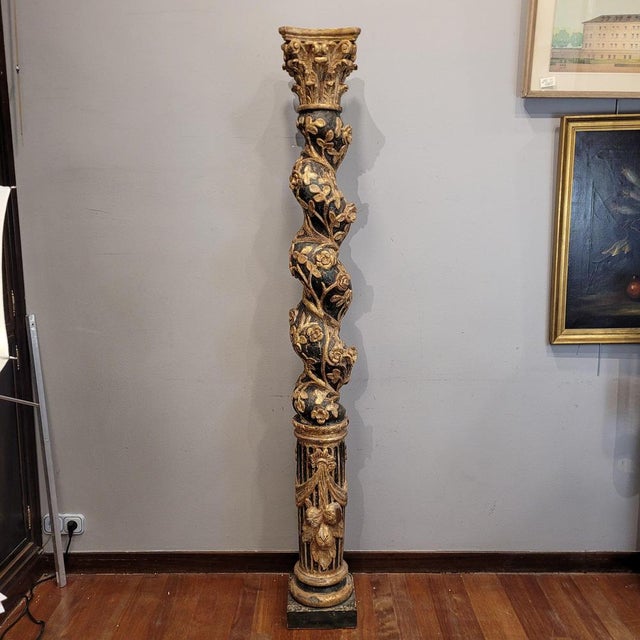
Sculpture, carving “Solomonic Column”, carved, gilded, and polychromed wood, 18th century – Spain
Magnificent Solomonic column belonging to the decorative …
Read more
Sculpture, carving “Solomonic Column”, carved, gilded, and polychromed wood, 18th century – Spain
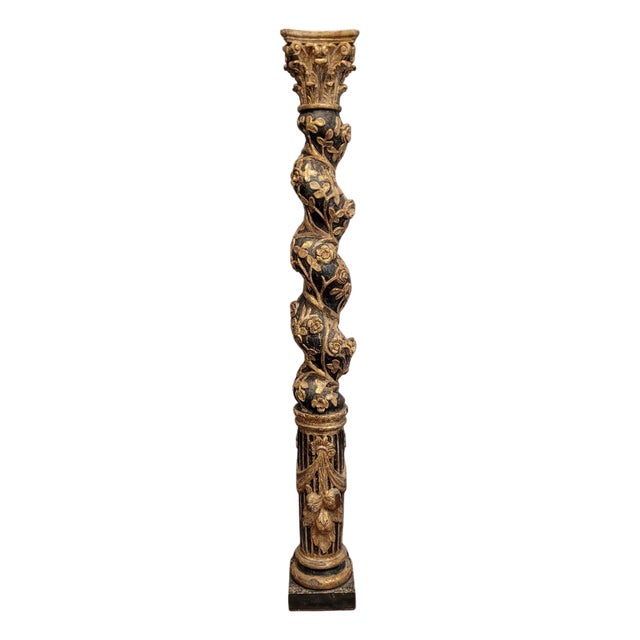
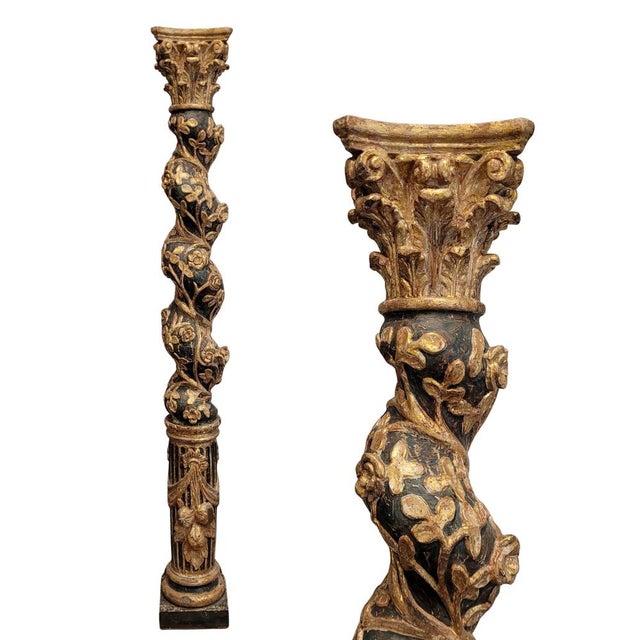
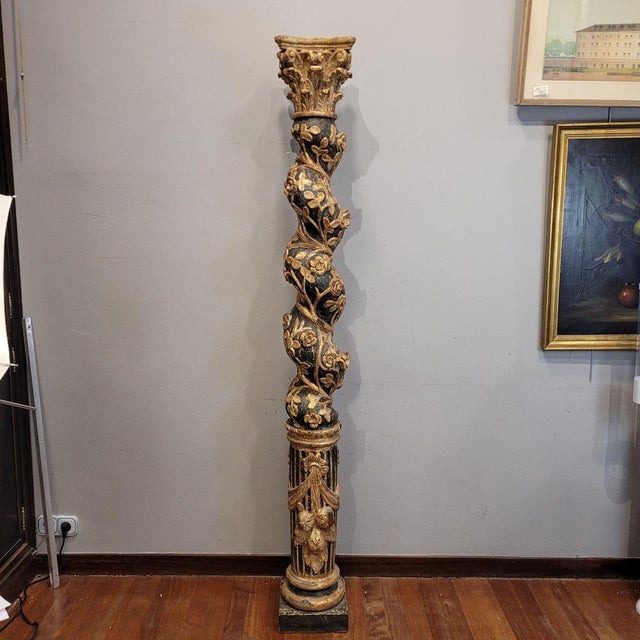
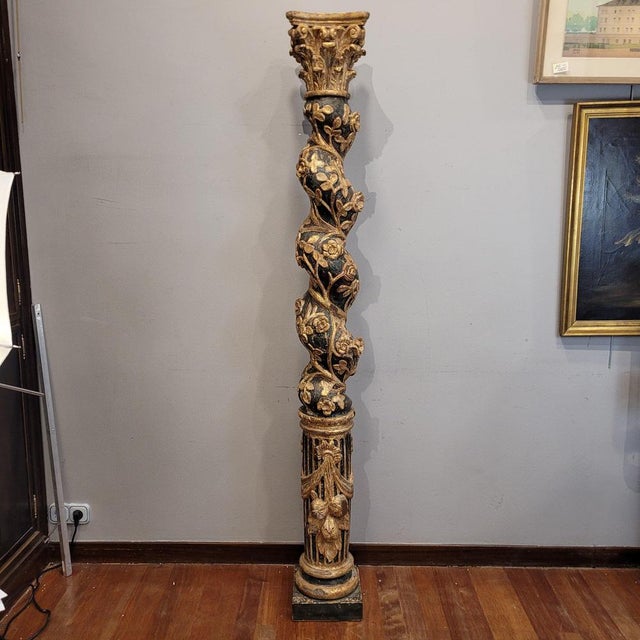
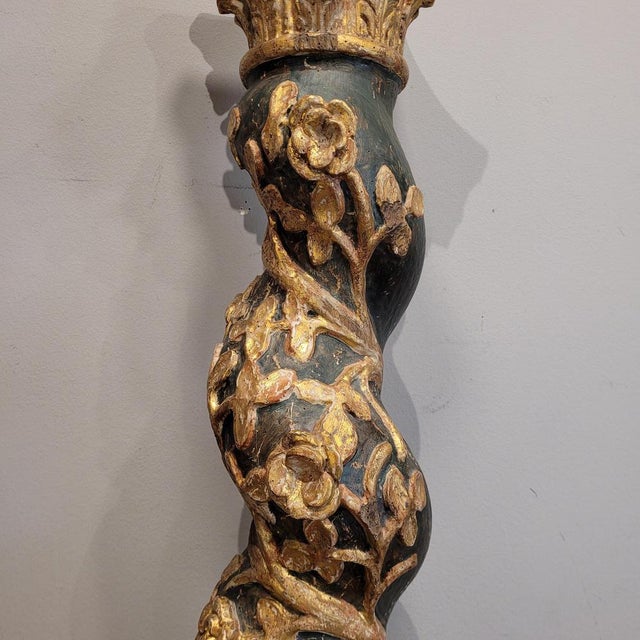
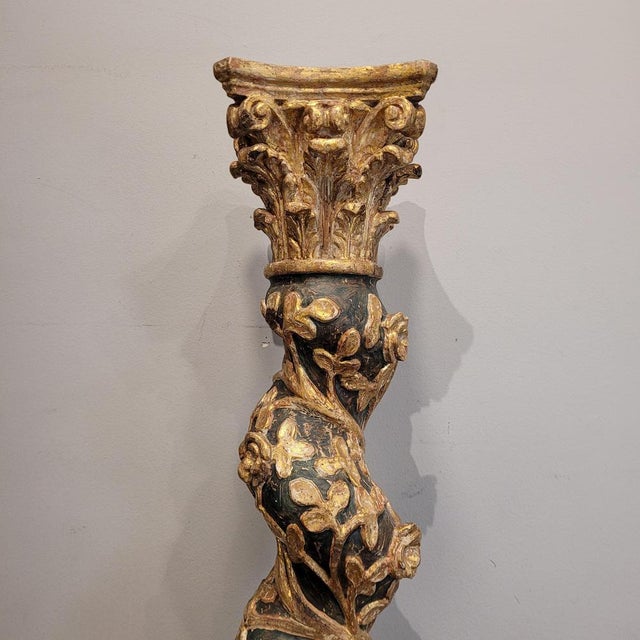
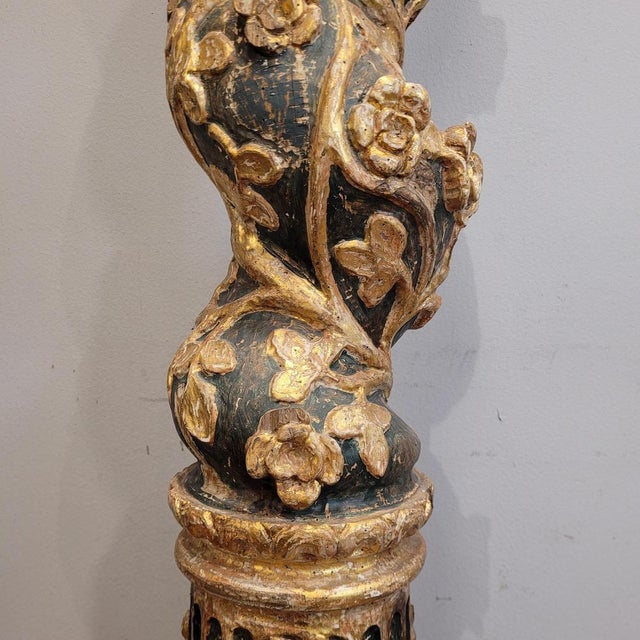
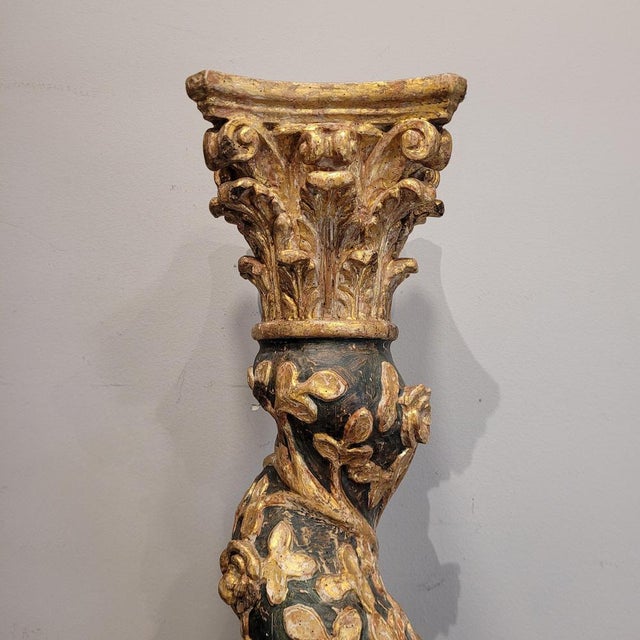
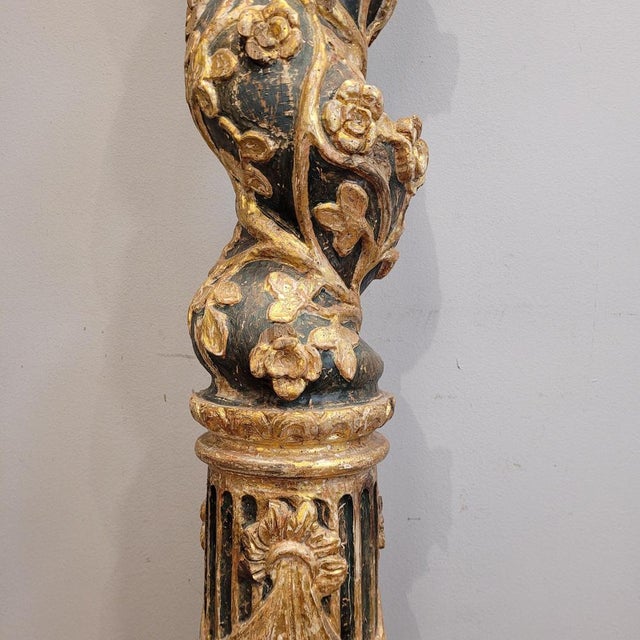
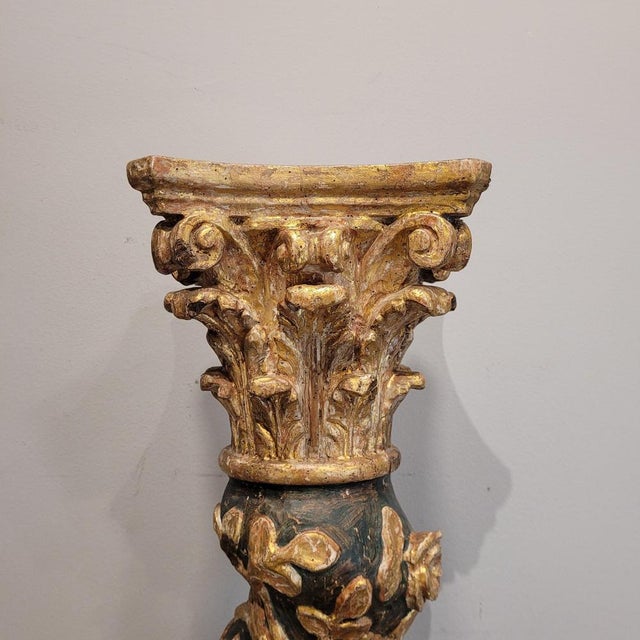
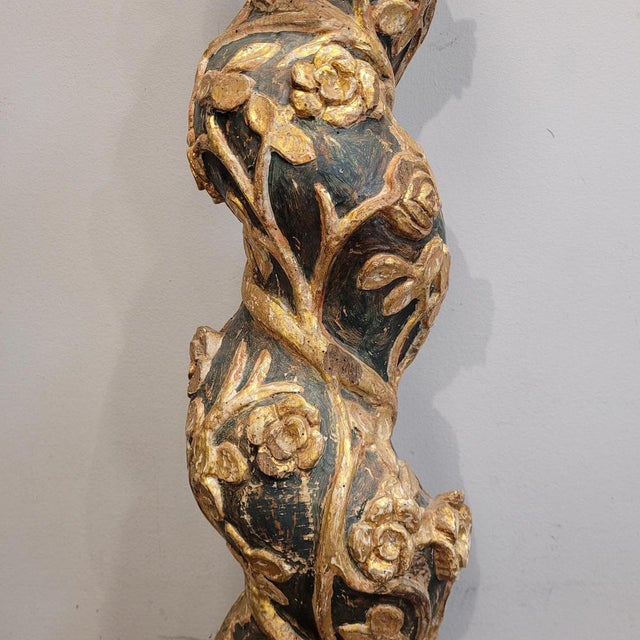
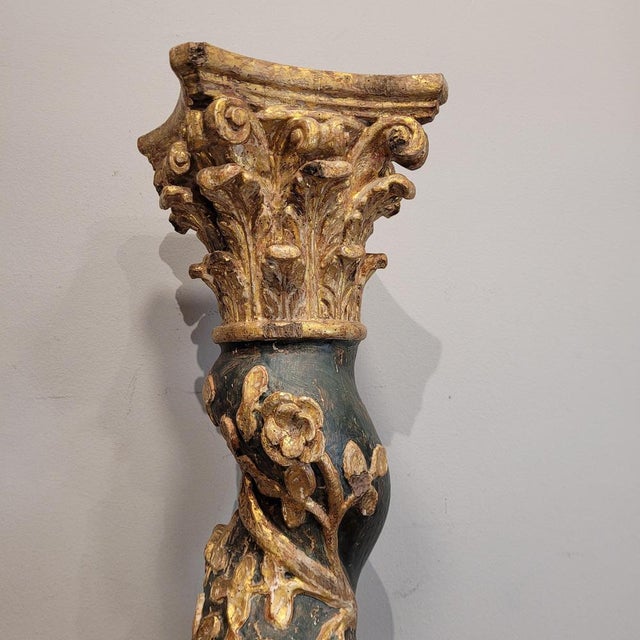
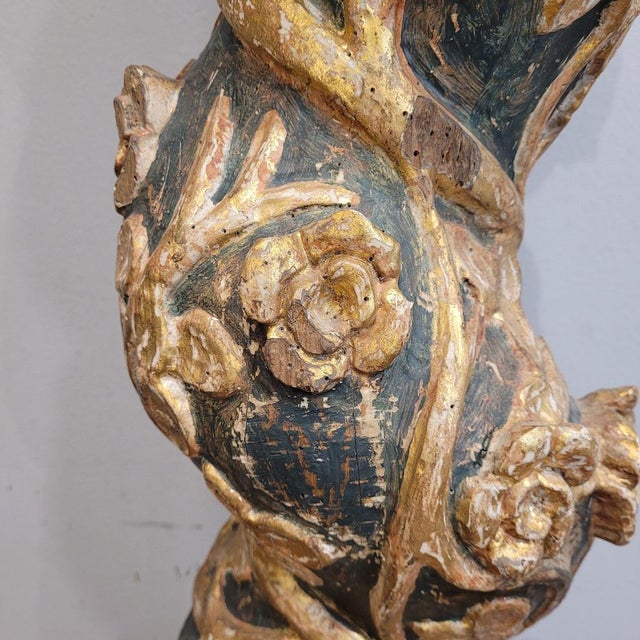
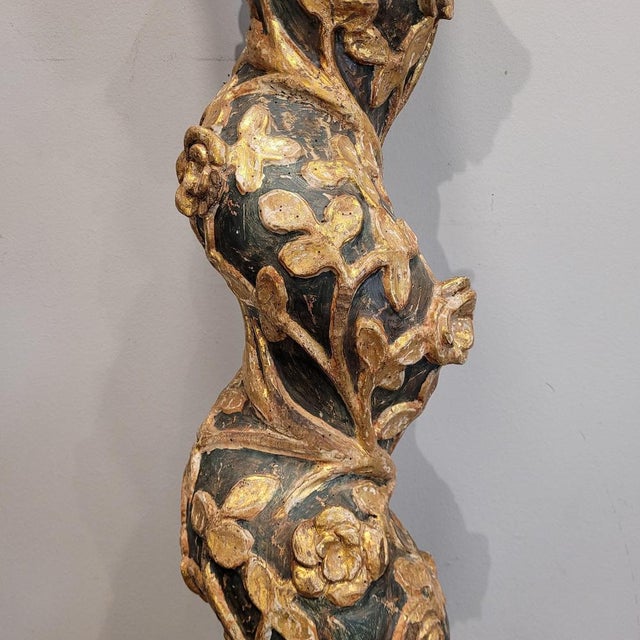
Magnificent Solomonic column belonging to the decorative structure of an 18th-century Baroque altarpiece. Originally, this piece would have been attached to the altarpiece structure, hence its ornamentation is concentrated on the visible face; the other side reveals the carved wood, but bare, without gilding and with minimal polychromy.
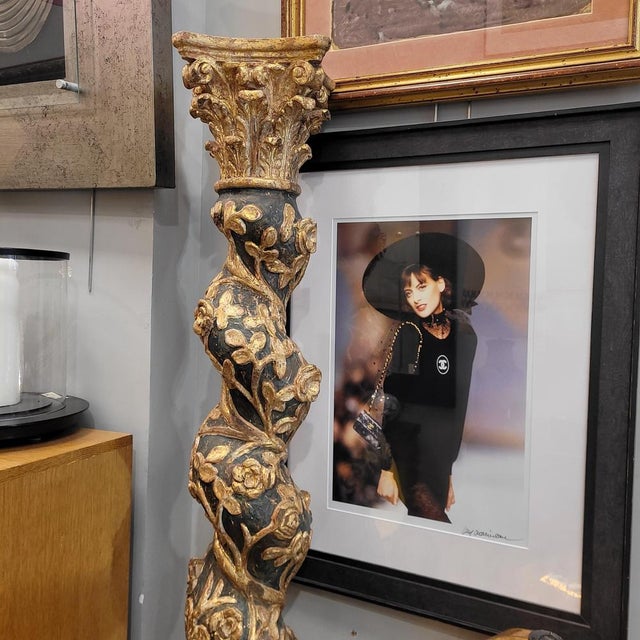
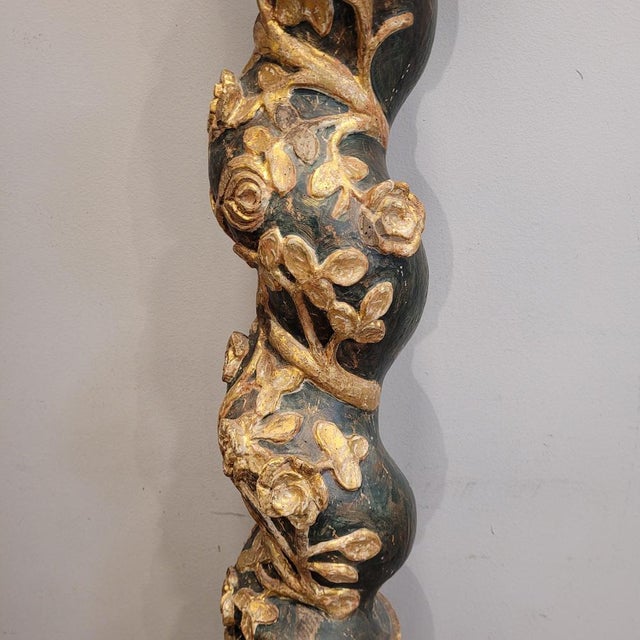
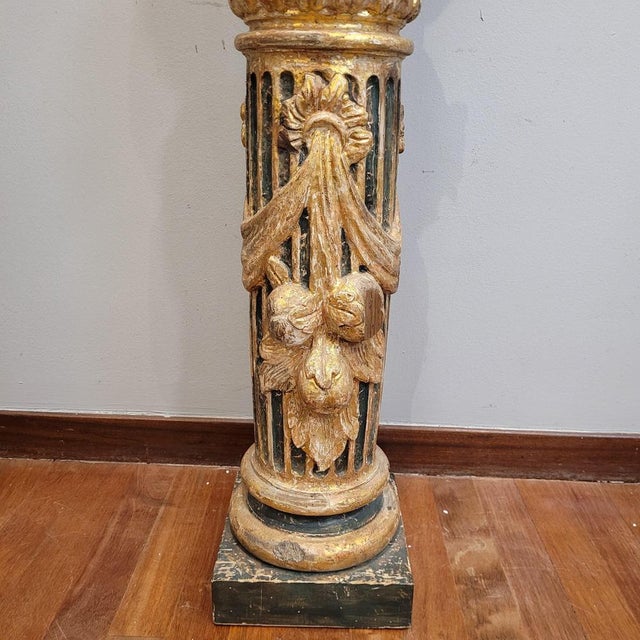
This Solomonic column twists on its own axis in a serpentine form. Its entire surface is decorated with polychrome vegetal motifs in shades of green, gilded with high-quality fine gold leaf. The base is not helical, but fluted. It culminates in an intricate Corinthian capital, replete with delicate acanthus leaves that curve outwards.
Solomonic columns are a type of architectural column characterized by their spiral, screw-like shape and decorated with plant motifs. This architectural style originated in 16th-century Italy and became popular in the 17th and 18th centuries in Europe and Latin America.
The Solomonic column has a complex and elaborate form, with a shaft that twists in a spiral and intertwines with plant motifs such as leaves, flowers, and fruit. This spiral shape gives the column a dynamic and elegant appearance, while the plant decoration lends it a natural and organic look. They were typically carved from wood or stone and painted in bright, vibrant colors, such as gold, red, green, or blue, to highlight the details of the plant decorations. Precious materials, such as marble and bronze, were also used to give them a more luxurious and elegant appearance.
They were primarily used in religious architecture, especially in Baroque churches, where they were used to decorate altars and chapels. They were also used in civil architecture, especially in palaces and public buildings, where they were used to decorate facades and interiors.
Material: Carved, gilded, and polychrome wood
Period: 18th century
Country of origin: Spain
Provenance: Private collection
Good condition considering its age and use.
Dimensions: 189 x 25 x 25 cm.
See less
- Dimensions
- 9.84ʺW × 9.84ʺD × 74.41ʺH
- Art Subjects
- Figure
- Country of Origin
- Spain
- Item Type
- Vintage, Antique or Pre-owned
- Materials
- Wood
- Condition
- Unknown, Some Imperfections
- Color
- Forest Green
- Condition Notes
- Good — This vintage item remains fully functional, but it shows sign of age through scuffs, dings, faded finishes, minimal … moreGood — This vintage item remains fully functional, but it shows sign of age through scuffs, dings, faded finishes, minimal upholstery defects, or visible repairs. less
Returns & Cancellations
Return Policy - All sales are final 48 hours after delivery, unless otherwise specified in the description of the product.
Cancellation Policy - Prior to shipping or local pickup, buyers may cancel an order for up to 48 hours, unless otherwise specified.
Related Collections
- Mario Lopez Torres Sculpture
- Lime Sculpture
- Klaus Ihlenfeld Sculpture
- Chaim Gross Sculpture
- Polycarbonate Sculpture
- Post Impressionist Sculpture
- Peter Shire Sculpture
- Eugenio Pattarino Sculpture
- Georgian Sculpture
- Copeland Sculpture
- Mathurin Moreau Sculpture
- Maison Jansen Sculpture
- Hagenauer Werkstätte Sculpture
- Renato Anatra Sculpture
- Photorealism Sculpture
- Loredano Rosin Sculpture
- Austin Productions Sculpture
- Mid-Century Modern Sculpture
- Brutalist Sculpture
- Folk Art Sculpture
- Nude Sculptures
- Alabaster Sculpture
- Large Sculptures
- Jade Sculpture
- Isamu Noguchi Sculpture