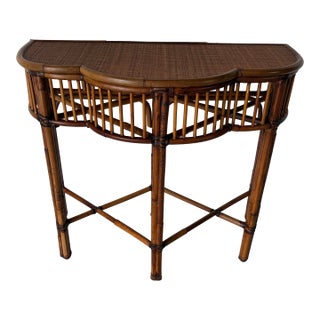
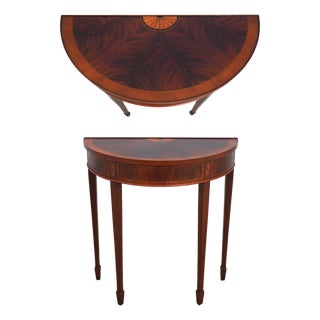
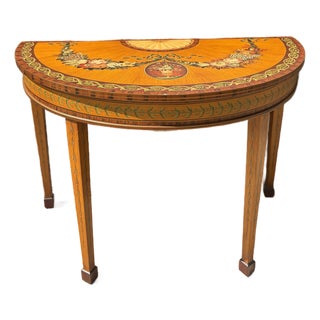
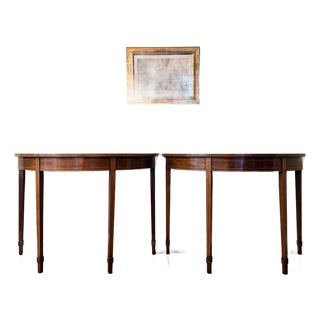
Details
Description
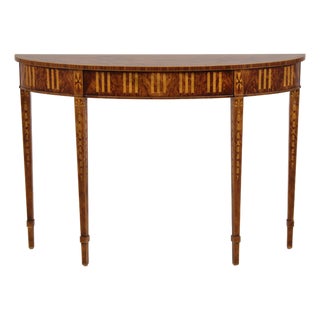
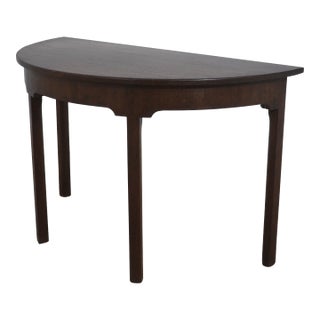
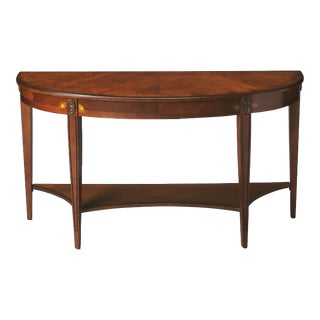
Primary material: Cherry wood (Prunus avium) – a highly prized native hardwood in southern Germany, known for its warm, reddish-brown …
Read more
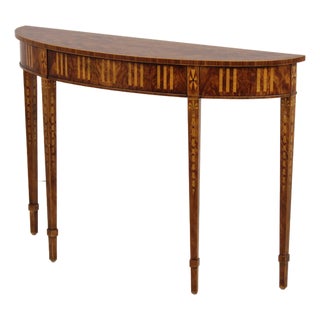
Primary material: Cherry wood (Prunus avium) – a highly prized native hardwood in southern Germany, known for its warm, reddish-brown color and fine grain. The wood was used both as solid wood (for the legs and substructure) and as high-quality veneer.
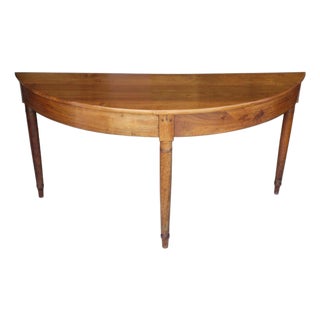
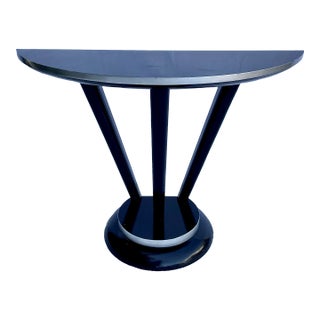
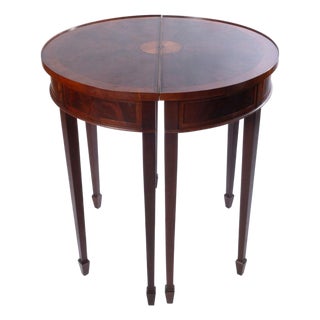
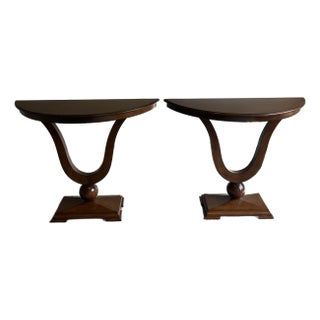
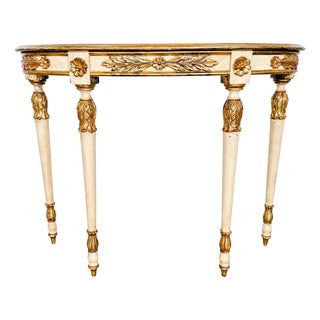
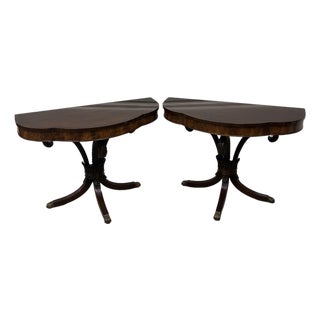
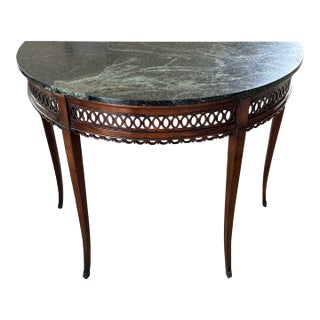
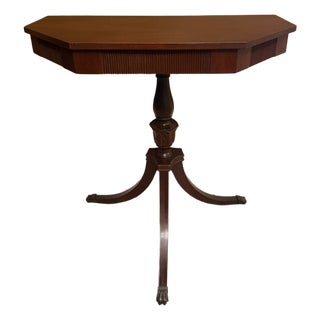
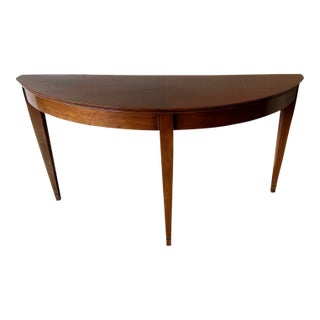
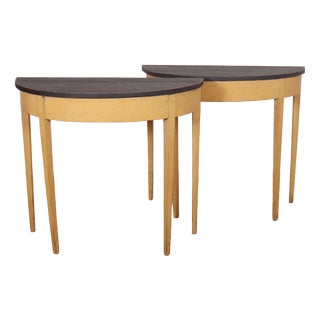
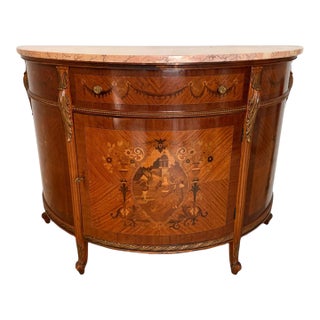
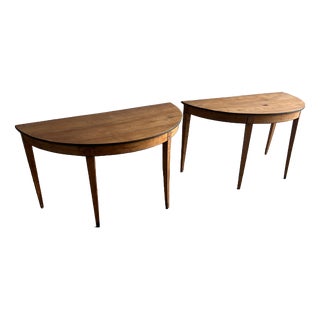
Construction: Traditional joinery in the Biedermeier style, using dovetail joints and mortise and tenon joints. The crescent-shaped tabletop consists of several glued boards, the frame is veneered, and the three tapered legs are turned from solid cherry wood.
Surface treatment: Original shellac polish (French polish), an elaborate hand-polishing technique that creates a mirror-like, deep-gloss surface through multiple applications of alcoholic shellac—the hallmark of Biedermeier furniture.
Special details: The elegantly tapered legs exhibit the typical Biedermeier aesthetic of reduction to the essentials, possibly with black ebonizing as subtle accents.
Production process
Context of origin: Handcrafted, unique piece from a South German cabinetmaker's workshop, circa 1815–1825—the heyday of the Biedermeier style. Every element was crafted by hand: from sawing and planing the boards to turning the legs and applying the elaborate shellac polish.
Region of origin: Southern Germany (likely Bavaria, Baden-Württemberg, or adjacent regions), known for its use of fruitwoods such as cherry, walnut, and pear.
Time required: The production of such a console table required approximately 80–120 hours of work by a master cabinetmaker—from cutting the wood and veneering to the multi-day shellac polishing process.
Design philosophy and inspiration
Style period: Biedermeier (1815–1848)—a unique furniture style in German-speaking countries that emerged as a counter-movement to the pompous Empire style.
Sources of inspiration:
Functionality and bourgeois values: Biedermeier furniture was created for the rising middle class, who, after the Napoleonic era, valued domestic comfort ("Gemütlichkeit") and practical elegance. laid.
Classical elements: Simplified forms from antiquity, reduced to clean lines and basic geometric shapes.
Natural beauty: Emphasis on the natural wood grain instead of elaborate ornamentation – "honesty of the material."
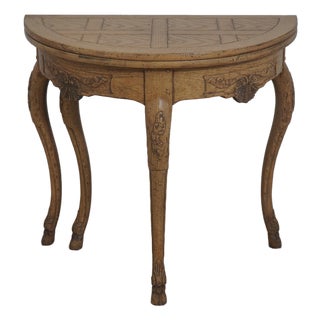
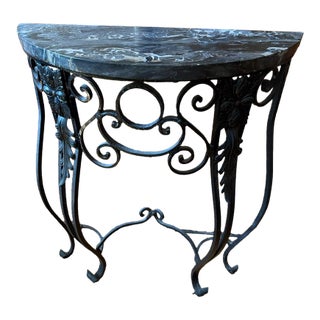
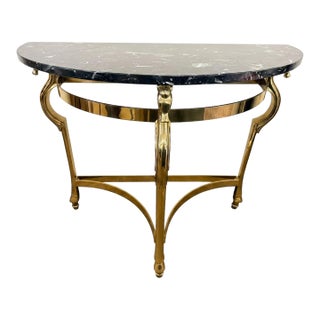
Shape: The half-moon shape (demi-lune) was particularly popular for wall consoles and reflects the Biedermeier preference for geometric, space-saving solutions.
Cultural and historical context
Period of origin: from the Congress of Vienna era to the Vormärz period – a politically conservative but culturally flourishing period in Germany and Austria. The Biedermeier era is considered the first independent German design movement.
Social function: Such console tables served as prestigious pieces of furniture in bourgeois households, for reception rooms, salons, or hallways. They were placed against the wall and supported candlesticks, vases, or letter trays.
Nationality of the design: German (specifically a South German variant of the Biedermeier style). Southern German furniture differs from Viennese (Austrian) Biedermeier pieces in its use of lighter woods and simpler forms.
Production Site
Origin: Southern German cabinetmaker's workshop, presumably in Bavaria, Baden-Württemberg, or adjacent regions.
Workshop Character: Small to medium-sized master workshop with 2-6 journeymen. Biedermeier furniture was not mass-produced, but rather manufactured in traditional workshops, often family-owned for generations.
No manufacturer's mark: Unlike French furniture, there was no requirement to stamp a mark in Germany, so most Biedermeier furniture is anonymous.
Recognition and art historical significance: Stylistic significance: Biedermeier is considered the most important German furniture style of the 19th century and is highly regarded internationally.
Collector's value: Original Biedermeier furniture from the early period (1815-1825) is highly sought-after and is exhibited in museums and private collections worldwide.
Current appreciation: Since the 1970s, Biedermeier furniture has experienced a renaissance. Its clear, minimalist design language complements modern interior design perfectly. I have official proof of authenticity such as vintage catalogs,
designer records,
or other literature sources and take full responsibility for any authenticity issues arising
from
misattribution
See less
- Dimensions
- 26.77ʺW × 14.57ʺD × 31.5ʺH
- Period
- Early 19th Century
- Country of Origin
- Germany
- Item Type
- Vintage, Antique or Pre-owned
- Materials
- Cherry Wood
- Condition
- Unknown, Needs Restoration
- Color
- Brown
- Condition Notes
- Patina Consistent with Age and Use Patina Consistent with Age and Use less
Returns & Cancellations
Return Policy - All sales are final 48 hours after delivery, unless otherwise specified in the description of the product.
Related Collections
- Edwardian Demi-lune Tables
- Swedish Modern Demi-lune Tables
- French Country Demi-lune Tables
- Traditional Demi-lune Tables
- Mahogany Demi-lune Tables
- Federal Demi-lune Tables
- French Demi-lune Tables
- Baker Furniture Company Demi-lune Tables
- Cherry Wood Demi-lune Tables
- Maitland - Smith Demi-lune Tables
- Early American Demi-lune Tables