




Details
Description
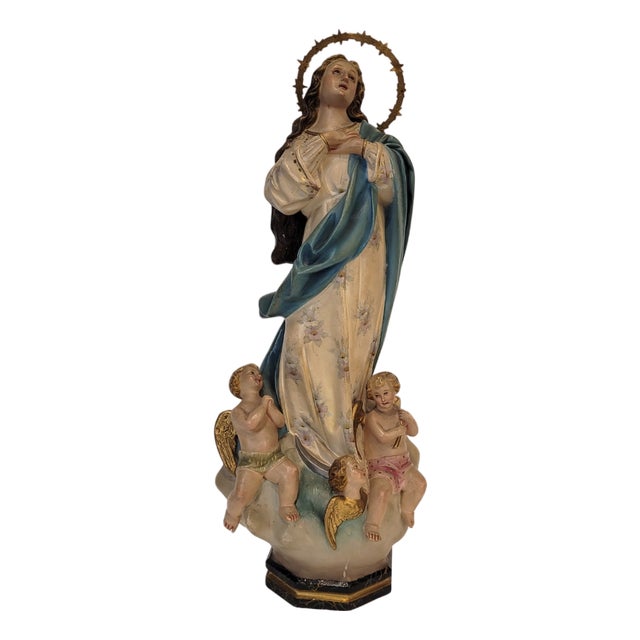
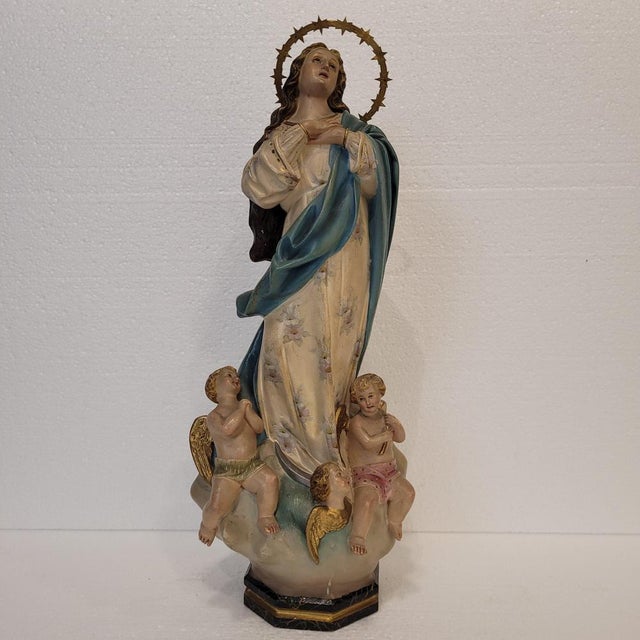
Sculpture of the Virgin Mary Immaculate Conception, Olot School, 20th century – Girona, Catalonia
Material: Wood pulp
School: Olot School
…
Read more
Sculpture of the Virgin Mary Immaculate Conception, Olot School, 20th century – Girona, Catalonia
Material: Wood pulp
School: Olot School
Period: Early 20th century
Country of origin: Catalonia, Spain
Provenance: Private collection in Valladolid
Good condition commensurate with age and use
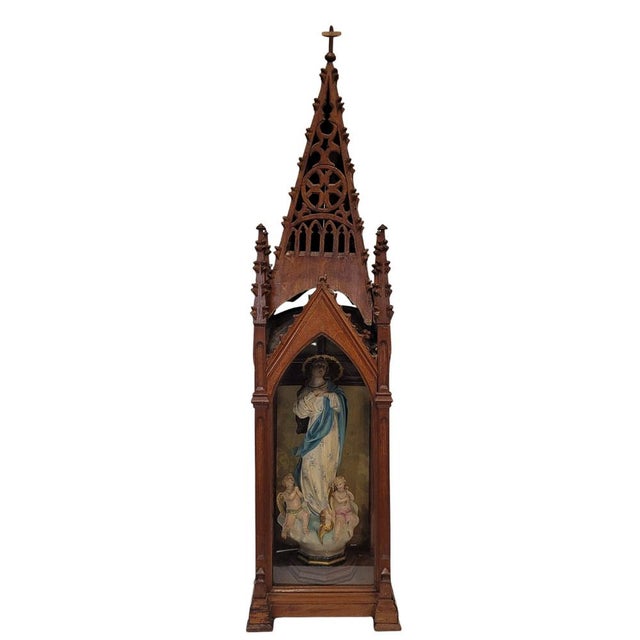
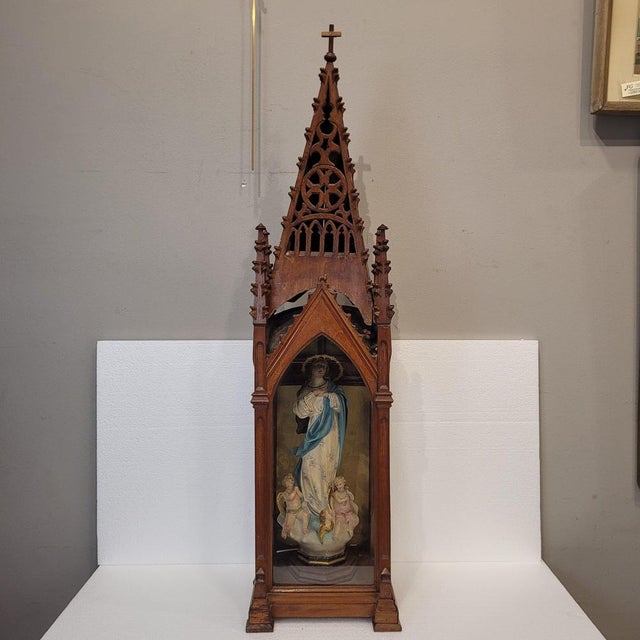
Dimensions with chapel: 112 x 28 x 23 cm
Dimensions of the carving: 42 x 17 x 13 cm
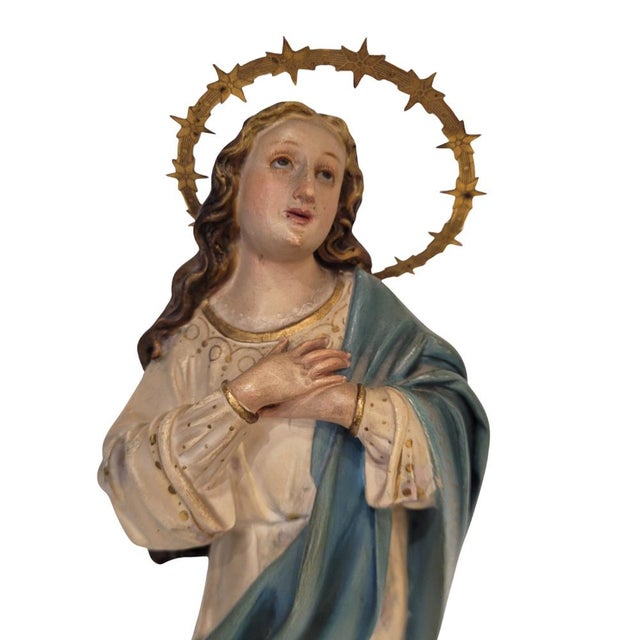
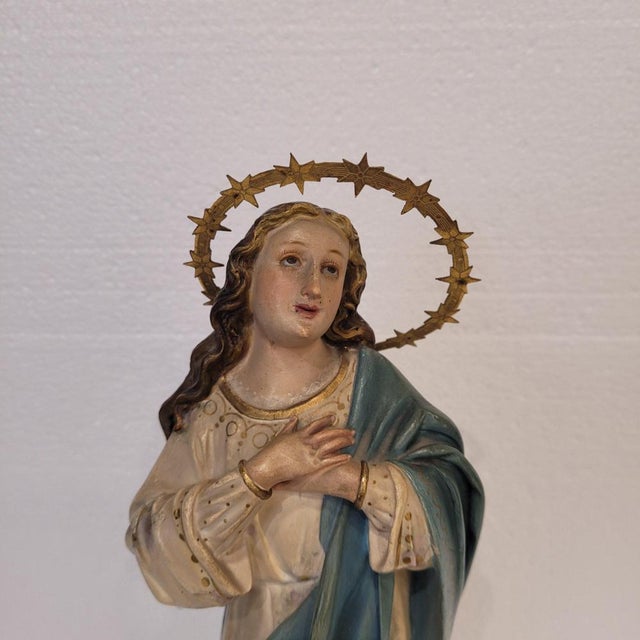
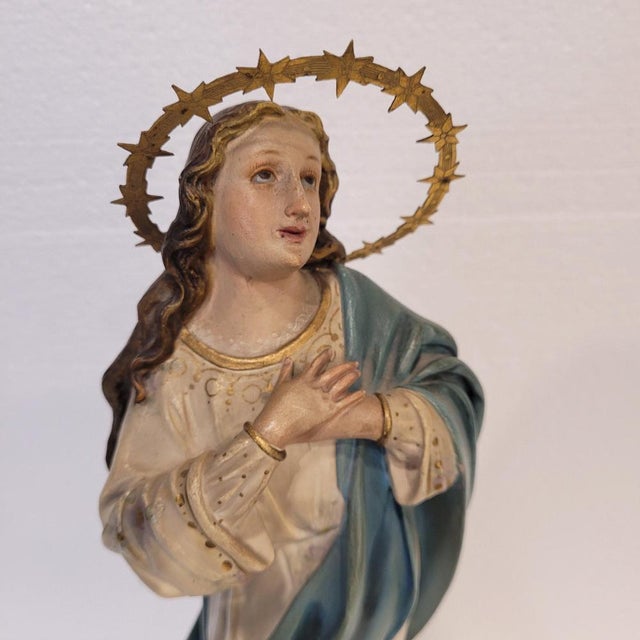
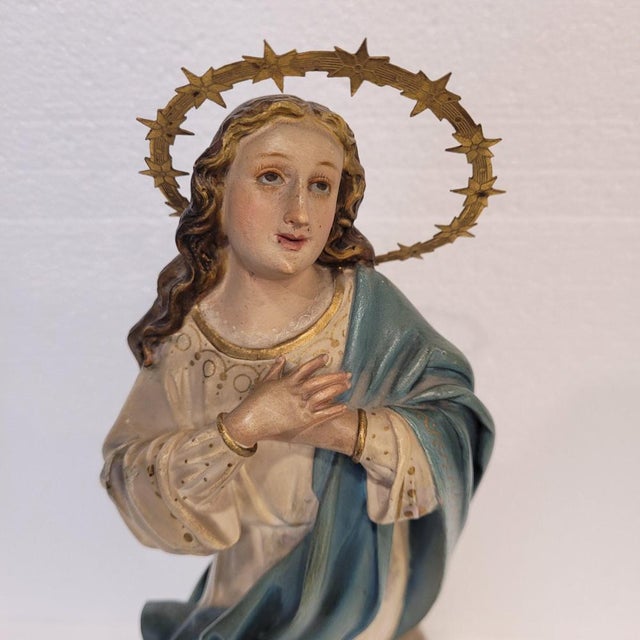
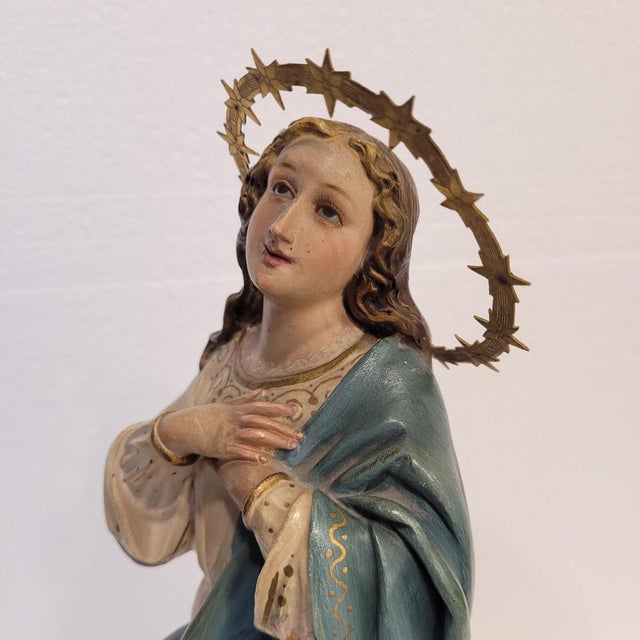
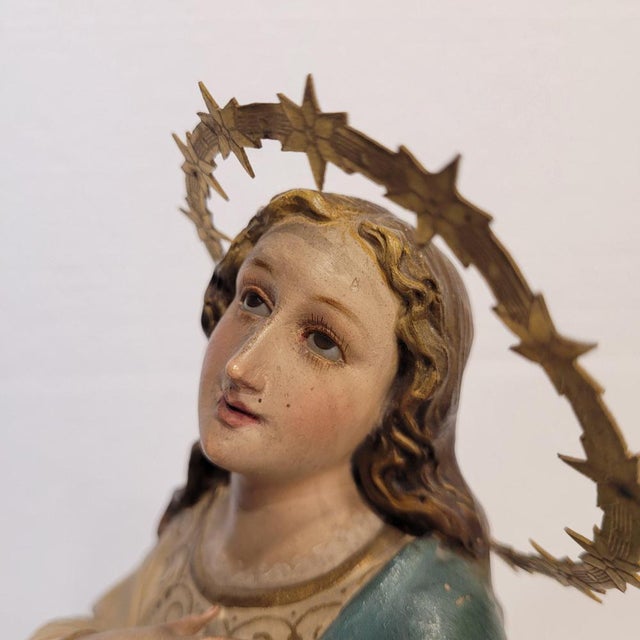
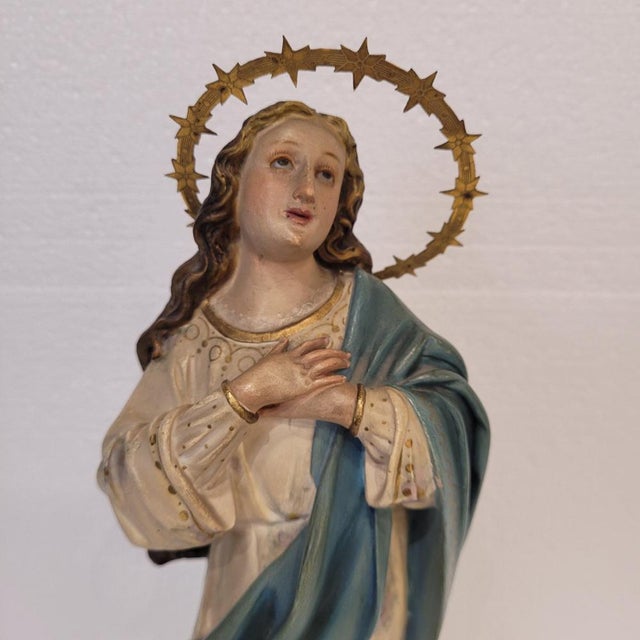
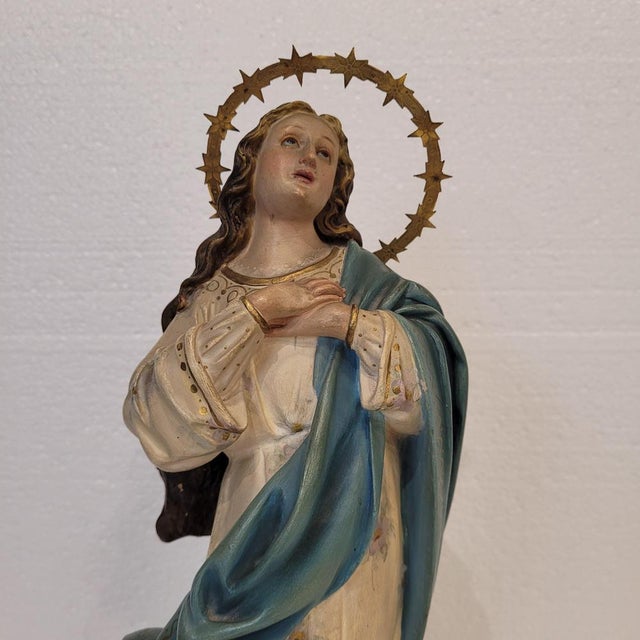
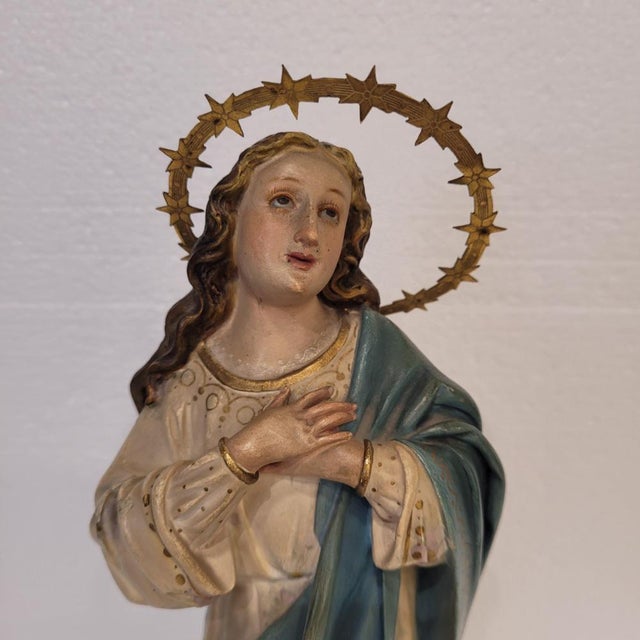
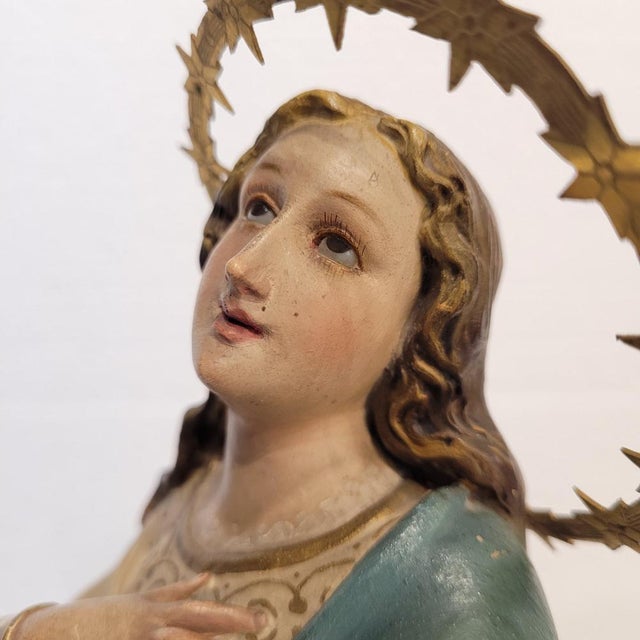
Splendid image of the Virgin Mary Immaculate, made of wood pulp. This sculpture originated from the Olot School, created at the beginning of the 20th century, in the Spanish town of the same name in the province of Girona.
The representation of the Virgin Mary has multiple iconographies, among them the Immaculate Conception. The Immaculate Conception, also known as the Immaculate Conception, stood out above the rest during the Baroque period. Challenged by Protestants in the 17th century, it found its place in Catholic Spain with the proliferation of churches and museums. Therefore, its iconography was clearly defined during this century thanks to the work of Hispanic artists. This is explained by its importance in Spain, where it was named patron saint of the Tercios of Flanders and Italy on December 8, 1585, and converted into a precept in 1644. In 1760, it was declared patron saint of Spain by order of King Charles III, and in 1864, Spanish priests were allowed to wear a blue chasuble on December 8. Finally, Queen Regent Maria Cristina of Habsburg named the Virgin Mary, Our Lady the Most Pure and Immaculate Conception, Patron Saint of the Infantry Army.
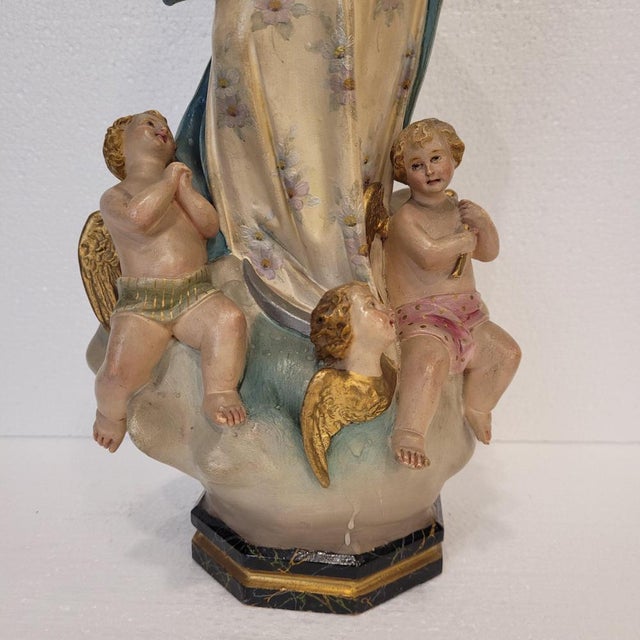
This iconography is based on the typology of the Tota Pulchra, with Marian symbols. These symbols—the lilies, mirror, palm trees, stairs, and the representation of a temple—disappeared as the iconography became more established. The most popular, and the one we see here, is that of a young woman, without the baby Jesus in her arms, dressed in a white tunic and a blue cloak. Her elegant hands, with thin, stylized fingers, are subtly crossed on her chest. She has long hair, a half-open mouth, and glass-paste eyes. A rich, sweet, realistic polychrome finish, with a field of lilies on the tunic against a white background. At her feet is the moon or globe. Three small cherubs or angels accompany her. She wears a starry crown in gilt metal.
About religious imagery in Olot
Religious imagery in Olot began in 1880 with the founding of a workshop by Joaquim Vayreda and Josep Berga dedicated to the manufacture of saints. Associated with the Olot Public Drawing School, both were concerned about the lack of professional opportunities for their students.
Initially, the first images produced were unique pieces made of clay; they also painted plaster sculptures imported from France. Four years later, they began to make images from wood pulp, a material that would revolutionize the production of saints. It was a very strong mixture that allowed for large pieces while significantly lightening their weight. Unlike plaster, wood pulp was a privileged material, as in 1887, following an ecclesiastical decree, it was permitted to be blessed.
Soon, new workshops began to be established in the city. Religious imagery became established as an important and distinctive product of Olot, and the city's Public Drawing School, established a century earlier and which trained skilled artisans for the workshops, played a decisive role in its rise.
Shipping costs will be paid by the buyer, depending on the product's dimensions, weight, and destination. We will contact you to arrange the shipment and agree on a quote. Shipping costs include custom-made professional packaging and personalized shipping, with a tracking number and warranty.
The buyer will be responsible for paying any import duties and associated taxes in the destination country. Please note the seller's disclaimer regarding any customs charges, as these are levied in the destination country, and the amount payable is determined by that country's customs office. I have official proof of authenticity such as vintage catalogs,
designer records,
or other literature sources and take full responsibility for any authenticity issues arising
from
misattribution
See less
- Dimensions
- 6.69ʺW × 5.12ʺD × 16.54ʺH
- Art Subjects
- Figure
- Period
- 1920s
- Country of Origin
- Spain
- Item Type
- Vintage, Antique or Pre-owned
- Materials
- Wood
- Condition
- Good Condition, Unknown, Some Imperfections
- Color
- Blue
- Condition Notes
- Good — This vintage item remains fully functional, but it shows sign of age through scuffs, dings, faded finishes, minimal … moreGood — This vintage item remains fully functional, but it shows sign of age through scuffs, dings, faded finishes, minimal upholstery defects, or visible repairs. less
Returns & Cancellations
Return Policy - All sales are final 48 hours after delivery, unless otherwise specified in the description of the product.
Cancellation Policy - Prior to shipping or local pickup, buyers may cancel an order for up to 48 hours, unless otherwise specified.
Related Collections
- Straw Sculpture
- Louis XIV Sculpture
- Roman Bronze Works Sculpture
- Constantin Brancusi Sculpture
- Fernando Botero Sculpture
- Georgian Sculpture
- Bakelite Sculpture
- Antique Iron Finish Sculpture
- Gold-Plate Sculpture
- Medium-Density Fibreboard Sculpture
- Sculpture in Columbus
- Polished Brass Finish Sculpture
- Barovier and Toso Sculpture
- René Lalique Sculpture
- Albert Ernest Carrier-Belleuse Sculpture
- Sculpture in Panama City, FL
- Gourd Sculpture
- Recycled/Repurposed Sculpture
- Geode Sculpture
- Photography Sculpture
- Worlds Away Sculpture
- Far Pavilions Sculpture
- Maison Jansen Sculpture
- Flavio Poli Sculpture
- Austin Productions Sculpture