


Details
Description
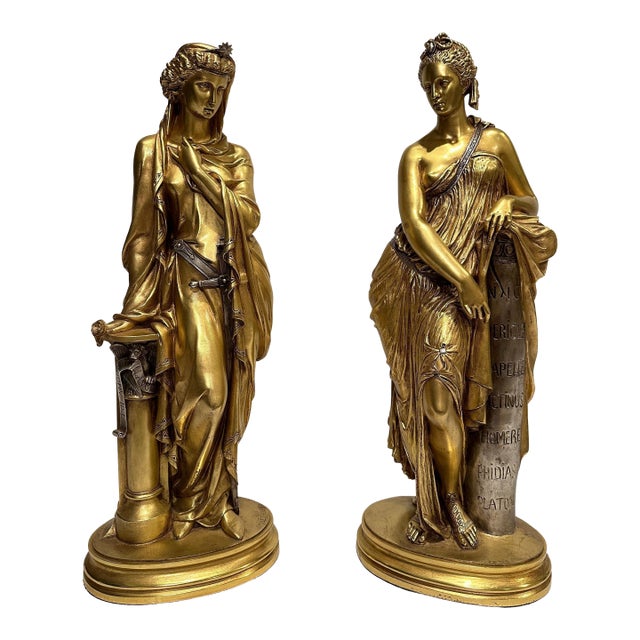
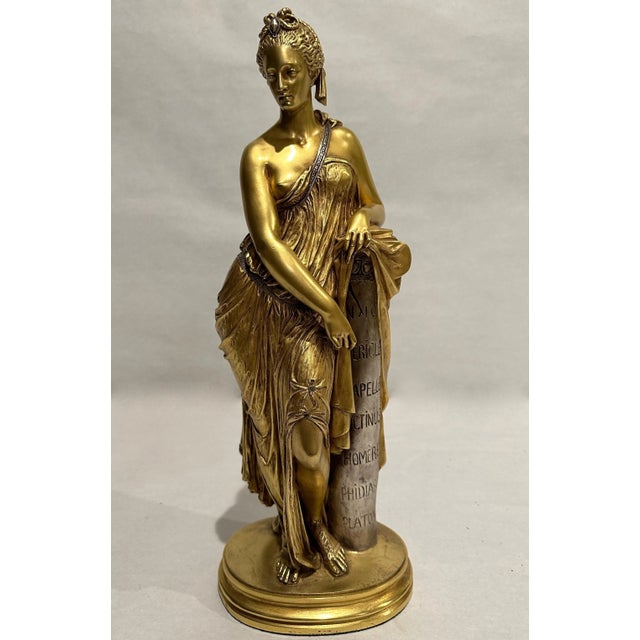
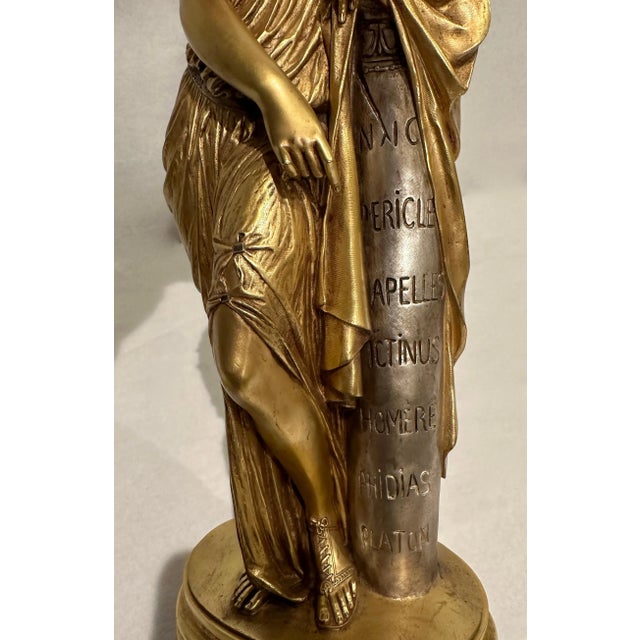
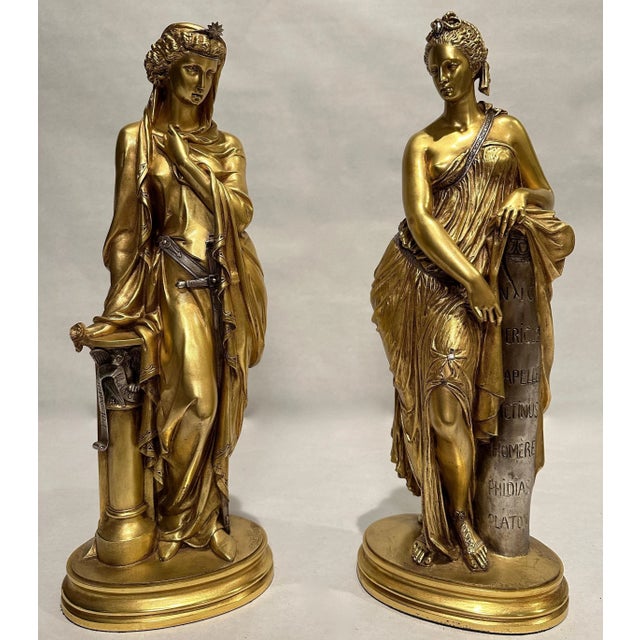
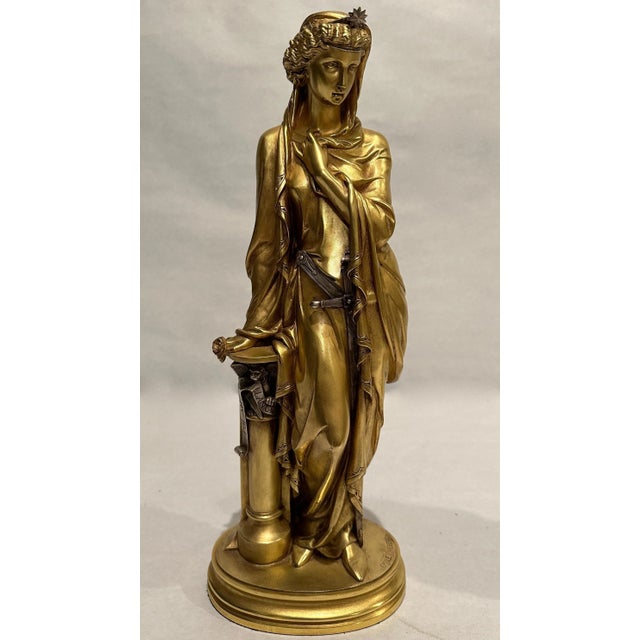
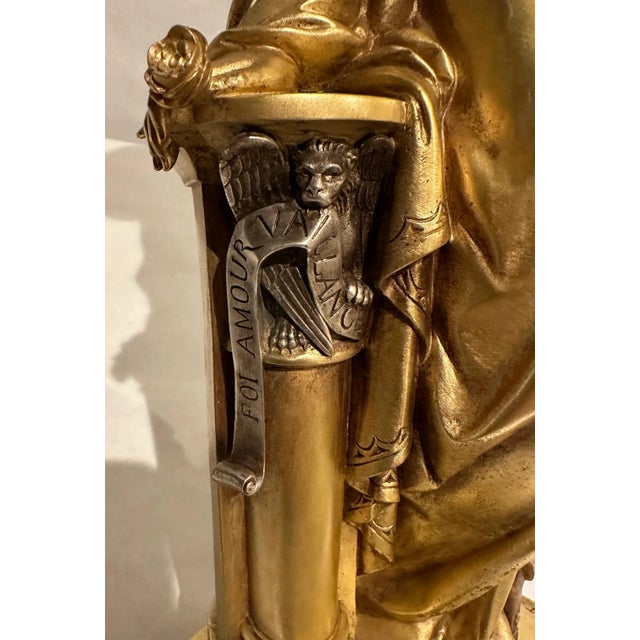
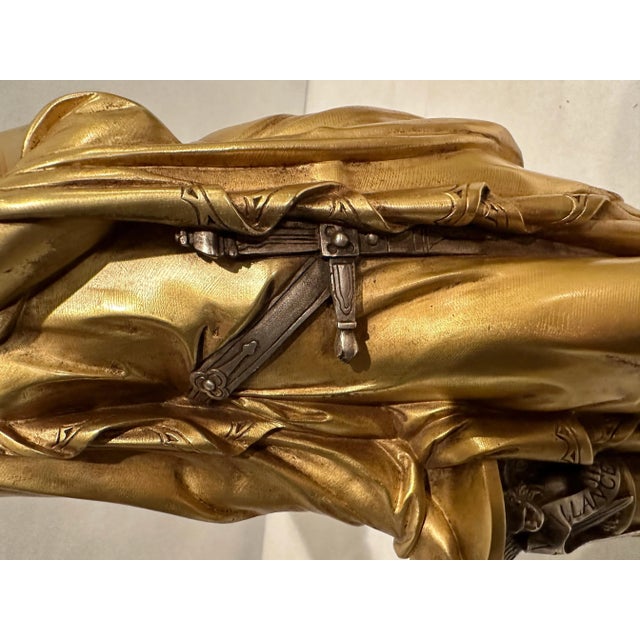
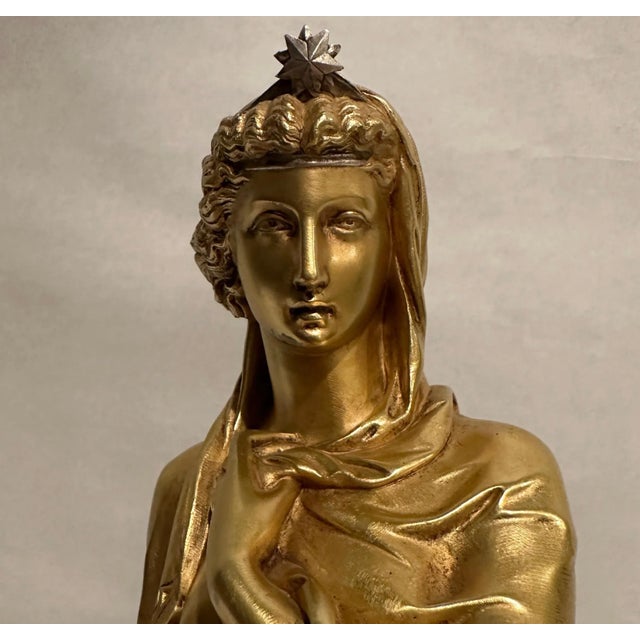
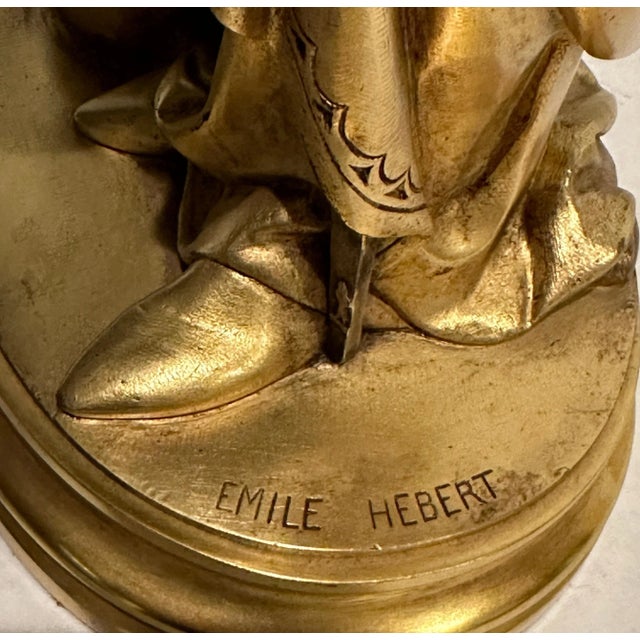
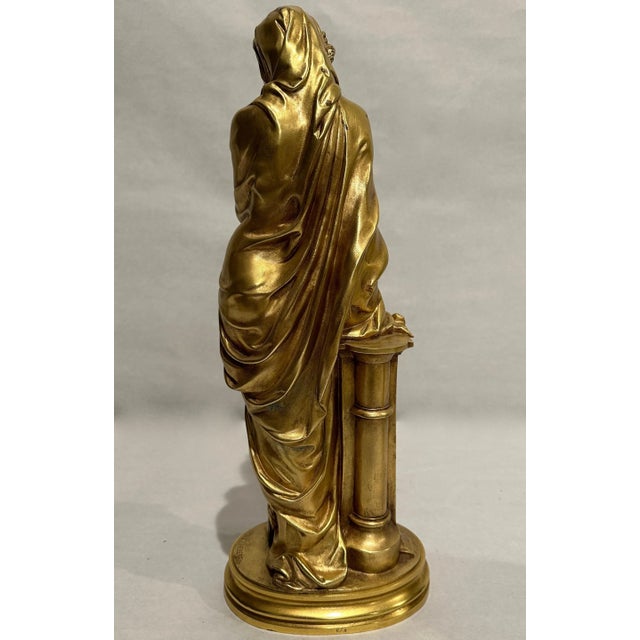
Rare pair of bronze sculptures by Emile Hebért. Fine quality silvered and gilt bronze figures of a warrior woman and …
Read more
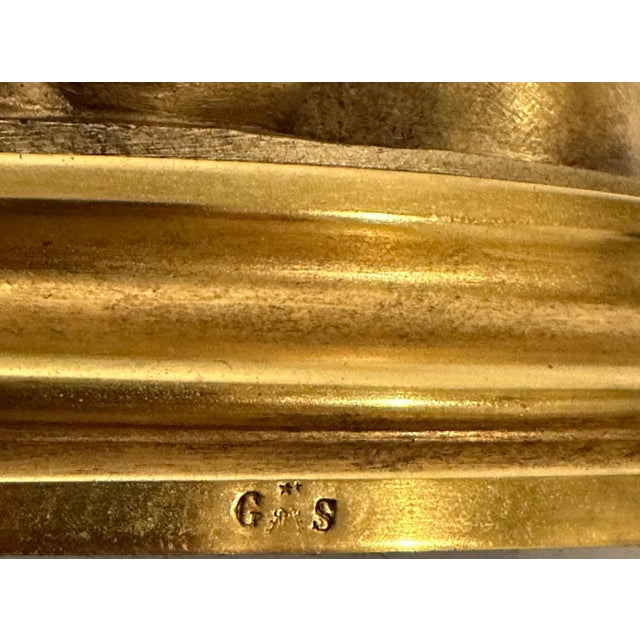
Rare pair of bronze sculptures by Emile Hebért. Fine quality silvered and gilt bronze figures of a warrior woman and a poet women dressed accordingly with military attire and poetic words. Signed and foundry marked with the G. Servant mark.
Pierre-Eugène-Emile Hébert, French, (1828 - 1893).
A native Parisian, Hébert apparently lived and worked in the capital until his death. He was born in 1828, and studied sculpture privately, with his father Pierre (1804-1869) and Jean-Jacques Feuchère (1807-1852), both of whom pursued modestly successful careers in the Salon and as public sculptors beginning in the 1830s. Hébert learned extensively from their very divergent paths. Whereas Pierre Hébert, a laborer's son, trained at the Ecole des Beaux-Arts, Feuchère emerged within the art-bronze industry of his family, where he also prospered, providing various founders with models throughout his career. The latter was, in fact, one of the most masterful practitioners of the romantic anti-classical historical idiom, and particularly of the neo-medieval macabre; Feuchère is best known today for his sinuous figure of Satan, a serial bronze in various sizes. Emile Hébert is the able successor to both sculptors in all such categories.
Hébert began his Salon career during the Second Republic, with portrait busts of eminent sixteenth-century figures that were immediately purchased by the government. He then exhibited statuettes representing a variety of subjects--genre, classical mythologies, and the satanic. Well respected in official circles by the mid-1850s, Hébert was chosen, along with his father, to represent France in the Fine-Arts section of the 1855 Paris Universal Exposition. The state commissioned or acquired several of Hébert's works: a Bacchus for the Tuileries Palace (1866, present location unknown); personifications for the facade of the théâtre du Vaudeville, Paris; The Oracle, a marble relief (vestibule, Musée de Vienne, Isère); portrait-statues of great French writers of the sixteenth and seventeenth centuries such as Jean-François Regnard (1880, facade, Hôtel de Ville, Paris) and François Rabelais (erected 1882, Quai Jeanne d'Arc, Chinon). Anne Pingeot discovered hitherto-unknown allegories by Hébert of anatomy and Etruscan art on the facade of the Nouveau Louvre (Pavillon Sully and between the Pavillons Daru and Denon, respectively, the latter signed and dated 1856). The sculptor showed regularly in the Salon until his death in 1893. Though he appears not to have had strong critical impact in Third-Republic exhibitions, the government of that time repeatedly chose Hébert's work to represent the nation internationally; his state-owned works appeared in the French Fine-Arts section of the 1873 Vienna Universal Exposition.
Thanks to Catherine Chevillot's unpublished research on nineteenth-century French foundries, it emerges that Hébert's lifetime reputation instead rests heavily upon his prolific work for the art-bronze industry throughout his career. Unlike most entrepreneurial animaliers and Carpeaux, who cast and marketed their own works, Hébert produced models for edition in bronze, plaster, and terracotta by other founders for at least thirty years. Though they frequently obtained reproduction rights, founders commonly identified Hébert as the sculptor in the catalogue and on the casts. He is recorded as providing models for a founder known only as E. Vittoz (a bronze Mephistopheles, for example); for another known only as E. Sévenier (a clock ornament of Hide-and-Seek, in addition to busts and groups); and for Auguste Gouge (Oedipus and the Sphinx, in bronze and plaster variants). Hébert's best-recorded and apparently longest-lived relationship, however, was with a founder today known only as G. Servant, whom the sculptor supplied with new models and variants of his Salon entries from the 1860s until Servant sold the business in 1882. Hébert's serial designs were thus seen and reviewed, possibly triggering orders at the founders' displays at the international exhibitions in London and on the continent through at least the 1870s.
See less
- Dimensions
- 6.5ʺW × 5ʺD × 17.5ʺH
- Styles
- Figurative
- Art Subjects
- Figure
- Period
- Mid 19th Century
- Country of Origin
- France
- Item Type
- Vintage, Antique or Pre-owned
- Materials
- Bronze
- Gold
- Silver
- Condition
- Good Condition, Original Condition Unaltered, Some Imperfections
- Color
- Gold
- Condition Notes
- Good Wear consistent with age and use. Beautiful estate condition. Good Wear consistent with age and use. Beautiful estate condition. less
Questions about the item?
Returns & Cancellations
Return Policy - All sales are final 48 hours after delivery, unless otherwise specified in the description of the product.
Cancellation Policy - Prior to shipping or local pickup, buyers may cancel an order for up to 48 hours, unless otherwise specified.
Related Collections
- Straw Sculpture
- Roman Bronze Works Sculpture
- Constantin Brancusi Sculpture
- Louis XIV Sculpture
- Fernando Botero Sculpture
- Medium-Density Fibreboard Sculpture
- Polished Brass Finish Sculpture
- Albert Ernest Carrier-Belleuse Sculpture
- Sculpture in Panama City, FL
- Gourd Sculpture
- Recycled/Repurposed Sculpture
- Barovier and Toso Sculpture
- Far Pavilions Sculpture
- Emmanuel Villanis Sculpture
- Maison Jansen Sculpture
- Flavio Poli Sculpture
- Georgian Sculpture
- Sculpture in Columbus
- Geode Sculpture
- Antique Iron Finish Sculpture
- René Lalique Sculpture
- Worlds Away Sculpture
- Photography Sculpture
- Gold-Plate Sculpture
- Jute Sculpture