

Details
Description
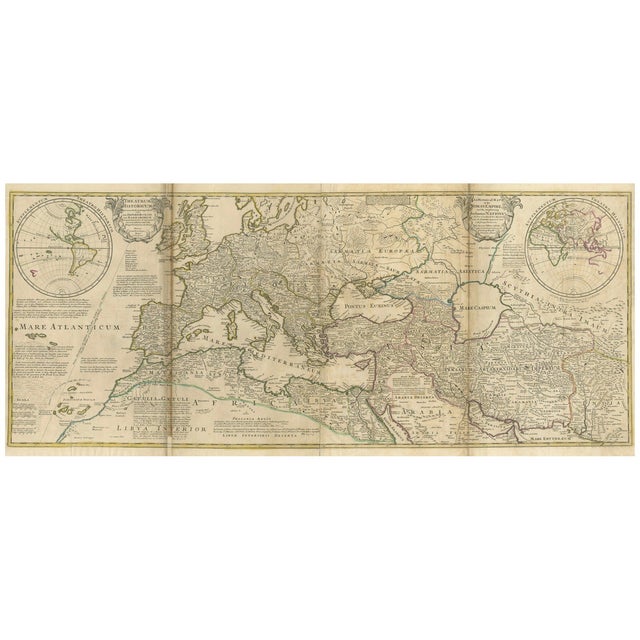
An historical map of the roman empire and the neighbouring barbarous nations by herman moll - circa 1730
this grand …
Read more
An historical map of the roman empire and the neighbouring barbarous nations by herman moll - circa 1730
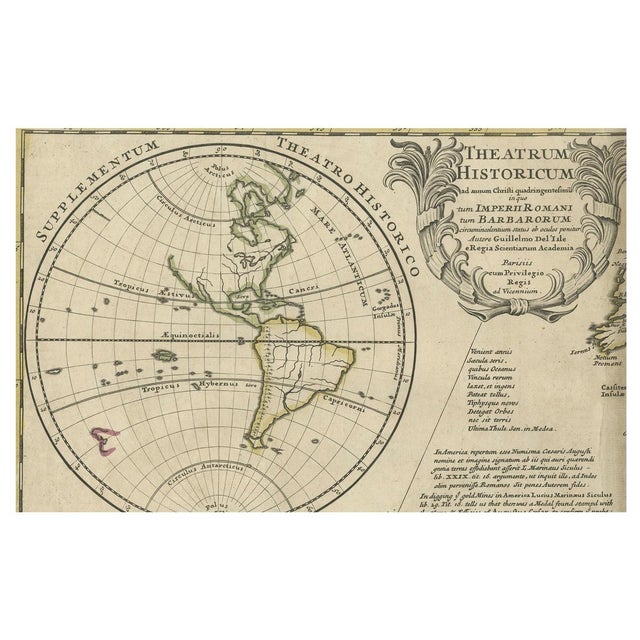
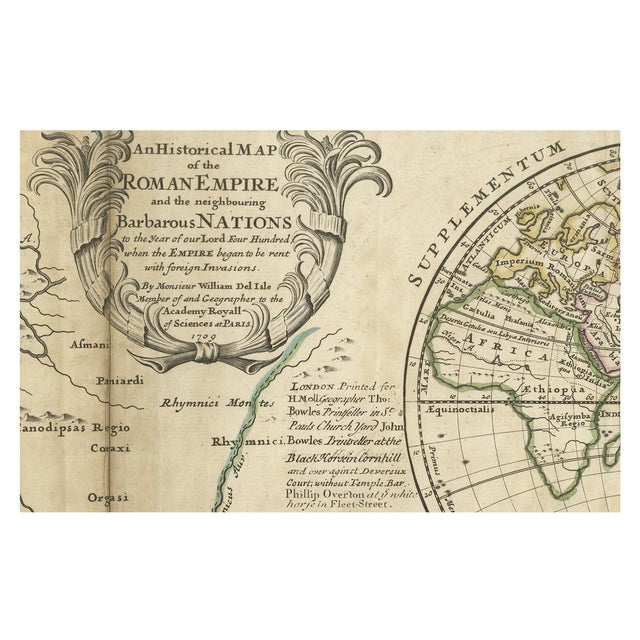
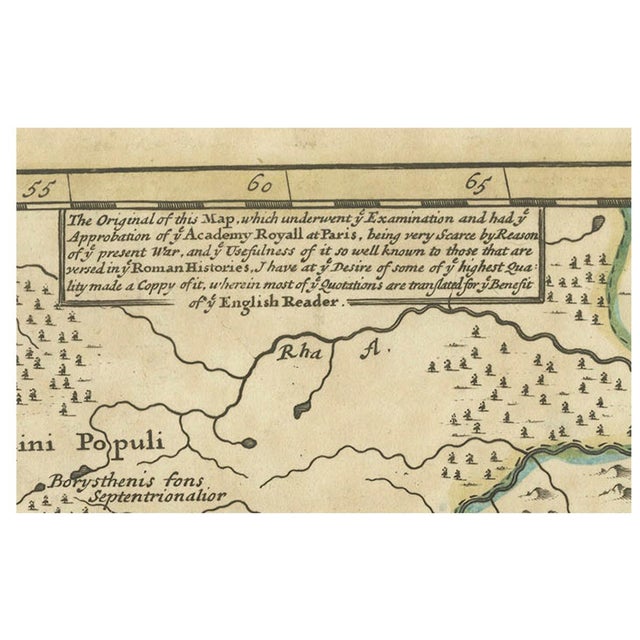
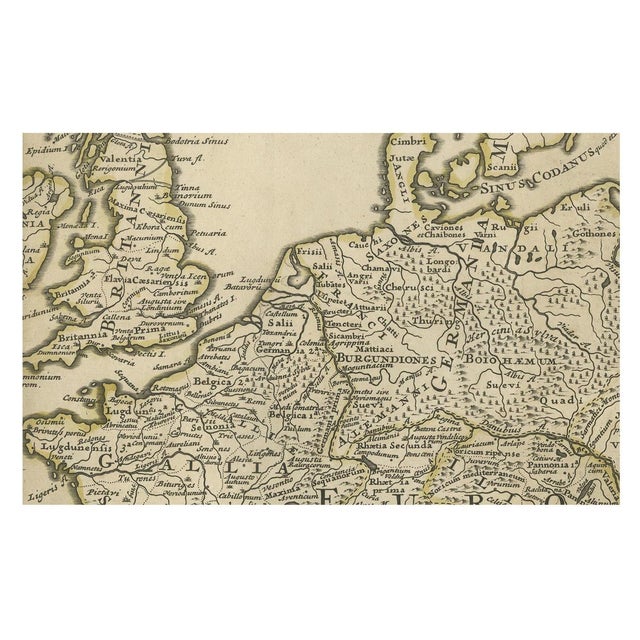
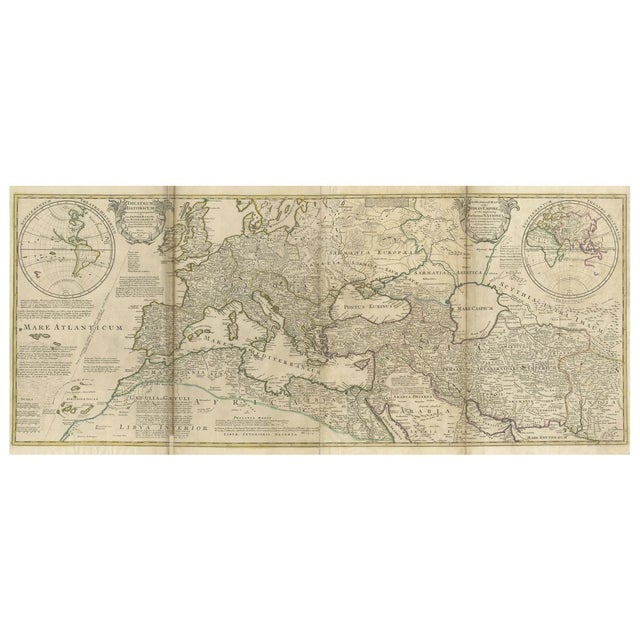
this grand and historically significant map of the roman empire was created by the renowned cartographer herman moll around 1730. Entitled an historical map of the roman empire and the neighbouring barbarous nations to the year of our lord four hundred when the empire began to be rent with foreign invasions, this large and meticulously engraved map showcases the vast extent of the roman empire at its height, as well as its neighboring territories inhabited by various so-called barbarous nations. Moll’s map is based on a similar example by the french cartographer guillaume de l'isle, whose influence is acknowledged within the decorative title cartouche. The map is presented on two conjoined sheets and is impressively detailed, with careful outline coloring that emphasizes the political boundaries of the ancient world. The extensive annotations throughout the map reflect the cartographer’s dedication to historical accuracy and are packed with valuable insights and observations. What makes this map particularly captivating are the two inset hemispherical maps located on either side of the main map. These supplementary maps depict the eastern and western hemispheres and are labeled supplementum theatro historico. These insets add a global context to the roman empire’s dominance and illustrate how the ancient world perceived both the known and the unexplored parts of the earth. The map covers the vast roman territory stretching from the british isles and the atlantic ocean in the west to the caspian sea and arabia in the east. It includes europe, north africa, and parts of asia minor and the middle east. Geographical features such as mountains, rivers, and seas are finely engraved, while major ancient cities and provincial boundaries are clearly labeled. The inclusion of both ancient and contemporary names provides a fascinating insight into the evolution of geographic knowledge and place names over centuries. The map itself carries the date 1709, but this does not necessarily indicate the actual publication date. Herman moll originally created the map around 1709, but this version is more likely a later reissue from approximately 1730. During this period, it was common for cartographers and publishers to reuse old plates for several decades, sometimes with slight updates or modifications, while keeping the original date on the map. In this case, the map was published by t. & j. Bowles, philip overton, and john king, who were active in the map publishing business during the early to mid-18th century, around the 1730s. Therefore, the map was likely printed around 1730, although the original cartographic work by herman moll dates back to 1709. This practice of using older plates was practical and economical, and it also helped maintain the prestige associated with an earlier publication date. Moll’s distinctive style is evident in the ornate cartouches, intricate border details, and the dense textual annotations that provide historical context about the roman empire’s expansion, administrative divisions, and interactions with neighboring tribes and kingdoms. This blend of visual appeal and scholarly content makes the map both an art piece and a historical document, capturing the imagination of scholars and collectors alike.
condition: the map is in fair condition with contemporary outline coloring, old folds, slight creasing, and some staining, typical of a map of this age. The paper is sound, and the engraving remains clear and sharp.
framing tips: to best preserve this remarkable piece, use archival-quality materials and uv-protected glass to protect against fading. A classic, dark wood frame would elegantly enhance the historical ambiance of the map and highlight its exceptional cartographic detail. More specific suggestions: to enhance the visual appeal and historical feel of the map, consider using one of the following matting board colors: 1. Cream or antique white: a classic choice that complements the aged paper and natural toning of antique maps. It gives a clean, elegant look while maintaining a vintage aesthetic. 2. Light tan or beige: these earthy tones harmonize with the yellowed or sepia tones often seen in old maps, giving a warm and sophisticated presentation. 3. Soft gray: a subtle gray works well if the map has darker outline coloring, as it provides contrast without overpowering the map’s details. 4. Olive green or sage: if there is significant green coloring in the map, a muted green mat can enhance the natural landscape elements while still feeling classic and refined. 5. Dark brown or mahogany: these deeper shades create a rich, historic look and pair beautifully with traditional dark wood frames. This color enhances the cartouche and ornate details. 6. Burgundy or wine red: for a bold and distinguished appearance, burgundy adds a regal touch while complementing red-toned elements on the map. Avoid bright or overly saturated colors, as they can distract from the map’s intricate details. Additionally, double matting with a narrow inner border in a contrasting color (such as gold or dark brown) can add depth and sophistication. For this specific map by herman moll, a combination of a cream main mat with a thin dark brown or olive green inner mat would look particularly striking, balancing elegance with a sense of antiquity.
See less
- Dimensions
- 47.24ʺW × 22.05ʺH
- Styles
- Empire
- Period
- 18th Century
- Country of Origin
- Germany
- Item Type
- Vintage, Antique or Pre-owned
- Materials
- Paper
- Condition
- Good Condition, Unknown, Some Imperfections
- Color
- Beige
- Condition Notes
- Good — This vintage item remains fully functional, but it shows sign of age through scuffs, dings, faded finishes, minimal … moreGood — This vintage item remains fully functional, but it shows sign of age through scuffs, dings, faded finishes, minimal upholstery defects, or visible repairs\. Slight creasing and staining less
Returns & Cancellations
Return Policy - All sales are final 48 hours after delivery, unless otherwise specified in the description of the product.
Cancellation Policy - Prior to shipping or local pickup, buyers may cancel an order for up to 48 hours, unless otherwise specified.