





Details
Description
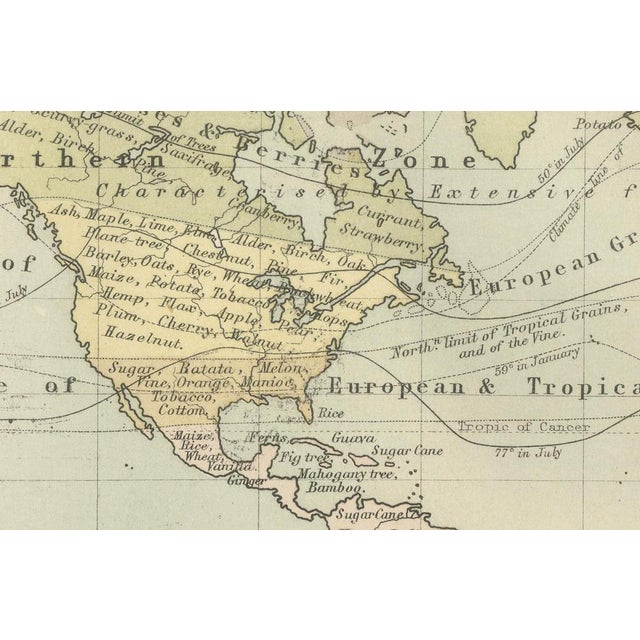
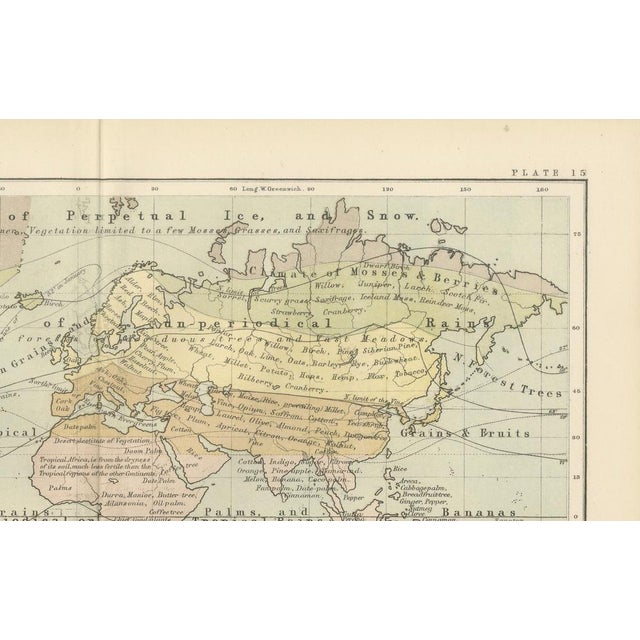
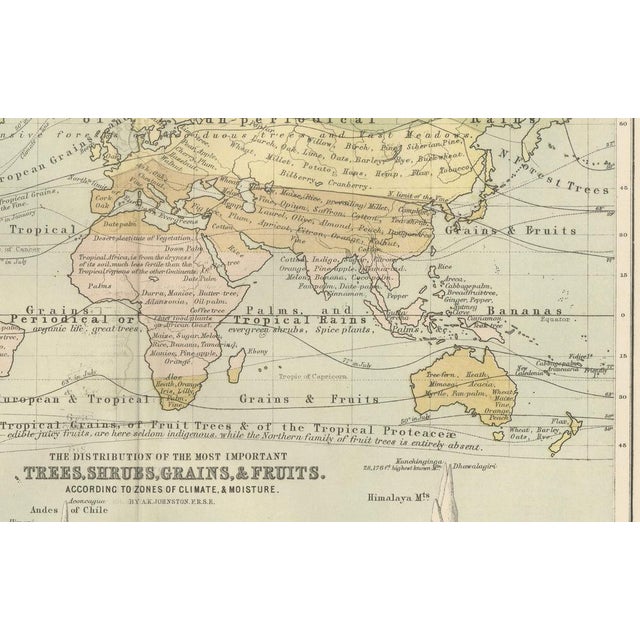
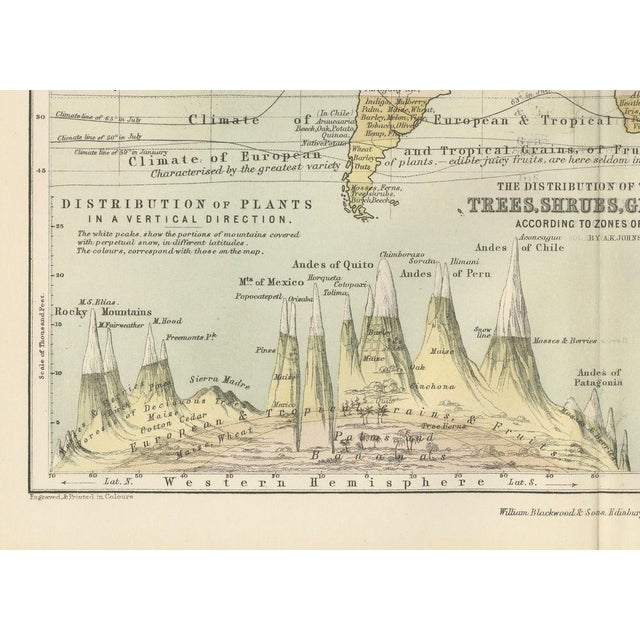
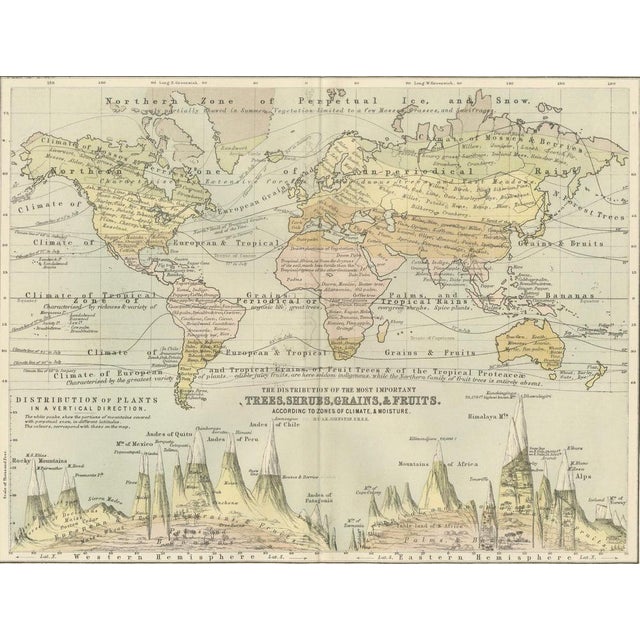
Botanical Map by A.K. Johnston – Global Plant Distribution Chart 1852 This remarkable antique chart titled "The Distribution of the … Read more Botanical Map by A.K. Johnston – Global Plant Distribution Chart 1852 This remarkable antique chart titled "The Distribution of the Most Important Trees, Shrubs, Grains, & Fruits According to Zones of Climate & Moisture" was created by Alexander Keith Johnston and published in 1852 by William Blackwood & Sons, Edinburgh and London. It is Plate 15 from Johnston’s revolutionary *Physical Atlas of Natural Phenomena*, a foundational work in scientific cartography. This thematic map combines botanical geography and climatology to illustrate how vegetation and agricultural crops are distributed across the globe according to climatic zones and moisture levels. Zones such as the "Climate of the Tropics," "European & Tropical," and "Northern Zone of Perpetual Ice and Snow" are color-coded and labeled with the dominant plants, fruits, or grains associated with each area. The map meticulously annotates where particular species grow best: bananas and sugarcane in equatorial regions, wheat and apples in temperate zones, palms and spice trees in the tropics, and mosses and berries in the Arctic. The influence of rainfall and elevation is also emphasized, providing a multidimensional understanding of global botanical ecology as understood in the 19th century. Beneath the main map is a stunning cross-sectional diagram titled "Distribution of Plants in a Vertical Direction," illustrating mountain ecosystems from the Rocky Mountains and Andes to the Himalayas and Alps. As the elevation rises, the vegetation zones change—from tropical palms at the base to alpine mosses and lichens near the peaks—offering a visual summary of how altitude affects plant distribution as dramatically as latitude. Alexander Keith Johnston (1804–1871), a leading figure in Victorian science and cartography, was Geographer in Ordinary to Queen Victoria in Scotland. His work revolutionized the use of maps to present scientific data, and his *Physical Atlas* is still admired for its clarity, elegance, and educational ambition. This chart is a must-have for collectors of botanical history, early climatology, or decorative scientific illustrations. Its blend of empirical data and visual storytelling is both informative and visually compelling. Condition and framing tips: Very good antique condition with minor age toning and a clean printed surface. A striking plate for display, best framed in walnut or gold with a warm ivory mat to highlight the earthy tones and detailed illustrations. Ideal for a library, conservatory, or academic interior. See less
- Dimensions
- 13.39ʺW × 10.63ʺH
- Period
- Mid 19th Century
- Item Type
- Vintage, Antique or Pre-owned
- Materials
- Paper
- Condition
- Good Condition, Unknown, Some Imperfections
- Color
- Gold
- Condition Notes
- Very Good — This vintage item has no defects, but it may show slight traces of use\. Very good condition. … moreVery Good — This vintage item has no defects, but it may show slight traces of use\. Very good condition. Light overall toning near the margins. The paper remains strong and well-preserved. Folding line as issued. less
Returns & Cancellations
Return Policy - All sales are final 48 hours after delivery, unless otherwise specified in the description of the product.
Cancellation Policy - Prior to shipping or local pickup, buyers may cancel an order for up to 48 hours, unless otherwise specified.