

Details
Description
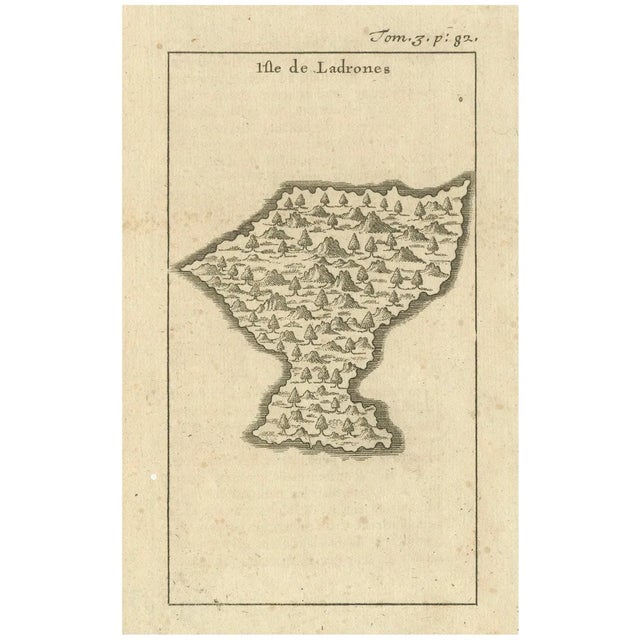
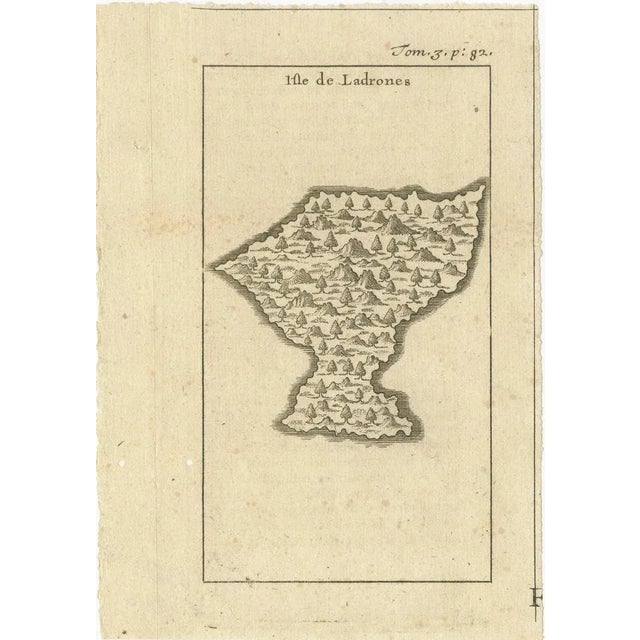
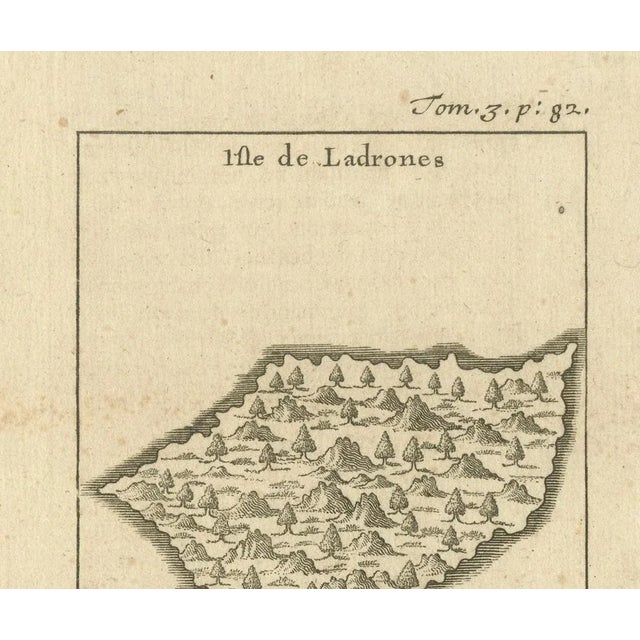
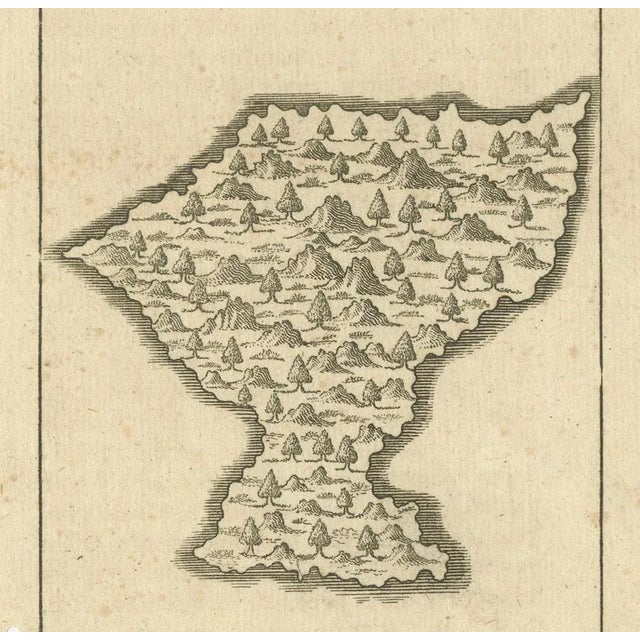
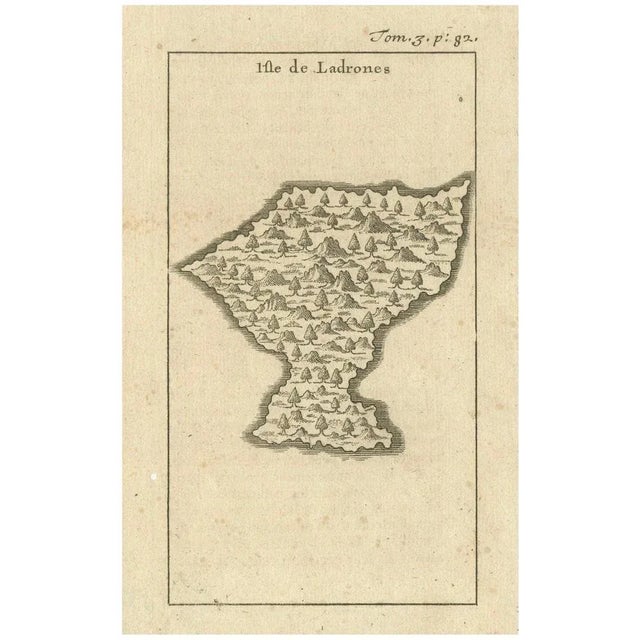
Isle de Ladrones: Early 18th-Century Map of the Mariana Islands by F. Bernard This intriguing copper engraving depicts the *Isle … Read more Isle de Ladrones: Early 18th-Century Map of the Mariana Islands by F. Bernard This intriguing copper engraving depicts the *Isle de Ladrones*, now known as the Mariana Islands, situated in the western Pacific Ocean. The map was published around 1722 in Amsterdam by F. Bernard as part of the influential travel compilation *Recueil des voyages qui ont servi a \.*. The map offers a simplistic yet stylized portrayal of the island, emphasizing its rugged and mountainous terrain, dotted with sparse vegetation and hills. The term *Isle de Ladrones* (Islands of Thieves) was given by the Spanish explorer Ferdinand Magellan in 1521 during his circumnavigation of the globe, as his crew encountered thefts from the native Chamorro people. The name later changed to *Mariana Islands* when they were named after Queen Mariana of Austria in the 17th century. This map provides a unique glimpse into how European cartographers depicted remote and lesser-known territories during the early 18th century. The engraving style features fine line work typical of early 18th-century cartography, with elegantly arranged tree and mountain symbols filling the island's surface. The map's composition appears intentionally stylized, focusing more on aesthetic appeal than precise geographical accuracy. The island’s shape is vaguely outlined, leaving much to the imagination, reflecting the limited knowledge of the area during that period. The map was published in Amsterdam, a significant hub for cartographic production and exploration literature in the 17th and 18th centuries. The editor, F. Bernard, was known for assembling collections of travel narratives and exploratory accounts. This piece comes from his atlas *Recueil des voyages qui ont servi a \.*, which compiled various geographical and ethnographical s to satisfy the growing European curiosity about distant lands. The map’s historical value lies not only in its representation of the Mariana Islands but also in its cultural context as part of the European exploration and colonization efforts. Such maps served both as informative guides and decorative illustrations for scholarly and wealthy patrons, who took great interest in collecting maps and travel books as symbols of knowledge and curiosity. Condition report: The engraving is in good condition, with clean, crisp lines and minimal foxing or staining. The paper has aged gracefully, retaining a warm, antique patina. Framing tips: To best present this rare piece, consider framing it with a classic black or dark wood frame and a cream or light tan mat that complements the soft tones of the aged paper. This presentation will emphasize the historic and cartographic charm of the print while protecting it for future generations. See less
- Dimensions
- 4.33ʺW × 6.3ʺH
- Item Type
- Vintage, Antique or Pre-owned
- Materials
- Paper
- Condition
- Unknown, Some Imperfections
- Color
- Black
- Condition Notes
- Very Good — This vintage item has no defects, but it may show slight traces of use\. Condition report: The … moreVery Good — This vintage item has no defects, but it may show slight traces of use\. Condition report: The engraving is in good condition, with clean, crisp lines and minimal foxing or staining. The paper has aged gracefully, retaining a warm, antique patina. less
Returns & Cancellations
Return Policy - All sales are final 48 hours after delivery, unless otherwise specified in the description of the product.
Cancellation Policy - Prior to shipping or local pickup, buyers may cancel an order for up to 48 hours, unless otherwise specified.