



Details
Description
Description of the object:
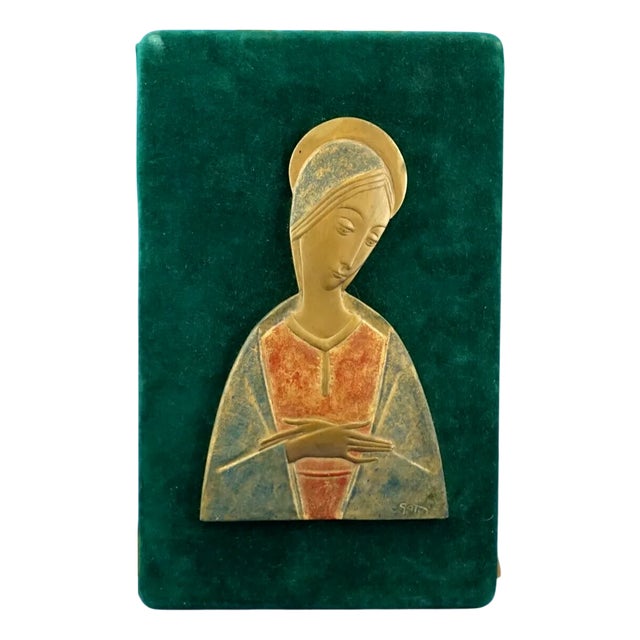
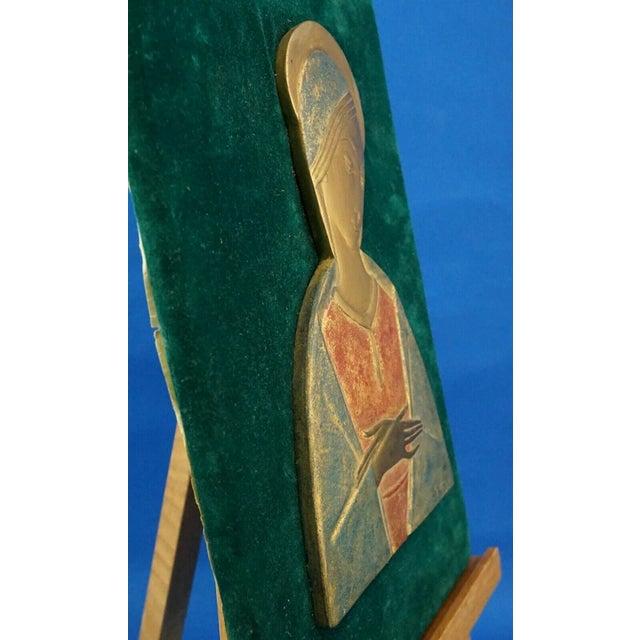
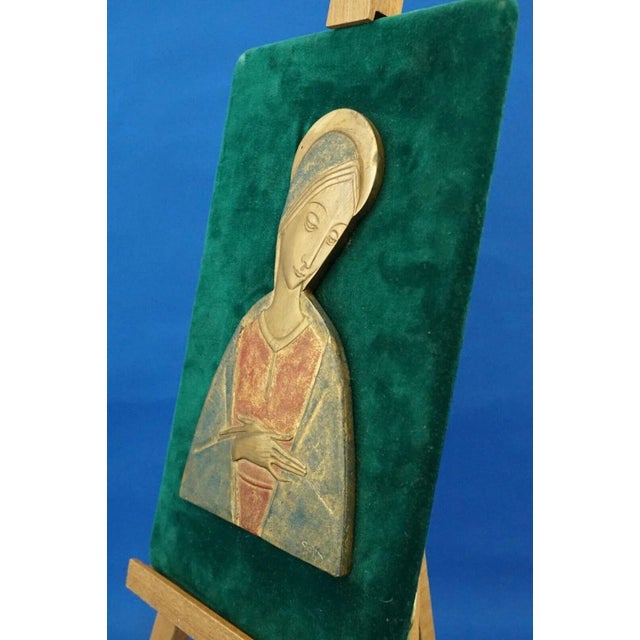
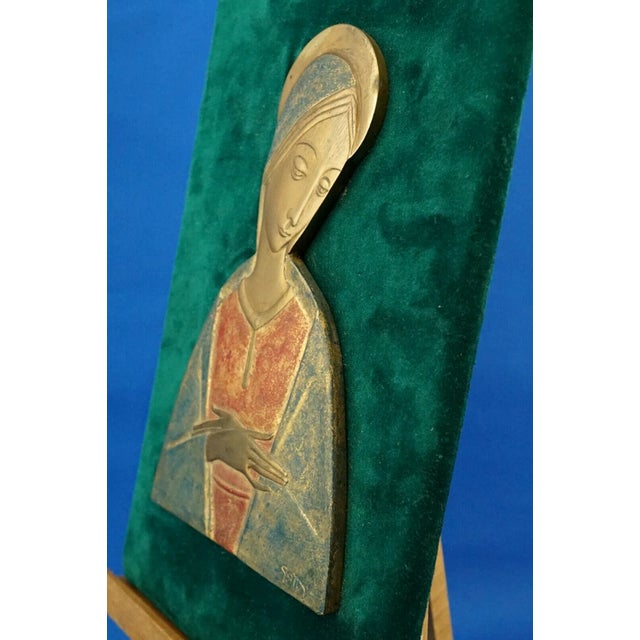
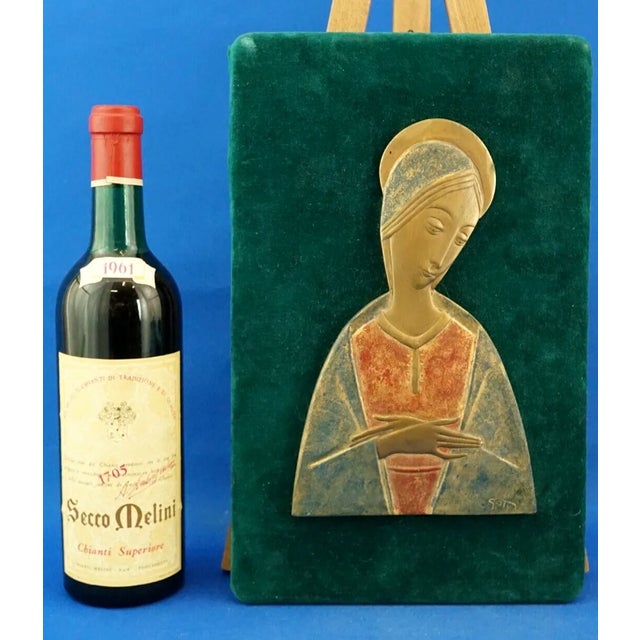
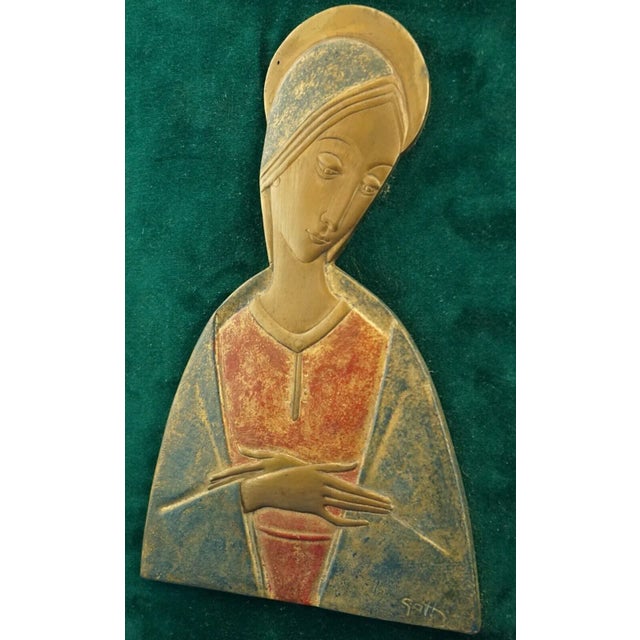
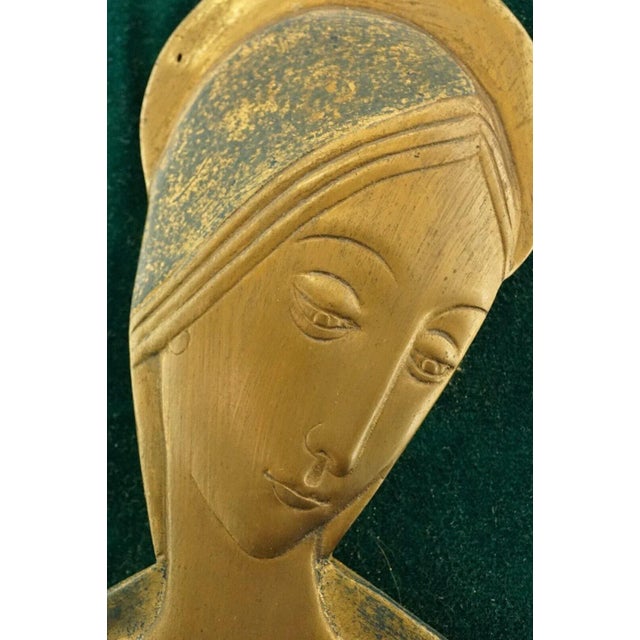
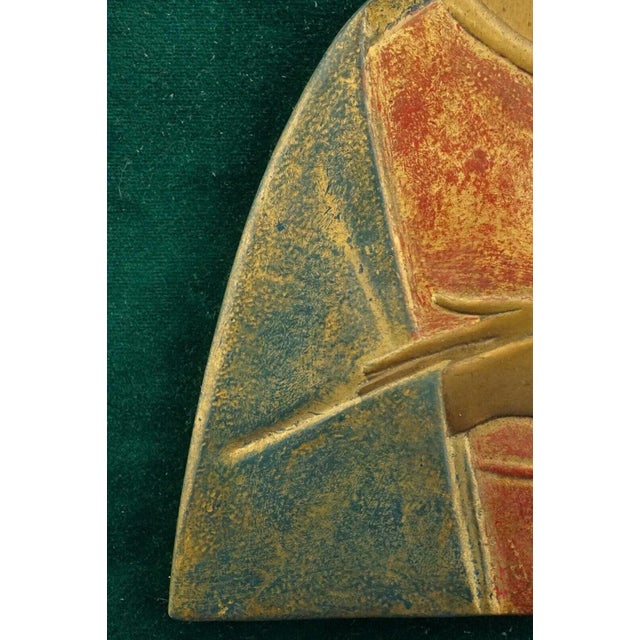
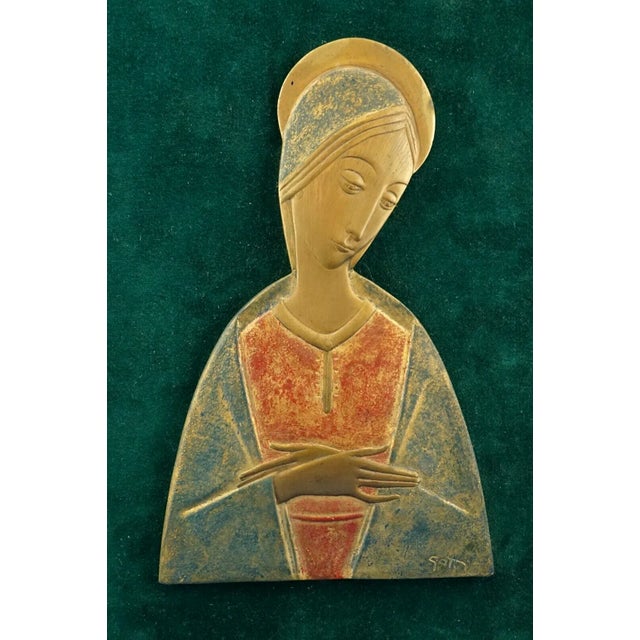
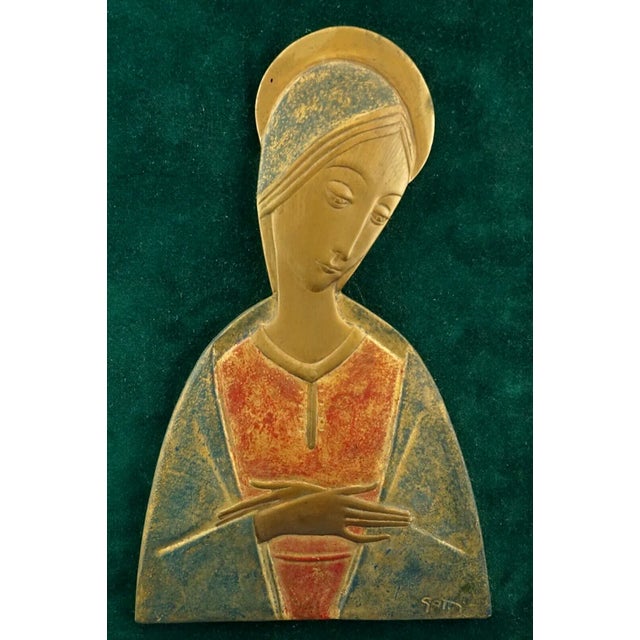
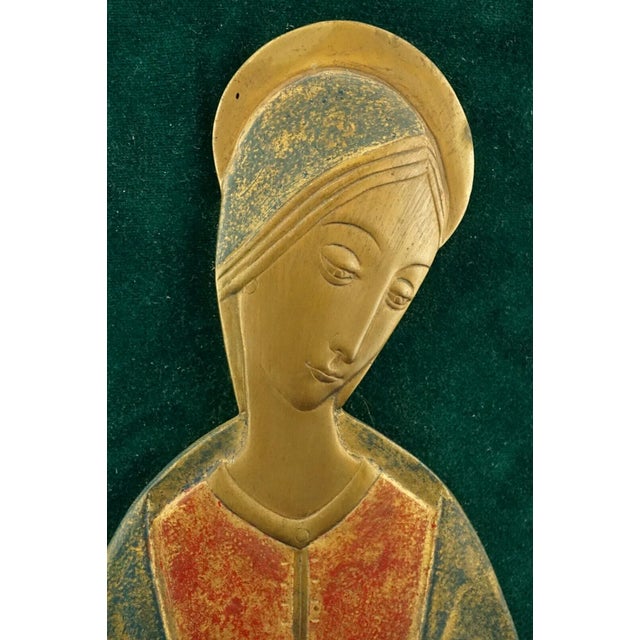
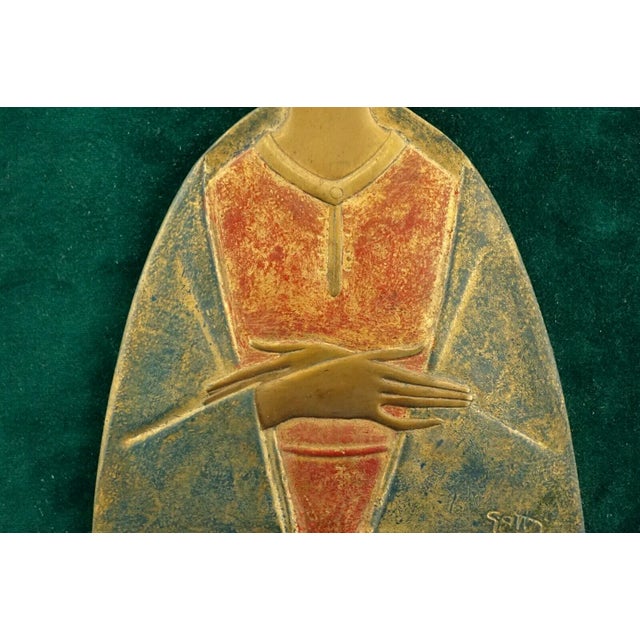
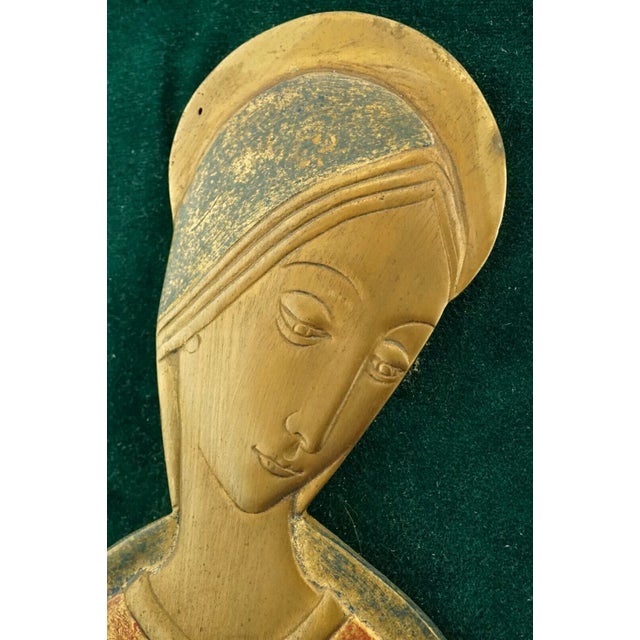
plaque, bas-relief sculpture in gilded bronze finished with chemical enamels, depicting guido reni's madonna orante, with …
Read more
Description of the object:
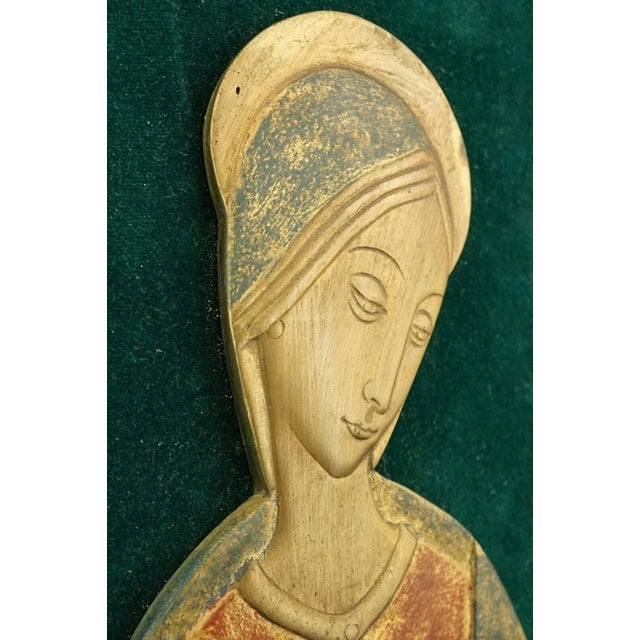
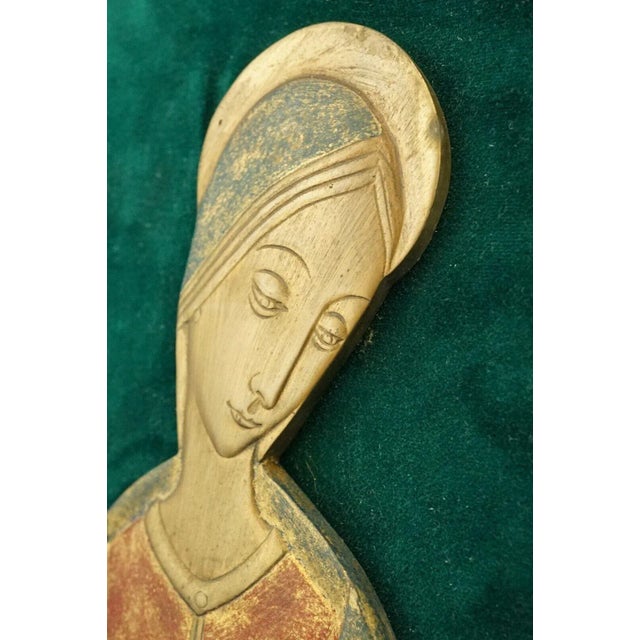
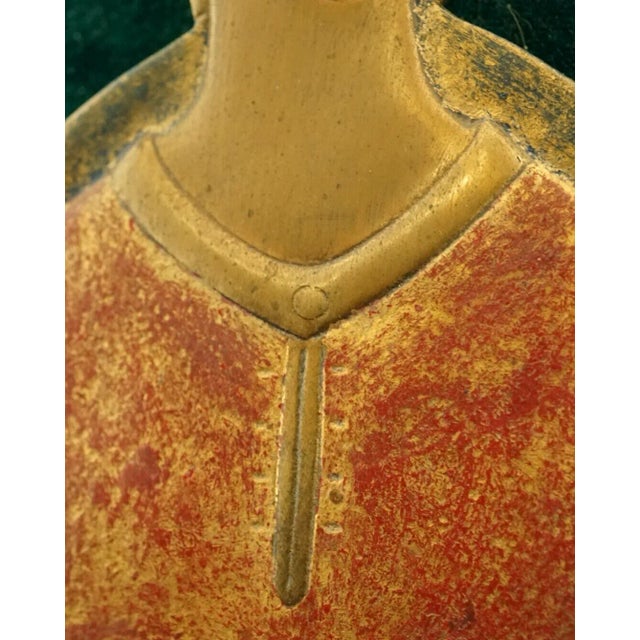
plaque, bas-relief sculpture in gilded bronze finished with chemical enamels, depicting guido reni's madonna orante, with her hands crossed over her chest, mounted on a green velvet-covered tablet, created by the famous sculptor mario gatti, signed by the artist himself with an incised signature in the lower right corner, dating from around 1950-1970, modern design. The madonna is of excellent artistic quality, very reminiscent of the iconography of russian icons of the 1600s in terms of lines and style. Note the neck and elongated hands, for example, or note the enamels made using a chemical process, deliberately treated with acid to wear them down and age the object, giving the sculpture an antique feel, precisely to resemble icons that are often damaged and lacking in color. The madonna depicted is the madonna orante with her hands crossed over her chest, taken from a painting by guido reni (bologna, first half of the 17th century).
useful information for evaluating the item:
our web research shows that a beautiful oil painting on canvas depicting the madonna was auctioned, as reported by the arcadja auction site, but as we are not subscribers, we cannot see the final result, the estimate, or the auction house. We then found a bronze sculpture, also depicting the madonna, valued at €500-1,000 by sesart's in brescia, auctioned in 2013, lot 92. This is to give an idea of the value of this artist's works.
information about the artist and/or manufacturer:
mario gatti, son of vittorio, a well-known bookseller, publisher, and playwright, grew up in a family that included the sculptor mario gatti (brescia, 1916-1990), who knew important figures in culture and art, including arturo benedetti michelangeli, with whom he shared a rigorous poetic conception. He created the portrait of the pianist in 1933: a youthful work, therefore, but shaped with acute interpretative skill; exhibited at the lombardy regional exhibition in milan, it deserved to be published in illustrazione italiana. This was the period when gatti mainly used wax, which he would continue to use until the end of the 1940s, in works such as la veletta (the veil), which won the luigina mastrazzi prize in 1946, la comunione (the communion), the following year, and various others, accepted by the angelicum in milan: figures such as the portrait of bishop giacinto tredici, placed in the episcopal palace in brescia. The stylistic change took place after his stay in paris: not only did gatti abandon wax in favor of bronze, but his vision became increasingly characterized by a constructive and expressive synthesis that led him to a formal purity enhanced by the meditation of the solids and the linearity of the profiles, echoing arp and the closer manzù. With results attesting to his progressive evolution, he participated in exhibitions in various italian cities (bergamo, novara, etc.). At the end of the 1950s, he was present at the le grazie gallery in milan, just beyond the la fontana gallery in rome, the city where he resided in 1961, having a studio in the building that once belonged to canova, and where his works were exhibited alongside those of the greatest sculptors of the time. But just when artistic recognition seemed within reach, his failing health forced him to return to brescia. A bitter period followed for mario gatti, who, forced to make difficult sacrifices, shared with his wife and four children the burden of setting up a new studio and securing new commissions. His first substantial commission came from rescaldina, near milan: a via crucis for the parish church designed by the architect magistretti and consecrated by giovanni battista montini, the future pope paul vi. From this moment on, commissions flourished once again, and his participation in exhibitions also increased, including those in trieste, vercelli, bologna, and são paulo, brazil. His personal exhibitions were hosted by the aab and the san michele gallery in 1968, 1969, 1971, and 1975, combined with participation in sacred art exhibitions. Indicative of the growing recognition acquired by mario gatti are the portrait of pius xii, destined for the vatican, the bust of the africanist roberto becchetti of the university college of pavia, the embossed works dedicated to leopoldo nember decorating the bus station in brescia, the portrait of giorgio montini commissioned by banca san paolo, the panels for the parish church of sarezzo, and the bust of father ottorino marcolini inaugurated in mompiano in 1982. For the oratory of sotto il monte and the casa dell'emigrante in brussels, gatti produced the portrait of john xxiii, while bishop and political prisoners became part of the collection of the modern art gallery in our city. Funeral compositions remain in the vantini cemetery, commemorative works and monuments in villa carcina, palazzolo, ponte zanano, desenzano, provezze, tremosine, sarezzo, bagnolo, and castenedolo: these works are catalogued alongside guerriero and quattordicenne in the catalogue of the exhibition la scultura bresciana del novecento (brescian sculpture of the twentieth century), held in palazzo martinengo in 1995.
this piece has an attribution mark,
i am sure that it is completely authentic and take full responsibility for any authenticity
issues arising from misattribution
See less
- Dimensions
- 8.27ʺW × 0.79ʺD × 13.39ʺH
- Period
- 1950s
- Country of Origin
- Italy
- Item Type
- Vintage, Antique or Pre-owned
- Materials
- Bronze
- Condition
- Good Condition, Original Condition Unaltered, Some Imperfections
- Color
- Green
- Condition Notes
- Excellent — This vintage piece is in near original condition. It may show minimal traces of use and/or have slight … moreExcellent — This vintage piece is in near original condition. It may show minimal traces of use and/or have slight restorations\. Scultura in perfette condizioni. less
Returns & Cancellations
Return Policy - All sales are final 48 hours after delivery, unless otherwise specified in the description of the product.
Cancellation Policy - Prior to shipping or local pickup, buyers may cancel an order for up to 48 hours, unless otherwise specified.
Related Collections
- Medium-Density Fibreboard Sculptural Wall Objects
- Dada Sculptural Wall Objects
- Maison Jansen Sculptural Wall Objects
- Ralph Lauren Sculptural Wall Objects
- Antique Copper Finish Sculptural Wall Objects
- Helmut Friedrich Schäffenacker Sculptural Wall Objects
- Asian Sculptural Wall Objects
- Mid-Century Modern Sculptural Wall Objects
- Curtis Jere Sculptural Wall Objects
- Greg Copeland Sculptural Wall Objects
- Plaster Sculptural Wall Objects
- Brutalist Sculptural Wall Objects
- Japanese Sculptural Wall Objects
- Sarreid Ltd. Sculptural Wall Objects
- Wenge Sculptural Wall Objects
- The American School Sculptural Wall Objects
- Arteriors Home Sculptural Wall Objects
- Silverplate Sculptural Wall Objects
- Stainless Steel Sculptural Wall Objects