








Details
Description
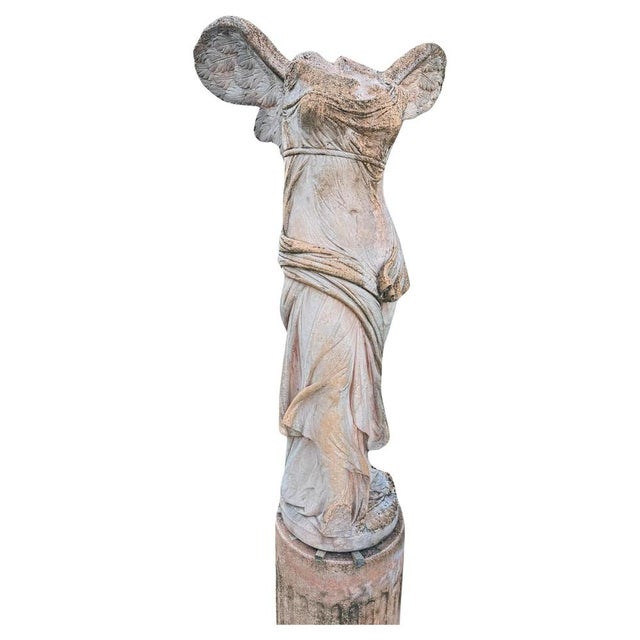
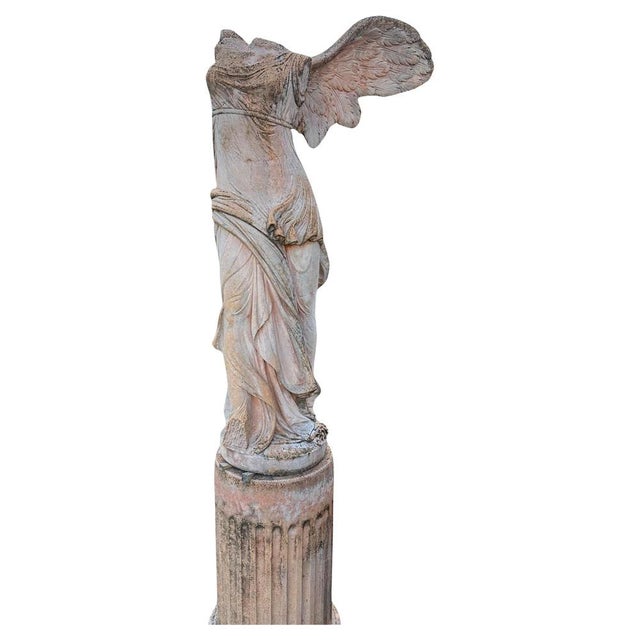
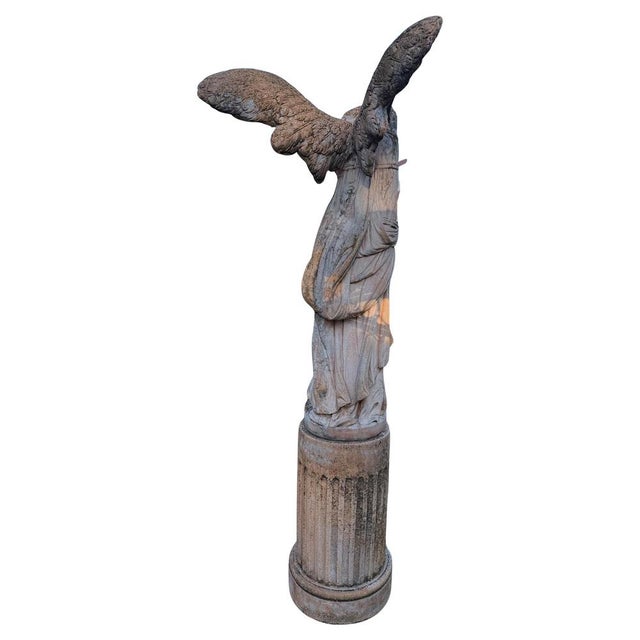
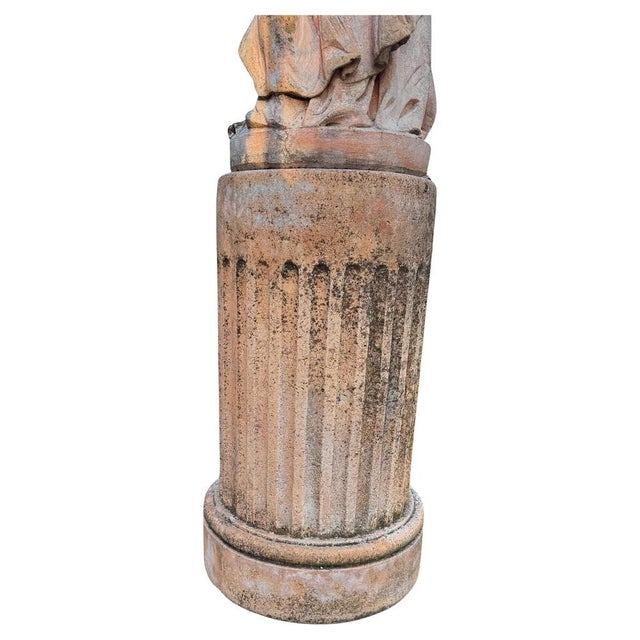
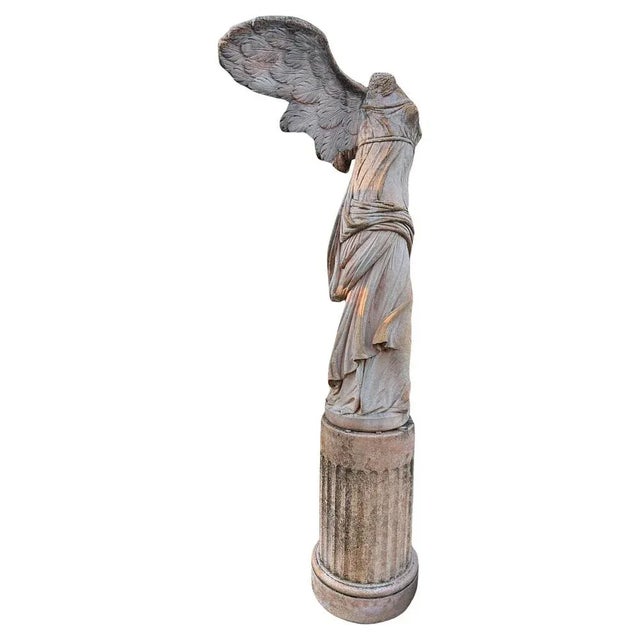
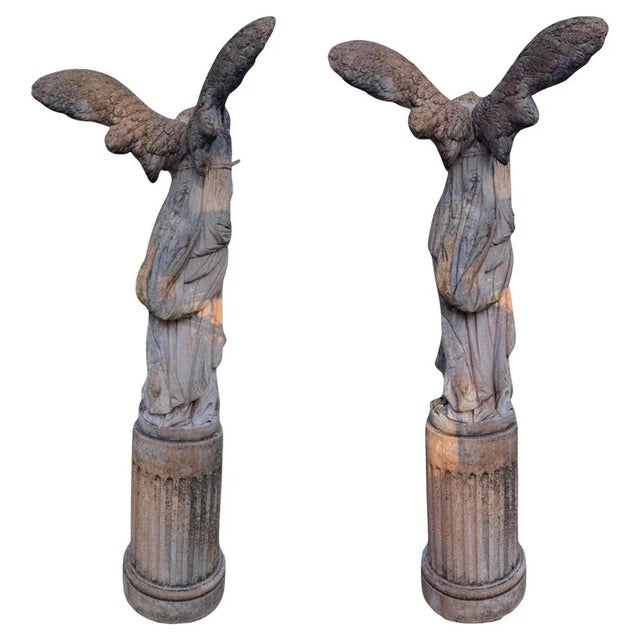
Nike of samothrace in terracotta, late 19th century total height with base: 220 cm good condition for its period original … Read more Nike of samothrace in terracotta, late 19th century total height with base: 220 cm good condition for its period original patina italian terracotta toscan the victory of samothrace, also known as nike of samothrace (in greek the statue is called nike tes samothrákes), is a sculpture belonging to the rhodian school of the hellenistic period. It is located in the louvre museum, paris. It represents nike, the goddess of victory. It stands 2.75 m tall and was made of marble around 190 bc. It comes from the sanctuary of the cabiri on samothrace. Some experts attribute it with some probability to pithokritos of rhodes. It was discovered in 1863 on the island of samothrace (samothraki in greek) by the french consul charles champoiseau, an amateur archaeologist. Although at the time of its discovery, it was thought to have been sent to sculpted by demetrius poliorcetes to commemorate his naval triumph at salamis over ptolemy soter's fleet in 306 bc, because it appeared on coins issued from 294 to 288 bc, the dating of the sculpture to the early 2nd century bc makes it more logical to believe that it was actually carved to celebrate the victories over antiochus iii megas. The female figure of winged victory perches on the prow of a ship, which acts as a pedestal for the figure, whose body presents a slight and graceful twist. She is wrapped in a fine chiton and a cloak, draperies that cling to her body, revealing her anatomy. This treatment is reminiscent of the so-called "wet drapery" technique attributed to the works of phidias. The cloak forms a roll over the right thigh and then falls between the legs, giving rise to a composition very characteristic of other female figures from the same period. The fluttering garments the wind shapes the drama, this time joyful, so characteristic of the rhodian school of sculpture, one of the most baroque of hellenistic periods. It should be noted that one of its wings, at least in part, is not original, but the product of a restoration. In the futurist manifesto published in le figaro in 1909, marinetti used this work to exemplify his critique of statuary and, by extension, of traditional classicist art, in favor of a new art that honored the technical progress of industrialization, connoted by speed and machinery. Thus, one can read that "a racing car is more beautiful than the victory of samothrace." another example of the relevance and timeliness of this work is the victory of samothrace by french artist yves klein. This sculpture is currently on display at the louvre museum in paris. It is a plaster cast, a miniature of the original statue, in the famous blue color. See less
- Dimensions
- 47.24ʺW × 47.24ʺD × 86.61ʺH
- Art Subjects
- Figure
- Country of Origin
- Italy
- Item Type
- Vintage, Antique or Pre-owned
- Materials
- Terra Cotta
- Condition
- Unknown, Some Imperfections
- Color
- Blue
Returns & Cancellations
Return Policy - All sales are final 48 hours after delivery, unless otherwise specified in the description of the product.
Cancellation Policy - Prior to shipping or local pickup, buyers may cancel an order for up to 48 hours, unless otherwise specified.
Related Collections
- Straw Sculpture
- Constantin Brancusi Sculpture
- Louis XIV Sculpture
- Fernando Botero Sculpture
- Bakelite Sculpture
- Gold-Plate Sculpture
- Antique Iron Finish Sculpture
- Albert Ernest Carrier-Belleuse Sculpture
- Polished Brass Finish Sculpture
- Sculpture in Panama City, FL
- Photography Sculpture
- Recycled/Repurposed Sculpture
- Worlds Away Sculpture
- Magenta Sculpture
- Flavio Poli Sculpture
- Witco Sculpture
- Barovier and Toso Sculpture
- Sculpture in Columbus
- Bentwood Sculpture
- Far Pavilions Sculpture
- Georgian Sculpture
- Maison Jansen Sculpture
- Austin Productions Sculpture
- Alabaster Sculpture
- Mid-Century Modern Sculpture