


Details
Description
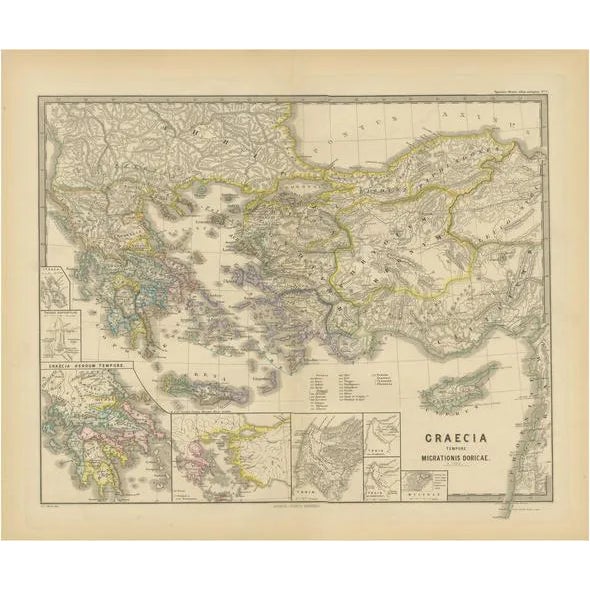
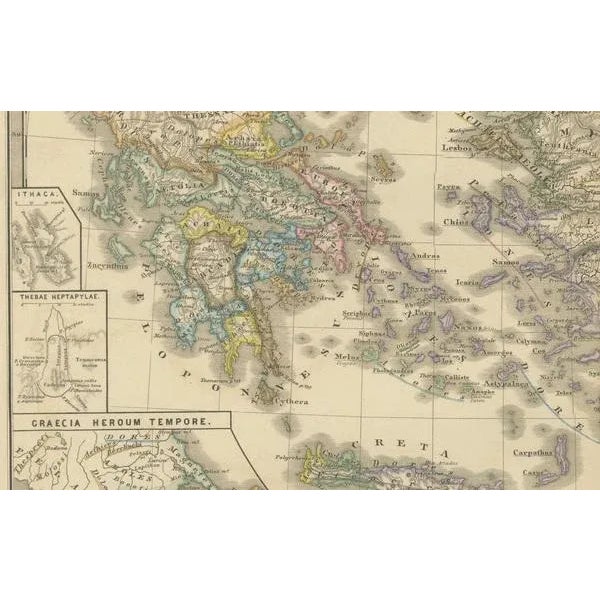
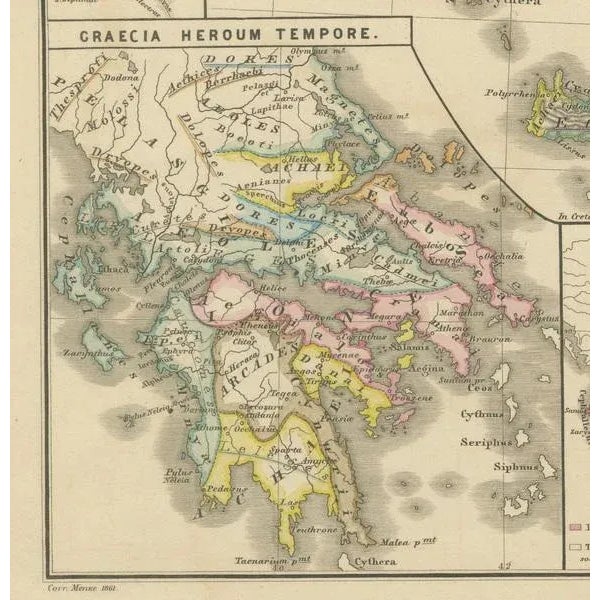
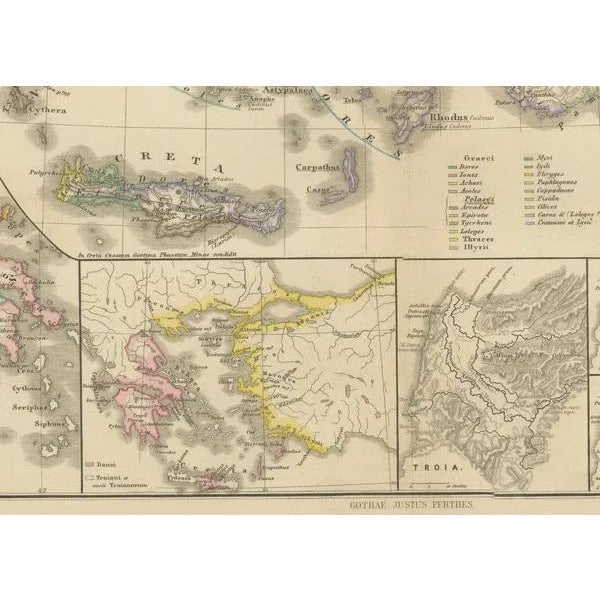
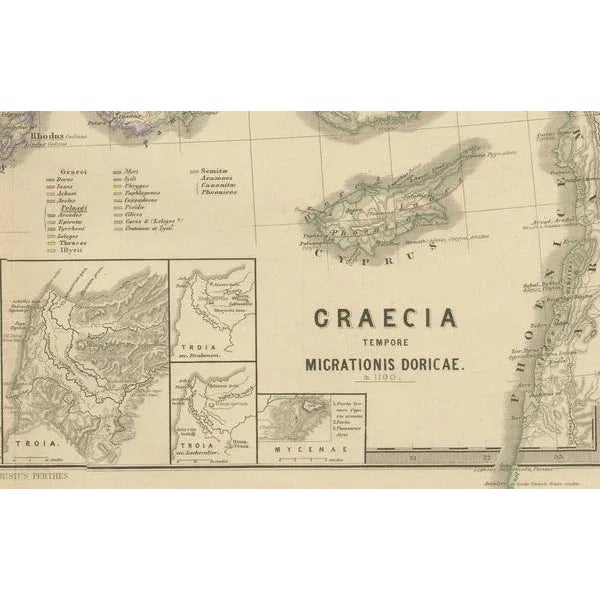
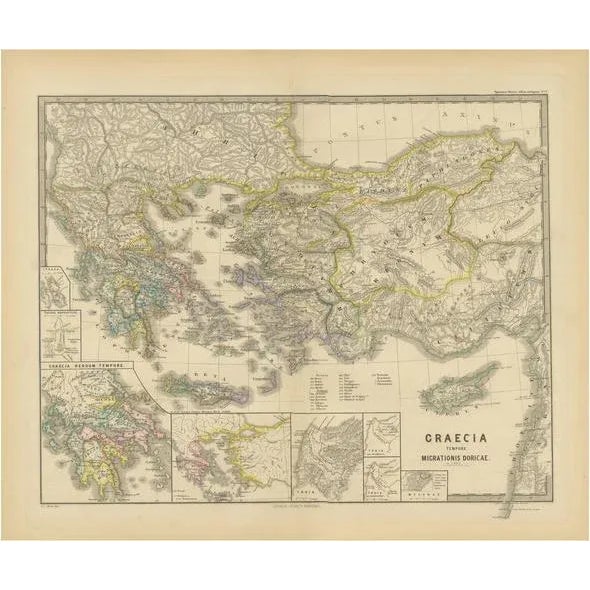
The map titled "graecia tempori migrationis doricae," translates to "greece at the time of the dorian migration." this map showcases … Read more The map titled "graecia tempori migrationis doricae," translates to "greece at the time of the dorian migration." this map showcases the regions of ancient greece during the period following the legendary dorian invasion, which according to tradition, led to the establishment of dorian greeks in the peloponnese, crete, and other parts of the aegean. Interesting aspects of the map include: 1. **historical period**: it illustrates greece during a formative period of its history, which saw the reorganization of its peoples and the development of classical greek culture. 2. **geographical detail**: the map includes detailed physical geography such as mountain ranges, valleys, islands, and bodies of water that have played significant roles in greek history. 3. **political boundaries**: it may depict the ancient regions and principalities of greece, such as sparta, athens, thebes, and others during the period of the dorian migration. 4. **ancient cities**: the map likely marks the locations of important ancient greek cities and sanctuaries, which were key in the political, religious, and social life of greece. 5. **inset maps**: there are several inset maps that likely provide more detail on specific regions, such as thessaly, epirus, the cyclades, crete (creta), and historical sites like troy (troia) and mycenae (mycenae), giving additional context to the overall map. 6. **cultural references**: this period in greek history is rich in myth and legend, and the map may include references to various significant cultural and mythological events. This map comes from the "spruner-menke atlas antiquus," a historical atlas compiled by karl spruner von merz, known for its detailed and scholarly representations of ancient geographies. The atlas, later edited by theodorus menke, was widely used for educational purposes in the 19th century. The period covered by the map, the dorian migration, is traditionally placed between the 12th and 11th centuries bc, a time that followed the collapse of the mycenaean civilization and preceded the rise of classical city-states in greece. See less
- Dimensions
- 18.5ʺW × 15.35ʺH
- Period
- 19th Century
- Item Type
- Vintage, Antique or Pre-owned
- Materials
- Paper
- Condition
- Good Condition, Unknown, Some Imperfections
- Color
- Condition Notes
- Very Good — This vintage item has no defects, but it may show slight traces of use\. Good, given age. … moreVery Good — This vintage item has no defects, but it may show slight traces of use\. Good, given age. General age-related toning, especially around the edges. vertical folding line as issued. Please study scan carefully. less
Returns & Cancellations
Return Policy - All sales are final 48 hours after delivery, unless otherwise specified in the description of the product.
Cancellation Policy - Prior to shipping or local pickup, buyers may cancel an order for up to 48 hours, unless otherwise specified.