






Details
Description
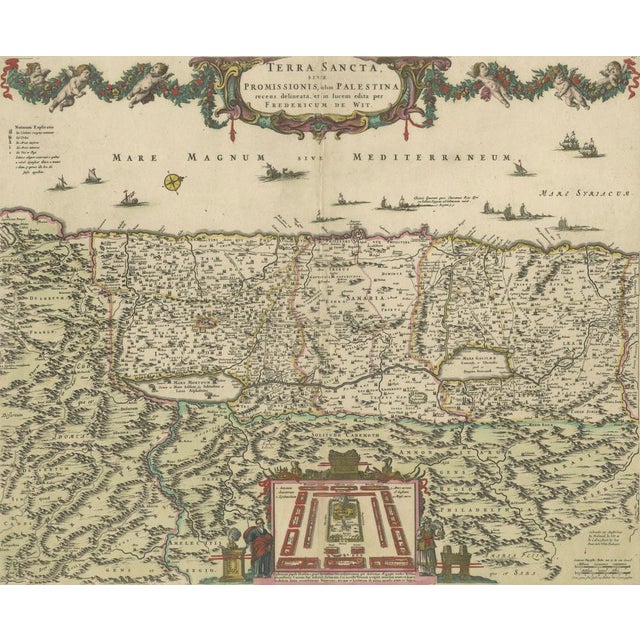
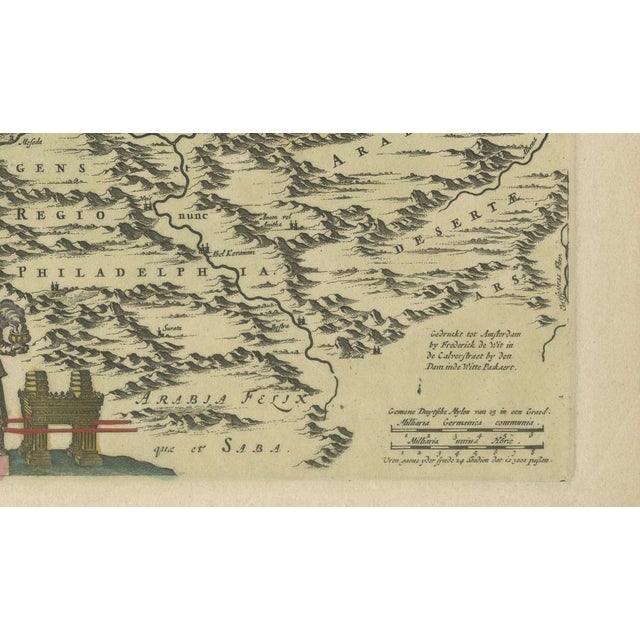
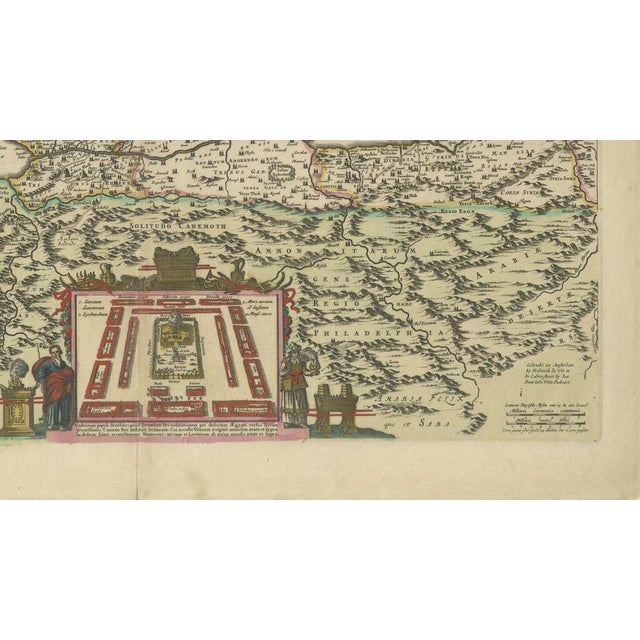
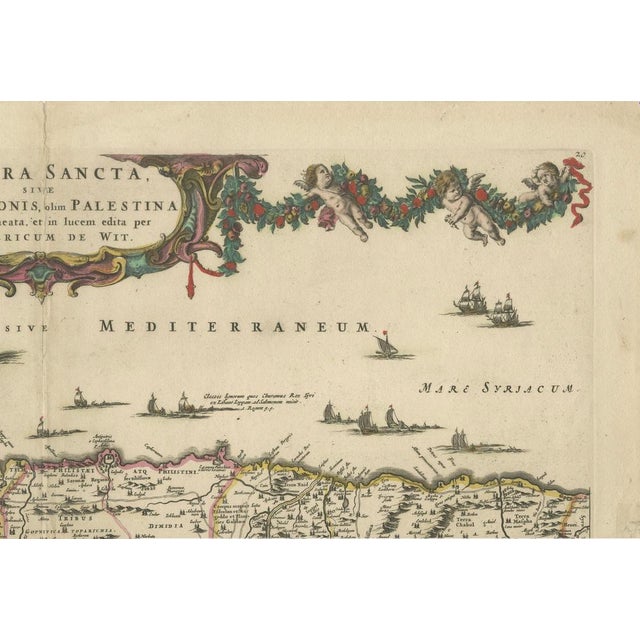
Terra sancta sive promissionis, olim palestina – hand-coloured copper-engraved map of the holy land by frederic de wit, amsterdam, circa … Read more Terra sancta sive promissionis, olim palestina – hand-coloured copper-engraved map of the holy land by frederic de wit, amsterdam, circa 1670 this impressive folio sheet, bearing the full latin title “terra sancta, sive promissionis, olim palestina,” was engraved and published by the dutch golden-age cartographer and print-seller frederic de wit (1629–1706) around 1670, shortly after he took over the plates of willem jansz. Blaeu and johannes janssonius and began issuing his own atlases from the kalverstraat in amsterdam. De wit’s work is renowned for its crisp line, balanced lettering, and exuberant baroque ornament, all of which are on display here. The geography follows the traditional orientation with the mediterranean at the top (labelled mare magnum sive mediterraneum) and the river jordan flowing into the dead sea, while the interior is divided into the territories of the twelve tribes of israel, making the map valuable to both biblical scholars and collectors of judaica. A lively procession of galleons and sea-creatures animates the coastal waters, echoing the maritime power of the dutch republic at the time the map was printed. Across the upper border a floral swag held aloft by winged putti provides a joyful frame for the title cartouche. Most striking is the large inset across the bottom centre: an architectural bird’s-eye plan of the tabernacle in the wilderness, complete with the ark of the covenant, the altar of burnt offerings, and the arrangement of the encamped tribes. This vignette, rarely found so elaborately rendered, underscores the map’s dual purpose as both geographical reference and didactic aid for readers of the old testament. Its presence sets de wit’s plate apart from earlier holy land maps by ortelius, visscher, and janssonius, and makes the print a favourite with collectors seeking decorative wall pieces that also carry deep iconographic meaning. Condition: strong, even impression on sturdy laid paper with a clearly visible watermark; original hand colour remains fresh and translucent. Old vertical centre-fold as issued; light age-tone and a few scattered, faint fox spots confined to blank margins; two tiny edge nicks skilfully closed on the verso with thin japanese tissue, well away from the printed border. No repairs or abrasions inside the engraved area. Graded very good+ for a work now more than 350 years old. Tip on framing: float-mount the sheet in an acid-free 100 % cotton rag mat to reveal the full plate-mark and deckled edge, then glaze with uv-filtering acrylic or glass to shield the delicate water-based colours. A simple ebonised or medium-walnut moulding complements both period and modern interiors while letting the rich baroque cartouches and hand colouring command attention. See less
- Dimensions
- 21.65ʺW × 18.11ʺH
- Period
- 17th Century
- Country of Origin
- Netherlands
- Item Type
- Vintage, Antique or Pre-owned
- Materials
- Paper
- Condition
- Good Condition, Unknown, Some Imperfections
- Color
- Copper
- Condition Notes
- Very Good — This vintage item has no defects, but it may show slight traces of use\. Condition: strong, even … moreVery Good — This vintage item has no defects, but it may show slight traces of use\. Condition: strong, even impression on sturdy laid paper with a clearly visible watermark; original hand colour remains fresh and translucent. Old vertical centre-fold as issued; light age-tone and a few scattered, faint fox spots confined to margins. less
Returns & Cancellations
Return Policy - All sales are final 48 hours after delivery, unless otherwise specified in the description of the product.
Cancellation Policy - Prior to shipping or local pickup, buyers may cancel an order for up to 48 hours, unless otherwise specified.