



Details
Description
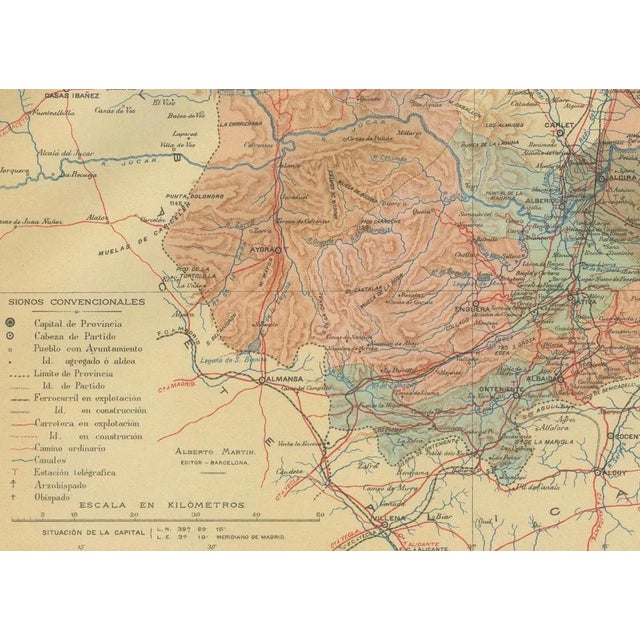
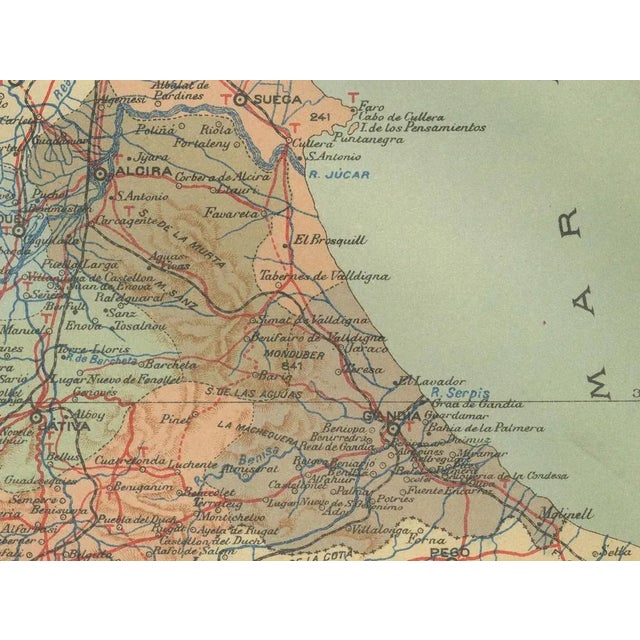
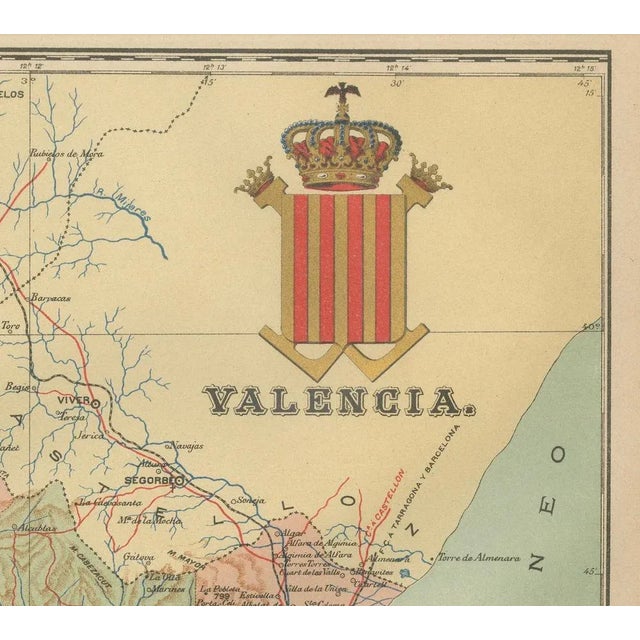
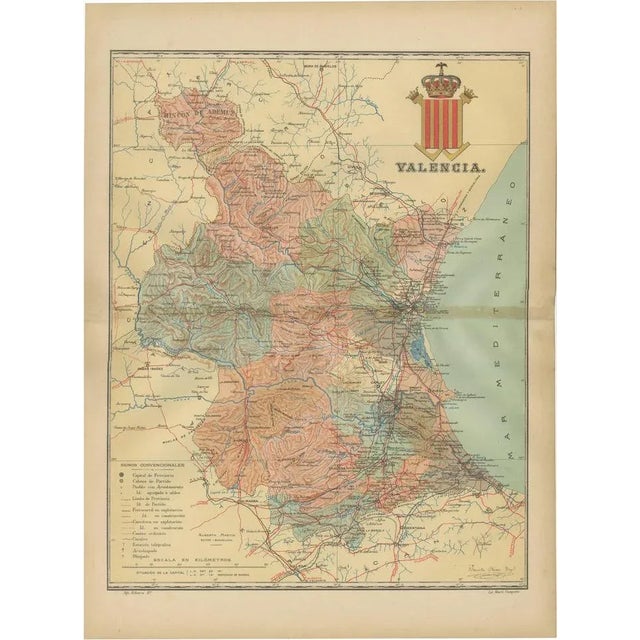
A historical map of the province of Valencia, dated 1901. The map includes intricate details such as topographical features, with … Read more A historical map of the province of Valencia, dated 1901. The map includes intricate details such as topographical features, with mountain ranges and river systems prominently marked. The province's boundaries are clearly outlined, and various types of roads and railways are indicated, suggesting the map's usefulness for navigation and understanding the region's geography during the early 20th century. The map includes a legend or "signos convencionales," which explains the symbols used to represent cities, towns (pueblos), administrative boundaries (límite de provincia), railways (ferrocarril en explotación and en construcción for operational and under-construction railways respectively), roads (carreteras), and telegraph lines (telégrafo), among others. Additionally, the map is adorned with the coat of arms of Valencia, highlighting regional pride and identity. The crest, along with the cartographic style, suggests an official or governmental source for the map. The province of Valencia is located along the Mediterranean coast, which is evident from the map's orientation. Valencia is known for its fertile lands, which benefit from the rivers such as the Turia and Júcar, and for its rich history and cultural heritage. The map would be particularly useful for historians, geographers, and others interested in the historical landscape and infrastructure development of Valencia at the turn of the 20th century. The province of Valencia, located on the eastern coast of Spain, is part of the autonomous community of the Valencian Community. It is bordered by the provinces of Castellón to the north, Teruel to the west, Cuenca and Albacete to the southwest, Alicante to the south, and the Mediterranean Sea to the east. The capital of the province is the city of Valencia, which is also the third-largest city in Spain. Valencia is known for its rich history, culture, and economic dynamism. It is famous for its vibrant festivals, including the internationally renowned Falles (Las Fallas), which features the creation and destruction of ninots (large wooden, cardboard, or plaster statues). The region is also famous for its traditional dish, paella, which has become a symbol of Valencian and Spanish cuisine worldwide. The province has a diverse geography, ranging from the sandy beaches along the coast to the rugged terrain and mountain ranges inland. It is also home to the Albufera Natural Park, a significant wetland reserve south of the city of Valencia. The economy is varied, with strong sectors in agriculture (particularly citrus fruits), industry, tourism, and services. In terms of infrastructure, the map would show a network of roads and railways connecting the province's various towns and cities, including an extensive system of smaller roads and paths serving the agricultural areas. The map could also indicate areas of particular historical interest, such as Roman ruins or medieval castles, as well as the locations of rivers, mountain ranges, and other natural features. See less
- Dimensions
- 14.57ʺW × 20.08ʺH
- Period
- 1900 - 1909
- Item Type
- Vintage, Antique or Pre-owned
- Materials
- Paper
- Condition
- Good Condition, Unknown, Some Imperfections
- Color
- Gold
- Condition Notes
- Very Good — This vintage item has no defects, but it may show slight traces of use\. Good condition. Central … moreVery Good — This vintage item has no defects, but it may show slight traces of use\. Good condition. Central vertical folding lines as issued. Aged paper with typically warm, yellowish-brown hue, especially around the edges and folding lines. Check the images carefully. less
Returns & Cancellations
Return Policy - All sales are final 48 hours after delivery, unless otherwise specified in the description of the product.
Cancellation Policy - Prior to shipping or local pickup, buyers may cancel an order for up to 48 hours, unless otherwise specified.