

Details
Description
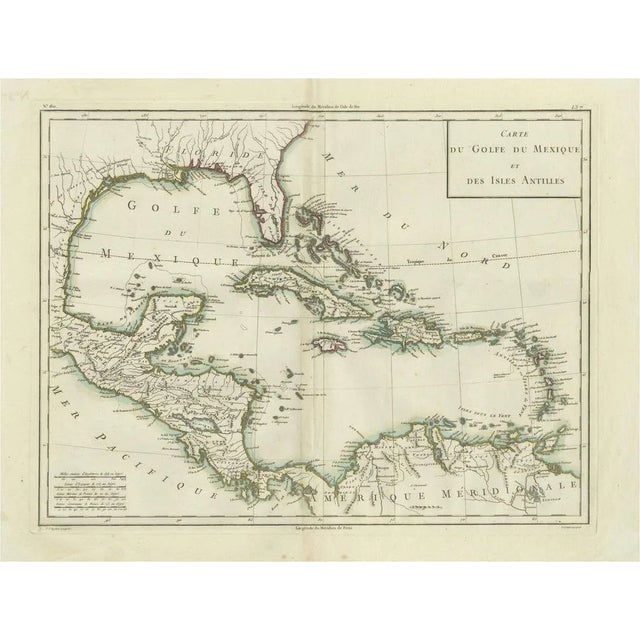
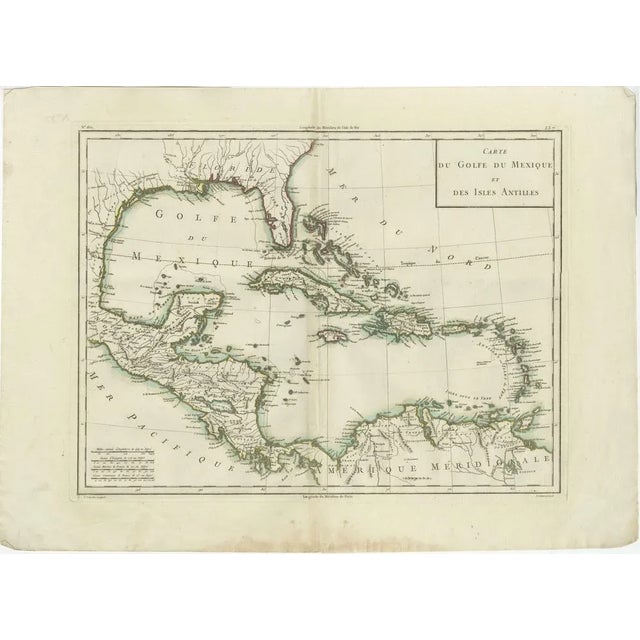
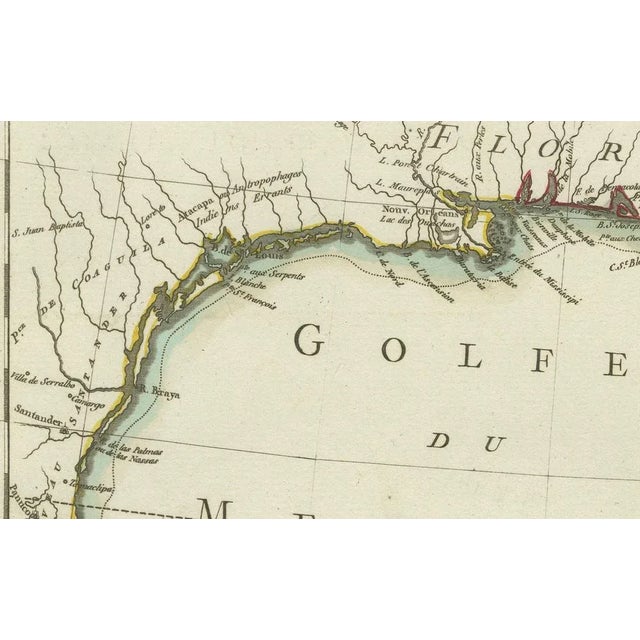
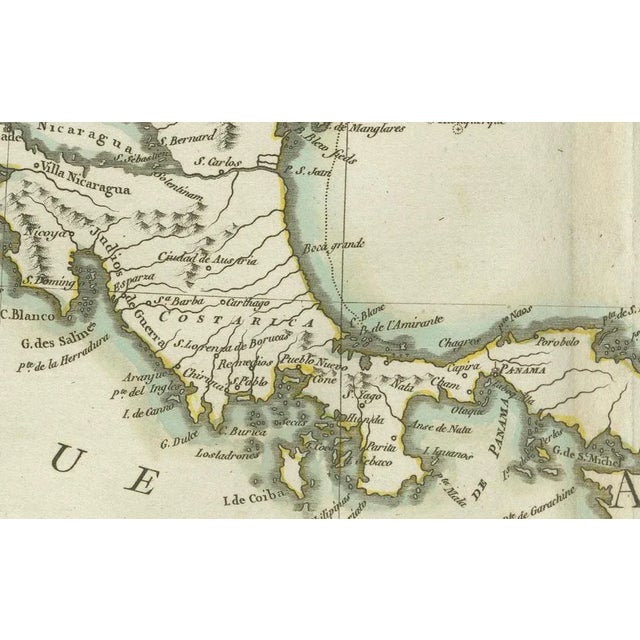
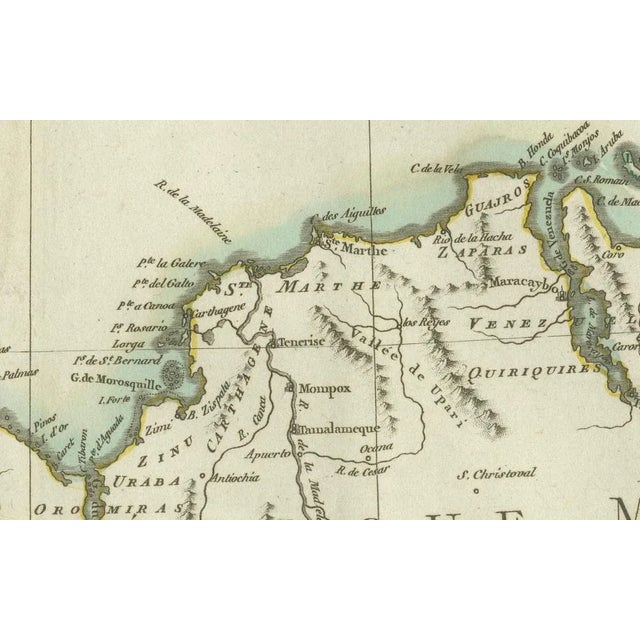
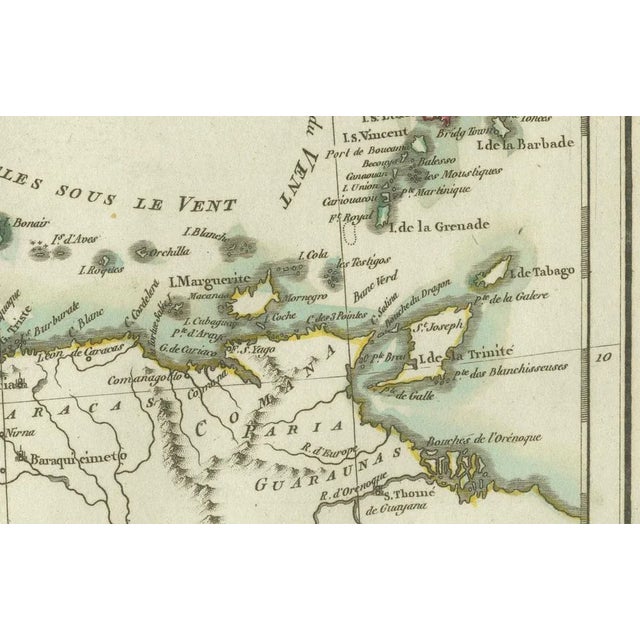
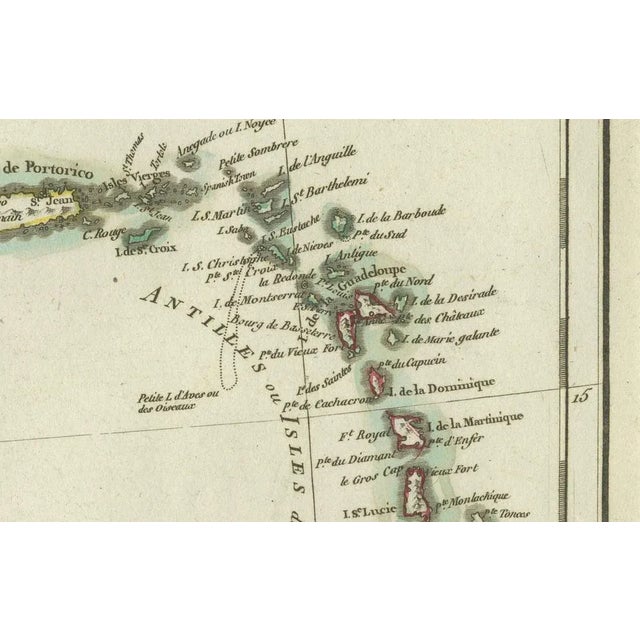
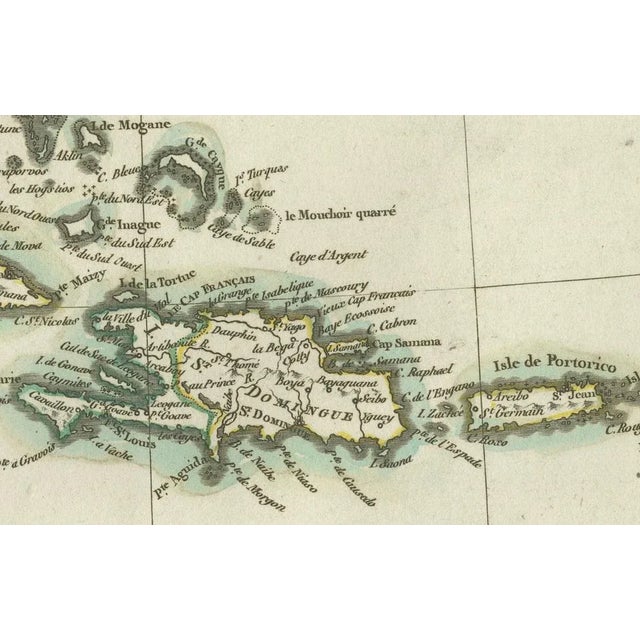
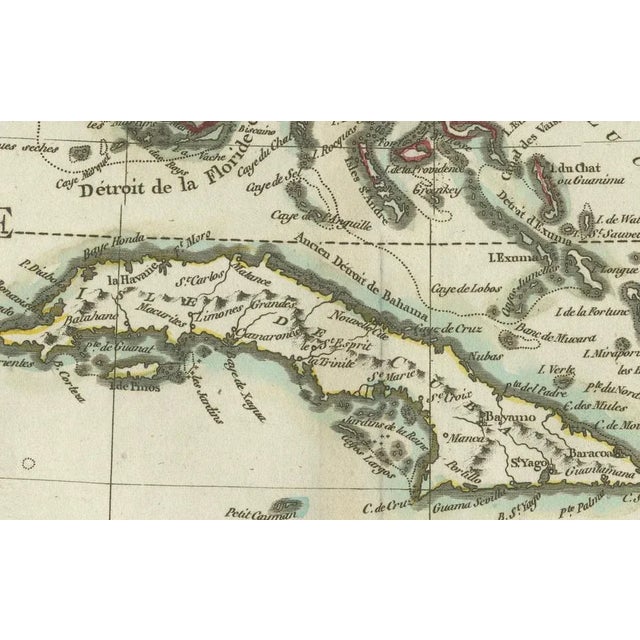
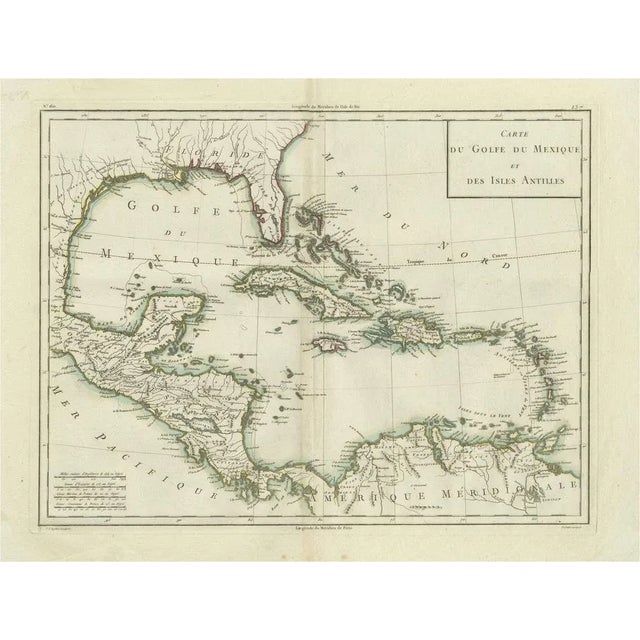
This is an original antique map titled "Carte du Golfe du Mexique et des Isles Antilles," depicting the Gulf of … Read more This is an original antique map titled "Carte du Golfe du Mexique et des Isles Antilles," depicting the Gulf of Mexico and the Caribbean islands. Created by Pierre Antoine Tardieu, this map provides a detailed view of the geographical and political landscape of the Gulf of Mexico, the Yucatan Peninsula, the Caribbean islands, and parts of Central America in the early 19th century. ### Map Details: - **Title**: Carte du Golfe du Mexique et des Isles Antilles - **Creator**: Pierre Antoine Tardieu (1784-1869) - **Publication Date**: Early 19th century - **Dimensions**: Approximately 34.5 x 43.5 cm (13.5 x 17.25 inches) - **Features**: The map includes detailed representations of the Gulf of Mexico, the Caribbean islands, and parts of Central America, highlighting political boundaries, major cities, rivers, and other geographical features. The title cartouche is located in the upper right corner, and the outlines are hand-colored to distinguish different regions. ### Key Geographic Features and Areas: 1. **Gulf of Mexico**: - The map shows the Gulf of Mexico, detailing the coastlines of present-day Mexico, the United States (Florida), and the Yucatan Peninsula. - Major ports and coastal features are marked, including Veracruz and New Orleans. 2. **Caribbean Islands**: - The map highlights the Caribbean islands, including Cuba, Hispaniola (Haiti and the Dominican Republic), Jamaica, Puerto Rico, and the Lesser Antilles. - Various islands are labeled with their names and key cities or settlements. 3. **Central America**: - Parts of Central America, including present-day countries such as Guatemala, Honduras, and Belize, are depicted. - Important cities and ports along the Caribbean coast are marked. ### Condition Overview: 1. **Paper Quality**: The paper shows typical signs of aging, such as slight yellowing, but remains in good condition without major tears or damage. 2. **Edges and Corners**: The edges are slightly worn, with minor fraying and small tears, particularly near the center fold. These imperfections do not significantly impact the overall readability or aesthetic value. 3. **Center Fold**: A center fold is present, which is common for maps of this period that were often folded for storage or publication. The fold appears intact without significant separation or damage. 4. **Color and Print Quality**: The hand-colored outlines remain vibrant and clear, highlighting the borders of different regions. The print quality is excellent, with sharp, legible text and detailed illustrations. 5. **Staining and Spots**: There are a few spots and stains, particularly near the edges and along the fold. These do not obscure any critical details of the map. ### Historical Context ### Political Landscape 1. **Spanish Empire**: - During the early 19th century, much of the region depicted on the map was under Spanish control, including Cuba, Puerto Rico, and parts of Central America. - The Spanish territories were critical for trade and military strategy. 2. **British and French Territories**: - The Caribbean islands were divided among various European powers, including the British (Jamaica, the Bahamas), the French (Haiti, Guadeloupe), and the Dutch (Curaçao, Aruba). - These territories were significant for their economic contributions, particularly in sugar production. 3. **United States**: - Florida, depicted on the map, was a Spanish territory but was of significant interest to the United States. It would later be acquired by the U.S. through the Adams-Onís Treaty in 1821. ### Socio-Economic Conditions 1. **Agriculture and Plantations**: - The Caribbean islands were known for their plantation economies, producing sugar, tobacco, coffee, and other cash crops. These plantations relied heavily on enslaved labor. - The fertile lands of the Yucatan Peninsula and parts of Central America also supported agricultural activities. 2. **Trade and Commerce**: - Major port cities such as Havana, Veracruz, and New Orleans were critical hubs for trade. Goods were exported to Europe and other parts of the Americas. - The Gulf of Mexico and the Caribbean Sea were essential maritime routes for the movement of goods, people, and ships. ### Cultural and Social Aspects 1. **Diverse Populations**: - The region was home to diverse populations, including European colonists, African slaves, Indigenous peoples, and mixed-race communities. - Cultural interactions and exchanges were common, leading to a rich blend of traditions and customs. 2. **Colonial Influence**: - European colonial powers influenced the cultural, religious, and social structures of the region. Spanish, French, British, and Dutch customs and governance systems shaped the development of these territories. ### Conflicts and Changes 1. **Independence Movements**: - The early 19th century was a period of significant political change, with independence movements sweeping through Latin America and the Caribbean. Many Spanish colonies in Central America and the Caribbean began to seek independence. - The Haitian Revolution (1791-1804) was a notable example, leading to the establishment of Haiti as the first independent black republic. 2. **Piracy and Naval Conflicts**: - The Caribbean was a hotspot for piracy and naval conflicts as European powers vied for control of trade routes and territories. ### Summary The Gulf of Mexico and the Caribbean around 1800 were regions of strategic political importance, economic activity, and cultural diversity. The map by Pierre Antoine Tardieu provides a detailed and historically valuable representation of these areas, reflecting the geographical and political complexities of the time. See less
- Dimensions
- 22.05ʺW × 16.14ʺH
- Period
- Early 19th Century
- Item Type
- Vintage, Antique or Pre-owned
- Materials
- Paper
- Condition
- Good Condition, Unknown, Some Imperfections
- Color
- Black
- Condition Notes
- Very Good — This vintage item has no defects, but it may show slight traces of use\. Good condition with … moreVery Good — This vintage item has no defects, but it may show slight traces of use\. Good condition with minor age-related wear. Hand-colored boundaries are well-preserved, enhancing the clarity of regions and features. Fold lines as issued. Damp spot at bottom edge. Some wear due to handling and age. Study the images carefully. less
Returns & Cancellations
Return Policy - All sales are final 48 hours after delivery, unless otherwise specified in the description of the product.
Cancellation Policy - Prior to shipping or local pickup, buyers may cancel an order for up to 48 hours, unless otherwise specified.