

Details
Description
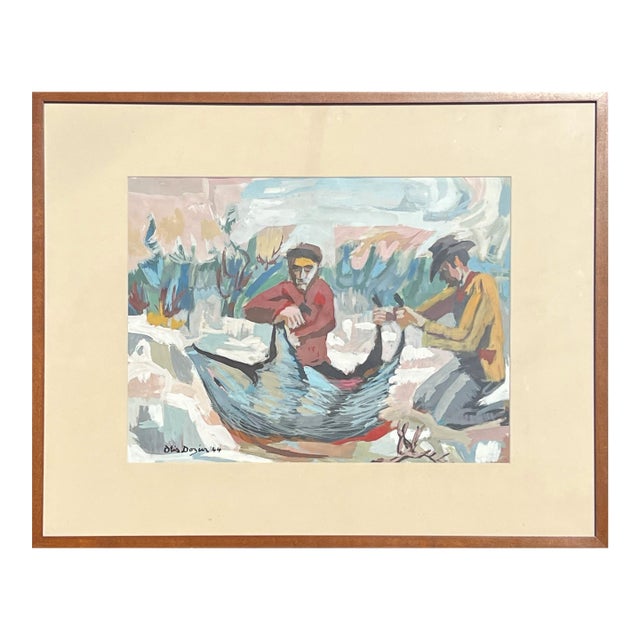
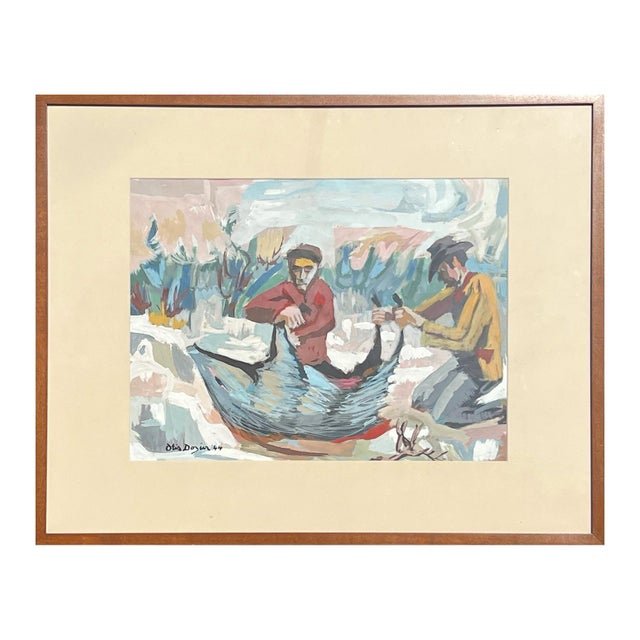
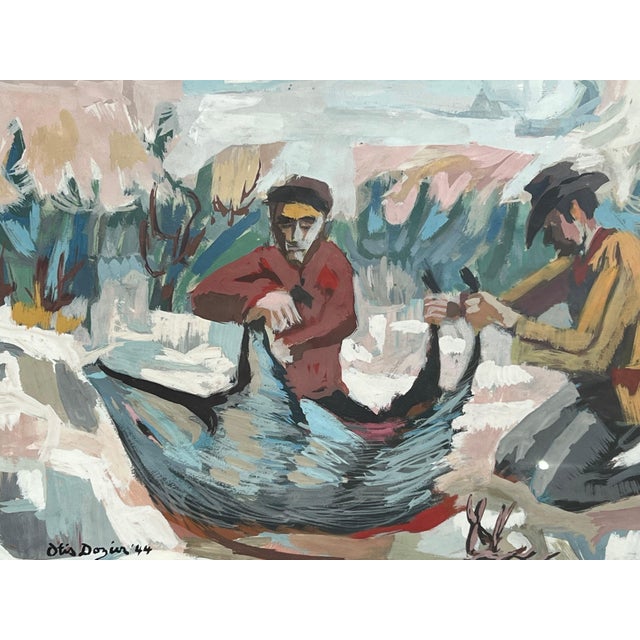
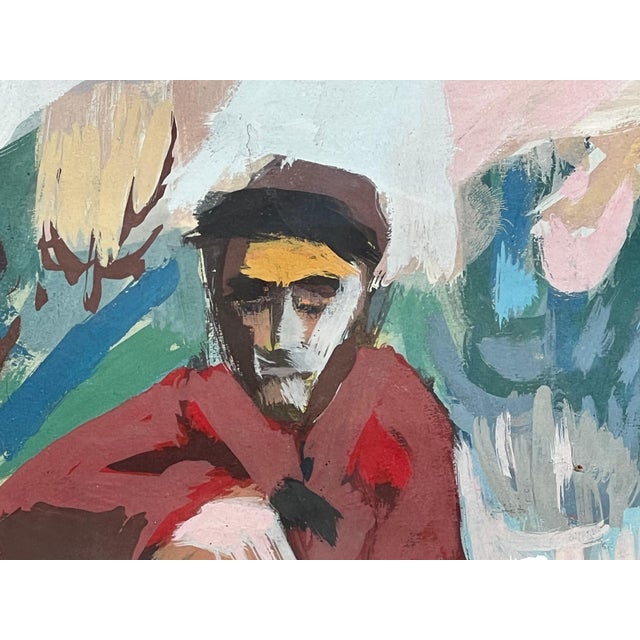
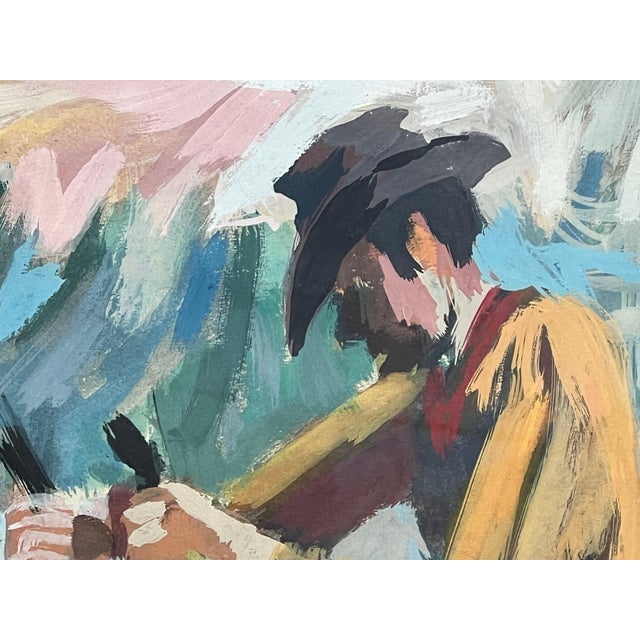
Modern Western wilderness scene by early Texas artist Otis Dozier. The work features two men kneeling and cleaning a hog …
Read more
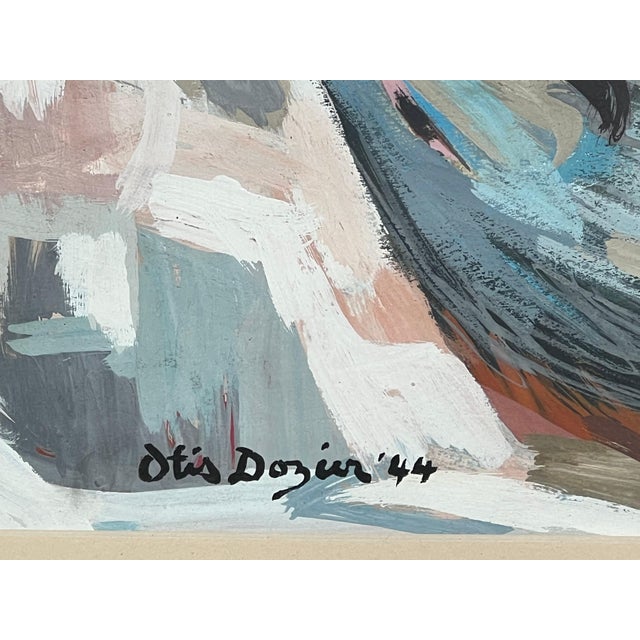
Modern Western wilderness scene by early Texas artist Otis Dozier. The work features two men kneeling and cleaning a hog set against a desert landscape. Signed and dated in the front lower left corner. Currently hung in a wooden frame with a cream matting.
Visible Dimensions Without Frame: H 14 in. x W 19 in.
Artist Biography: Otis Dozier (1904-1987) was raised on a cotton farm between Forney and Mesquite, developing a love for art and nature at a young age. After his family moved into Dallas in 1920, he received his earliest art training from well-known instructor Vivian Aunspaugh. Following his 1925 graduation from Forest High School, Dozier continued his art studies at the Dallas Art Institute with Olin Travis and Tom Stell. Also, during the 1920s, he accompanied his parents and three sisters on at least three automobile trips through the American West, familiarizing himself with the region that he would later depict in his art.
Six of Dozier’s works were included in 1932’s “Exhibition of Young Dallas Painters”; a number of these artists, including Dozier, Jerry Bywaters, John Douglass, Alexandre Hogue, William Lester, and Everett Spruce, would go on to form such significant local organizations as the Dallas Artists League and the Lone Star Printmakers. Dozier also was represented in the Texas Centennial Exposition’s art exhibit during the summer of 1936.
Spread 29, Sketchbook 1, 1937In the summer of 1938, he won a scholarship to the Colorado Springs Fine Arts Center, one of the most renowned art schools in the trans-Mississippi West in the 1930s, where he studied with Boardman Robinson. The next year he became Robinson's assistant, a position he held until 1945.
Following his 1940 marriage to Velma Davis, the couple explored much of Colorado, with Dozier producing more than 3,000 sketches of mountains and mining towns in the course of his career.
In 1945, the Doziers returned to Dallas at the invitation of Jerry Bywaters, where he taught for a few years at SMU and at the Dallas Museum of Fine Arts School until 1970. Dozier began to develop a semiabstract style, using looser brushwork and more brilliant colors than he had during the Regionalist era.
During the 1950s and early 1960s, the Doziers’ international travels prompted him to include Indian and Asian subjects in his work. Although Dozier moved away from the anecdotal subject matter of his 1930s work for several decades, in the final years of his life he returned to childhood roots and early interests, as he again executed depictions of Texas rural life and the natural world.
He and Velma Dozier played significant roles in the cultural life of Dallas until their deaths in the late 1980s. The Dozier Foundation, established after their deaths, donated Otis Dozier’s sketchbooks to the Dallas Museum of Art and the rest of the couple’s papers to SMU’s Hamon Arts Library, where they are held as part of the Bywaters Special Collections.
See less
Questions about the item?
Returns & Cancellations
Return Policy - All sales are final 48 hours after delivery, unless otherwise specified in the description of the product.
Cancellation Policy - Prior to shipping or local pickup, buyers may cancel an order for up to 48 hours, unless otherwise specified.
Related Collections
- Ed Ruscha Paintings
- Ralph Lauren Paintings
- Photorealism Canvas Paintings
- Photorealism Paintings in New York
- Louise Nevelson Paintings
- Silk Velvet Paintings
- Richard Serra Paintings
- Herman Miller Paintings
- BDDW Paintings
- Jo Baskerville Paintings
- Jean-Paul Barray Paintings
- Johannes Andersen Paintings
- Peter Behrens Paintings
- Karl-Erik Ekselius Paintings
- Carl-Axel Acking Paintings
- Joseph Stella Paintings
- Raphael Paintings
- Pedro Friedeberg Paintings
- Piet Hein Eek Paintings
- James McCray Paintings
- Lawson-Fenning Paintings
- Milton Avery Paintings
- Hans Andersen Paintings
- Cassina Paintings
- Photorealism Paintings in Los Angeles