



Details
Description
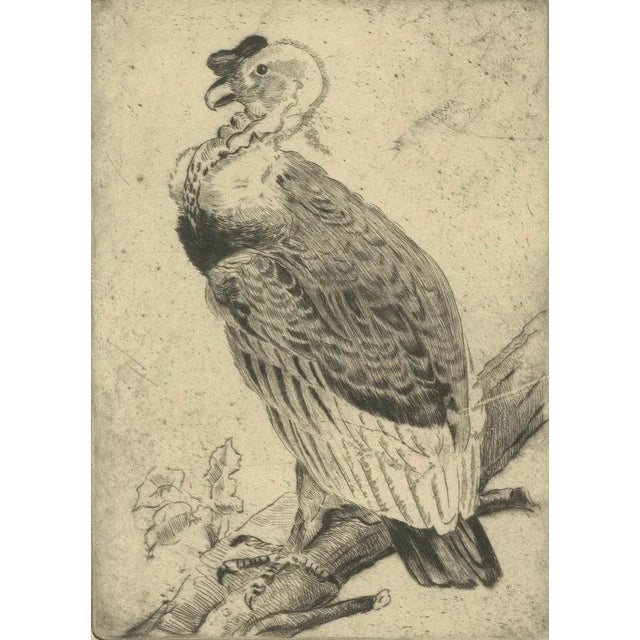
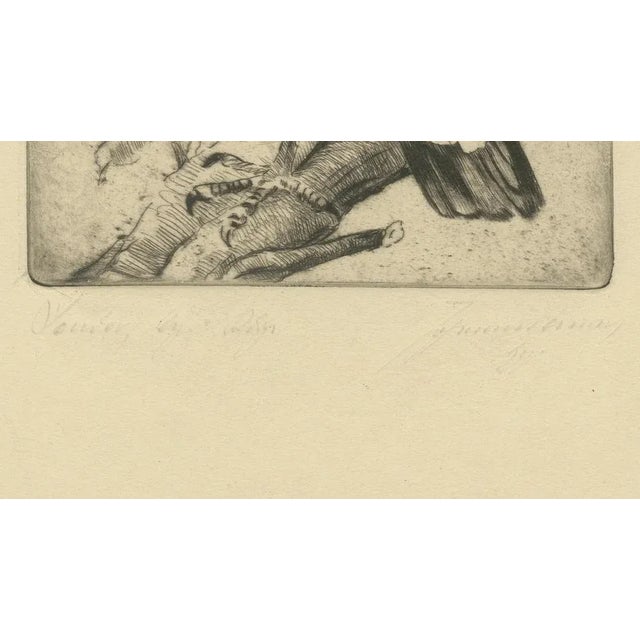
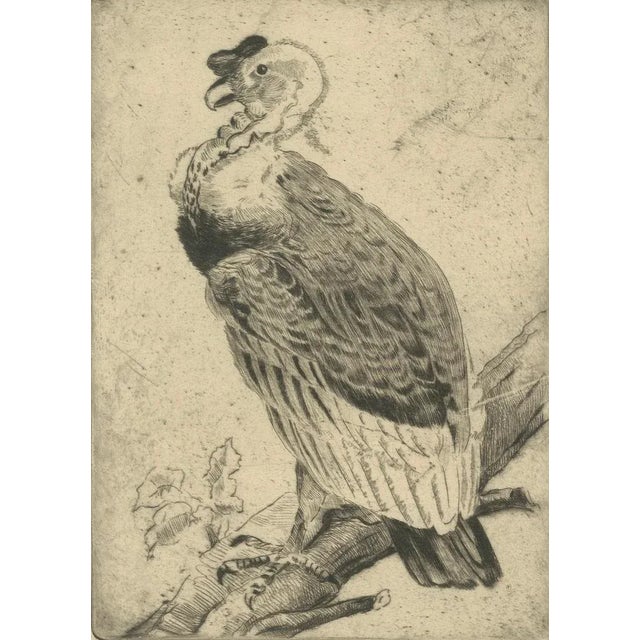
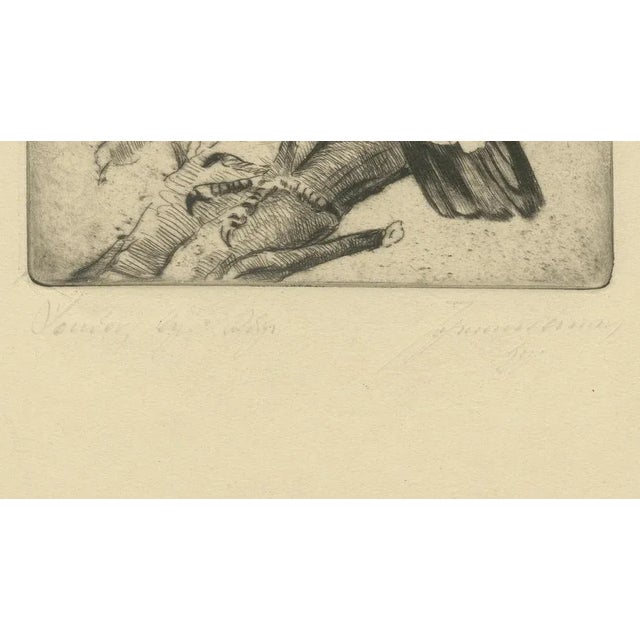
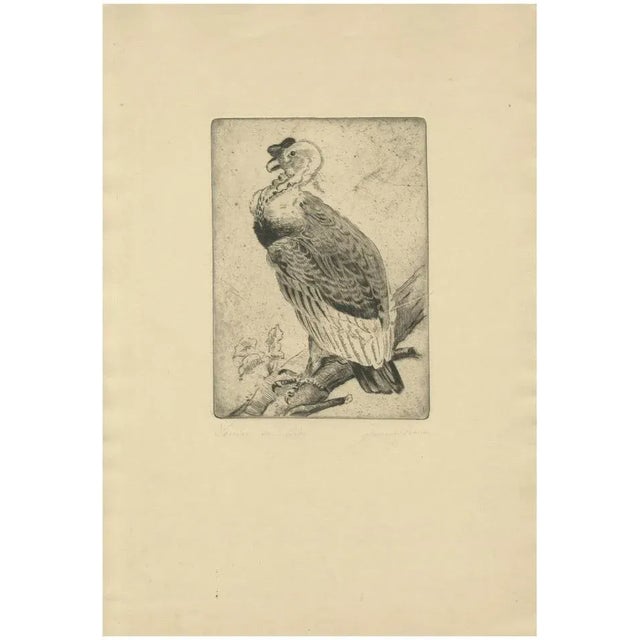
Vulture Etching – 19th Century Natural History Print of the Andean Condor This striking 19th-century etching features a detailed image … Read more Vulture Etching – 19th Century Natural History Print of the Andean Condor This striking 19th-century etching features a detailed image of a vulture, most likely the 'Vultur Gryphus', or Andean condor, one of the world’s largest flying birds and an iconic species of South America. The bird is shown perched on a branch, its distinctive hooked beak, fleshy caruncle, and layered feathering rendered with great care. The etching captures the solemn and powerful posture of the bird, making it a compelling study in natural history illustration. The print is executed in fine linework with deep tonal contrasts, emphasizing the textures of the feathers and the anatomical strength of the talons. Below the image, in pencil, is the Latin name Vultur Gryphus, accompanied by a signature and date, which appear to be in a 19th-century hand, though the artist remains unidentified. This anonymity adds a certain historical charm, and the high quality of the execution suggests the work of a skilled illustrator or printmaker familiar with zoological subjects. More research is needed to identify the maker. No second one found. Etchings of birds of prey such as this were highly popular among naturalists and collectors during the 1800s, often created as scientific references or limited edition collector’s prints. The composition’s vertical format and naturalistic detailing make it ideal for framing as a standalone decorative piece or as part of a gallery wall of natural history subjects. The sheet is printed on sturdy cream wove paper with generous margins, allowing for a wide range of framing options. It would appeal to collectors of antique ornithology, zoological art, or 19th-century etchings. Condition Report: Very good condition. Clean impression on cream paper with wide margins. Minor age spots and faint signs of handling. Pencil title and signature below image. Blank verso. No tears or repairs. Framing Tips: Frame with a black, walnut, or antique gold moulding. A warm off-white or ivory mat will complement the tone of the paper and enhance the rich details of the etching. Use UV-protective glass to preserve the print. Based on the style of the etching, paper, and handwriting, this print was most likely produced in the late 19th century, specifically around 1870 to 1890. Here’s why: 1. Etching technique – The fine linework and tonal control reflect the 19th-century revival of etching as an artistic medium, especially popular in Europe from the 1850s to 1890s. 2. Handwriting and terminology – The Latin species name *Vultur Gryphus* and the delicate, slanted pencil script are typical of scientific illustrations or academic prints from this period. 3. Paper and margins – The paper used appears to be quality wove or laid paper with wide margins, common in prints meant for collectors or limited editions in the second half of the 19th century. 4. Stylistic influence – The pose and naturalistic rendering of the bird resemble works in zoological studies and ornithological books produced during the Victorian era. Unless more concrete publication data or artist identity emerges, a safe and accurate listing would state: Date: circa 1870–1890 Period: Late 19th century See less
- Dimensions
- 9.84ʺW × 14.17ʺH
- Art Subjects
- Animals
- Item Type
- Vintage, Antique or Pre-owned
- Materials
- Paper
- Condition
- Unknown, Some Imperfections
- Color
- Black
- Condition Notes
- Very Good — This vintage item has no defects, but it may show slight traces of use\. Very good condition. … moreVery Good — This vintage item has no defects, but it may show slight traces of use\. Very good condition. Clean impression on cream paper with wide margins. Minor age spots and faint signs of handling. Pencil title and signature below image. Blank verso. No tears or repairs. less
Returns & Cancellations
Return Policy - All sales are final 48 hours after delivery, unless otherwise specified in the description of the product.
Cancellation Policy - Prior to shipping or local pickup, buyers may cancel an order for up to 48 hours, unless otherwise specified.
Related Collections
- Patrick Nagel Reproduction Prints
- Reproduction Prints in Panama City, FL
- Daylight Dream Editions Reproduction Prints
- Polychrome Reproduction Prints
- Gold-Plate Reproduction Prints
- William Hogarth Reproduction Prints
- Jute Reproduction Prints
- Sam Francis Reproduction Prints
- Leather Reproduction Prints
- Utagawa Kunisada (Toyokuni Iii) Reproduction Prints
- Reproduction Prints in Mobile
- Alvar Aalto Reproduction Prints
- Ethan Allen Reproduction Prints
- Paule Marrot Reproduction Prints
- Jim Dine Reproduction Prints
- Qing Reproduction Prints
- Francis Orpen Morris Reproduction Prints