


Details
Description
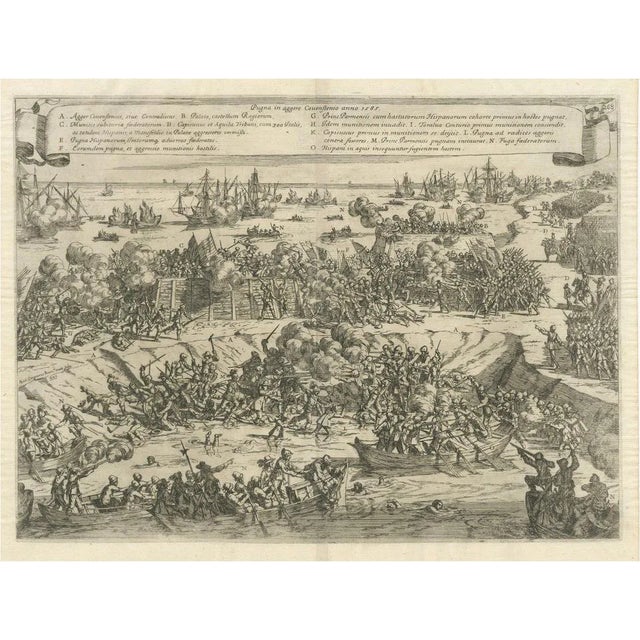
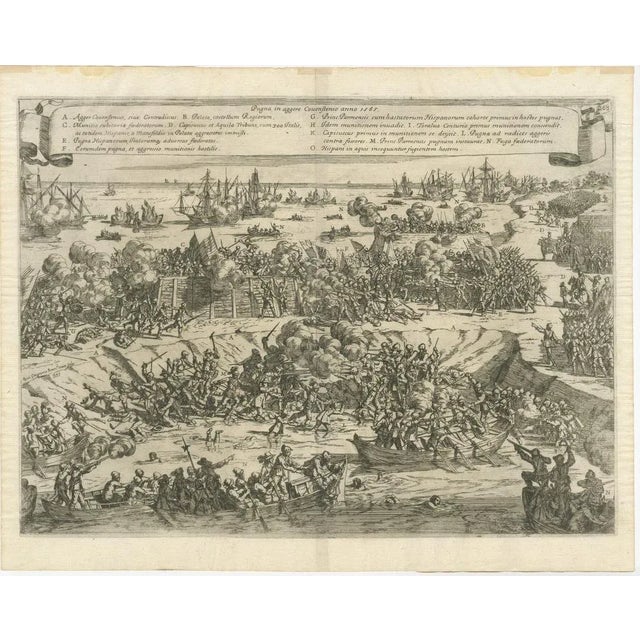
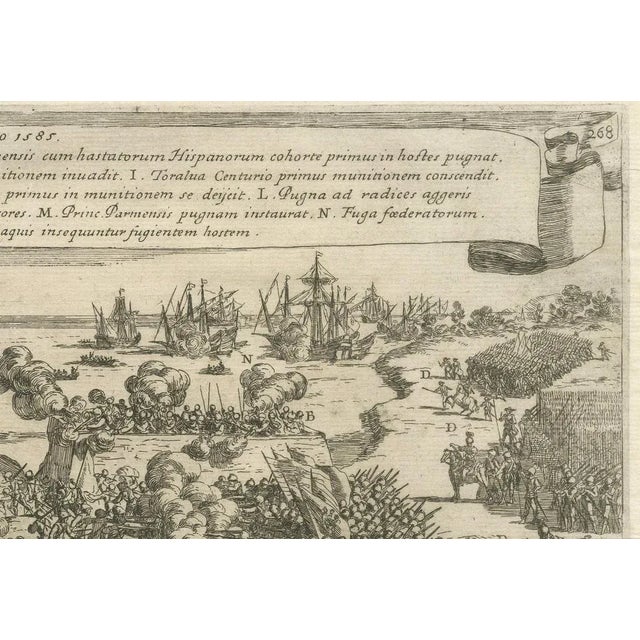
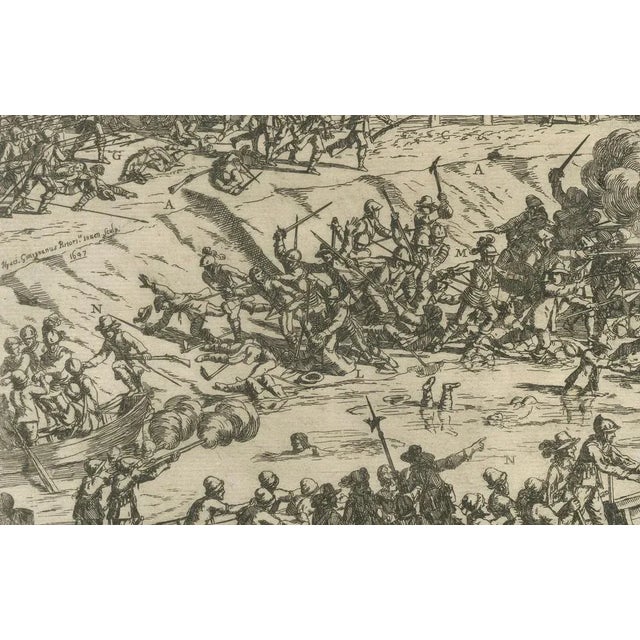
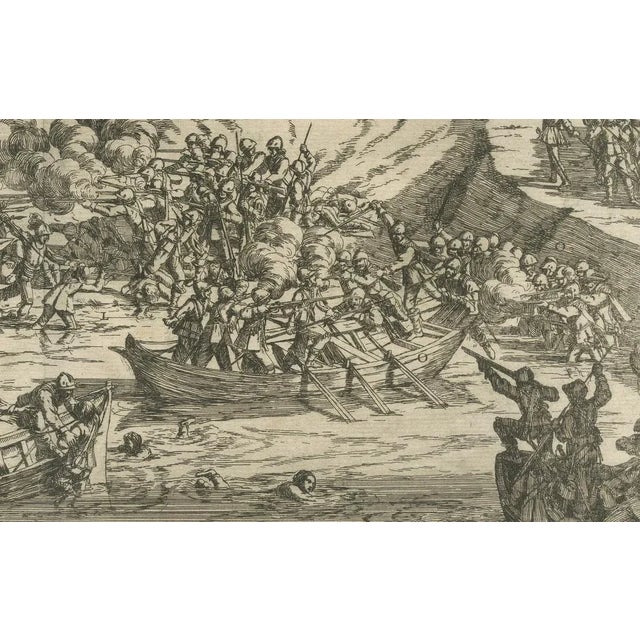
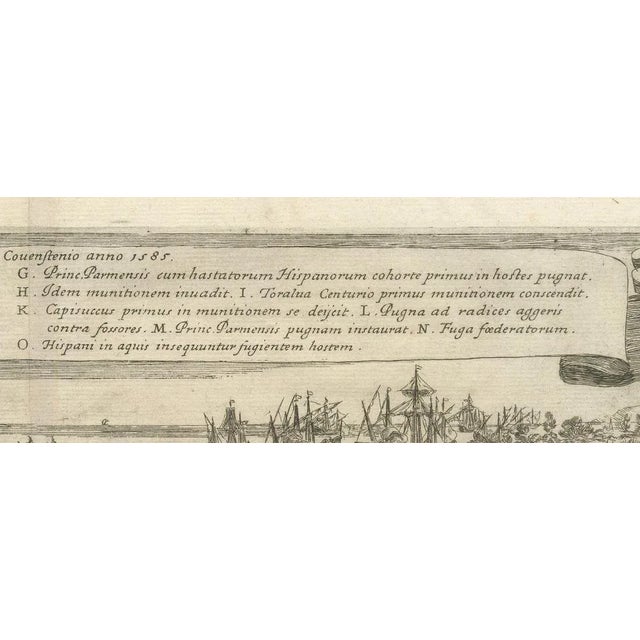
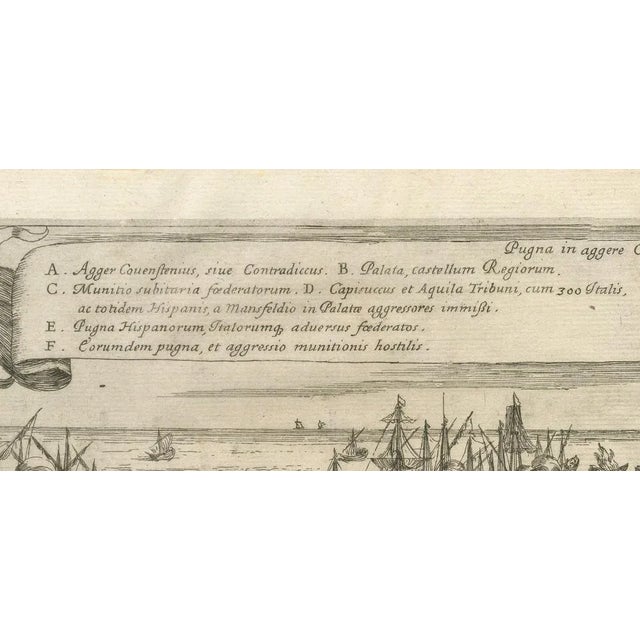
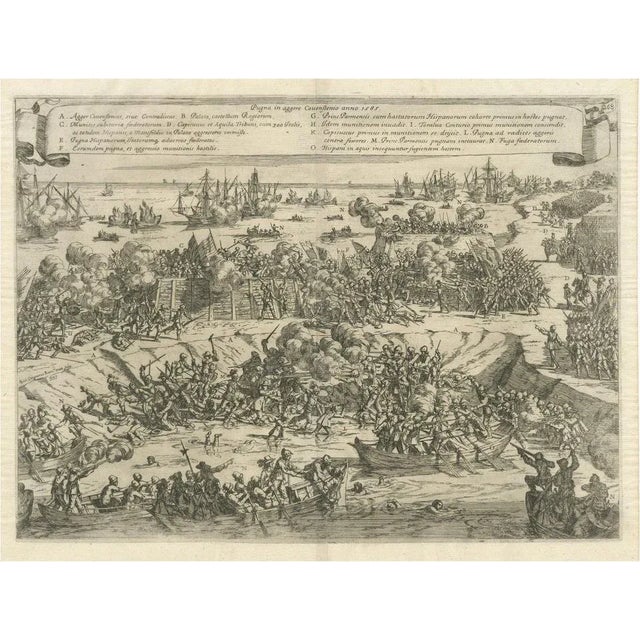
Battle on the kauwensteinse dike, 26 mai 1585, attack from the staten army and ships from sealand on the dike … Read more Battle on the kauwensteinse dike, 26 mai 1585, attack from the staten army and ships from sealand on the dike against the spanish in the eighty years' war. An original historical artwork depicting the battle of 'kauwenstein (dutch)' or covenstein in 1585, created by the italian artist giacinto gimignani in 1647. Gimignani was an italian painter from the baroque period, born in pistoia. He was known for his frescoes, altarpieces, and history paintings. In this detailed engraving, we can see a dynamic representation of a battle scene. Such historical engravings were an important means of documenting and communicating events at the time, as photography was not yet invented. The artwork is filled with activity, illustrating various moments of the battle - from the confrontations of soldiers in the foreground to the ships engaging in combat in the background. The attention to detail in depicting the chaos and vigor of the battle is notable. The use of annotations, marked by letters, suggests that this image was meant to be educational, perhaps explaining the events of the battle to those who were not present. These annotations often correspond to a key or legend that would describe the depicted elements in more detail. It's a valuable historical document that gives insight into the art and communication methods of the 17th century, as well as the military history of the late 16th century. More about the battle: the battle on the kauwensteinse dike, which took place on march 26, 1585, was a significant event during the siege of antwerp in the eighty years' war. The states army, together with ships from zeeland, launched an attack on the dike as part of the broader military efforts to capture antwerp from the spanish forces. Despite the strategic coordination and the use of fireboats, the dutch forces were met with a counterattack by the spanish. The battle was intense and protracted, shifting back and forth along the dike throughout the night. The conflict was marked by significant casualties, with around 2,000 dutch and 1,000 spanish soldiers losing their lives. The dutch succeeded in damaging the dike, but they did not manage to fully breach it, allowing for its subsequent repair. The battle also saw many soldiers from both sides drown after slipping off the dike, and many were left stranded when dutch boats withdrew. The siege of antwerp itself was a key episode in the dutch revolt against spanish habsburg rule, with the city ultimately surrendering to the spanish under alessandro farnese on august 17, 1585. This siege had far-reaching consequences, including the exodus of protestants from antwerp to the north, which contributed to amsterdam's rise as a new economic capital. The kauwensteinse dike battle is remembered for its unique warfare style, which included naval elements and was fought over a narrow stretch of land. It serves as an example of the complex military operations during the eighty years' war and the challenges of warfare in the low countries at the time. The latin text provides a detailed of the battle scene, identifying specific locations and actions taken by the military forces involved. Translated: a. The cauwenstein dyke, or counter-dyke. B. Palata, the castle of the regions. C. The sudden fortification of the allies. D. Capisuccus and aquila, the tribunes, with 300 italians; and the same number of spaniards, sent as aggressors into palata by mansfeld. E. The battle of the spaniards and italians against the allies. F. Their battle, and the attack on the enemy's fortification. G. The prince of parma with a cohort of spanish spearmen fights first against the enemies. H. The same person invades the fortification. I. Toralua the centurion is the first to ascend the fortification. K. Capisuccus is the first to throw himself into the fortification. L. The fight at the base of the rampart against the diggers. M. The prince of parma renews the fight. N. The flight of the allies. O. The spanish in the waters pursue the fleeing enemy. See less
- Dimensions
- 13.78ʺW × 17.32ʺH
- Period
- 17th Century
- Item Type
- Vintage, Antique or Pre-owned
- Materials
- Paper
- Condition
- Good Condition, Unknown, Some Imperfections
- Color
- Gold
- Condition Notes
- Very Good — This vintage item has no defects, but it may show slight traces of use\. Good, given age. … moreVery Good — This vintage item has no defects, but it may show slight traces of use\. Good, given age. General age-related toning and/or occasional minor defects from handling. Middle fold line as issued. Small remains of tape in the top border. Please study scan carefully. less
Returns & Cancellations
Return Policy - All sales are final 48 hours after delivery, unless otherwise specified in the description of the product.
Cancellation Policy - Prior to shipping or local pickup, buyers may cancel an order for up to 48 hours, unless otherwise specified.