





Details
Description
Salvador dali (1904-1989)
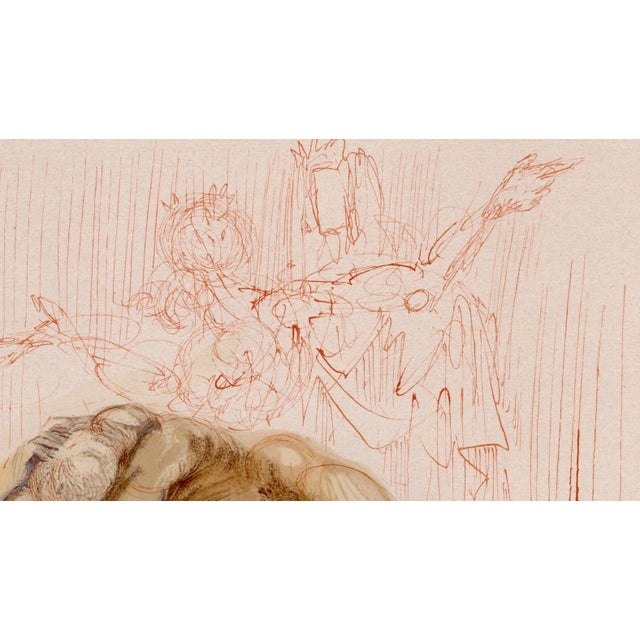
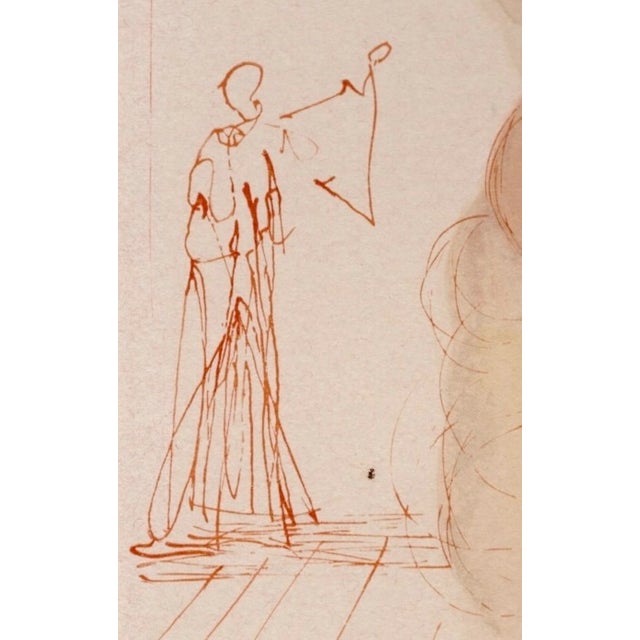
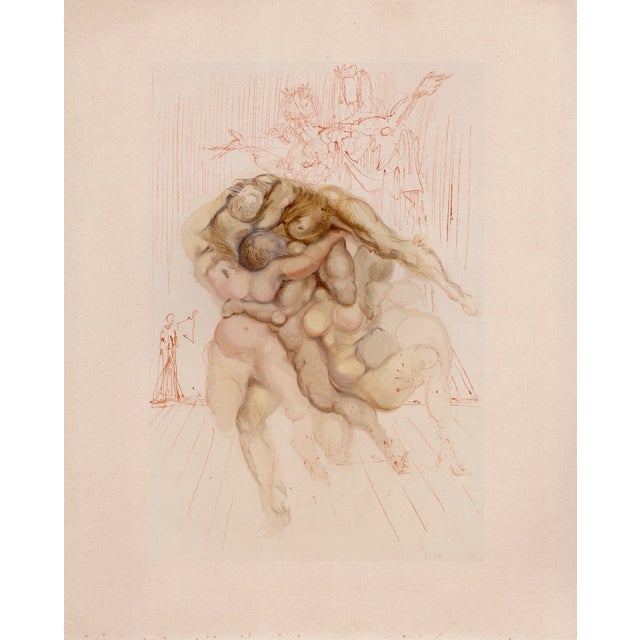
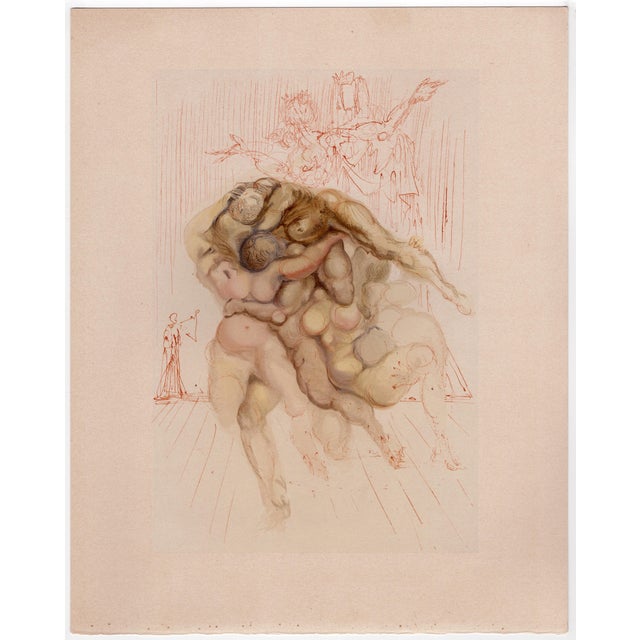
gli iracondi
(wrathful souls)
plate 8 from "la divina commedia" (the divine comedy), referring to inferno, chant …
Read more
Salvador dali (1904-1989)
gli iracondi
(wrathful souls)
plate 8 from "la divina commedia" (the divine comedy), referring to inferno, chant 7
from the special italian edition of only 80 (out of a total edition of 2900) - see the image of the plaque attached to the portfolio
original colour woodcut on rives paper
executed in paris for the italian publisher, under the direction of master printer raymond jacquet for the italian edition
year: 1964
33 x 26 cm
on the back: "inferno tav. 8" (inferno, plate 8)
catalogue raisonné:
r.michler and l. W. Löpsinger
"salvador dali, catalogue raisonné of prints ii - lithographs and wood engravings 1956-1980" ref. 1046
great condition: full size (no trimming), never framed, minimal traces of time near the edges, original deckle bottom edge, no restoration
with certificate
important
from the special edition of 80
___
this very artwork refers to inferno, chant 7, verses 112-114:
queste si percotean non pur con mano,
ma con la testa e col petto e coi piedi,
troncandosi co' denti a brano a brano.
\. They with their hands alone
struck not, but with the head, the breast, the feet,
cutting each other piecemeal with their fangs.
(translator: reverend henry francis cary)
i have official proof of authenticity such as vintage catalogs,
designer records,
or other literature sources and take full responsibility for any authenticity issues arising
from
misattribution
See less
- Dimensions
- 10.24ʺW × 12.99ʺH
- Art Subjects
- Figure
- Period
- 1960s
- Country of Origin
- France
- Item Type
- Vintage, Antique or Pre-owned
- Condition
- Good Condition, Original Condition Unaltered, Some Imperfections
- Color
- Condition Notes
- Excellent — This vintage piece is in near original condition. It may show minimal traces of use and/or have slight … moreExcellent — This vintage piece is in near original condition. It may show minimal traces of use and/or have slight restorations\. full size (no trimming), never framed, minimal traces of time near the edges, original deckle bottom edge, no restoration less
Returns & Cancellations
Return Policy - All sales are final 48 hours after delivery, unless otherwise specified in the description of the product.
Cancellation Policy - Prior to shipping or local pickup, buyers may cancel an order for up to 48 hours, unless otherwise specified.
Related Collections
- Reproduction Prints in Panama City, FL
- William Gropper Reproduction Prints
- Monotype Reproduction Prints
- Alvar Aalto Reproduction Prints
- Daylight Dream Editions Reproduction Prints
- Gold-Plate Reproduction Prints
- Polychrome Reproduction Prints
- William Hogarth Reproduction Prints
- Utagawa Kunisada (Toyokuni Iii) Reproduction Prints
- Leather Reproduction Prints
- Jute Reproduction Prints
- Ethan Allen Reproduction Prints
- Paule Marrot Reproduction Prints
- Jim Dine Reproduction Prints
- Francis Orpen Morris Reproduction Prints