

Details
Description
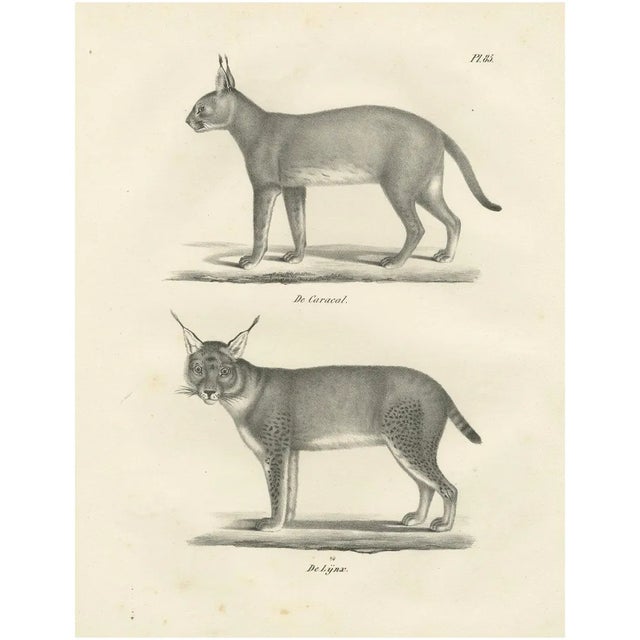
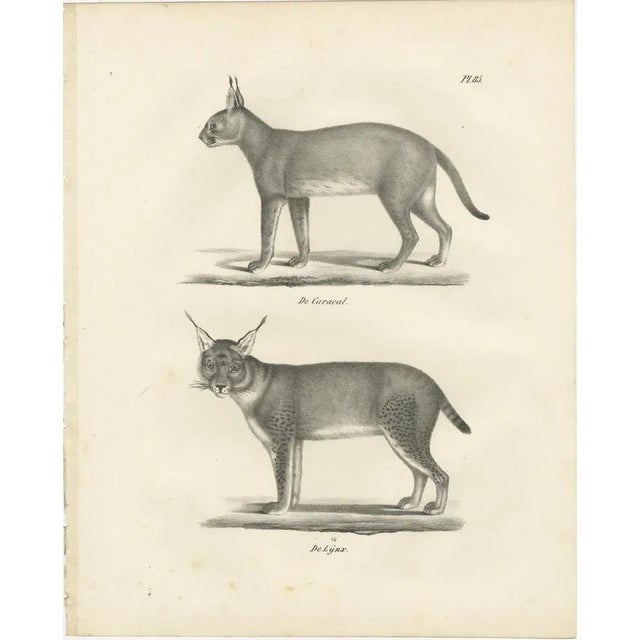
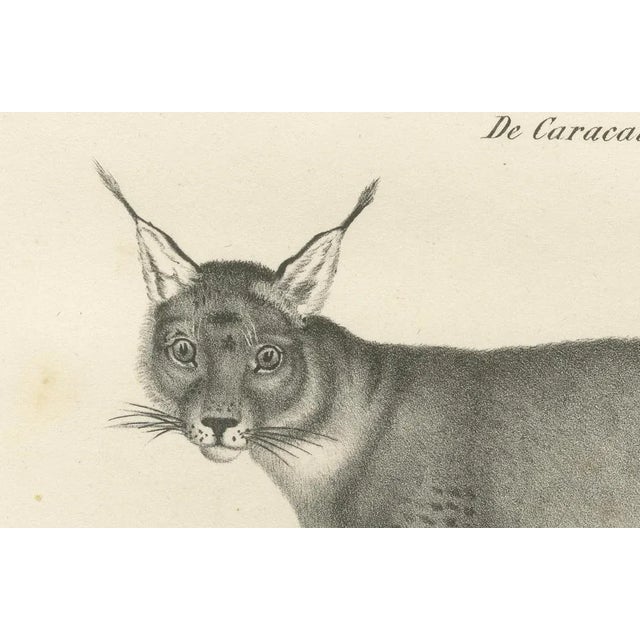
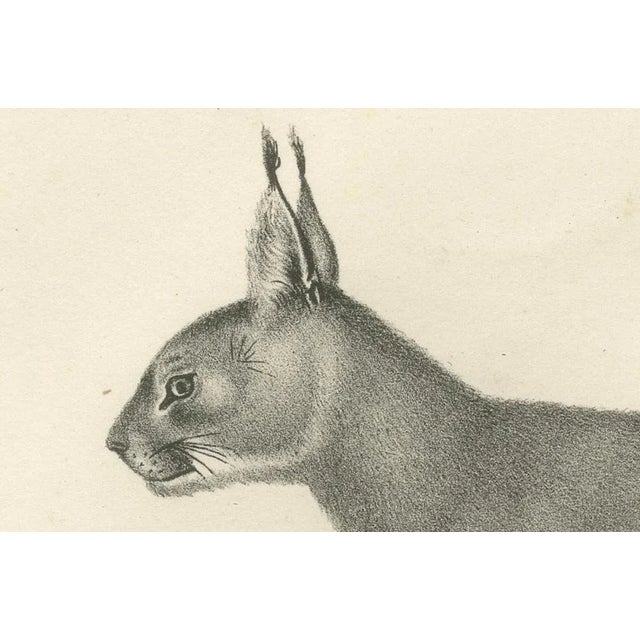
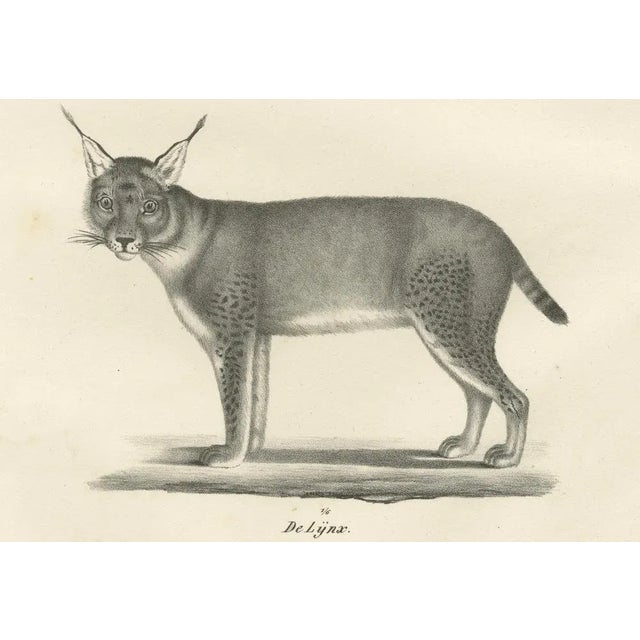
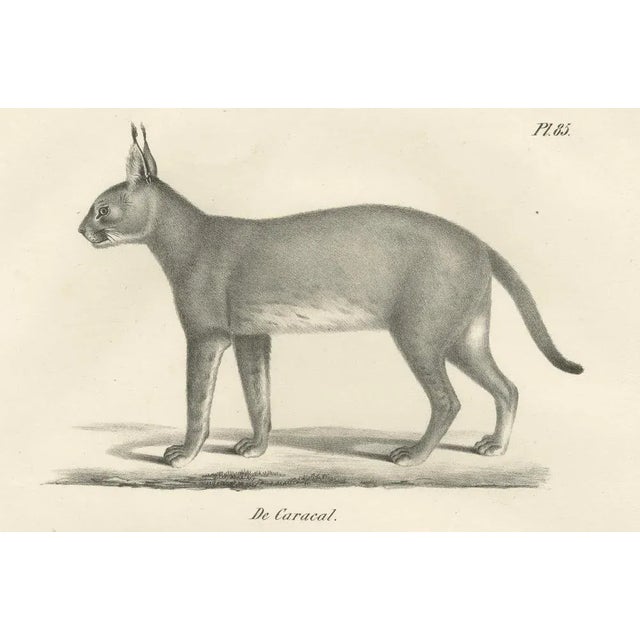
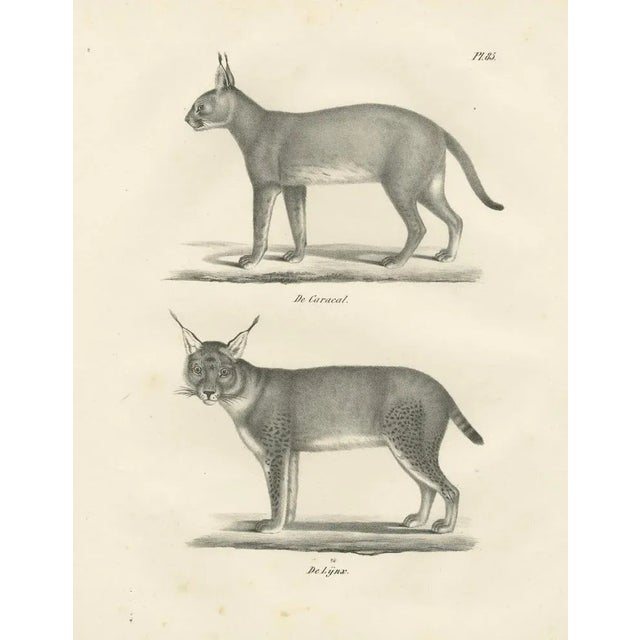
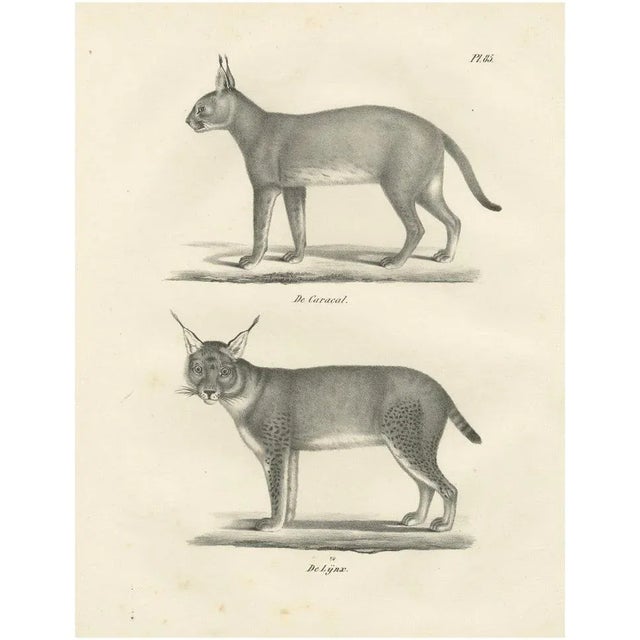
19th-century lithograph of the caracal and lynx in striking profiles this detailed 19th-century lithograph features two remarkable wild cats: the … Read more 19th-century lithograph of the caracal and lynx in striking profiles this detailed 19th-century lithograph features two remarkable wild cats: the caracal (caracal caracal) and the lynx (lynx lynx). Originally published in *de zoogdieren: afgebeeld en in hunne levenswijze geschetst*, this illustration captures the defining characteristics of these elusive felines with remarkable artistic precision. The caracal, also known as the desert lynx, is native to africa, the middle east, and parts of asia. It is easily recognized by its long, tufted ears, which enhance its acute sense of hearing. Caracals are exceptional hunters, capable of leaping several meters into the air to catch birds in flight. Unlike other small wild cats, they are known for their remarkable agility and speed, making them efficient solitary predators in arid landscapes. The lynx, found across europe, north america, and asia, is characterized by its short tail, distinctive ear tufts, and thick fur, which helps it survive in colder climates. Lynxes are expert stalkers and ambush predators, primarily hunting small mammals such as hares. Unlike caracals, which thrive in open areas, lynxes prefer dense forests where they can remain hidden from prey and competitors. Created by c.c. G. Zool. And printed by la haye & j. L. G. V., this lithograph is an important piece for collectors of antique zoological prints, wildlife enthusiasts, and those interested in early scientific representations of felines. Keywords: 19th century, lithograph, natural history, zoology, caracal, lynx, wild cats, big cats, caracal caracal, lynx lynx, wildlife art, scientific illustration, antique print, animal engraving, taxonomy, netherlands, la haye, j.l.g.v. --- condition summary: the print is in good condition, with minor age-related toning and light foxing along the margins. The lithographic details remain crisp, highlighting the caracal’s elegant profile and the lynx’s distinctive features. The edges show slight irregularities due to historical binding, but no major tears or folds are present. The print is well-preserved and highly collectible. --- framing tips: to emphasize the lithograph’s fine details, use an acid-free mat in a neutral shade, such as off-white or light beige. A dark wooden or black frame will create an elegant contrast, drawing attention to the rich textures of the fur. Uv-protective glass is recommended to prevent fading over time. If displayed alongside other wildlife lithographs, matching frames will provide a cohesive and refined presentation. See less
- Dimensions
- 12.6ʺW × 10.24ʺH
- Art Subjects
- Animals
- Period
- 19th Century
- Item Type
- Vintage, Antique or Pre-owned
- Materials
- Paper
- Condition
- Good Condition, Unknown, Some Imperfections
- Color
- Beige
- Condition Notes
- Very Good — This vintage item has no defects, but it may show slight traces of use\. The print is … moreVery Good — This vintage item has no defects, but it may show slight traces of use\. The print is in good condition, with minor age-related toning and light foxing along the margins. The lithographic details remain crisp, highlighting the caracal’s elegant profile and the lynx’s distinctive features. less
Returns & Cancellations
Return Policy - All sales are final 48 hours after delivery, unless otherwise specified in the description of the product.
Cancellation Policy - Prior to shipping or local pickup, buyers may cancel an order for up to 48 hours, unless otherwise specified.
Related Collections
- Patrick Nagel Reproduction Prints
- Hable Reproduction Prints
- Reproduction Prints in Panama City, FL
- William Hogarth Reproduction Prints
- Sister Parish Reproduction Prints
- Jonathan Adler Reproduction Prints
- Lauren Ralph Lauren Reproduction Prints
- Dorothy Draper Reproduction Prints
- Gold-Plate Reproduction Prints
- Edward S. Curtis Reproduction Prints
- Mark D. Sikes Reproduction Prints
- Leather Reproduction Prints
- William Gropper Reproduction Prints
- Jute Reproduction Prints
- Sam Francis Reproduction Prints
- Alvar Aalto Reproduction Prints
- Polychrome Reproduction Prints
- Utagawa Kunisada (Toyokuni Iii) Reproduction Prints
- Serena and Lily Reproduction Prints
- Daylight Dream Editions Reproduction Prints
- Restoration Hardware Reproduction Prints
- Reproduction Prints in Mobile
- Joshua Reynolds Reproduction Prints
- Port 68 Reproduction Prints
- Bunny Williams Home Reproduction Prints