




Details
Description
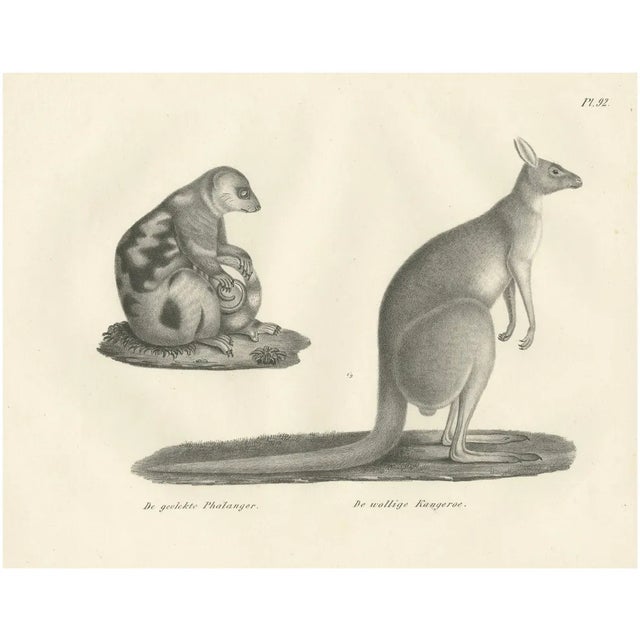
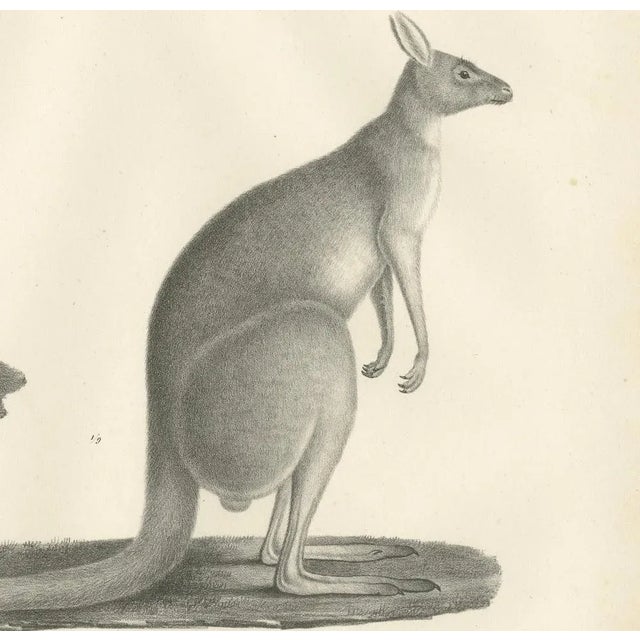
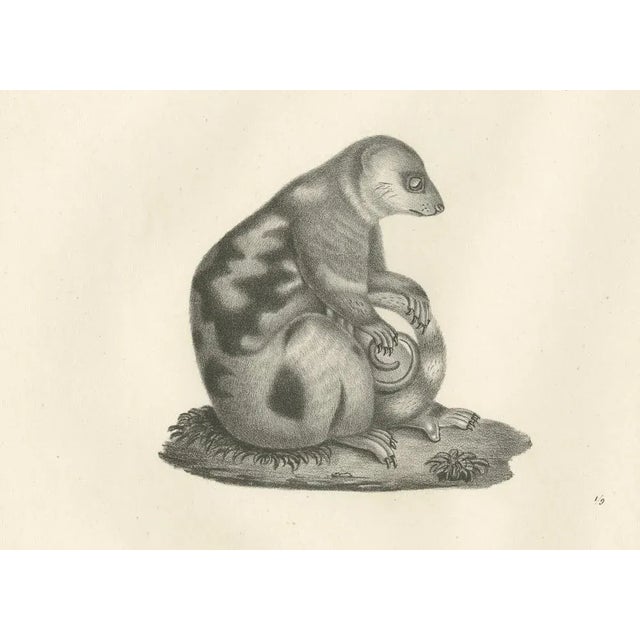
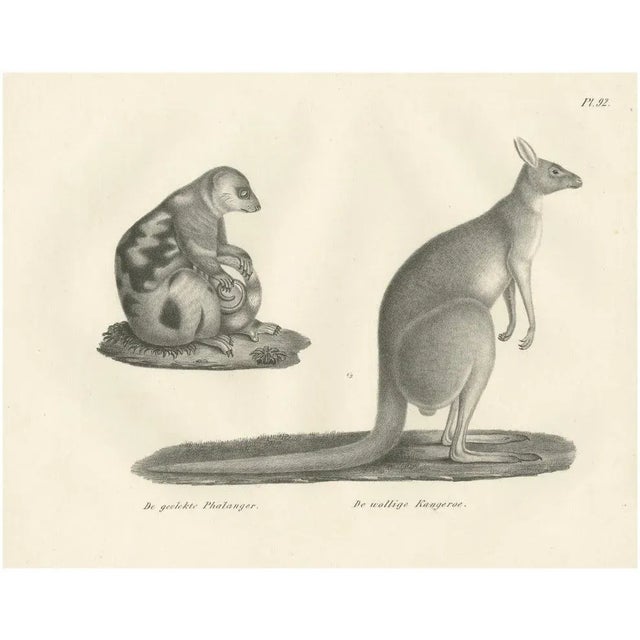
19th-Century Lithograph of a Spotted Phalanger and Woolly Kangaroo from Australia : This stunning 19th-century lithograph presents two fascinating marsupials … Read more 19th-Century Lithograph of a Spotted Phalanger and Woolly Kangaroo from Australia : This stunning 19th-century lithograph presents two fascinating marsupials native to Australia and surrounding regions. It originates from *De Zoogdieren: afgebeeld en in hunne levenswijze geschetst*, a series of zoological illustrations documenting mammals in remarkable detail. The first species, the spotted phalanger (Spilocuscus maculatus), is a type of cuscus found in New Guinea and parts of northern Australia. This nocturnal, tree-dwelling marsupial is recognized for its soft, woolly fur and distinctive spotted pattern, which provides natural camouflage in dense foliage. Known for its slow movements and strong prehensile tail, it primarily feeds on leaves, fruits, and flowers. The second species, the woolly kangaroo, is depicted with a strong yet elegant form, highlighting the anatomical accuracy of early scientific illustrations. Likely representing a forest-dwelling wallaby or a variant of the eastern grey kangaroo (Macropus giganteus), this marsupial is known for its thick fur, which protects it from cooler environments. Kangaroos are famous for their powerful hind legs and large tails, used for balance and support. This lithograph is an exquisite example of early natural history prints, capturing the curiosity and meticulous study of exotic wildlife. It is a valuable addition to collections focusing on Australian fauna, marsupials, or antique zoological prints. Keywords: Australian Wildlife, Spotted Phalanger, Woolly Kangaroo, 19th Century, Natural History Print, Scientific Illustration, Rare Lithograph, Marsupial Art --- Condition Summary: This lithograph is in very good condition, with minor foxing and light age-related discoloration along the margins. The image remains crisp, with fine shading and strong contrast preserving the intricate details of the animals. A small binding mark along the left edge is present but does not affect the artwork itself. This well-preserved print is a fine example of 19th-century scientific illustration. --- Framing Tips: For optimal display, frame this lithograph with a dark wood or gold-gilded frame to contrast the delicate shading. Use an acid-free archival mat in ivory or light beige to enhance the print’s natural warmth. Museum-grade UV-protective glass is recommended to prevent fading and preserve its historical integrity. Placing this print alongside other marsupial illustrations will create a striking natural history-themed gallery. See less
- Dimensions
- 10.24ʺW × 12.6ʺH
- Art Subjects
- Animals
- Period
- Mid 19th Century
- Item Type
- Vintage, Antique or Pre-owned
- Materials
- Paper
- Condition
- Good Condition, Unknown, Some Imperfections
- Color
- Beige
- Condition Notes
- Very Good — This vintage item has no defects, but it may show slight traces of use\. This lithograph is … moreVery Good — This vintage item has no defects, but it may show slight traces of use\. This lithograph is in very good condition, with minor foxing and light age-related discoloration along the margins. The image remains crisp, with fine shading and strong contrast preserving the intricate details of the animals. less
Returns & Cancellations
Return Policy - All sales are final 48 hours after delivery, unless otherwise specified in the description of the product.
Cancellation Policy - Prior to shipping or local pickup, buyers may cancel an order for up to 48 hours, unless otherwise specified.
Related Collections
- Patrick Nagel Reproduction Prints
- Qing Reproduction Prints
- Reproduction Prints in Panama City, FL
- Monotype Reproduction Prints
- Sol LeWitt Reproduction Prints
- Utagawa Kunisada (Toyokuni Iii) Reproduction Prints
- Reproduction Prints in Mobile
- Daylight Dream Editions Reproduction Prints
- William Hogarth Reproduction Prints
- William Gropper Reproduction Prints
- Classical Greek Reproduction Prints
- Ethan Allen Reproduction Prints
- Paule Marrot Reproduction Prints