



Details
Description
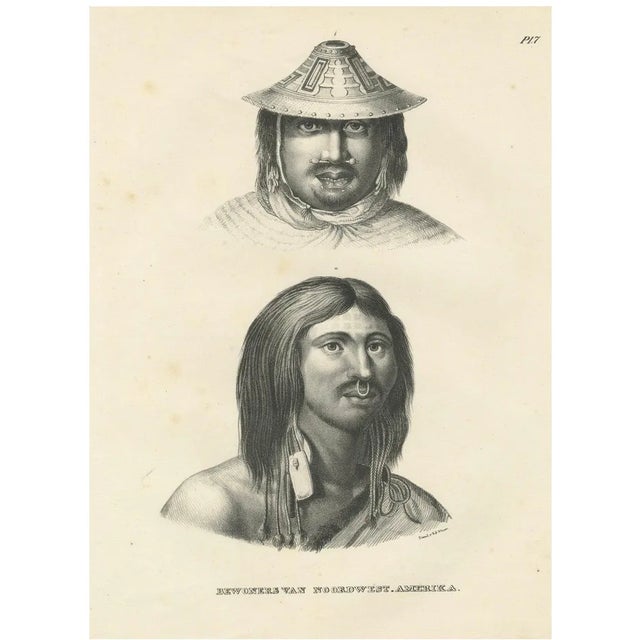
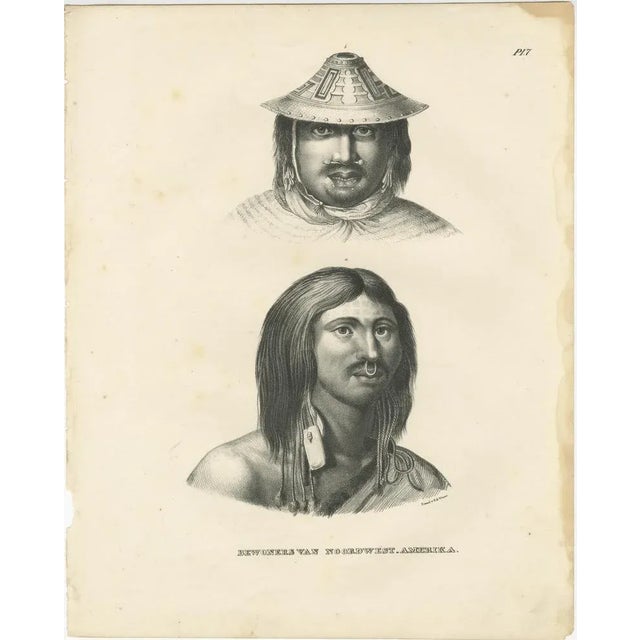
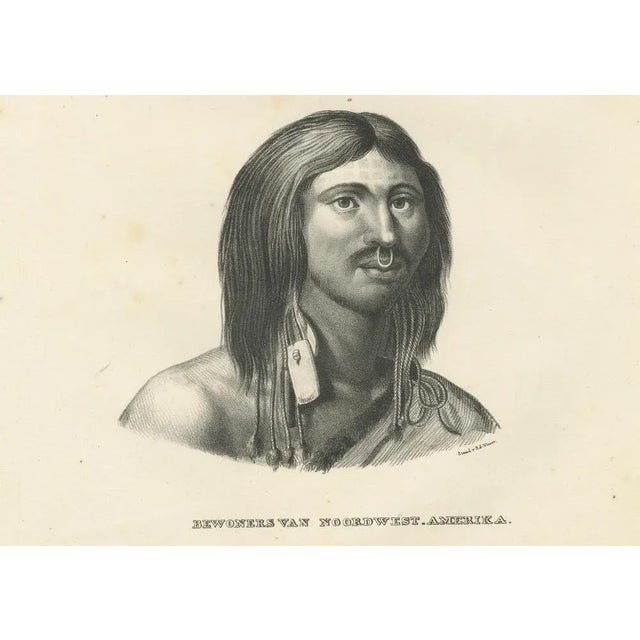
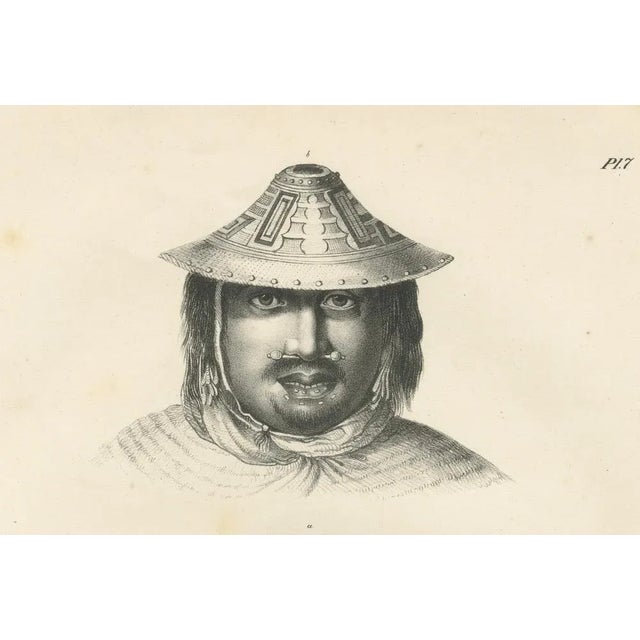
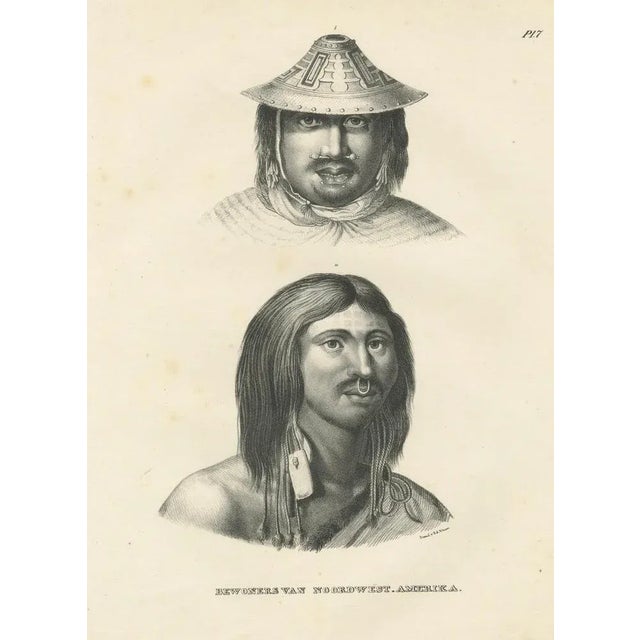
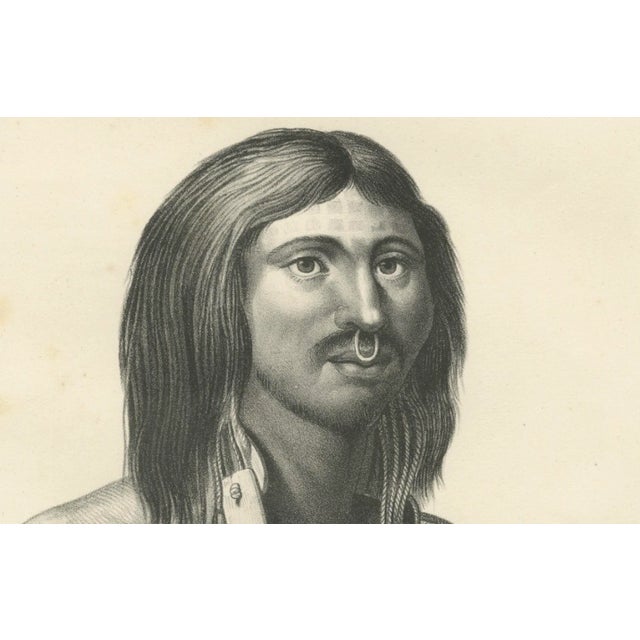
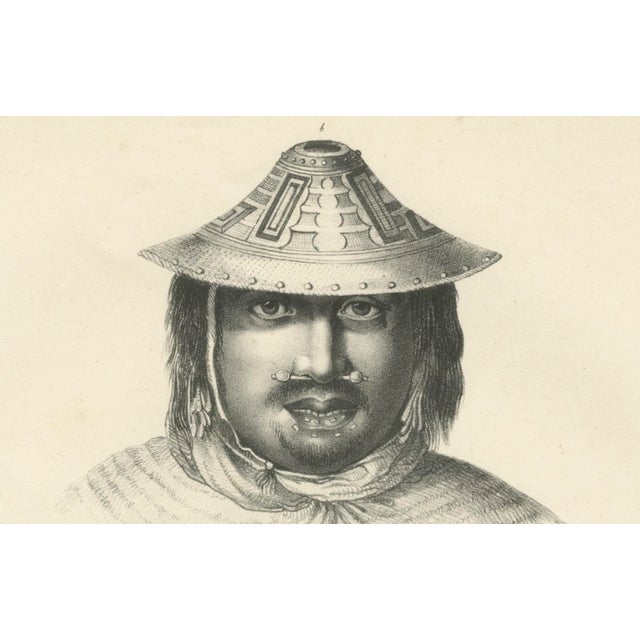
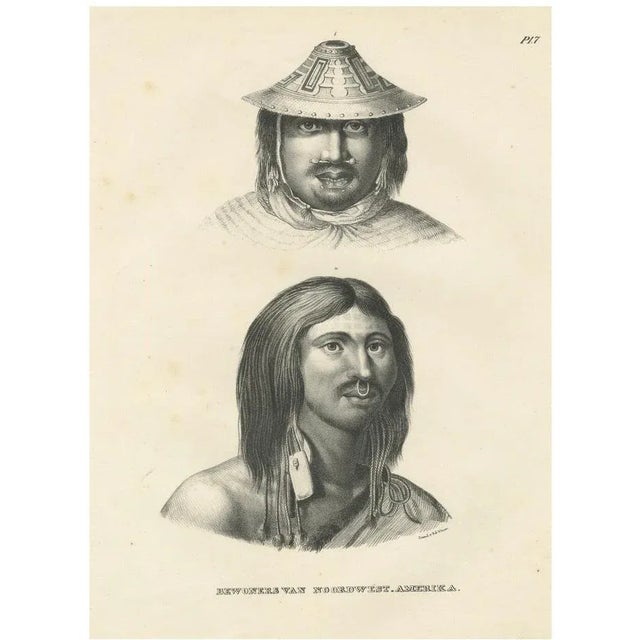
This lithograph, by Karl Joseph Brodtmann, is labeled "Bewoners van Noordwest-Amerika" (Inhabitants of Northwest America). It depicts two individuals from … Read more This lithograph, by Karl Joseph Brodtmann, is labeled "Bewoners van Noordwest-Amerika" (Inhabitants of Northwest America). It depicts two individuals from indigenous groups likely living in the northwestern regions of North America. This specific print reflects the interest Europeans had in the indigenous populations of the Americas, particularly as they explored and documented the different cultures of North America. : The lithograph features two portraits, one at the top and one below, each depicting a man from an indigenous group in the Pacific Northwest of America, a region known for its distinct cultural practices, clothing, and adornments. 1. The top figure wears a traditional hat that is distinctive of the Pacific Northwest tribes, such as the Tlingit or Haida people. The hat, woven from natural fibers and often decorated with geometric patterns, was both functional and symbolic, used to protect from the elements and indicate status within the community. His clothing appears to be made of animal skins or woven materials, typical for the coastal environment. His facial expression is solemn, and Brodtmann’s detailed shading helps bring out the contours of his features and the intricate design of his hat. 2. The bottom figure shows a man with long hair, adorned with beads and jewelry, including a prominent nose ring and what appears to be a bone or ivory ornament in his ear. His bare chest suggests the depiction is of a warm-weather or ceremonial context. The man’s facial expression and accessories, like the nose piercing and ornamentation, are typical of body modification practices found in many indigenous cultures of the Americas. These piercings may signify rank, status, or achievements within the community. Both figures are shown in half-body portraits with a neutral background, allowing the viewer to focus on their facial features, attire, and accessories. These ethnographic elements would have been of particular interest to European audiences, who were unfamiliar with these unique cultural traits and customs. Maker: Karl Joseph Brodtmann (1787–1862) was a renowned Swiss lithographer whose works often focused on the natural world and the peoples of distant lands. His ethnographic prints, such as this one, were part of broader efforts to document the diversity of human populations during a time of expanding European exploration. His meticulous and realistic style contributed significantly to the visual knowledge Europeans had of people from regions like the Americas, Africa, and Asia. Technique and Style: As with Brodtmann's other works, this lithograph was produced using lithography, a printmaking process that allowed for fine detail and mass reproduction. His realistic style in this work emphasizes the careful rendering of facial features, clothing, and cultural symbols. The use of shading, especially around the nose ring, facial features, and the texture of the woven hat, highlights Brodtmann’s skill in creating a lifelike representation of his subjects. This piece fits within the ethnographic realism movement, which was common in 19th-century European art, driven by the desire to document and classify different peoples around the world. Brodtmann’s works were used to educate European audiences about the diversity of human cultures, often portraying indigenous peoples in ways that balanced observation with European perspectives on the "exotic." This lithograph, with its focus on specific cultural artifacts like the hat and body jewelry, serves as both an artistic piece and a document that reflects European curiosity about the indigenous peoples of the Pacific Northwest in America. See less
- Dimensions
- 10.24ʺW × 12.6ʺH
- Art Subjects
- Portrait
- Period
- Mid 19th Century
- Country of Origin
- Switzerland
- Item Type
- Vintage, Antique or Pre-owned
- Condition
- Good Condition, Unknown, Some Imperfections
- Color
- Gold
- Condition Notes
- Good — This vintage item remains fully functional, but it shows sign of age through scuffs, dings, faded finishes, minimal … moreGood — This vintage item remains fully functional, but it shows sign of age through scuffs, dings, faded finishes, minimal upholstery defects, or visible repairs\. Condition: good, given age. General age-related toning and/or occasional minor defects from handling. Some stains along the right border, not affecting the image. Please study scan carefully. less
Returns & Cancellations
Return Policy - All sales are final 48 hours after delivery, unless otherwise specified in the description of the product.
Cancellation Policy - Prior to shipping or local pickup, buyers may cancel an order for up to 48 hours, unless otherwise specified.
Related Collections
- Patrick Nagel Reproduction Prints
- Qing Reproduction Prints
- Reproduction Prints in Panama City, FL
- Monotype Reproduction Prints
- Sol LeWitt Reproduction Prints
- Utagawa Kunisada (Toyokuni Iii) Reproduction Prints
- Reproduction Prints in Mobile
- Daylight Dream Editions Reproduction Prints
- William Hogarth Reproduction Prints
- William Gropper Reproduction Prints
- Classical Greek Reproduction Prints
- Polychrome Reproduction Prints
- Gold-Plate Reproduction Prints
- Ethan Allen Reproduction Prints
- Paule Marrot Reproduction Prints
- Jim Dine Reproduction Prints