






Details
Description
Item description:
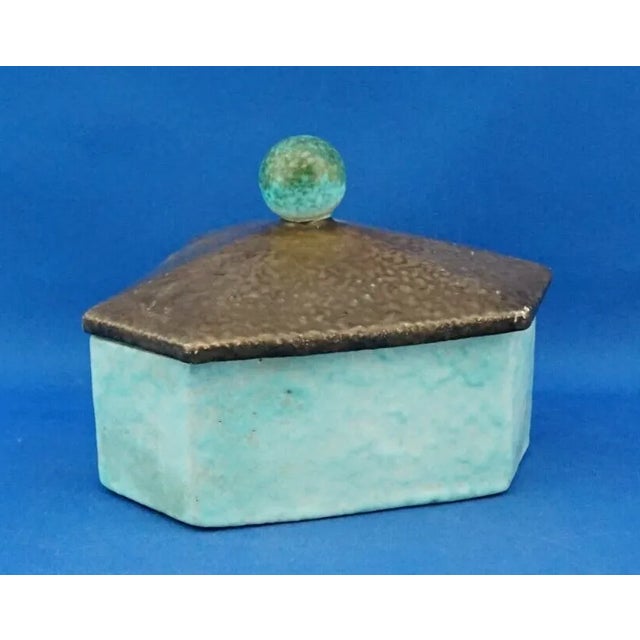
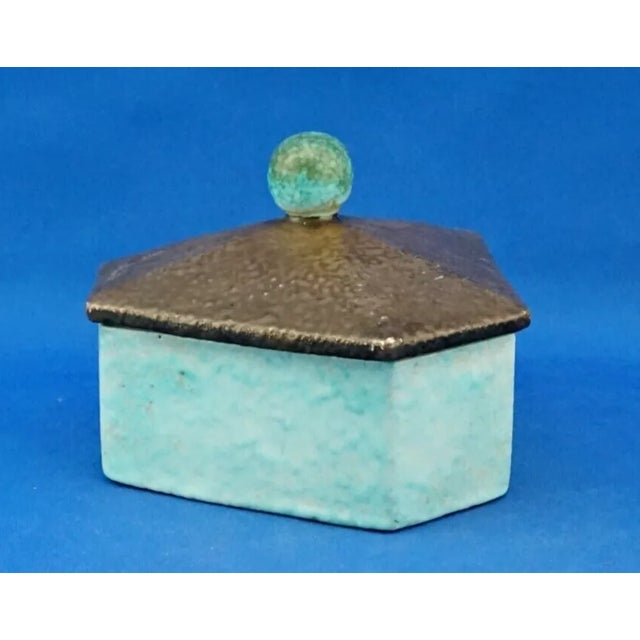
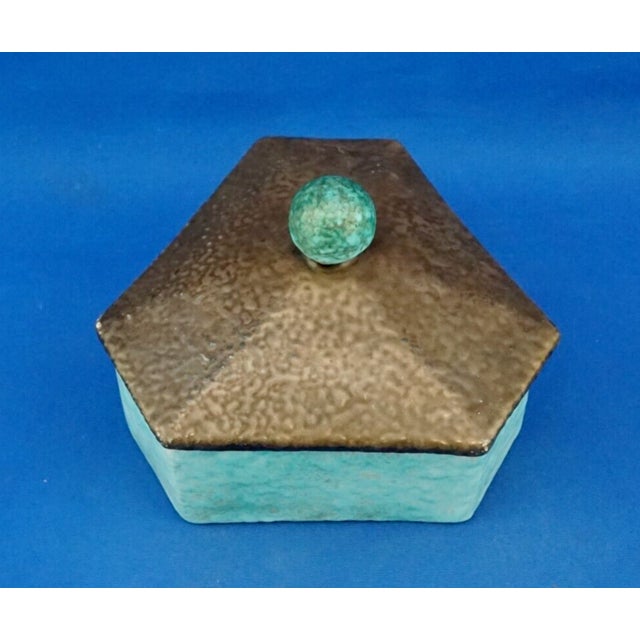
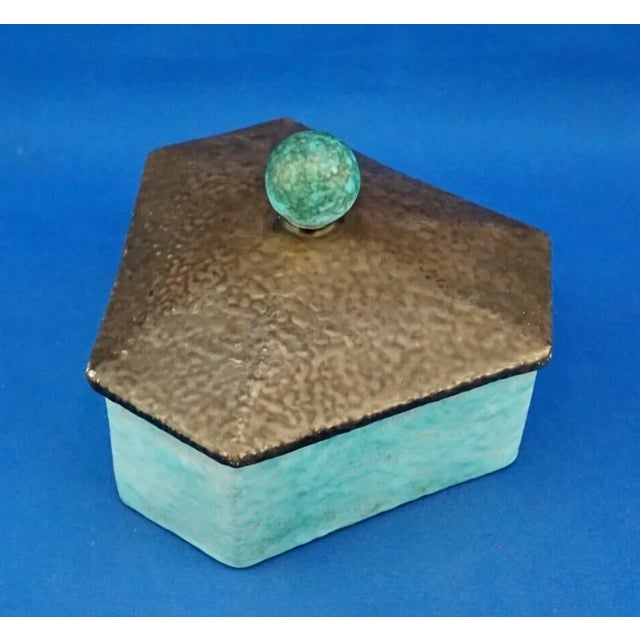
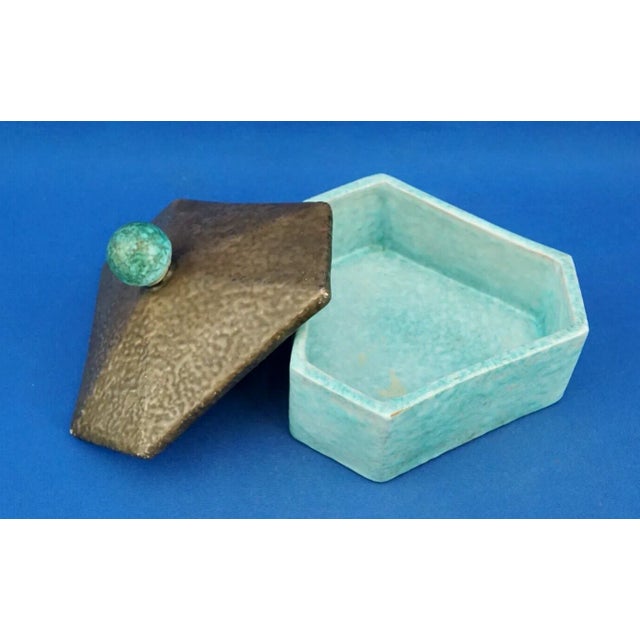
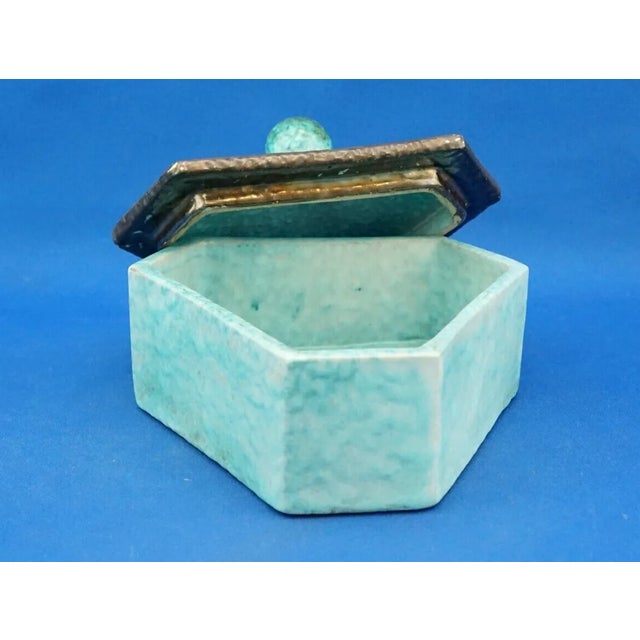
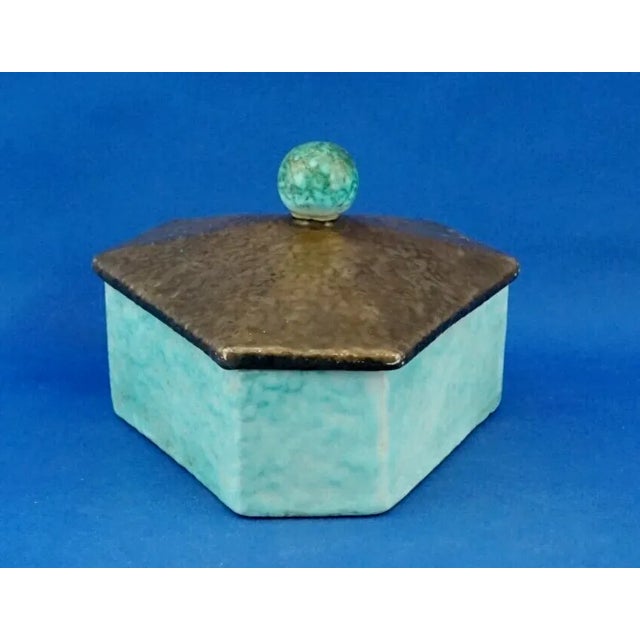
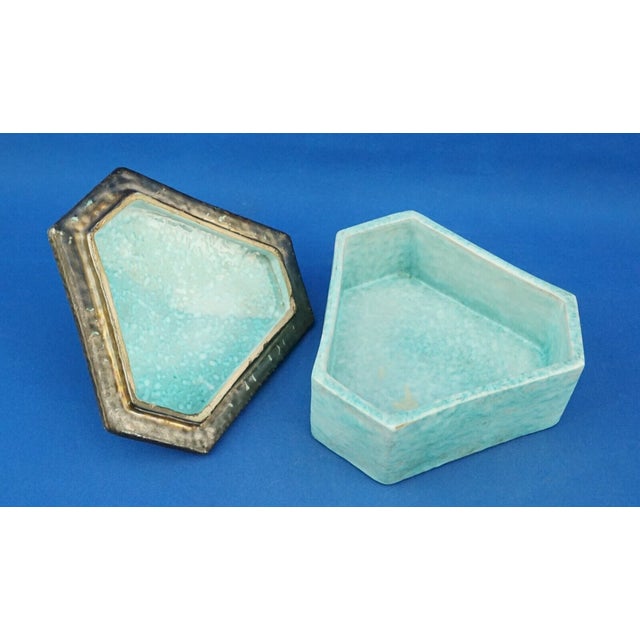
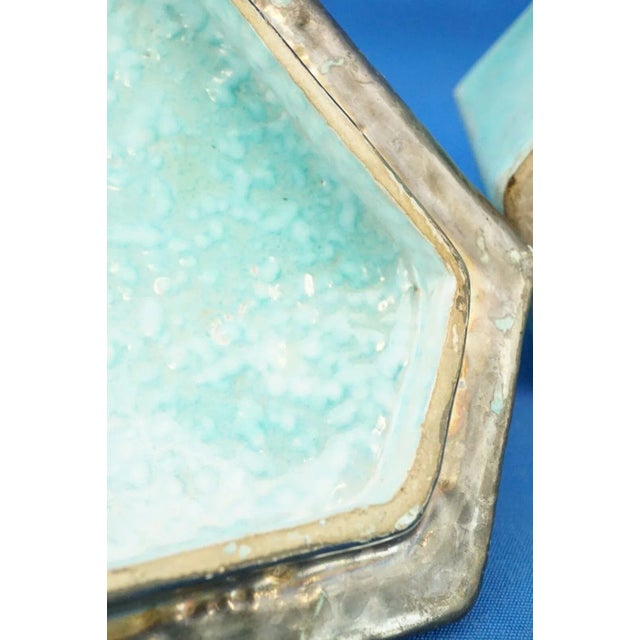
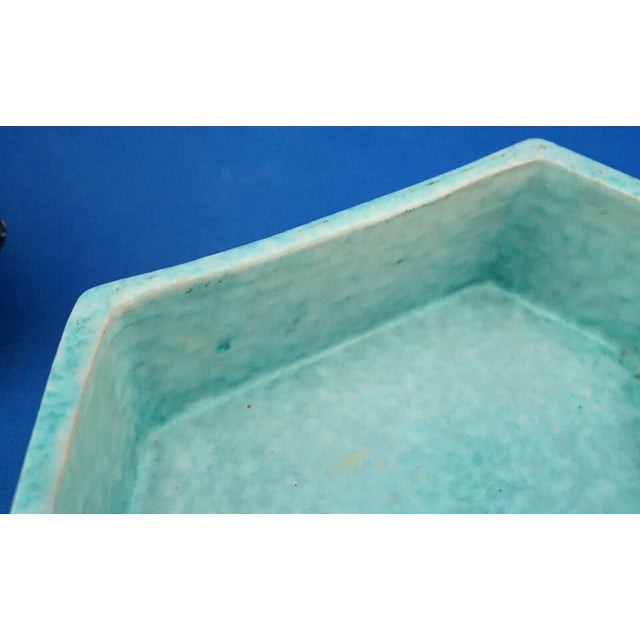
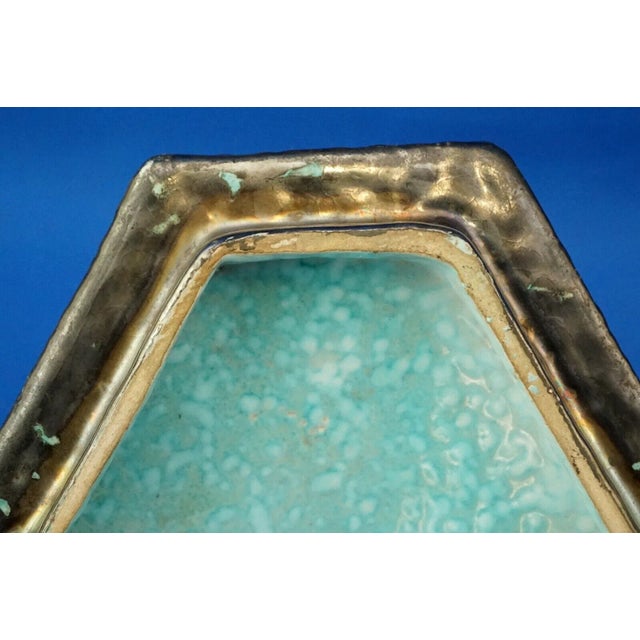
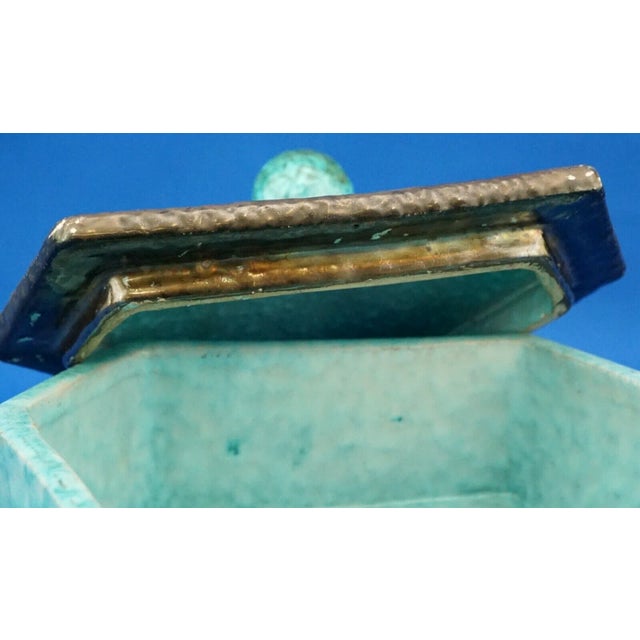
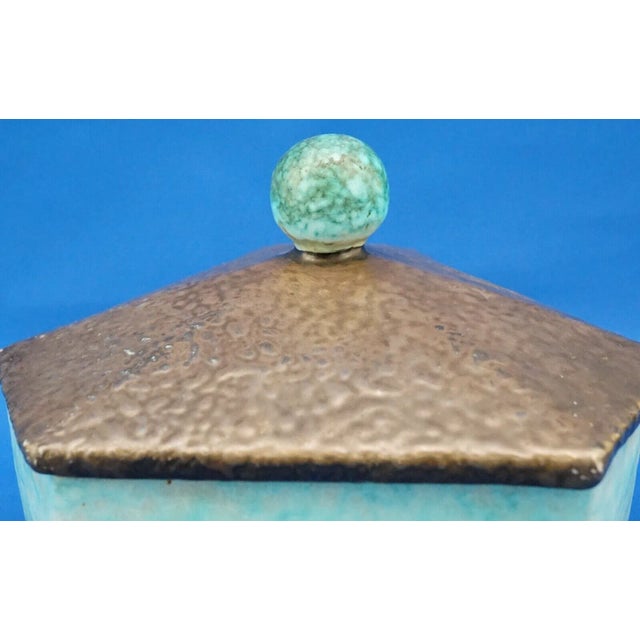
wonderful hexagonal box in art deco style, made of majolica earthenware, glazed in bronze and green, with a …
Read more
Item description:
wonderful hexagonal box in art deco style, made of majolica earthenware, glazed in bronze and green, with a spherical knob and finished with golden lustre, signed "mga" under the base, a famous manufacturer in albissola. In our opinion, it can be attributed to tullio or torido mazzotti or nicolay diulgheroff, both for the bronze metallic glazing of the lid and for the hammered orange peel finish of the glazing, especially on the lid but also on the entire box. Made in the first half of the 20th century. The shape of the box is particularly rare, irregularly hexagonal, resembling an equilateral triangle with cut corners. The lid has a spherical knob enamelled like the box, while the rest of the lid is enamelled with bronze enamels and finished with metallic and gold lustres. A very distinctive design and very rare to find.
useful information for evaluating the item:
according to our internet research, mga futurist ceramics are priced from a minimum of €200-300 up to several thousand euros, depending on their size, the complexity of their workmanship, the beauty of their decoration, and the artist who created them. They are all ceramics, however, of great value and highly sought after by collectors.
information about the artist and/or manufacturer:
an apprentice ceramist from the age of twelve at the "fornari" kiln in albisola, after various experiences as a potter's wheel operator in livorno, at the "bonfiglio" factory and in naples at the "picone" factory, giuseppe mazzotti, known as bausin, opened a workshop in 1903 in vicolo del pozzo in albisola, where he made chimney pots for the building industry. The kiln soon became the "fabbrica di ceramiche d'arte tradizionali e moderne giuseppe mazzotti" (giuseppe mazzotti traditional and modern art ceramics factory) and he began producing his own artistic ceramics, signing the pieces that came out of his workshop with his initials "m.g.a.". Thanks also to the collaboration of some well-known albisola ceramists such as pietro rabbia and dario ravano, in 1906 he won a gold medal for his work at the savona craft exhibition and, thanks to his success, he decided to open a shop, run by his wife celestina gerbino promis, for direct sales to the public. Starting in the years after the first world war, the young painter giuseppe agnino collaborated with the workshop. From 1922 to 1927, painter and decorator guido cavallero, a retired lieutenant colonel, joined the company and changed its name to "premiata fabbrica ceramiche artistiche già mazzotti di cavallero & c." (award-winning artistic ceramics factory formerly mazzotti di cavallero & c.), sometimes signing the products with the words "cavallero & mazzotti." during these years, the factory also collaborated with great external ceramists such as mario gambetta, virio da savona, and paolo rodocanachi. In 1923, a second factory was opened in albisola superiore, under the direction of torido mazzotti, giuseppe's eldest son. In 1925, several ceramics bearing the "m.g.a." mark were presented at the international exhibition of decorative and modern arts in paris, and their success opened up the international market to the manufacturer. In 1928, the factory produced a catalog of its production, presenting over five hundred classic and modern ceramics, as well as its first works in the futurist style. From 1928, torido's brother tullio (known as tullio d'albisola) began to gather an ever-growing group of futurist artists around the factory, who designed and produced the ceramics that made "m.g.a." famous. In the 1920s, painters antonio vaccari, giovanni gerlo, orlando gambino, and kiln master lino mordeglia collaborated with the factory, as did alf gaudenzi, fillia, fortunato depero, nino servettaz, and others. In 1930, farfa designed 11 pieces for the factory in collaboration with tullio, which were then produced by giuseppe giacchino and were destined to revolutionize the stylistic features of futurist ceramics. In 1932, a new large factory was built on via aurelia, at the mouth of the sansobbia stream, based on a design by bulgarian architect and ceramist nicolaj diulgheroff. The factory was expanded two years later. From 1933 to 1938, he collaborated occasionally with the guglielmo sansoni factory, known as tato, and in the same years with the designer bruno munari. In 1937, m.g.a. Won the grand prix at the world's fair in paris. Among the collaborators of this period were romeo bevilacqua, also famous for his small sculptures depicting dogs, lino berzoini, bartolomeo tortarolo, and nino strada. Other collaborators active in the 1930s included salvatore fancello, agenore fabbri, lucio fontana, and aligi sassu. In 1939, due to sanctions, m.g.a. Lost its international markets and the factory began a slow and inexorable decline that led to its closure. In 1944, giuseppe mazzotti died in san michele di mondovì, while his sons torido and tullio suffered fascist persecution. After the war, torido and tullio resumed the business and, in the 1950s, the factory began to recover and resumed its collaboration with numerous artists and artisans of the time, including renzo aiolfi, giovanni battista, and others. Tullio, and vittoria resumed the business, and in the 1950s, the factory recovered and resumed its collaboration with numerous artists and artisans of the time, including renzo aiolfi, giovanni battista de salvo, giuseppe capogrossi, pina olivero, asger jorn, karel appel, piero manzoni, franco garelli, emilio scanavino, roberto crippa, and many others. Between 1946 and 1951, giacomo manzù created several cherubs and decorations for plates and bottles in the factory's workshops. In the early 1950s, designer cipì ferrari polli collaborated with the company. In 1950, m.g.a. Was asked to represent italian ceramics at the italian craftsmanship exhibition at the brooklyn museum in new york. In 1959, the three mazzotti brothers decided to divide the family business, and torido, with the help of his wife rosa bovio and his children bepi and celina, remained the sole owner of the factory, which is still in operation today, naming it "ceramiche e maioliche artistiche giuseppe mazzotti 1903." in the 1960s, anna maria traverso, known as annaviva, wife of the futurist giovanni acquaviva, fired a series of refined ceramics depicting the madonna in the factory's kilns, which were subsequently exhibited in an exhibition organized by tullio d'albisola to celebrate the 150th anniversary of the coronation of the madonna of savona.
this piece has an attribution mark,
i am sure that it is completely authentic and take full responsibility for any authenticity
issues arising from misattribution
See less
- Dimensions
- 7.09ʺW × 7.09ʺD × 5.12ʺH
- Period
- 1920s
- Country of Origin
- Italy
- Item Type
- Vintage, Antique or Pre-owned
- Materials
- Ceramic
- Condition
- Good Condition, Original Condition Unaltered, Some Imperfections
- Color
- Goldenrod
Returns & Cancellations
Return Policy - All sales are final 48 hours after delivery, unless otherwise specified in the description of the product.
Cancellation Policy - Prior to shipping or local pickup, buyers may cancel an order for up to 48 hours, unless otherwise specified.
Related Collections
- Mario Buatta Boxes
- Ettore Sottsass Boxes
- Violet Boxes
- Enzo Mari Boxes
- Acacia Wood Boxes
- Tony Duquette Boxes
- Silk Velvet Boxes
- Polyester Boxes
- Abaca Boxes
- Port 68 Boxes
- Jewelry Boxes
- Burlwood Boxes
- Hat Boxes
- Silver Boxes
- Alabaster Boxes
- Japanese Boxes
- Pill Boxes
- Tool Boxes
- Maitland - Smith Boxes
- Cigar Boxes
- Marble Boxes
- Porcupine Quill Boxes
- Porcelain Boxes
- Mother-of-Pearl Boxes
- Brass Boxes