





Details
Description
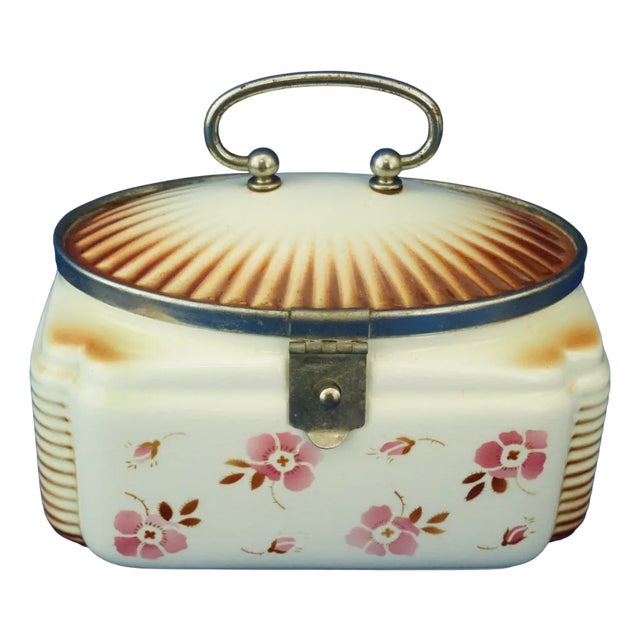
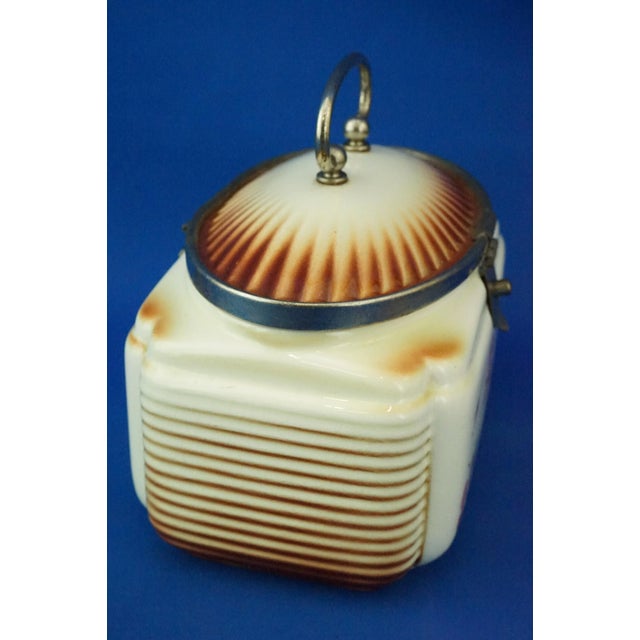
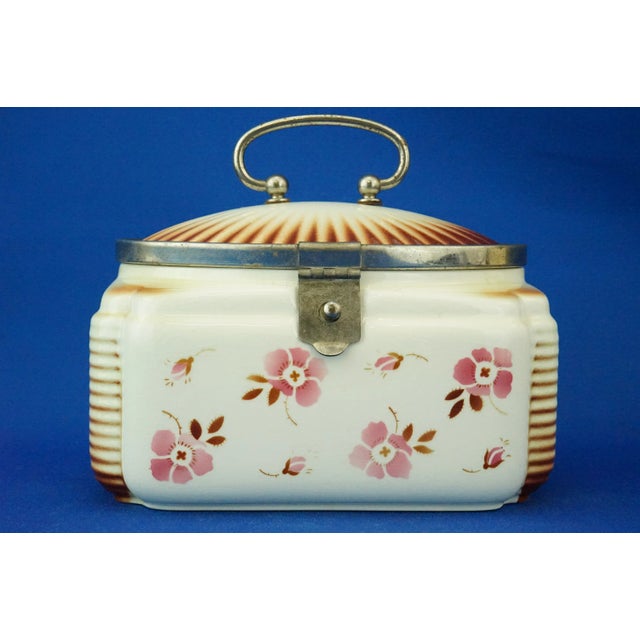
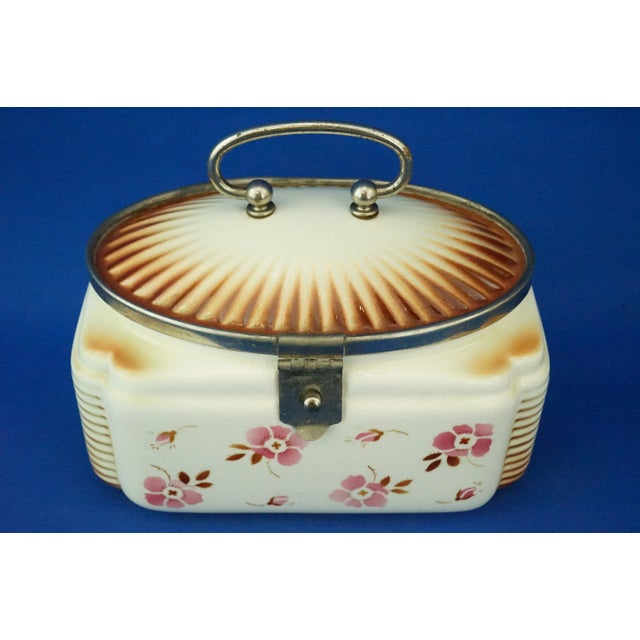
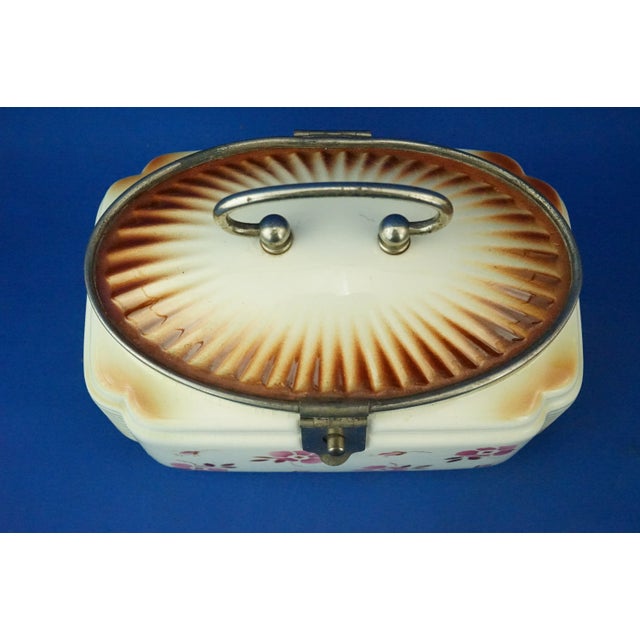
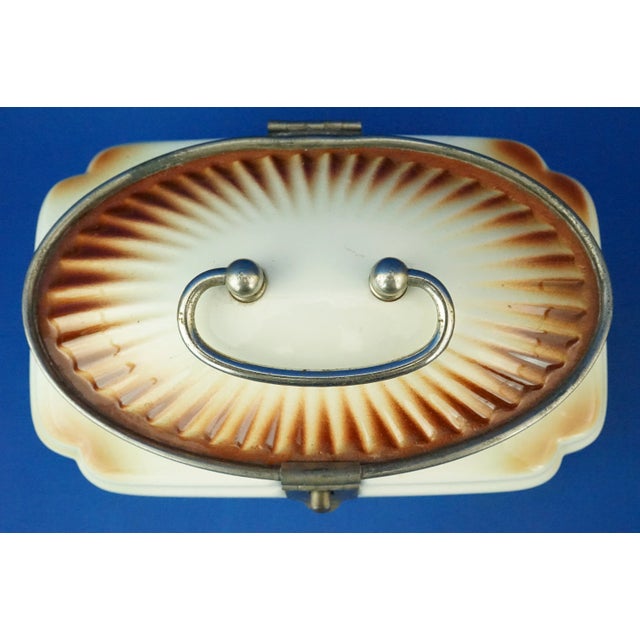
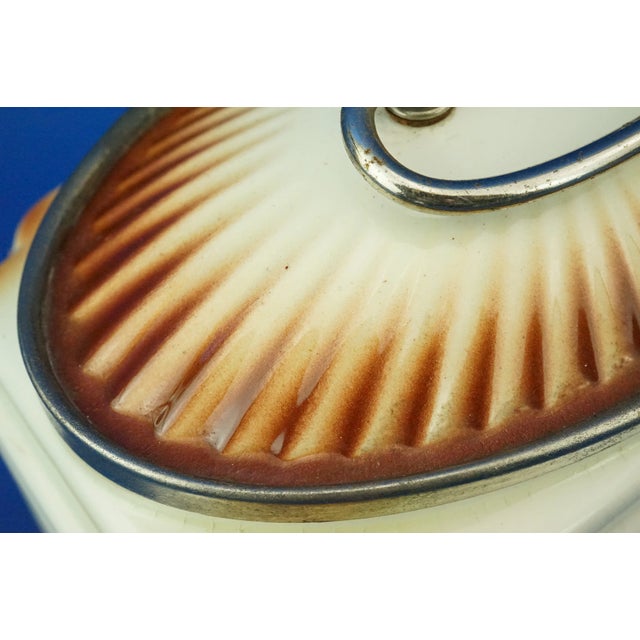
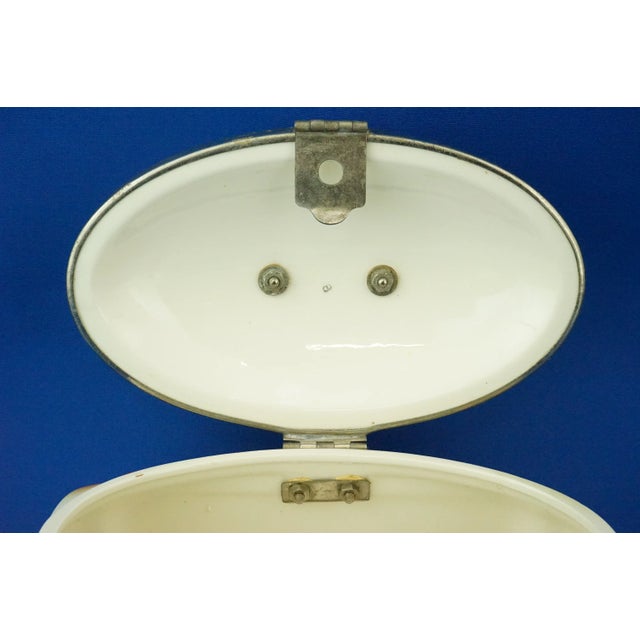
Beautiful Deco box, made of glazed and vitrified ceramic, with metal closure, mouth edge and handle, entirely hand-decorated with airbrush …
Read more
Beautiful Deco box, made of glazed and vitrified ceramic, with metal closure, mouth edge and handle, entirely hand-decorated with airbrush with stylised flowers and geometric decorations. Unsigned object, but numbered under the base, with article number and decoration code and finally with place of production "Germany". The object is attributable to the German Spritzdekor factory, famous above all for its Deco production decorated with airbrush, including the production of numerous similar boxes in metal and ceramic, made with slightly different shapes, decorations and sizes. Our box can be dated to the first decades of the 20th century, between 1920 and 1940 and the evident patina, especially under the base, is perfectly in line with our dating.
Useful information for evaluating the object:
from our research on the internet we found several Deco boxes very similar to ours, most not signed, but only numbered under the base, exactly as it happens for ours, all offered on other sites selling art and antiques from a minimum of €80-100 up to requests of over €1,000 for the rarest ones, made by important artists. A box really, very similar to ours, in size, shape, style and quality of the decorations, is offered on Pamono for €249.
Information on the artist and/or manufacturer:
German Spritzdekor Ceramics were mainly made between 1928-1936. The decorations of the Spritzdekor manufacture required great skill. The number of designs produced by approximately 95 manufacturers was incalculable. The designs could be made directly on a surface or a combination of free forms and stencils was also common. The colors were applied under or over the glaze. The glazes were extremely thin and hard. Not all manufacturers marked their pieces. The mold number was often, but not always, embossed directly onto the base of the object. Sometimes the manufacturer's mark and other numbers were embossed onto the base as well. Sometimes the mold number was embossed onto the base in ink. The designs were often inspired by the trend-setting art movements of the previous decade, such as Suprematism, founded by the Russian painter Kasimir Malevich, which used basic geometric shapes such as squares, lines, circles and rectangles. Inspiration also came from several other Soviet-era artists such as El Lissitsky, Lyubov Popova and Aleksandr Rodchenko, and from the Bauhaus in Weimar and later Dessau, where Paul Klee, Wassily Kandinsky and László Moholy-Nagy were teachers and active artists. The paintings and textiles of the Parisian Sonia Delaunay also served as inspiration, as did the works of many other artists who are now mostly forgotten. This piece is attributed to the mentioned designer/maker. It has no attribution mark and no
official proof of authenticity,
however it is well documented in design history. I take full responsibility for any authenticity
issues arising from misattribution
See less
- Dimensions
- 7.48ʺW × 4.33ʺD × 5.12ʺH
- Period
- 1920s
- Country of Origin
- Germany
- Item Type
- Vintage, Antique or Pre-owned
- Materials
- Ceramic
- Metal
- Condition
- Good Condition, Original Condition Unaltered, Some Imperfections
- Color
- Red
Returns & Cancellations
Return Policy - All sales are final 48 hours after delivery, unless otherwise specified in the description of the product.
Cancellation Policy - Prior to shipping or local pickup, buyers may cancel an order for up to 48 hours, unless otherwise specified.
Related Collections
- Silk Velvet Boxes
- Mario Buatta Boxes
- Tony Duquette Boxes
- Ettore Sottsass Boxes
- Abaca Boxes
- Violet Boxes
- Enzo Mari Boxes
- Acacia Wood Boxes
- Polyester Boxes
- Gustavsberg Boxes
- Jewelry Boxes
- Burlwood Boxes
- Hat Boxes
- Alabaster Boxes
- Silver Boxes
- Tool Boxes
- Japanese Boxes
- Pill Boxes
- Marble Boxes
- Maitland - Smith Boxes
- Cigar Boxes
- Porcupine Quill Boxes
- Porcelain Boxes
- Mother-of-Pearl Boxes
- Copper Boxes