





Details
Description
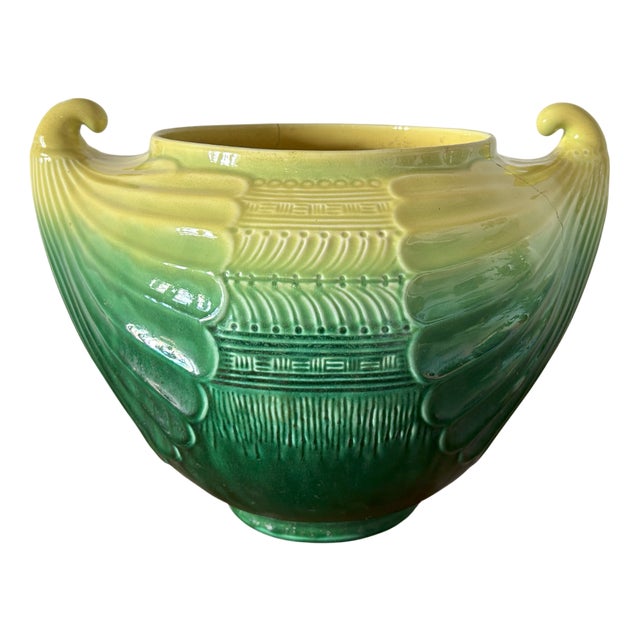
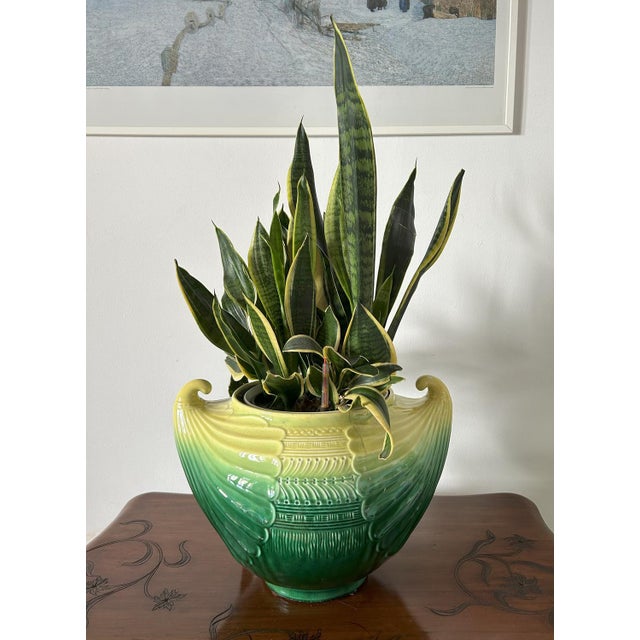
This striking art nouveau ceramic cachepot was designed by the pioneer of modern design, christopher dresser, for the prestigious s.c.i. …
Read more
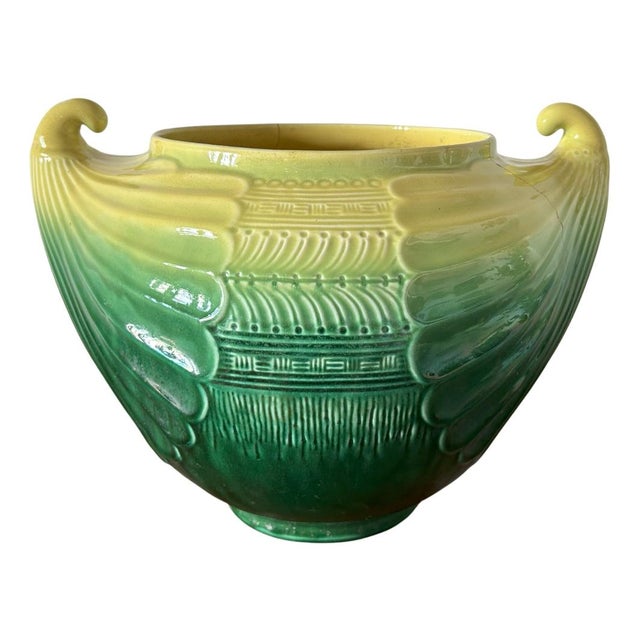
This striking art nouveau ceramic cachepot was designed by the pioneer of modern design, christopher dresser, for the prestigious s.c.i. Laveno (società ceramica italiana) around 1910.
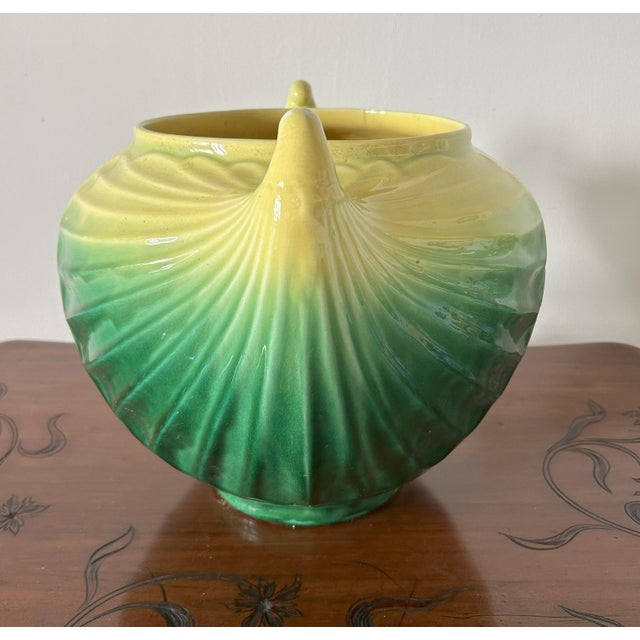
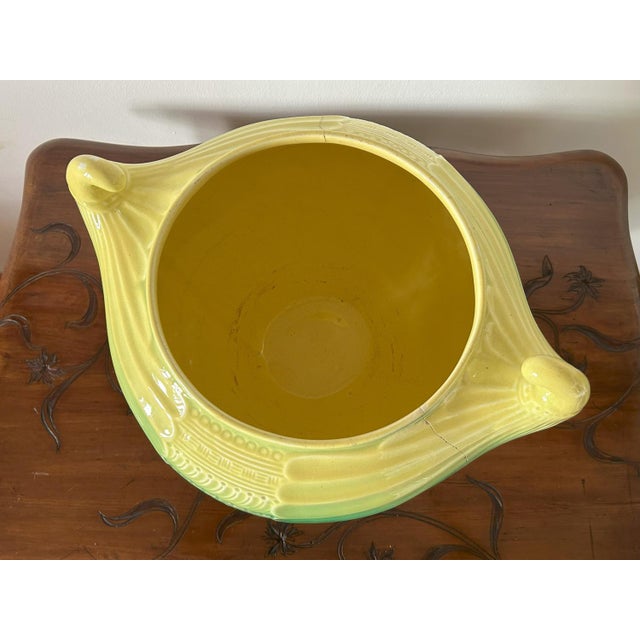
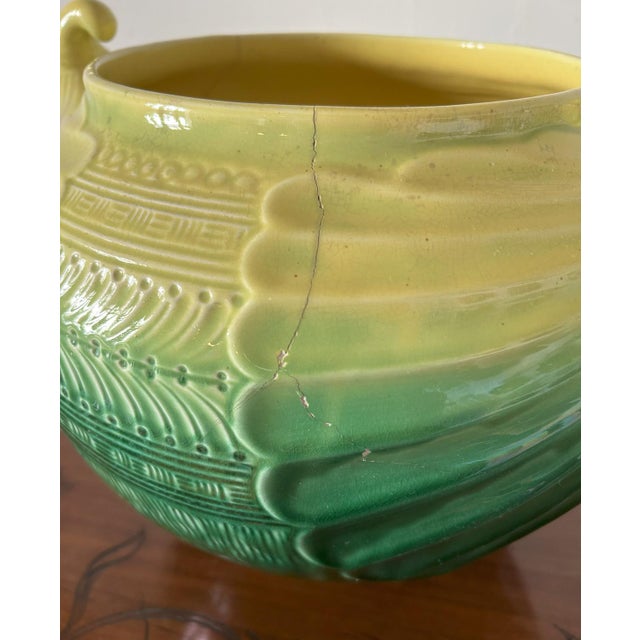
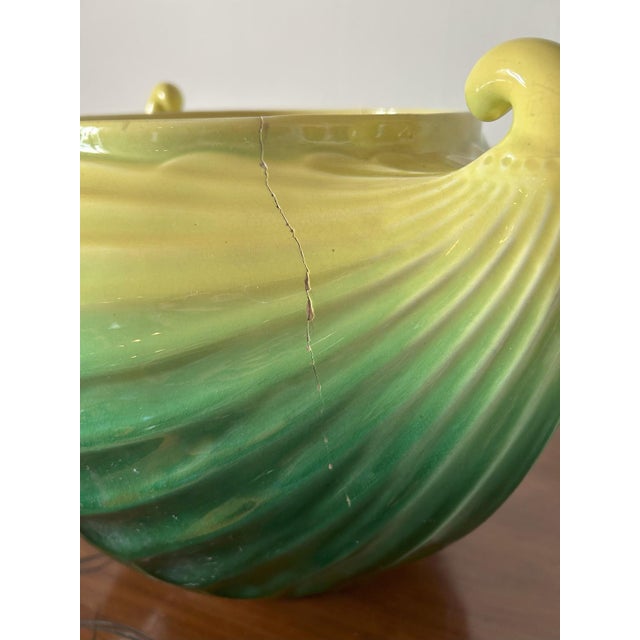
the vessel showcases dresser's iconic aesthetic, blending organic art nouveau curves with "egyptian revival" motifs and geometric structures that predate the art deco movement. The piece is characterized by its dramatic, stylized scroll handles and a deeply ribbed, sculptural body. The glaze features a sophisticated degradé finish, transitioning from a vibrant forest green at the base to a soft primrose yellow at the rim.
provenance & literature
provenance: from the private collection of a historic noble household in rome.
literature: this specific model is documented in: raffaella ausenda & andrea griffanti, storia della ceramica nel territorio di varese dal '700 al '900, museo gianetti, saronno, 2007, p. 85.
condition report
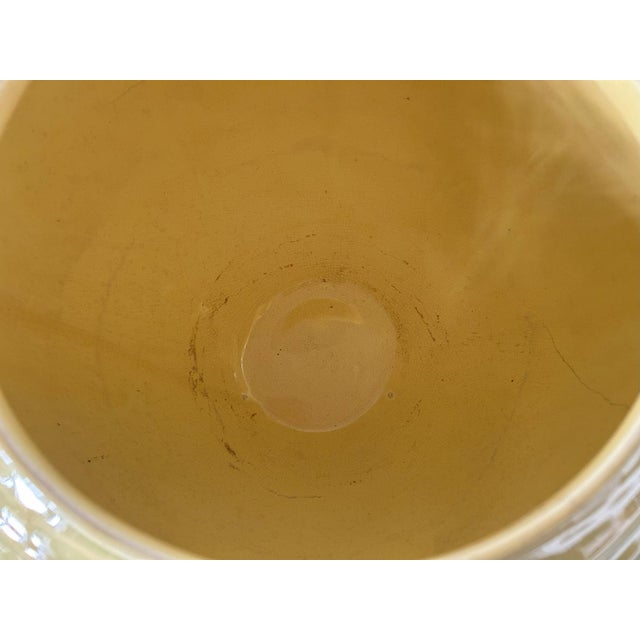
overall condition: used — visible signs of age and wear.
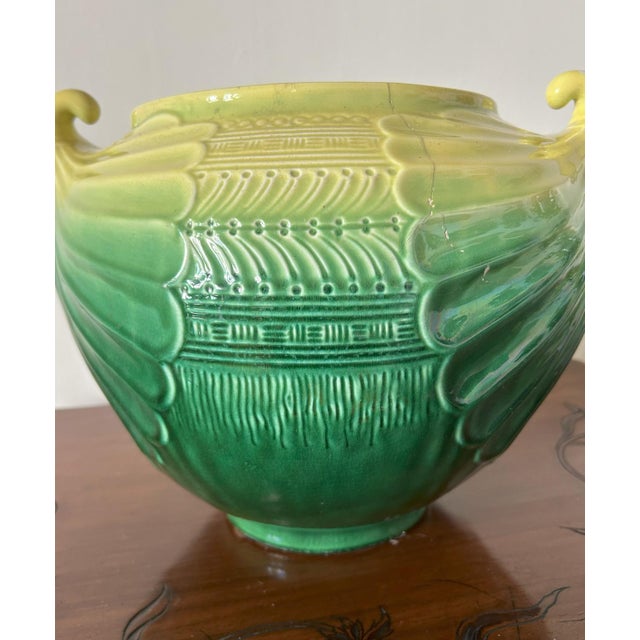
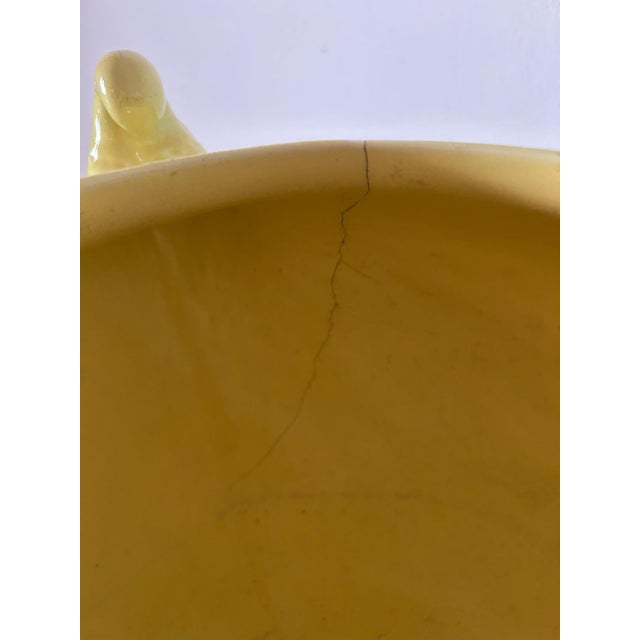
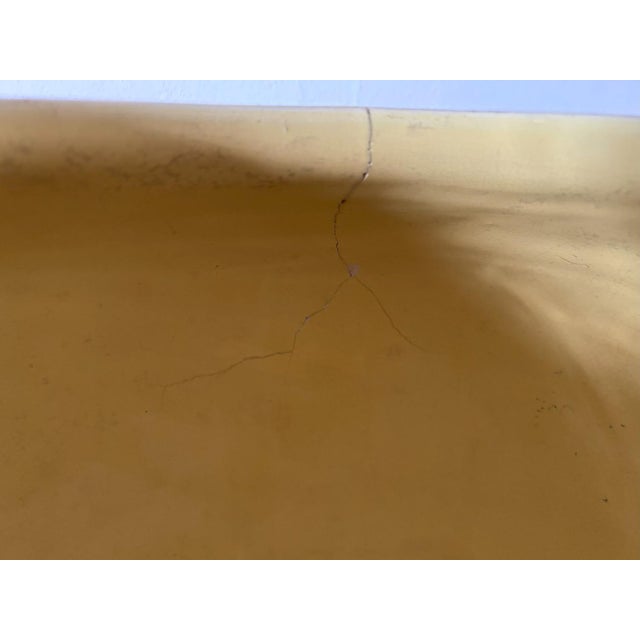
structural details: the piece features two vertical cracks (hairlines) along the body, as shown in the detailed photographs.
note: despite these structural imperfections, the cachepot remains solid and stable, retaining its immense decorative and historical impact.
technical details
dimensions: height 31 cm | width 42 cm | depth 35 cm
weight: 4.511 kg
designer: christopher dresser
manufacturer: s.c.i. Laveno (società ceramica italiana)
design period: 1900 to 1910
country of manufacture: italy
materials: glazed earthenware (terraglia)
collector’s note
while the three visible hairlines reflect the object's century-long history, they do not diminish the sculptural grandeur of this rare christopher dresser creation. Finding a piece of this scale, documented in official literature and originating from a noble roman estate, is an exceptional opportunity for any serious collector of early 20th-century italian design. It remains a powerful statement piece, embodying the intersection of british avant-garde design and italian craftsmanship.
christopher dresser design, s.c.i. Laveno, italian liberty style, art nouveau pottery, egyptian revival, antique italian ceramics, museal piece, noble provenance, laveno monbello, 20th century decorative arts. I have official proof of authenticity such as vintage catalogs,
designer records,
or other literature sources and take full responsibility for any authenticity issues arising
from
misattribution
See less
- Dimensions
- 16.54ʺW × 13.78ʺD × 12.2ʺH
- Period
- Early 20th Century
- Country of Origin
- Italy
- Item Type
- Vintage, Antique or Pre-owned
- Materials
- Ceramic
- Condition
- Good Condition, Unknown, Some Imperfections
- Color
- Green
- Condition Notes
- Heavy Signs of Use,Patina Consistent with Age and Use Heavy Signs of Use,Patina Consistent with Age and Use less
Returns & Cancellations
Return Policy - All sales are final 48 hours after delivery, unless otherwise specified in the description of the product.
Cancellation Policy - Prior to shipping or local pickup, buyers may cancel an order for up to 48 hours, unless otherwise specified.