Details
Description
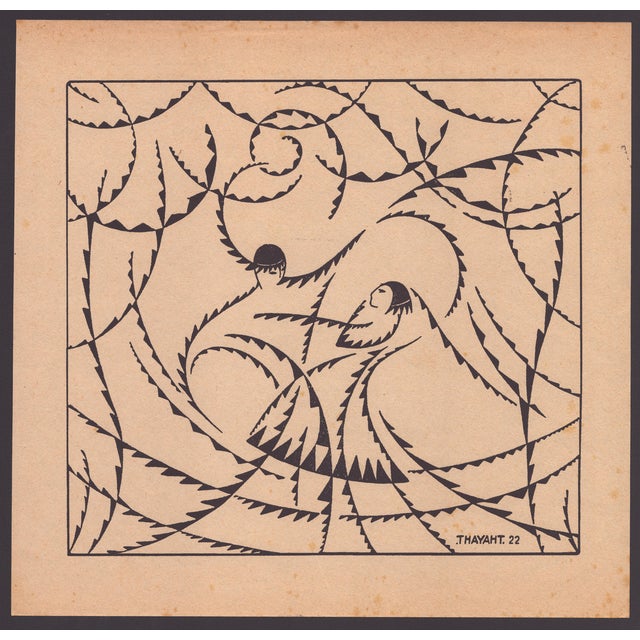
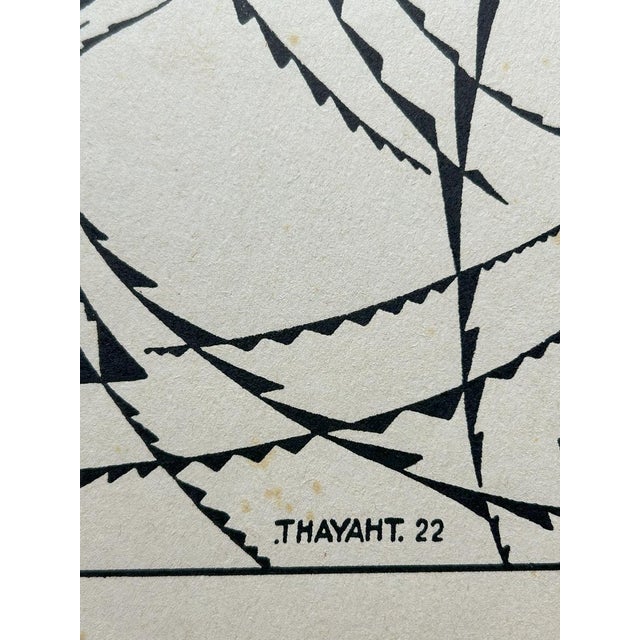
Ernesto michahelles thayaht (1893-1959)
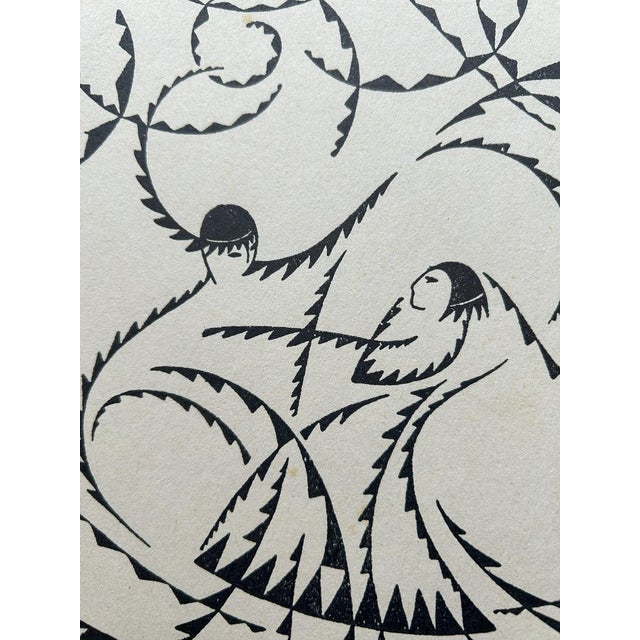
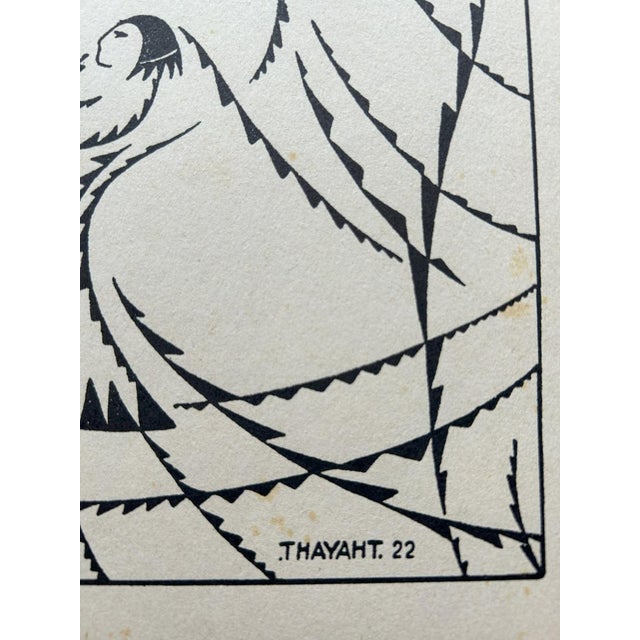
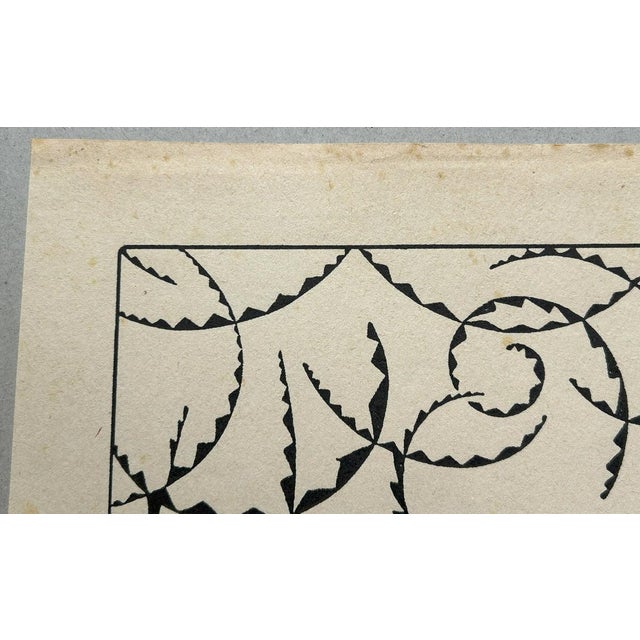
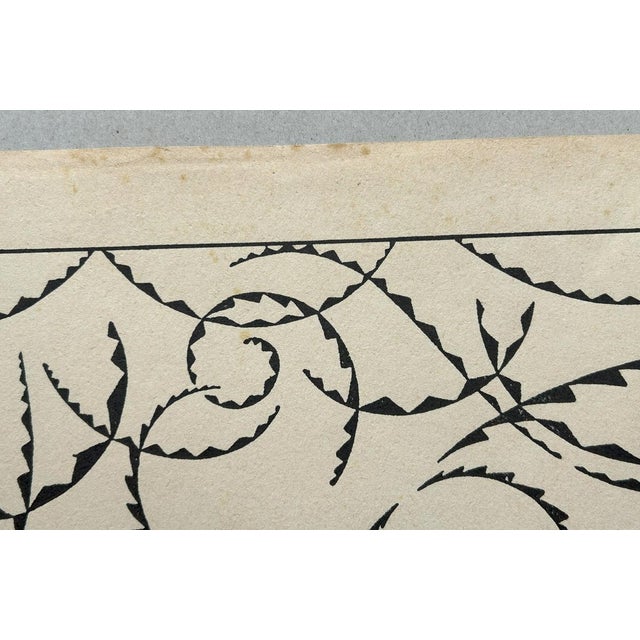
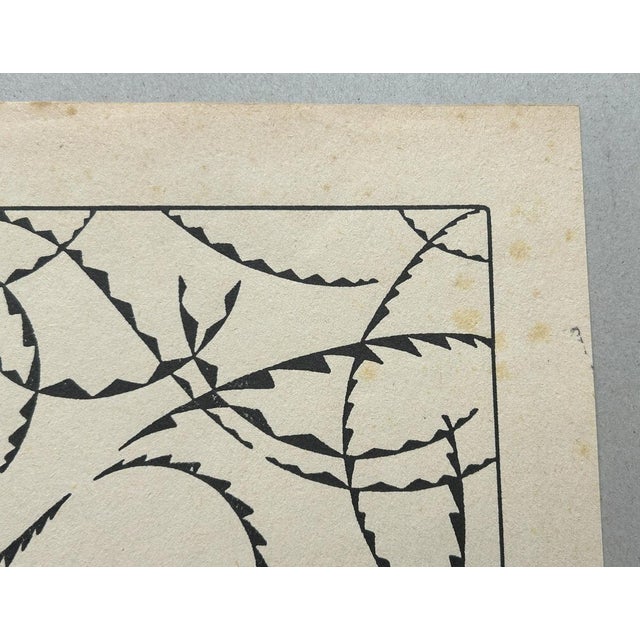
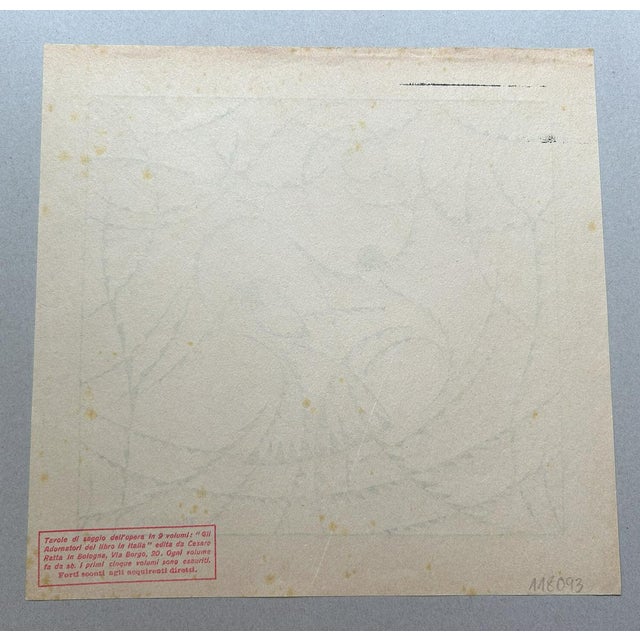
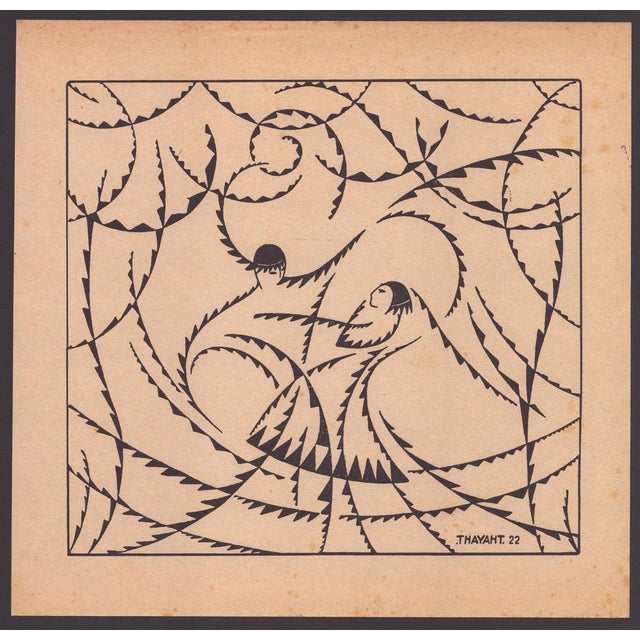
untitled, woodcut, futurist print from the 9-volume work "gli adornatori del libro in italia".
a very …
Read more
Ernesto michahelles thayaht (1893-1959)
untitled, woodcut, futurist print from the 9-volume work "gli adornatori del libro in italia".
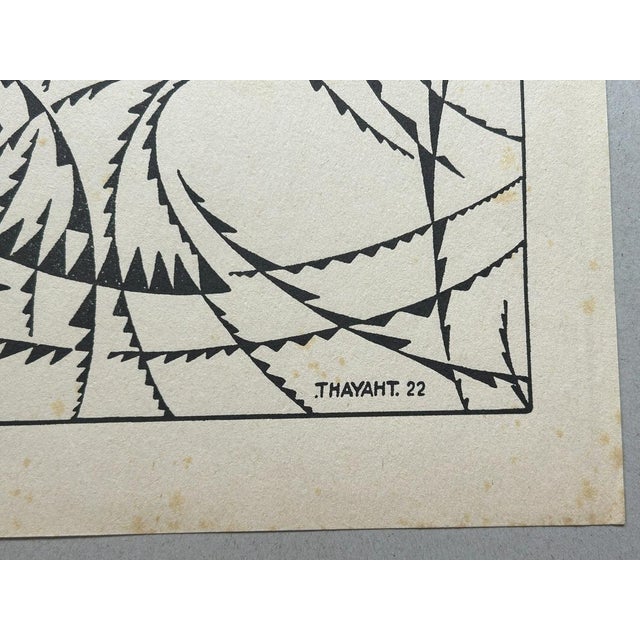
a very beautiful example with rich tones on thin unlaid paper.
in excellent condition, except for signs of foxing and uniform browning.
dimensions: 25 x 26 cm
ernesto michahelles (1893-1959) was an italian artist. Known by his stage name of thayaht, ernesto michahelles, with an initial formative construction substantially self-taught and a subsequent continuous growth based on his eclecticism, was a sculptor, painter, photographer, designer, architect, inventor and goldsmith. He was therefore an extremely multifaceted and innovative artist, a forerunner of new sensibilities: his work stands out for its synthetic lines and forms, which express exquisite elegance through precise geometry. It was tommaso marinetti who enlisted him in futurism. He also worked, immediately acquiring great fame, in the field of fashion following his meeting in paris in 1918 with madeleine vionnet for whom he designed garments with chromatic combinations and geometric combinations that were innovative for the time. He was the inventor, in 1919-1920, with his brother ram, of the overall (in addition to the certain conception of the garment, many also attribute to him the coining of the neologism). He was born in florence and spent his childhood and adolescence in the family villa at poggio imperiale, formerly the residence and studio of his great-grandfather, the famous american neoclassical sculptor, hiram powers. He began his high school studies in florence, which he interrupted. He consolidated his artistic training by attending first the studio of the painter and etcher filippo marfori savini, and later the school of the american painter and portraitist julius rolshoven, located in the castello del diavolo. Already in 1915 he began to exhibit his first works under the pseudonym cheak, thus deciding to dedicate himself completely to art, experimenting with all the techniques. Due to a serious liver disease the artist was forced to interrupt his research for three years, until 1919, when he moved to paris at the urging of diaghilev and massine. On this occasion he made his first contacts for an occasional collaboration with the famous fashion house of madeleine vionnet for which in 1919 he designed the logo, and then became the consultant and designer of the atelier, influencing the fashion house in its choices and conditioning french and european fashion until 12 december 1924. In 1920, having returned to florence, he designed and promoted, alongside his brother ram, the tuta, a universal dress for everyone and for every occasion, through the daily newspaper “la nazione”. In this year he also coined his pseudonym, the palindrome “tayat”, which was soon changed to “thayaht”. Collaborations with the florentine gallery cavalensi and botti and frequenting the gallery-bookstore of errante gonnelli, a centre of avant-garde culture and art in florence, date back to this period. In 1921, he left for the united states to complete his studies, reaching first boston and then cambridge where he stayed at harvard university to take courses on scientific colouring, dynamic symmetry and the numerical absolute held by prof. Denman ross. Upon his return, the same year, he confirmed his collaboration with madame vionnet's atelier, who offered the artist a contract as a designer to ensure the exclusivity of his creations. In 1922 he participated in the establishment of the "corporation of decorative arts" in florence, with the aim of encouraging collaboration between artists and craftsmen, and the following year he participated in the "1st international exhibition of modern decorative and industrial arts" in monza, with a series of furniture designed by him and exhibited together with sculptures by antonio maraini. In the meantime, he bought a house in versilia, in marina di pietrasanta, which he called "casa gialla". In 1924-25 he took part with his brother ruggero in the formation of the first corporation of fine arts in florence, for which he created a lively and modern banner and won, again together with his brother, the national scenography competition for the new production of “aida”. In 1927 he took part in the “iii international exhibition of modern decorative and industrial arts” in monza and the following year he was chosen by the “gruppo nazionale fascista della paglia” as a designer of new models of hats for men and women. From 1929 onwards he published his drawings in “moda”, the official magazine of the “federazione nazionale fascista industria dell’abbigliamento” and in the same year, in may, he was introduced to marinetti by primo conti, who in turn introduced him to mussolini. On this occasion thayaht brought him as a gift the effigy of the “dux” in steely iron, thus making his adherence to futurism official. In october of the same year he presented himself at the exhibition “trentatre futuristi” at the pesaro gallery in milan with three sculptures and fifteen paintings. The same year he was awarded at the “international exhibition of barcelona” by winning the gold medal for the creation of taiattite. The following year he participated in the “iv international triennial exhibition of modern decorative and industrial arts” in monza, where he exhibited furniture and objects in “taiattite”, a silver and aluminum alloy of his own invention. In the meantime he was invited to the “xii international art biennial” in venice, where he exhibited six sculptures in the futurist room. He also participated in the “international goldsmith exhibition”, where he presented a display case with taiattite jewelry. In 1931 he was invited to the “i quadriennale d’arte nazionale” in rome, where he exhibited his first aerosculpture, “vittoria dell’aria”. In the same period, together with marasco, he first organized the futurist exhibition painting, sculpture, aeropainting, decorative arts, architecture at the art gallery in florence for the tuscan futurist group, and then participated in the “first aeropainting exhibition” with the futurists balla, ballelica, benedetta, diulgheroff, dottori, fillia, prampolini, somenzi and tato organized at the gallery “la camerata degli artisti” in rome. On april 10 of the same year, “indice”, a genoese newspaper, published thayaht’s response to an article by ezra pound on futurist sculpture, in which the artist stated that it was possible to illustrate solids in motion through a new technique, defined by him as “trajective”, which served to represent a three-dimensional object on a plane. The following year, in 1932, he participated in the exhibition “enrico prampolini et les aeropeintres futuristes italiens” at the galerie de la renaissance in paris. In may of the same year he exhibited the sculpture “tuffo” at the “xviii venice biennale”. His first monograph, “ernesto thayaht”, was also published in florence and was presented by marinetti, antonio maraini and fortunato bellonzi. Finally, in 1932, together with his brother ram, he drew up the “manifesto for the transformation of men’s clothing”. In the following years he participated in the venice biennale, first in 1934 and then in 1936. This piece has an attribution mark,
i am sure that it is completely authentic and take full responsibility for any authenticity
issues arising from misattribution
See less
Returns & Cancellations
Return Policy - All sales are final 48 hours after delivery, unless otherwise specified in the description of the product.