






Details
Description
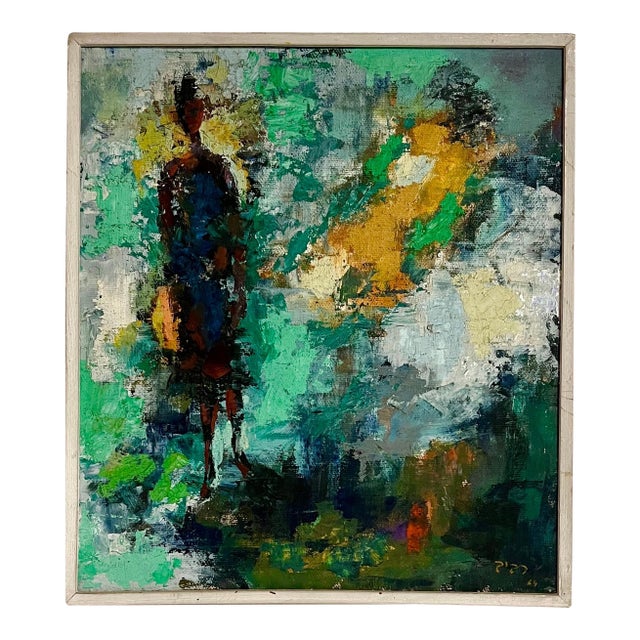
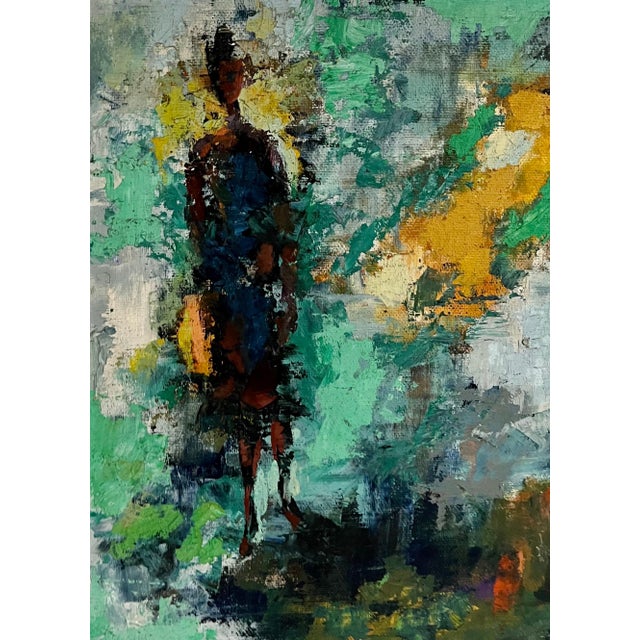
Abstract, Figure of Woman,
Safed
Oil on Masonite.
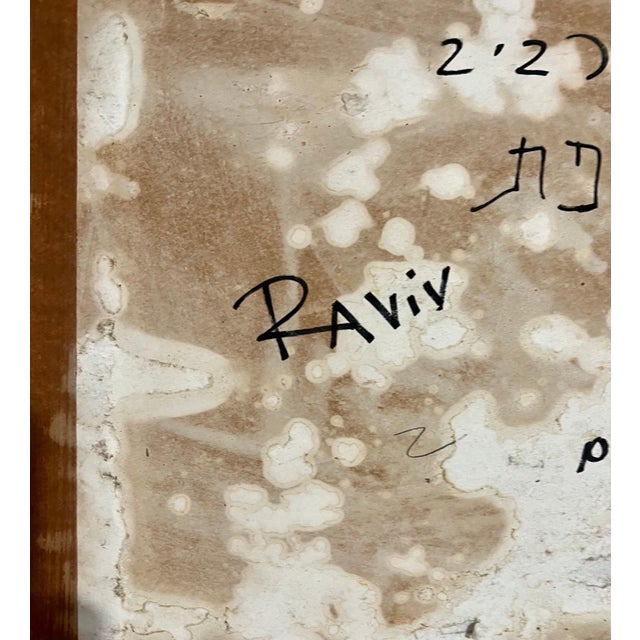
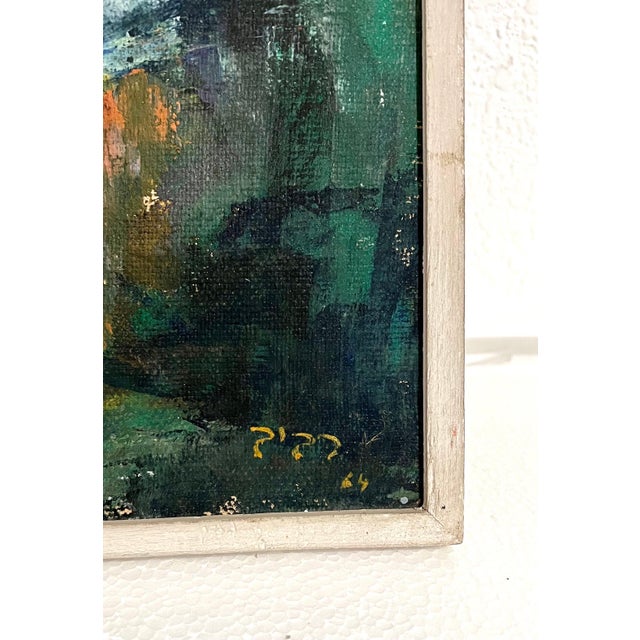
Signed.
Moshé Raviv-Vorobeichic, known as Moi Ver, born Moses Vorobeichik (1904–1995) was …
Read more
Abstract, Figure of Woman,
Safed
Oil on Masonite.
Signed.
Moshé Raviv-Vorobeichic, known as Moi Ver, born Moses Vorobeichik (1904–1995) was an Israeli photographer and painter.
Moi Ver (Moshe Raviv) was born in 1904 in Vilnius, Lithuania as Moshe Vorobeichic.
Moshe Vorobeichic received his initial artistic training in the early 1920s in Vilnius, Lithuania, where he studied painting, architecture, and photography. Having become an important figure in the Yiddish avant-garde culture, he exhibited his first works. From October 1927, he studied at the Bauhaus school in Dessau (Germany), with photographer-visual artist Laszlo Moholy Nagy and painters Josef Albers, Paul Klee, Wassily Kandinsky, and Hinnerk Scheper.
In his book Moi Ver: Paris, he produced avant-garde photomontages. Originally published in 1931 by Editions Jeanne Walter with an introduction by futurist Fernand Leger.
In 1932 Raviv was sent by the weekly La Vie Parisienne to British Mandate Palestine as photo reporter. Raviv illustrated many books. Raviv was a founder of the Artists' Colony in Safed.
At the height of 20th Century modernism and one of the followers of Laszlo Moholy Nagy and his concept of New Vision, Moin Ver was one of the rising stars in European photography. Born in Lebedeva, in Belarus, he wandered through Europe until he immigrated to Palestine in 1934. His well known yet partly forgotten three photographic projects in 1931, The Ghetto Lane in Wilna, Paris: 80 Photographies de Moi Ver and Ci-Contre – 110 Photos de Moi Ver (that was not published at the time), have remained milestones in the art of the 1930s as he created and imposed a new visionary style in photography.
As a contemporary of artists such as Man Ray, Ilse Bing, Hannah Hoch, Andre Kertesz, Brassai, Germaine Krull and Dora Maar, who were all active in Paris at the same time and like most of them Moi Ver’s photographic vision was a combination of innovative painting and advanced unconventional camera practice that yielded radical images. Raviv's work is a perfect example of the modernist movement of the early 20th century and reflects the social, cultural, and artistic changes that were taking place at the time.
Decades ahead of his time, the collage, multiple exposures and combination prints he produced were a vibrant depiction of the dynamism of the modern metropolis and are still relevant and modern as an advanced form of photographic expression which has influenced since then generations of photographers. In 1934 he immigrated to what was then known as Palestine.
In 1937 he undertook a report on agricultural farms (hakhsharot or kibbutzim) for the training of young Zionists emigrating to Palestine. These images bear testimony to pre-war Jewish life in Eastern Europe. They were published during the 1930s and 1940s in the press and in various books in Poland, France and Palestine, where he had lived since 1934. Moshe Raviv-Vorobeichic (as he called himself in Israel) He photographed the “new migrants”, the construction of infrastructures, and the daily life in kibbutzim. These novel images were later published in books and informational brochures; they also served as raw material to produce political posters. In the early 1950s, at the age of fifty, Vorobeichic adopted the name Moshe Raviv and left Tel Aviv for the village of Safed, in the north of the country, near Lake Tiberias. Moshe Raviv joined the Jewish artistic community in Safed, which had been very active since the 1930s. He gradually abandoned photography and graphic design, returning to oil painting and dabbling with drawing and engraving. His works reveal multiple influences: expressionism, popular Yiddish literature, modernism, and even the esoteric kabbalistic tradition. While some of them include figurative references, such as landscapes, religious figures, and places of study, most of them are abstracts reminiscent of his first paintings from the 1920s.
Education
Graduated from the first Hebrew Gymnasium in the Diaspora
Art and architecture, Vilnius University
1928 Bauhaus, Dessau, Germany with Paul Klee, Wassily Kandinsky, and Joseph Albers
1930 Ecole Photo Cine, Paris, photography
See less
- Dimensions
- 16ʺW × 0.25ʺD × 17.8ʺH
- Styles
- Bauhaus
- Frame Type
- Framed
- Art Subjects
- Abstract
- Period
- Mid 20th Century
- Item Type
- Vintage, Antique or Pre-owned
- Materials
- Oil Paint
- Condition
- Good Condition, Original Condition Unaltered, Some Imperfections
- Color
- Green
- Condition Notes
- Good minor wear. please see photos. Good minor wear. please see photos. less
Questions about the item?
Returns & Cancellations
Return Policy - All sales are final 48 hours after delivery, unless otherwise specified in the description of the product.
Cancellation Policy - Prior to shipping or local pickup, buyers may cancel an order for up to 48 hours, unless otherwise specified.
Related Collections
- Ed Ruscha Paintings
- Photorealism Canvas Paintings
- Ralph Lauren Paintings
- Photorealism Paintings in New York
- Karen Offutt Paintings
- Richard Serra Paintings
- Silk Velvet Paintings
- Jeff Slemmons Paintings
- Black Photorealism Paintings
- Herman Miller Paintings
- Cassina Paintings
- Vienna Secession Paintings
- Jaanika Peerna Paintings
- Photorealism Paintings in Los Angeles
- BDDW Paintings
- Louise Nevelson Paintings
- Jo Baskerville Paintings
- Lee Reynolds Paintings
- Mid-Century Modern Paintings
- Abstract Paintings
- Nautical Paintings
- Velvet Paintings
- Landscape Paintings
- 19th Century Oil Paintings
- Oil Paintings