









Details
Description
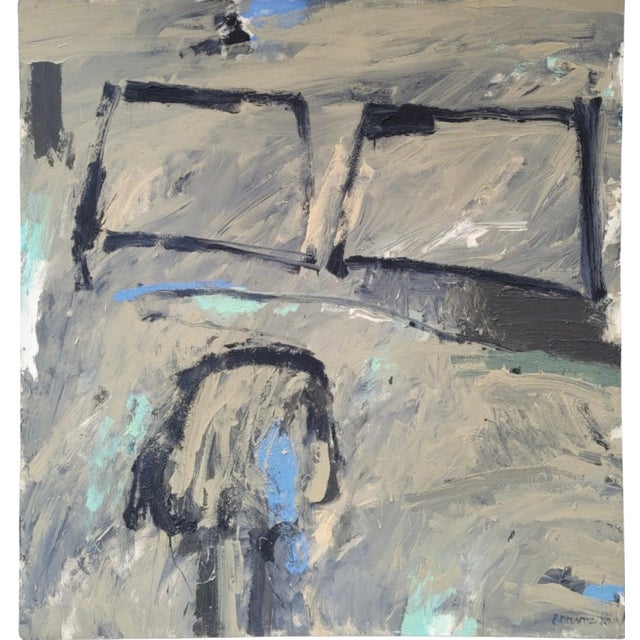
“Childhood Islands” Esteban de la Foz, Abstraction, 1996 – Cantabria, Spain
Exceptional large-format work by Esteban de la Foz, without …
Read more
“Childhood Islands” Esteban de la Foz, Abstraction, 1996 – Cantabria, Spain
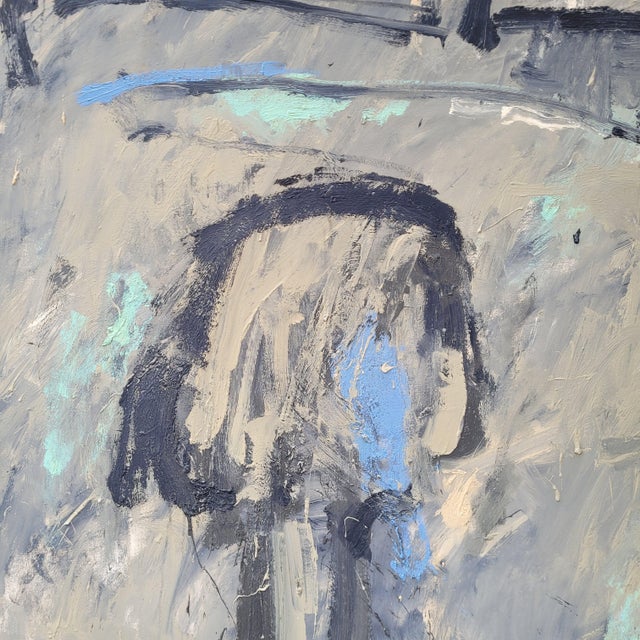
Exceptional large-format work by Esteban de la Foz, without a doubt, the most representative and influential personality of abstraction in Cantabria. Titled “Childhood Islands” and dated 1996, this work is part of the artist's stage of experimentation and maturity, characterized by dynamic compositions and gestural and intuitive brushstrokes. At this stage he also introduced elements inspired by nature and the landscape, with series such as “Islas y Costas”, to which this work belongs.
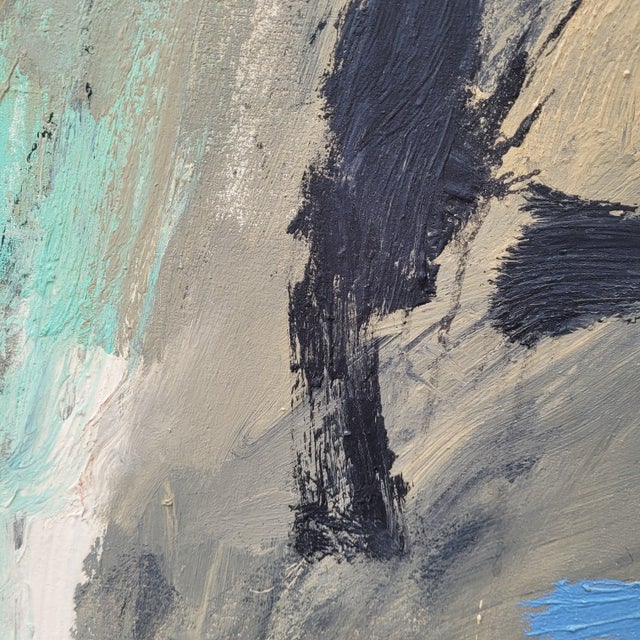
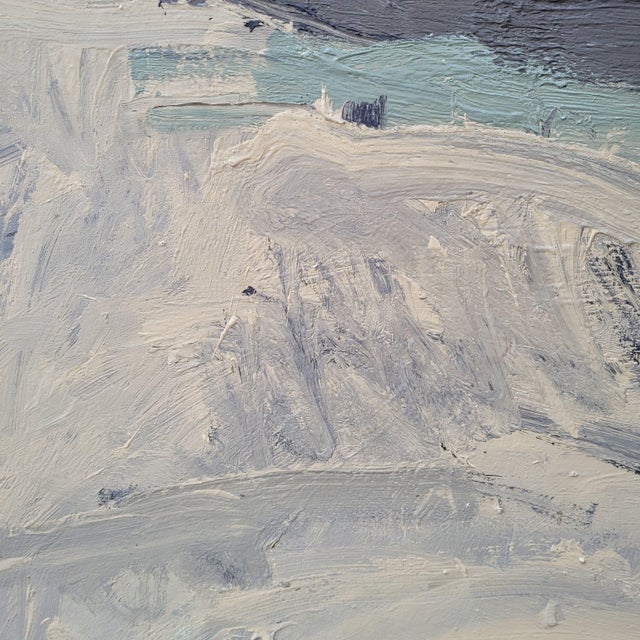
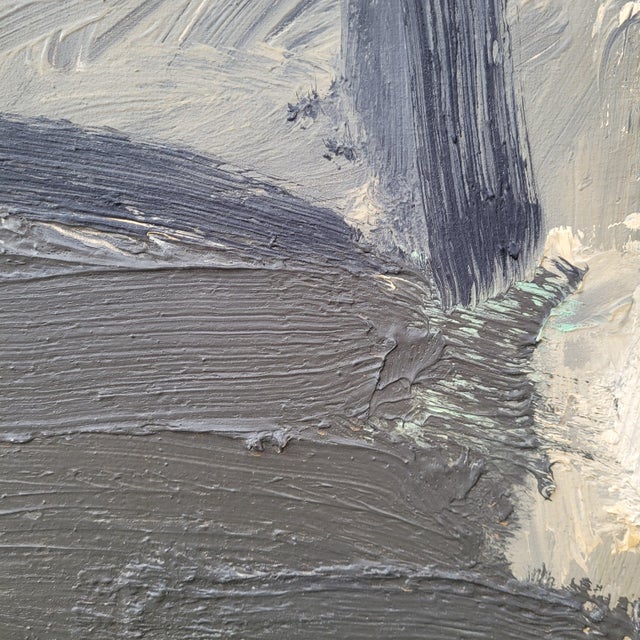
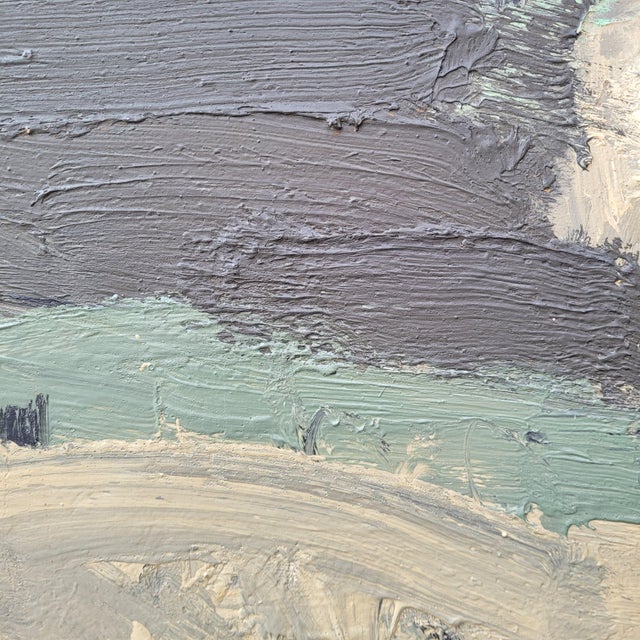
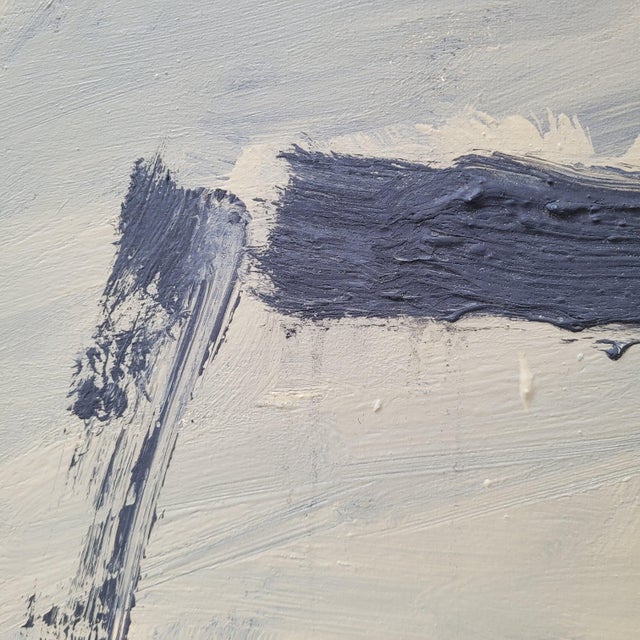
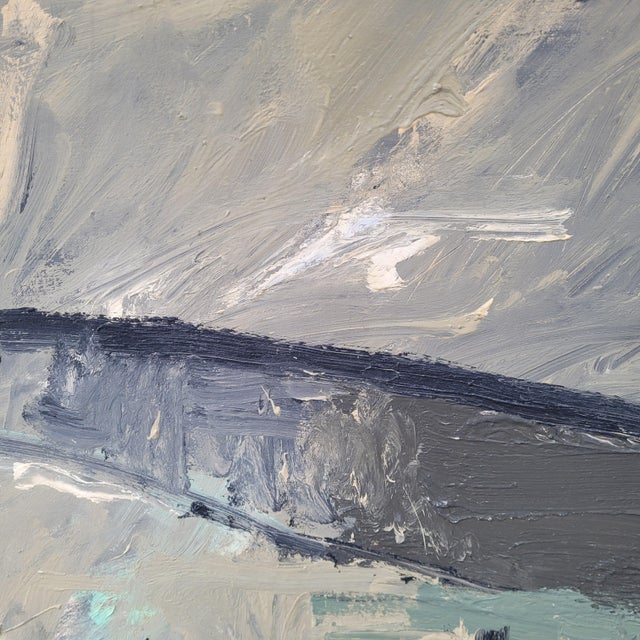
It uses a sober color range, with grayish tones in which the black, blue and greenish brushstrokes stand out, without much contrast. The artist plays with textures through very material brush strokes, loaded with pigment, which leave a relief on the canvas that each of his brush strokes suggests. He usually made his own pigments in order to manipulate their density and play with how they would act on the support. It is a painting with very marked lines that allows the viewer to be transported to the process of creating the piece, intuiting its movements and rhythm.
Esteban Pérez de la Foz (Santander, 1928-2007)
Esteban de la Foz is the artistic name of Esteban Pérez de la Foz Fernández, an abstract painter born in Santander on April 4, 1928. He showed his inclination for art from very early on. His first contacts with drawing and painting were self-taught, without appropriate academic training. His style evolved constantly and coherently throughout his career, reflecting his artistic restlessness and his openness to contemporary trends. Up to five stages can be identified in his work, each one with its own characteristics:
The first stage took place around the 1950s, his early years, characterized by late-cubist figuration and neo-cubism, with urban landscapes and subjective portraits made with marked lines and faceted planes. At first, the most influential painters of his devotion were Velázquez and Goya, until he discovered the work of his countryman, Pancho Cossío. That's when he decided to make a clean slate. He held his first exhibition at the Galería Sur in Santander in 1954. He obtained a scholarship from the Ministry of Education (1957) and settled in Paris, at which time he began to develop an expressionism linked to an underlying cubism as a base. The color palette during this stage is sober, reflecting a structured and rational vision of reality, and experimenting with materials and textures.
His second period (late 50-60's) is characterized by an influence from his stay in Paris and his training at L'École du Louvre and the Atelier de la Grande Chaumière. His work begins to evolve towards a more abstract formal synthesis. He is interested in ordered composition and the play of fillings. His constructivist urban landscapes evolve into large fields of color and geometric shapes, anticipating his transition to abstraction.
In the third stage (60's and 70's), marked by abstract expressionism and social criticism, his painting adopts a much more expressive character, with increasingly broader brush strokes and vibrant colors. Many of his works from this stage are loaded with social criticism or reflect a strong existentialist content.
The decades of the 80's and 90's are considered his stage of experimentation and maturity. During this period, some of his works border on minimalism, without losing expressiveness, through dynamic compositions and motifs inspired by nature and the landscape. After more than ten years working on total abstraction, in 1985, influenced by American abstract expressionism and German neo-expressionism, he developed a series of abstract paintings in terms of form, but maintaining, in some way, the figuration with the titles, in charge of “guiding” the viewer by indicating what they should see. This is precisely what happens with “Childhood Islands”.
His fifth and final stage (90's and early 2000's) represents the culmination of his style and the path towards abstraction. It achieves an expressionism of synthesis, with a rich brushstroke and intense, but always balanced, colors. A musical influence is evident in the rhythm and structure of his latest works. His favorite color palette is sober; large patches of intense colors are rarely found in his works, and always as a resource to provide a greater dramatic component. In his latest exhibitions he maintains his personal stamp: a dialogue between form, color and emotion, with a strong command of oil painting and composition.
with more than 40 group and solo exhibitions, he is positioned as an essential artist of contemporary Spanish art. His career describes a path from initial informalism to abstraction. Around 1970 he found his most personal style, characterized by the total liberation of figuration, masterfully experimenting with support and pigments.
Technique on support: Oil on canvas
Title of the work: “Childhood Islands”
Author: Esteban de la Foz
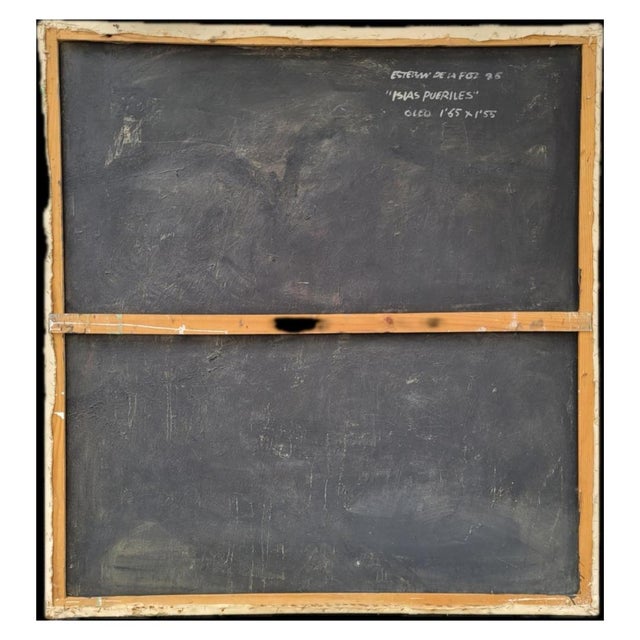
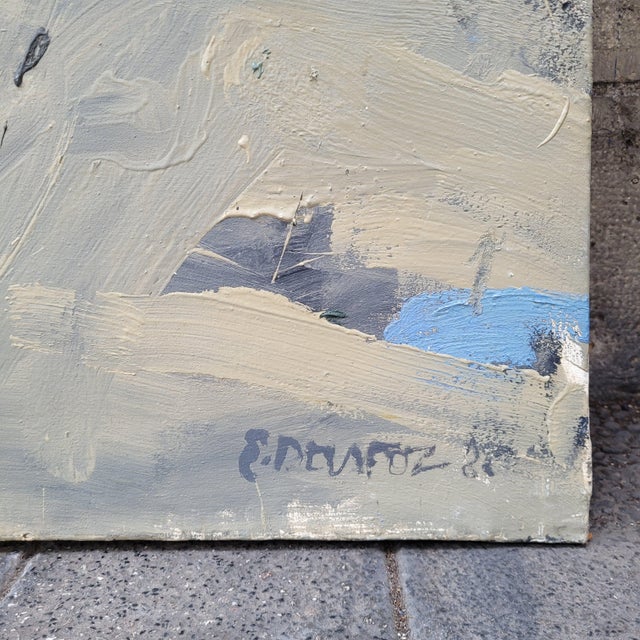
Signed in the lower right corner and on the back
Style: Abstraction
Year: 1996
Country of origin: Cantabria, Spain
In good condition according to its age and use
Dimensions: 165 x 155 cm. This piece has an attribution mark,
I am sure that it is completely authentic and take full responsibility for any authenticity
issues arising from misattribution
See less
- Dimensions
- 61.02ʺW × 0.79ʺD × 64.96ʺH
- Art Subjects
- Abstract
- Period
- 1990s
- Country of Origin
- Spain
- Item Type
- Vintage, Antique or Pre-owned
- Condition
- Good Condition, Unknown, Some Imperfections
- Color
- Blue
- Condition Notes
- Very Good — This vintage item has no defects, but it may show slight traces of use. Very Good — This vintage item has no defects, but it may show slight traces of use. less
Returns & Cancellations
Return Policy - All sales are final 48 hours after delivery, unless otherwise specified in the description of the product.
Cancellation Policy - Prior to shipping or local pickup, buyers may cancel an order for up to 48 hours, unless otherwise specified.
Related Collections
- Lee Krasner Paintings
- Steve Kaufman Paintings
- Limoges, France Paintings
- Richard Anuszkiewicz Paintings
- Vienna Secession Paintings
- Camille Pissarro Paintings
- René Magritte Paintings
- Paul Jenkins Paintings
- Paintings in Panama City, FL
- BandB Italia Paintings
- Sol LeWitt Paintings
- Ralph Lauren Paintings
- Donald Judd Paintings
- Damien Hirst Paintings
- Margaret Kennedy Paintings
- Laminate Paintings
- Keith Haring Paintings
- Jacobean Paintings
- Michelle Arnold Paine Paintings
- Nikolaos Schizas Paintings
- Joseph Solman Paintings
- Louis Wolchonok Paintings
- Mark Lewis Art Paintings
- Mark Lewis Paintings
- Lee Reynolds Paintings