


Details
Description
This chair from the late Ming dynasty represents an exceptional example of the art and craftsmanship that characterize the Ming …
Read more
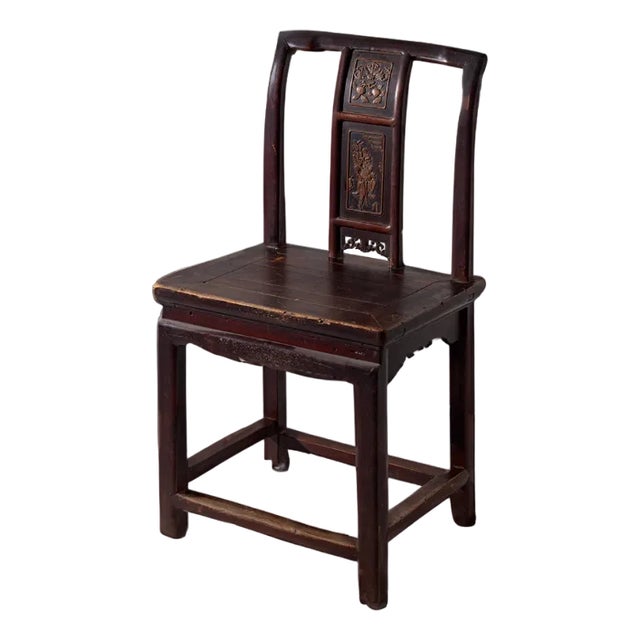
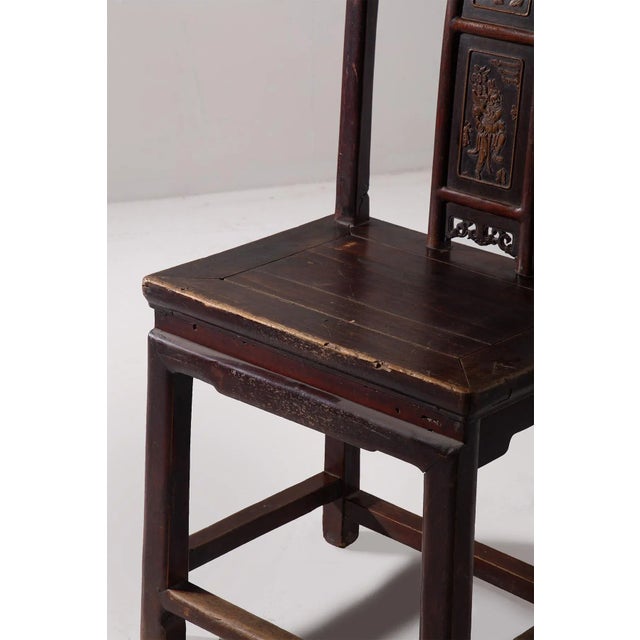
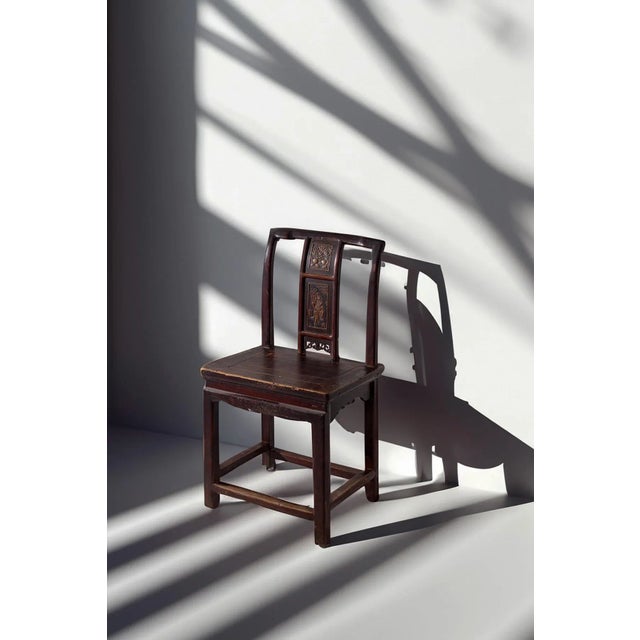
This chair from the late Ming dynasty represents an exceptional example of the art and craftsmanship that characterize the Ming style. Side chairs, or chairs without arms, appeared during the Song dynasty and maintained a simple, unchanging form through successive dynasties, up to the Qing dynasty. Although they were likely the most common type of chair, their less sturdy structure compared to those with armrests led to the survival of fewer examples.
The traditional term "lamphanger chair" (deng'gua yi) appears in texts from the Yongzheng period (1722-1735) and is still used in China today to describe these chairs. This type of seating, while less structured than others, was characterized by a simple and functional design, making it a common element in Chinese homes.
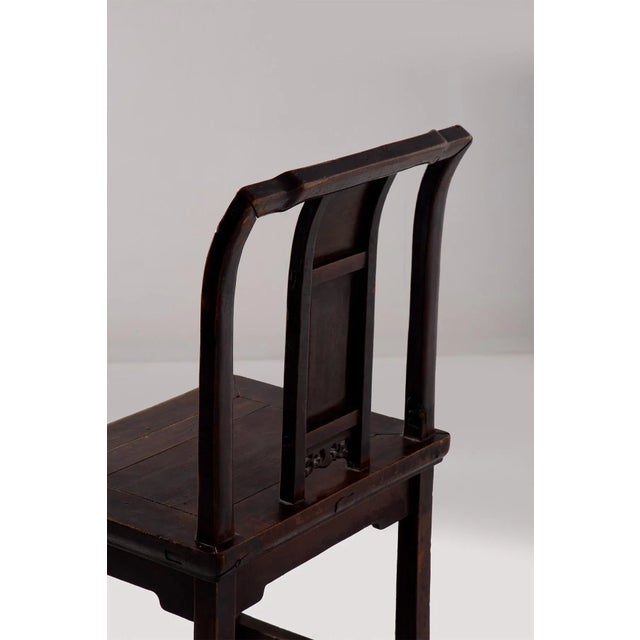
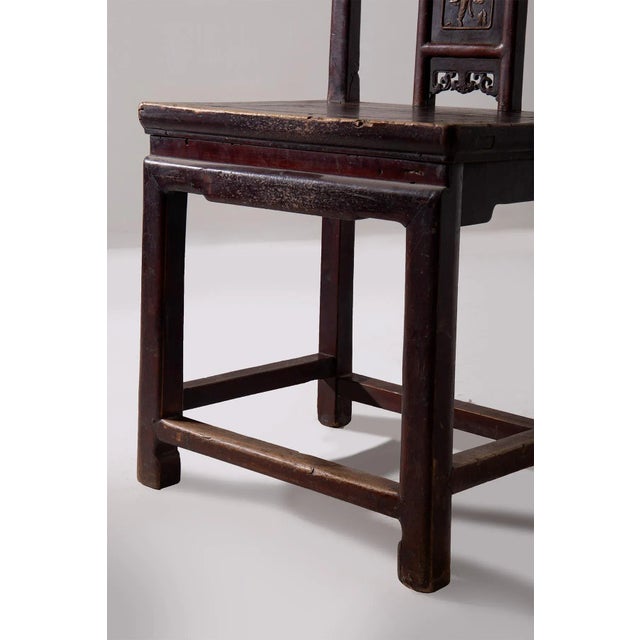
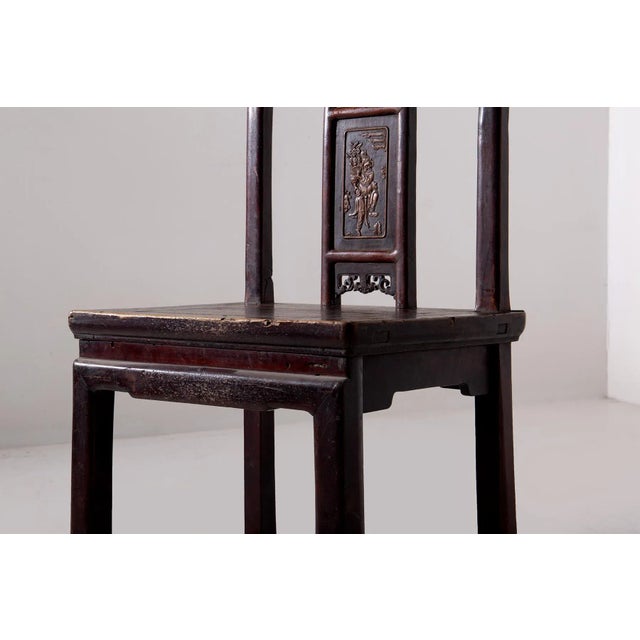
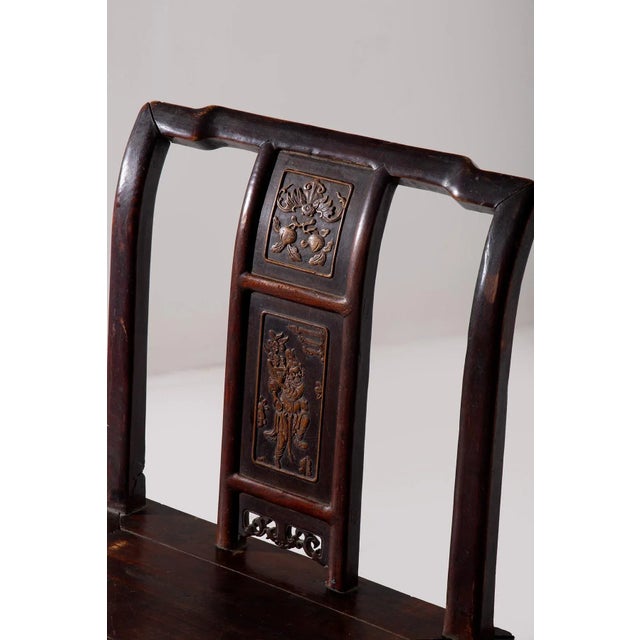
Crafted from dark wood, the chair exudes an air of elegance and authority. The straight, square-sectioned legs provide a stable and robust base, while the backrest, though straight, features a slight curve at the top to enhance comfort. The intricate carvings on the backrest, executed with great skill, add a touch of sophistication, highlighting the care and precision that define the furniture of this period.
A particularly fascinating detail of this chair is the carvings depicting two main figures: the lower one represents a man holding a plant from which Chinese wén coins grow, symbolizing prosperity. Above it, peaches can be seen, a lucky fruit in Chinese tradition that represents longevity. These symbols, combined, give the chair a profound auspicious meaning.
This chair is not just a piece of furniture but a tangible witness to the rich Chinese artisanal tradition. Its design reflects both the aesthetic sensibilities of the Ming dynasty and the functional considerations that made it a popular choice. with its imposing presence and inherent cultural value, this chair is a work of art that enriches any space with its history and significance.
See less
- Dimensions
- 18.9ʺW × 16.14ʺD × 36.22ʺH
- Seat Height
- 19.69 in
- Period
- Late 19th Century
- Country of Origin
- China
- Item Type
- Vintage, Antique or Pre-owned
- Materials
- Wood
- Condition
- Good Condition, Unknown, Some Imperfections
- Color
- Brown
- Condition Notes
- Good — This vintage item remains fully functional, but it shows sign of age through scuffs, dings, faded finishes, minimal … moreGood — This vintage item remains fully functional, but it shows sign of age through scuffs, dings, faded finishes, minimal upholstery defects, or visible repairs\. The seat is in original vintage condition for true connoisseurs in the field and lovers of traditional Chinese art. However, restoration is recommended. less
Returns & Cancellations
Return Policy - All sales are final 48 hours after delivery, unless otherwise specified in the description of the product.
Cancellation Policy - Prior to shipping or local pickup, buyers may cancel an order for up to 48 hours, unless otherwise specified.
Related Collections
- Willett Furniture Dining Chairs
- Sally Sirkin Lewis Dining Chairs
- Bevan Funnell Ltd. Dining Chairs
- Joe and Linda Ricchio Dining Chairs
- Davis Allen Dining Chairs
- Ello Dining Chairs
- Giuseppe Scapinelli Dining Chairs
- Wittmann Dining Chairs
- Medium-Density Fibreboard Dining Chairs
- Sergio Rodrigues Dining Chairs
- Aksel Bender Madsen Dining Chairs
- Silk Velvet Dining Chairs
- Laverne International Dining Chairs
- Katavolos, Littel, and Kelly Dining Chairs
- Designmaster Furniture Dining Chairs
- Mid-Century Modern Dining Chairs in Los Angeles
- Abaca Dining Chairs
- Henredon Dining Chairs
- McGuire Dining Chairs
- Thomasville Dining Chairs
- Burlwood Dining Chairs
- Bentwood Dining Chairs
- Duncan Phyfe Dining Chairs
- Wrought Iron Dining Chairs
- Restoration Hardware Dining Chairs