




Details
Description
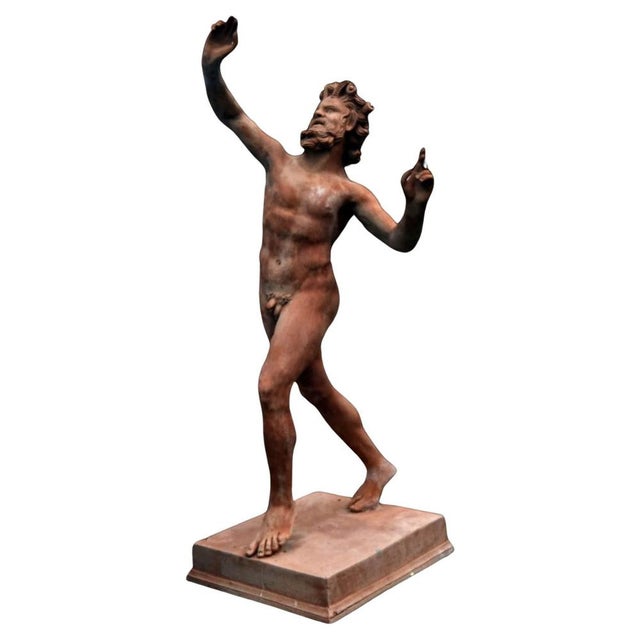
The house of the faun (italian: casa del fauno), built during the 2nd century bc, was one of the largest … Read more The house of the faun (italian: casa del fauno), built during the 2nd century bc, was one of the largest and most impressive private residences in pompeii, italy, and housed many great pieces of art. It is one of the most luxurious aristocratic houses from the roman republic, and reflects this period better than most archaeological evidence found even in rome itself. The house of the faun was built in the 2nd century bc during the samnite period (80 bc). There is evidence, most notably in the eastern walls of the tetrastyle atrium, that after the great earthquake in ad 62, the house of the faun was rebuilt and/or repaired; yet, the building was only used again until ad 79, ultimately rendered unusable by the eruption of mount vesuvius. Although the eruption was devastating, the layers of ash covering the city preserved artworks, like the mosaics of the house of the faun, which would have otherwise been likely destroyed or decayed due to the passage of time. The house of the faun was named for the bronze statue of the dancing faun located, originally, on the lip of the impluvium, a basin for catching rainwater; it has been moved to the center of the impluvium, as seen in the adjacent picture. Fauns are spirits of untamed woodland, which literate and hellenized romans often connected to pan and greek satyrs, or wild followers of the greek god of wine and agriculture, dionysus. It is purely decorative sculpture of a high order: "the pose is light and graceful," sir kenneth clark observed, the modeling well understood, the general sense of movement admirably sustained," though he missed in its suavity the stimulus of sharper contrasts to be found in renaissance nudes. Archaeologists discovered an inscription bearing the cognomen saturninus, suggesting that the dwelling was owned by the important gens, or clan, satria; a ring bearing the family name cassius was also found, indicating that someone of the cassii family married into the gens satria and lived in the house of the faun. The house of the faun was initially excavated in 1830 by the german archeological institute. See less
- Dimensions
- 11.81ʺW × 11.81ʺD × 27.56ʺH
- Art Subjects
- Nude
- Period
- 1950s
- Item Type
- Vintage, Antique or Pre-owned
- Materials
- Terra Cotta
- Condition
- Good Condition, Unknown, Some Imperfections
- Color
- Gold
- Condition Notes
- Very Good — This vintage item has no defects, but it may show slight traces of use. Very Good — This vintage item has no defects, but it may show slight traces of use. less
Returns & Cancellations
Return Policy - All sales are final 48 hours after delivery, unless otherwise specified in the description of the product.
Cancellation Policy - Prior to shipping or local pickup, buyers may cancel an order for up to 48 hours, unless otherwise specified.
Related Collections
- Lime Sculpture
- Mario Lopez Torres Sculpture
- Copeland Sculpture
- Eugenio Pattarino Sculpture
- Bruno Munari Sculpture
- Mathurin Moreau Sculpture
- Hagenauer Werkstätte Sculpture
- Ralph Lauren Sculpture
- Photorealism Sculpture
- Klaus Ihlenfeld Sculpture
- Chaim Gross Sculpture
- Peter Shire Sculpture
- Royal Copenhagen Sculpture
- Polycarbonate Sculpture
- Franz Hagenauer Sculpture
- Post Impressionist Sculpture
- Renato Anatra Sculpture
- Austin Productions Sculpture
- Mid-Century Modern Sculpture
- Brutalist Sculpture
- Nude Sculptures
- Folk Art Sculpture
- Large Sculptures
- Jade Sculpture
- Bronze Animal Sculptures