



Details
Description
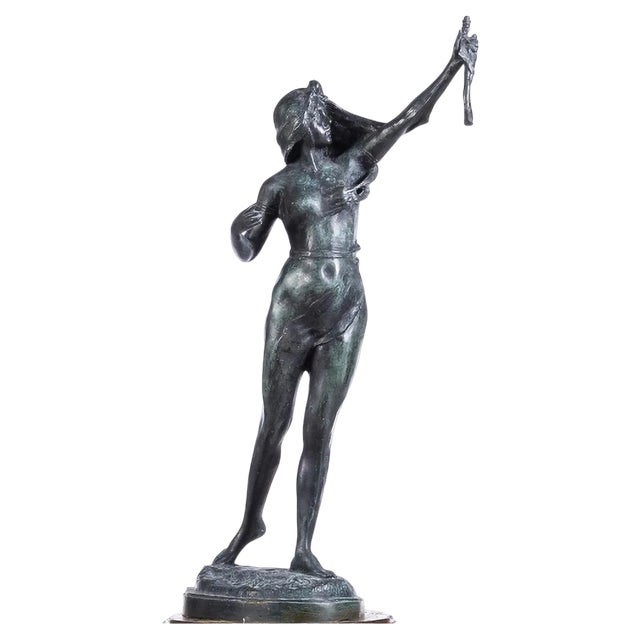
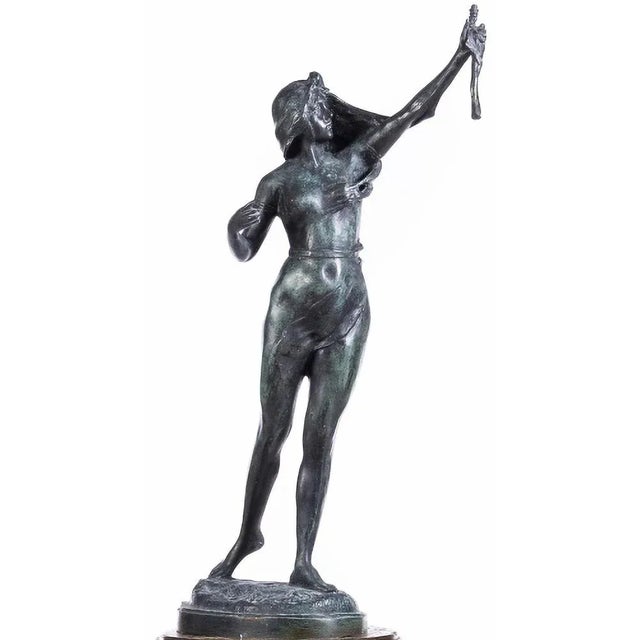
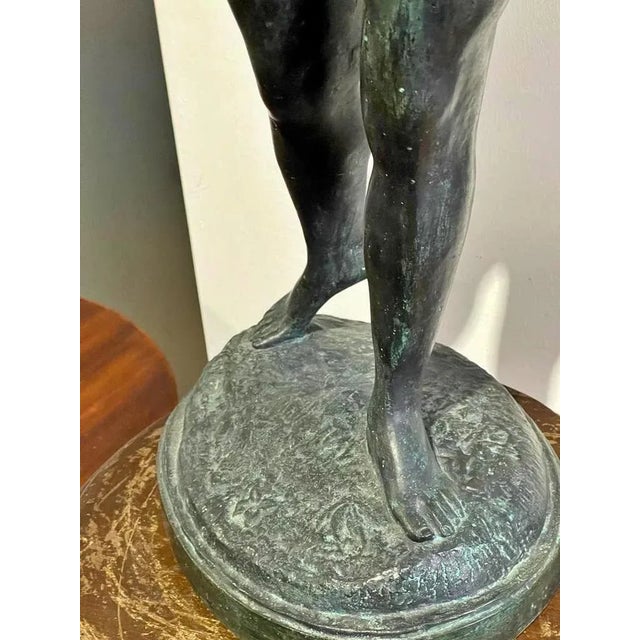
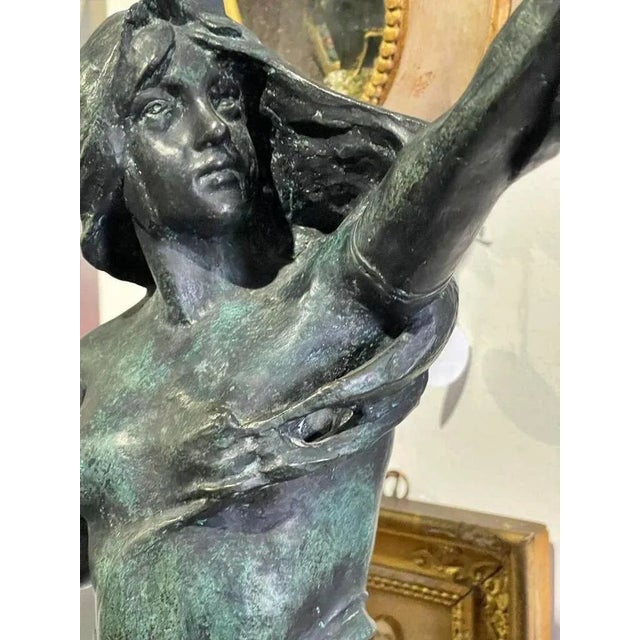
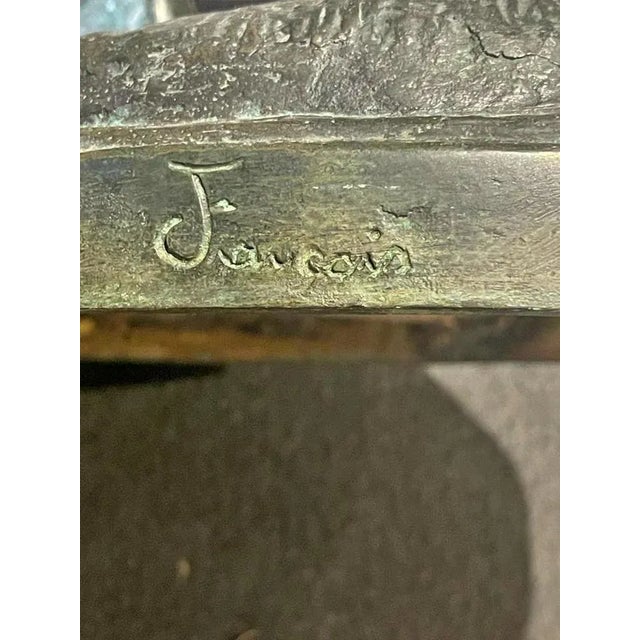
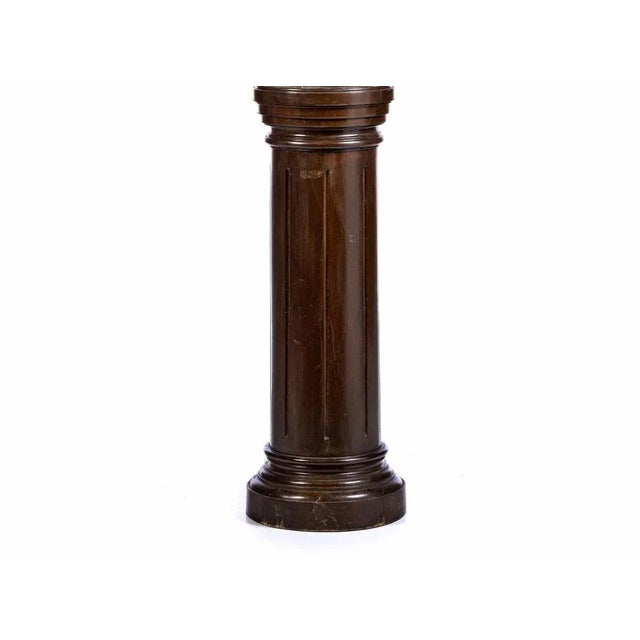
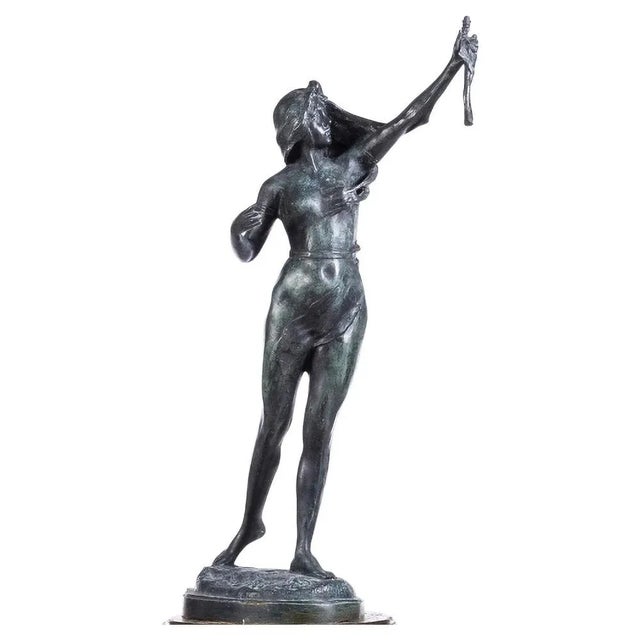
François Rude (1784-1855) attributed to "Female Figure". Bronze sculpture, signed. Measures: Sitting on a wooden base. Height: (sculpture) 82 cm. …
Read more
François Rude (1784-1855) attributed to "Female Figure". Bronze sculpture, signed. Measures: Sitting on a wooden base. Height: (sculpture) 82 cm. Height: (total) 182 cm. very good conditions Born in Dijon, he worked with his father until he was 16, but received training as a draftsman from François Devosges,1 where he learned that a strong and simple outline was an invaluable ingredient in the plastic arts2 In 1809 he went to Paris from the art school in Dijon, and became a student of Pierre Cartellier, obtaining the Grand Prix de Rome in 1812. After the second Bourbon restoration he retired to Brussels, where, probably due to the intervention of the exiled Jacques-Louis David He obtained some commissions from the architect Charles Vander Straeten, who employed him to execute nine bas-reliefs in the now-destroyed Tervuren Palace. In Brussels, Rude married Sophie Fremiet, the daughter of a Bonapartist compatriot to whom he had a number of obligations, but who happily granted him the chance to return to Paris, where he attracted attention in 1827 with a statue of the Virgin for him. St Gervais and a Mercury tying his sandals (today in the Louvre Museum). His great success, however, dates back to 1833, when he received the Legion of Honor for his statue of the Neapolitan Fisher Boy Playing with a Tortoise (today in the Louvre), which also earned him the important commission to make a high-relief for the triumphal arch of l'Étoile: this is Départ des volontaires from 1792, commonly known as La Marseillaise, which is his most famous work. It is a work full of energy and fire, which immortalized the name of Rude. Among his other works, we can mention Napoleon awakening to immortality (1845-1845, Musée d'Orsay, Paris), the statue of the mathematician Gaspard Monge (1848), Joan of Arc, in the Luxembourg gardens (1852), a Calvary in bronze for the high altar of Saint Vincent de Paul (1855), as well as Hebe and the Eagle of Jupiter (Museum of Fine Arts, Dijon), Love Triumphant and Christ on the Cross, all of which appeared at the Paris Salon of 1857 after his death. An important disciple of Rude was Jean-Baptiste Carpeaux, who later performed his own version of the Neapolitan Fisher Boy, a popular theme at the time.) Also among his students are Charles Cordier and his stepson Paul Cabet who was also a sculptor. The Rude de Dijon Museum, opened in 1947, is dedicated to plaster casts of his works that were acquired by the city of Dijon between 1887 and 1910; it is housed in the transept of the 11th-century church of Saint-Etienne on rue Vaillant. This piece is attributed to the mentioned designer/maker. It has no attribution mark and no
official proof of authenticity,
however it is well documented in design history. I take full responsibility for any authenticity
issues arising from misattribution
See less
- Dimensions
- 5.91ʺW × 5.91ʺD × 32.28ʺH
- Art Subjects
- Figure
- Country of Origin
- France
- Item Type
- Vintage, Antique or Pre-owned
- Materials
- Bronze
- Condition
- Unknown, Some Imperfections
- Color
Returns & Cancellations
Return Policy - All sales are final 48 hours after delivery, unless otherwise specified in the description of the product.
Cancellation Policy - Prior to shipping or local pickup, buyers may cancel an order for up to 48 hours, unless otherwise specified.
Related Collections
- Fernando Botero Sculpture
- Louis XIV Sculpture
- Bentwood Sculpture
- Worlds Away Sculpture
- Angela Chrusciaki Blehm Sculpture
- Barovier and Toso Sculpture
- Gold-Plate Sculpture
- Recycled/Repurposed Sculpture
- Antique Iron Finish Sculpture
- Lime Sculpture
- Maison Jansen Sculpture
- Georgian Sculpture
- Far Pavilions Sculpture
- Constantin Brancusi Sculpture
- Bakelite Sculpture
- Witco Sculpture
- Albert Ernest Carrier-Belleuse Sculpture
- Polished Brass Finish Sculpture
- Photography Sculpture
- Sculpture in Columbus
- Sculpture in Panama City, FL
- Austin Productions Sculpture
- Alabaster Sculpture
- Mid-Century Modern Sculpture
- Brutalist Sculpture